
Traditional employee performance reviews are rapidly becoming outdated. The old model of conducting a single annual evaluation is no longer effective for modern workplaces where business priorities, customer expectations, and employee responsibilities constantly evolve throughout the year.
Modern employee performance management is no longer about a once-a-year report card. Instead, it focuses on continuous improvement, regular communication, coaching, skill development, and aligning employee performance with broader business goals.
Companies that rely only on annual performance reviews often struggle with:
poor communication, disengaged employees, unclear expectations, delayed feedback, and inconsistent performance improvement.
Employees today expect ongoing support and meaningful development opportunities rather than infrequent evaluations that only focus on past mistakes.
At the same time, businesses need better visibility into employee productivity, customer service quality, operational efficiency, and team development.
That is why modern performance management systems increasingly rely on:
real-time feedback, measurable KPIs, data-driven evaluation, coaching conversations, and continuous goal tracking.
When implemented correctly, employee performance management creates benefits for both businesses and employees. Teams become more engaged, managers make better operational decisions, employee development improves, and businesses gain stronger alignment between individual performance and company objectives.
Modern performance management also helps businesses create healthier workplace cultures. Employees perform better when expectations are clear, recognition is consistent, and growth opportunities feel achievable.
In this guide, we’ll explore how modern employee performance management works, the key stages of the performance management cycle, important KPIs businesses should track, common challenges organizations face, and how businesses can create systems that genuinely improve employee performance and long-term business success.
Table of Contents
- What Is Modern Employee Performance Management?
- Understanding the Performance Management Cycle
- Setting Clear Goals and Expectations
- Why Continuous Feedback Matters
- Measuring Employee Performance with KPIs
- The Role of Managers in Performance Management
- How Performance Management Improves Employee Engagement
- Common Performance Management Challenges
- Best Practices for Modern Performance Management
- Using Data for Better Performance Decisions
- How Biyo POS Helps Businesses Track Employee Performance
- Frequently Asked Questions
What Is Modern Employee Performance Management?
Modern employee performance management is an ongoing process designed to improve employee productivity, skill development, communication, and business performance through continuous collaboration between managers and employees.
Unlike traditional annual appraisals, modern systems focus on:
continuous coaching, regular check-ins, measurable goals, development planning, and real-time feedback.
The purpose is not simply evaluating employees after work is completed. Instead, performance management aims to improve performance continuously throughout the entire year.
Modern businesses operate in fast-moving environments where priorities, customer behavior, and operational challenges change constantly. Because of this, employees need frequent communication and support rather than delayed annual evaluations.
Performance management also strengthens alignment between employees and company goals.
When employees clearly understand:
business objectives, performance expectations, and how their work contributes to company success, motivation and engagement often improve significantly.
Strong performance management systems also help businesses identify:
training needs, leadership potential, operational inefficiencies, employee strengths, and areas requiring additional support.
This transforms performance management from a stressful HR process into a practical business strategy that supports both employee growth and operational success.

Understanding the Performance Management Cycle
Modern performance management usually follows a continuous cycle rather than a one-time review process.
The performance management cycle typically includes four major stages:
- Planning and goal setting
- Monitoring performance and providing feedback
- Reviewing progress and evaluating results
- Recognizing achievements and supporting development
Each stage builds upon the previous one to create continuous improvement over time.
The planning stage focuses on defining expectations clearly.
Employees and managers work together to establish:
goals, responsibilities, performance metrics, timelines, and development objectives.
The monitoring stage focuses on:
ongoing communication, progress tracking, coaching, and identifying challenges early.
Instead of waiting months to address issues, managers can provide support immediately.
The review stage involves:
evaluating results, discussing accomplishments, identifying growth opportunities, and planning future improvements.
Finally, the recognition stage reinforces positive behaviors through:
rewards, promotions, praise, incentives, and career development opportunities.
When organizations treat performance management as a continuous cycle instead of a yearly event, employees usually feel more supported and motivated.
Setting Clear Goals and Expectations
One of the most important parts of employee performance management is setting clear expectations from the beginning.
Employees cannot perform effectively if goals are vague, unrealistic, or poorly communicated.
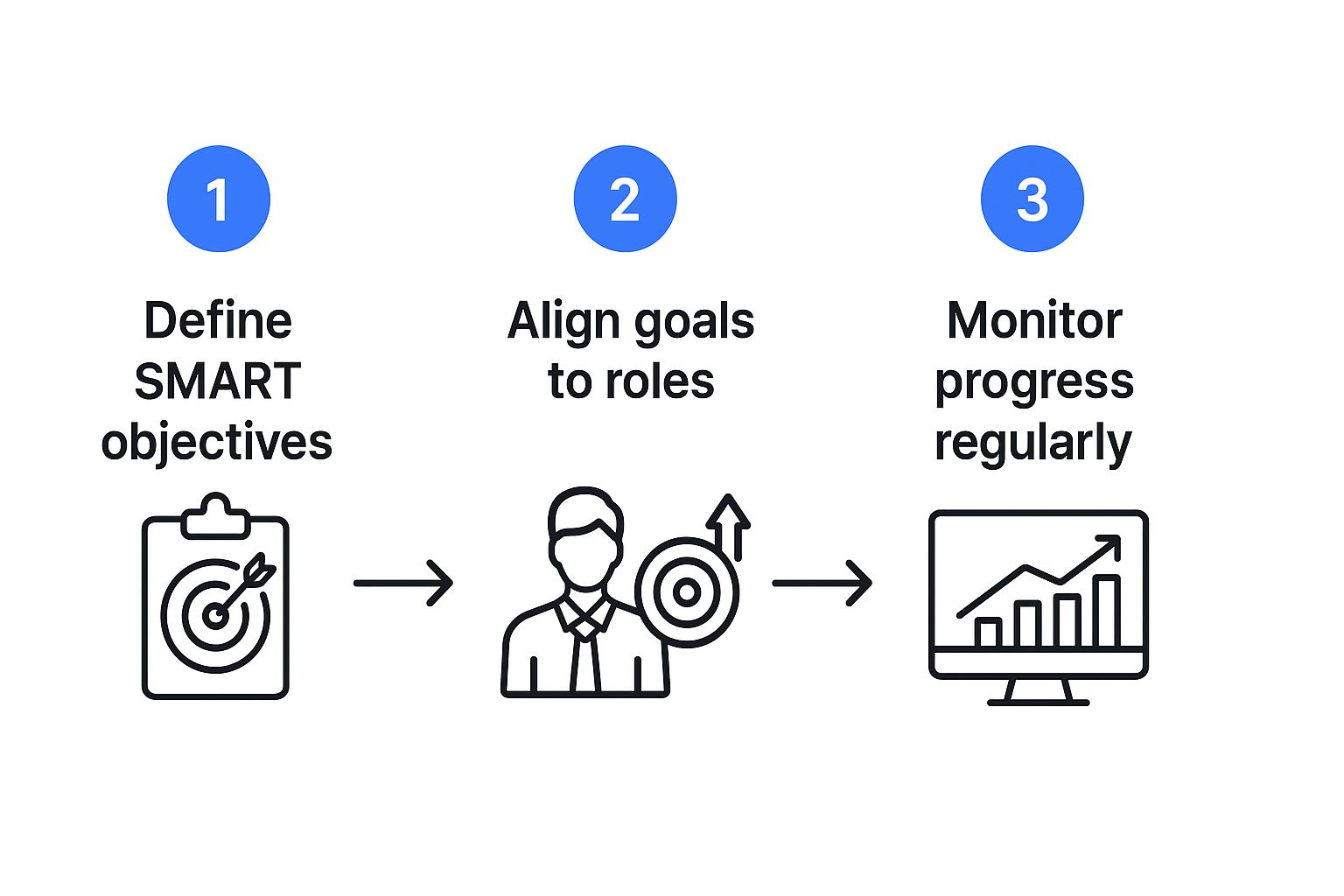
Strong goals should be:
specific, measurable, achievable, relevant, and time-sensitive.
Employees should clearly understand:
what success looks like, how performance will be measured, and how their responsibilities support business objectives.
Goal-setting should also involve employee participation.
Research consistently shows that employees become more engaged when they help create their own performance goals rather than simply receiving instructions from management.
For example, instead of telling a retail employee to “improve sales,” managers should define measurable targets such as:
increasing average transaction value, improving upsell percentages, or reducing transaction processing times.
Clear expectations reduce confusion while creating stronger accountability.
Employees are more likely to stay motivated when goals feel realistic, transparent, and connected to meaningful outcomes.
Why Continuous Feedback Matters
Continuous feedback is one of the biggest differences between modern and traditional performance management systems.
Annual reviews often fail because feedback arrives too late to create meaningful improvement.
If an employee struggles with communication, customer service, or productivity for several months, waiting until year-end to discuss the issue becomes ineffective.
Continuous feedback solves this problem by creating regular conversations between employees and managers.
These conversations help:
identify challenges quickly, reinforce positive behaviors, improve accountability, and provide immediate coaching opportunities.
Modern feedback should not feel punitive or overly formal.
Instead, it should focus on:
guidance, support, development, and problem-solving.
Employees are more receptive to feedback when managers communicate consistently rather than only during negative situations.
Frequent feedback also improves trust between managers and employees because communication becomes more transparent and collaborative.
Recognition matters equally as much as correction.
Employees who receive regular acknowledgment for strong performance usually remain more motivated and engaged long term.
Measuring Employee Performance with KPIs
Modern employee performance management relies heavily on measurable data.
Businesses increasingly use Key Performance Indicators (KPIs) to evaluate performance objectively rather than relying only on personal opinions.
KPIs help businesses track:
productivity, efficiency, customer service quality, sales performance, operational accuracy, and employee contribution.
The right KPIs depend on the employee’s role and industry.
For retail and service businesses, common KPIs may include:
- Sales per hour
- Average transaction value
- Conversion rates
- Order accuracy
- Customer satisfaction scores
- Upsell percentages
- Table turnover rates
These metrics provide measurable visibility into employee performance.
For example, a restaurant manager can monitor:
table turnover rates, customer feedback, and average ticket size to evaluate team efficiency.
A retail store manager may focus on:
sales conversion, inventory accuracy, and average order value.
Using KPIs creates more objective performance discussions because managers can rely on real operational data rather than vague impressions.
Employees also benefit because they clearly understand how performance is measured.

The Role of Managers in Performance Management
Managers play a central role in modern employee performance management systems.
In traditional systems, managers often acted mainly as evaluators.
Today, effective managers function more like:
coaches, mentors, communicators, and development partners.
Strong managers help employees:
understand expectations, overcome obstacles, improve skills, and stay aligned with business goals.
Managers also influence workplace culture significantly.
Poor communication, inconsistent expectations, and weak leadership often damage employee motivation and performance.
Modern managers need strong skills in:
communication, emotional intelligence, coaching, conflict resolution, and constructive feedback.
Performance conversations should feel collaborative rather than confrontational.
Employees are more likely to improve when managers focus on:
support, clarity, accountability, and professional growth instead of fear-based criticism.
Manager consistency is equally important.
Employees lose trust quickly if performance standards appear unfair or inconsistent between teams.
How Performance Management Improves Employee Engagement
Employee engagement is closely connected to performance management quality.
Employees who receive:
clear communication, regular feedback, recognition, and development opportunities are usually more engaged at work.
Engaged employees often demonstrate:
higher productivity, stronger customer service, better teamwork, and lower turnover rates.
One major reason employees become disengaged is lack of clarity.
When workers do not understand expectations or feel disconnected from company goals, motivation decreases.
Modern performance management improves engagement by creating:
transparency, communication, accountability, and stronger alignment between individual contributions and organizational success.
Career development also plays an important role.
Employees are more motivated when businesses invest in:
training, mentorship, leadership development, and advancement opportunities.
Recognition matters significantly too.
Employees who feel appreciated for strong work are more likely to remain committed and productive.
Common Performance Management Challenges
Despite its advantages, performance management still presents challenges for many organizations.
One major issue is manager bias.
Personal opinions, inconsistent evaluations, and favoritism can damage employee trust quickly.
Data-driven KPIs help reduce this problem by introducing objective measurements into performance discussions.
Another challenge is inconsistent communication.
Some managers provide excellent feedback and coaching while others avoid performance conversations entirely.
This inconsistency creates frustration and confusion among employees.
Poor goal-setting is another common issue.
Vague goals such as “work harder” or “improve attitude” provide little actionable guidance.
Businesses also struggle when performance systems become overly bureaucratic.
Complicated evaluation forms and excessive paperwork often reduce participation and engagement.
Employee mistrust is another serious obstacle.
Workers often view performance reviews negatively if they believe evaluations are unfair or disconnected from real work performance.
Strong transparency and consistent communication help reduce this skepticism.
Best Practices for Modern Performance Management
Modern performance management systems work best when businesses focus on continuous improvement rather than rigid evaluation structures.
One of the most effective strategies is replacing annual reviews with regular check-ins.
Frequent conversations improve communication while allowing managers to address problems before they escalate.
Businesses should also prioritize manager training.
Managers need guidance on:
providing constructive feedback, coaching employees, handling difficult conversations, and reducing bias.
Transparency is equally important.
Employees should clearly understand:
how performance is measured, how rewards are determined, and what opportunities exist for growth.
Strong performance management systems also connect directly to employee development.
Feedback becomes more valuable when employees receive:
training resources, mentorship, career planning support, and skill-building opportunities.
Recognition should happen consistently rather than only during annual reviews.
Simple acknowledgment for strong work often improves morale significantly.
Finally, businesses should focus on balancing accountability with support.
Employees perform better when expectations remain high but support systems remain available.
Using Data for Better Performance Decisions
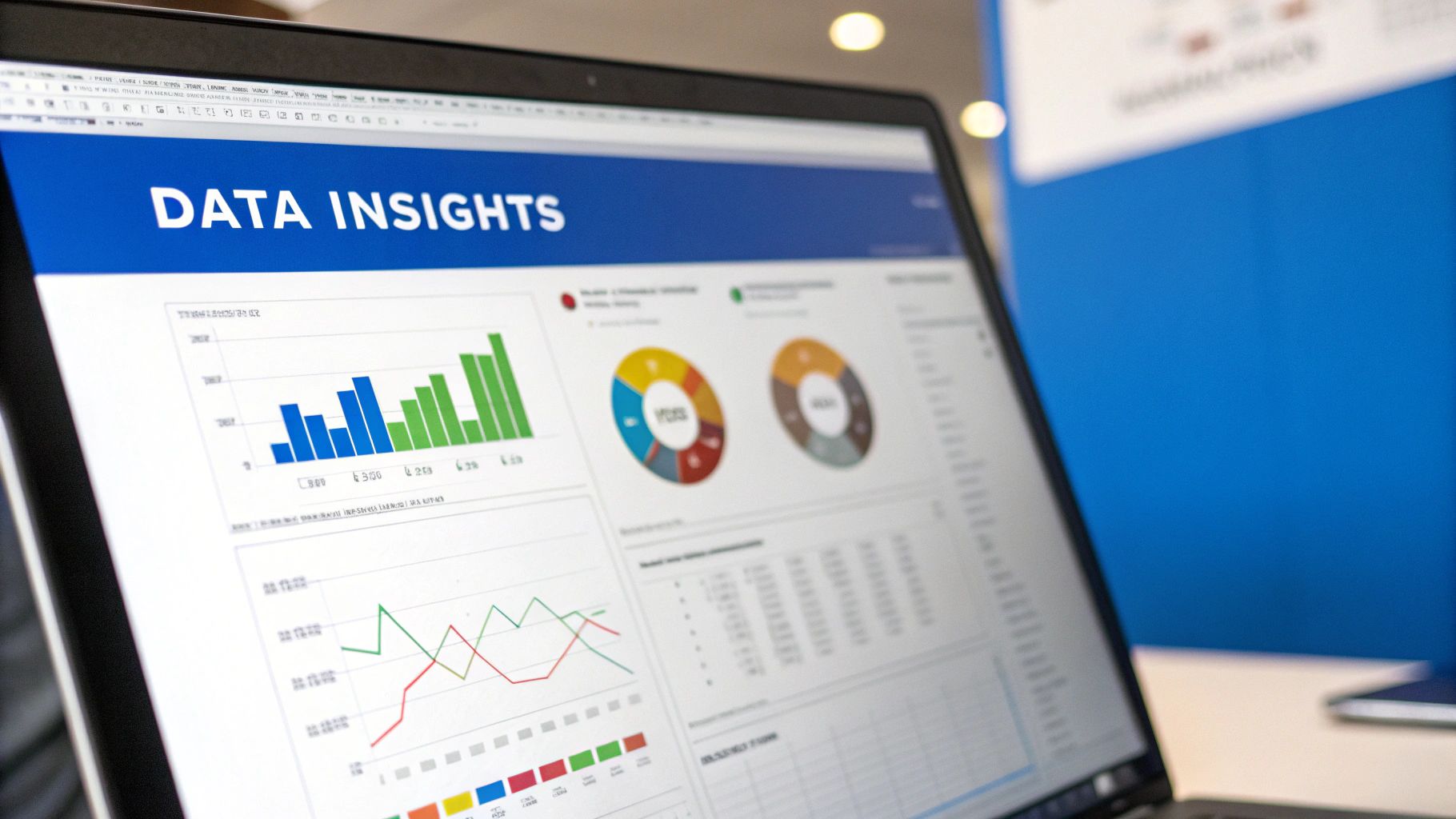
Data-driven performance management helps businesses make more objective and informed decisions.
Instead of relying solely on personal observations, businesses can use operational data to evaluate performance more accurately.
Modern software platforms allow businesses to track:
sales activity, customer service quality, attendance, productivity, order accuracy, and operational efficiency in real time.
This visibility improves decision-making related to:
promotions, scheduling, incentives, compensation, staffing, and employee development.
For example, businesses can identify:
top-performing employees, operational bottlenecks, customer service issues, and training needs more quickly.
Data also improves fairness.
Employees are more likely to trust performance evaluations when decisions are based on measurable results rather than subjective opinions alone.
At the same time, businesses should avoid relying entirely on numbers without context.
Strong performance management balances measurable KPIs with:
communication skills, teamwork, leadership potential, adaptability, and overall employee contribution.
How Biyo POS Helps Businesses Track Employee Performance
Biyo POS helps businesses improve employee performance management through integrated operational tracking and reporting tools.
The platform allows businesses to monitor:
sales performance, employee productivity, transaction speed, upselling activity, reporting analytics, customer trends, and operational efficiency through centralized cloud-based systems.
Managers can use this data to:
identify high-performing employees, provide objective coaching, improve scheduling decisions, and support employee development more effectively.
Biyo POS also helps businesses simplify reporting workflows while improving visibility into overall operational performance.
If you want to modernize employee performance tracking and business operations, you can explore the platform directly through the Biyo POS signup page.
Frequently Asked Questions
What is employee performance management?
Employee performance management is an ongoing process focused on improving employee productivity, communication, development, and alignment with business goals through continuous feedback and performance evaluation.
Why are annual performance reviews becoming outdated?
Annual reviews often delay feedback too long, reduce communication, and fail to support continuous employee improvement effectively.
What are KPIs in performance management?
Key Performance Indicators (KPIs) are measurable metrics businesses use to evaluate employee productivity, efficiency, customer service quality, and operational performance.
How often should managers provide feedback?
Modern performance management works best when managers provide regular ongoing feedback through weekly, bi-weekly, or monthly check-ins rather than only annual reviews.
What are common challenges in performance management?
Common challenges include manager bias, unclear goals, inconsistent communication, employee mistrust, weak feedback processes, and poor use of performance data.
How does Biyo POS help with employee performance management?
Biyo POS helps businesses track employee productivity, sales performance, operational efficiency, transaction analytics, and reporting data through centralized cloud-based management tools.