Starting a grocery store is one of the most promising ventures in the retail industry. However, to ensure long-term success, you need a well-prepared grocery store business plan and financial projections. A strong business plan sets the foundation for your store’s operations, while financial projections demonstrate its potential to generate revenue and remain profitable. Investors, lenders, and even your management team rely on these forecasts to gauge performance, identify risks, and map growth strategies. In this article, we’ll walk through the essential components of building a plan that includes startup costs, expense tracking, revenue forecasting, break-even analysis, and cash flow management.
Table of Contents
- Market Research and Competitive Analysis
- Financial Structure and Startup Costs
- Sales Projections and Revenue Forecasting
- Expense Management and Profit Margins
- Financial Statements and Investor Readiness
Market Research and Competitive Analysis
Before drafting your grocery store business plan and financial projections, you must understand your market. A solid plan requires detailed insights into customer behavior, demographics, and competitive positioning. Market research ensures that your business model aligns with consumer demand and identifies gaps in the retail grocery business model you can capitalize on.
Understanding Customer Demographics
Your customer base defines the structure of your grocery store business plan and financial projections. Analyzing demographics such as age, household size, income, and shopping habits helps tailor product offerings. For example, a neighborhood with young families may prioritize affordable bulk items, while an urban location might demand organic or specialty products. Incorporating this analysis into your plan supports accurate sales projections.
Customer profiling also helps establish a clear pricing strategy. Pricing decisions influence profit margins and must match customer purchasing power. For instance, if your target area has a high demand for premium products, you can price higher to increase contribution margin. On the other hand, price-sensitive communities require a balance between cost of goods sold and competitive pricing.
Another crucial aspect is predicting customer loyalty. Repeat shoppers generate consistent revenue, which stabilizes financial forecasting. Including loyalty program strategies in your plan ensures sustainable sales growth. Loyalty programs, memberships, and reward systems not only create consistent revenue streams but also provide valuable data about purchasing patterns that can further refine your future projections.
Evaluating the Competition
A detailed competitive analysis is critical in any grocery store business plan and financial projections. Identifying direct competitors such as supermarkets and specialty shops allows you to differentiate your store. Examine their product mix, pricing models, customer service quality, and marketing tactics to find opportunities for improvement. Documenting both strengths and weaknesses of competitors ensures your plan reflects realistic market conditions.
Competitive analysis also sheds light on barriers to entry. For instance, if nearby stores dominate with aggressive discounting, your plan might emphasize superior customer experience or unique offerings. This helps refine your financial model by aligning pricing and sales strategies with market gaps. It also prepares you to defend against price wars by leveraging differentiation strategies rather than competing on cost alone.
Competitor performance can also inspire realistic financial goals. Reviewing competitor foot traffic, average transaction values, and sales cycles provides benchmarks for your own revenue forecasting. This benchmarking is essential for building projections that investors can trust, as it anchors your assumptions in real-world examples rather than speculation.
Crafting a Unique Selling Proposition
Every successful grocery store business plan and financial projections requires a clear value proposition. This unique offering ensures customers choose your store over competitors. It could be focused on affordability, product variety, eco-friendly practices, or exceptional convenience. Your value proposition should be communicated not just in marketing materials but also in your financial model, showing how it influences pricing and margins.
For instance, highlighting fast checkout lanes, app-based ordering, or free delivery can set your store apart. These elements not only improve customer retention but also influence sales projections by increasing average basket size. Customers who see consistent convenience are more likely to shop more frequently, which directly impacts projected revenue growth.
A well-articulated selling proposition also reassures investors. When they see how your model addresses unmet needs, they gain confidence in your financial projections. A strong USP becomes a narrative tool in investor presentations, illustrating why your store is positioned for growth and profitability compared to other retail grocery business models.

Financial Structure and Startup Costs
Your grocery store business plan and financial projections should outline startup costs clearly. Investors want to know how much capital is required before the business becomes self-sufficient. A detailed breakdown ensures you avoid surprises and set accurate funding requirements.
Identifying Initial Investments
Startup costs include lease deposits, store renovations, equipment purchases, licenses, and initial inventory. Without accurately accounting for these, your financial projections will appear incomplete. For example, refrigeration units and point-of-sale systems represent significant upfront costs that must be included in the plan. Neglecting them can cause undercapitalization, which jeopardizes early-stage operations.
Initial investments also depend on store size and location. A small community store may need modest funds, while a full-scale supermarket requires substantial capital. Highlighting these factors in your plan ensures realistic expectations for both you and potential investors. Tailoring projections based on these variables prevents overestimating or underestimating your store’s profitability timeline.
Including a buffer for unexpected expenses strengthens your case. Lenders are more likely to trust your projections if they see you prepared for contingencies. Unexpected delays in permitting, inflation-driven equipment costs, or last-minute renovations can drain resources. Showing that you have planned for these scenarios communicates financial responsibility and readiness.
Calculating Operating Expenses
Operating expenses cover rent, salaries, utilities, and insurance. These recurring costs determine your store’s break-even point and affect profit margins. A grocery store business plan and financial projections must clearly differentiate fixed and variable expenses for clarity. This differentiation shows how your costs react to changes in sales volumes.
For example, rent and utilities remain constant, while labor expenses may fluctuate based on sales volume. Proper categorization of these costs helps in precise revenue forecasting and expense tracking. This ensures that your cash flow management is steady throughout the year, even during slower sales months when variable expenses naturally decline.
Detailed expense planning also allows for cost-saving strategies. For instance, negotiating long-term supplier contracts can lower the cost of goods sold and increase gross margins. Implementing technology solutions such as automated scheduling or energy-efficient systems can also reduce recurring operating expenses, which strengthens projected profit margins in the long run.
Securing Funding Requirements
Every grocery store business plan and financial projections should address funding sources. These may include bank loans, investor capital, or government grants. Clearly stating the required amount and its allocation reassures lenders and investors of your preparedness. Transparent funding requests prevent doubts about whether resources will be used efficiently.
Funding requests should be tied to specific uses such as inventory stocking, staff hiring, or marketing campaigns. This demonstrates accountability and makes your plan more credible. For example, allocating 30% of funds to initial stock and 20% to marketing shows strategic foresight, which increases the likelihood of investor buy-in.
Providing repayment or return-on-investment expectations builds confidence. Investors appreciate when business owners forecast how and when their capital will yield results. Detailing projected repayment schedules or equity growth demonstrates professionalism, making your plan more attractive compared to less prepared proposals.
Sales Projections and Revenue Forecasting
Accurate sales projections form the backbone of any grocery store business plan and financial projections. These forecasts demonstrate potential income and justify expenses, guiding the store toward profitability. A realistic approach ensures your growth strategy is achievable.
Building Sales Projections
Sales projections estimate how much revenue your grocery store will generate over time. These are often broken into daily, weekly, monthly, and yearly estimates. For instance, predicting average basket size and customer count per day forms the basis of these calculations. Breaking projections into smaller increments allows for precise tracking against actual sales.
Factoring in seasonal trends, like increased demand during holidays, makes projections more accurate. Small details such as promotions or loyalty programs can significantly influence overall sales volume. Including these elements in your plan shows attention to detail and builds credibility with investors who expect realistic growth assumptions.
Sales projections also allow for performance benchmarks. Comparing actual sales against projected figures helps identify growth opportunities or operational issues. When projections align with actual results, it validates your business model, making future forecasting even stronger. On the other hand, when results diverge, it provides insights into areas that require adjustment.
Using Revenue Forecasting Models
Revenue forecasting translates sales projections into financial expectations. Models such as trend analysis, regression, or scenario planning help visualize potential outcomes. For instance, scenario planning can predict revenue under best-case, average, and worst-case scenarios. Including all three reassures investors that you are prepared for varying market conditions.
Revenue forecasting also accounts for pricing strategy. Adjusting prices by just a few percentage points can significantly impact profit margins. Therefore, building flexible models that allow quick adjustments is essential. For example, simulating the impact of a 5% price increase can reveal how sensitive revenue streams are to pricing changes.
Investors often look closely at these models. They want to see how your store reacts to changes in demand, supply costs, or competition. A strong forecasting model demonstrates not only profitability potential but also resilience, which is critical in the highly competitive retail grocery business model.
Conducting Break-even Analysis
Break-even analysis shows the sales volume required to cover all expenses. It answers the critical question: when will the store start making a profit? This analysis is indispensable in any grocery store business plan and financial projections. It gives both you and your investors a realistic timeline for profitability.
To calculate the break-even point, divide fixed costs by the contribution margin per unit. For example, if your fixed monthly costs are $20,000 and you earn $5 per basket after variable costs, you need 4,000 baskets per month to break even. This type of calculation simplifies complex financial data into clear targets for your management team.
This calculation not only reassures investors but also guides your pricing and marketing strategy. Knowing your break-even point ensures your promotions do not erode profitability. It also helps your management team evaluate whether expansion plans are financially sustainable before committing resources.
Expense Management and Profit Margins
Strong expense management ensures financial sustainability. Your grocery store business plan and financial projections must illustrate how costs will be monitored and profit margins protected. Without effective management, even high sales volumes may not translate into profits.
Tracking Operating Expenses
Expense tracking systems allow you to monitor spending in real time. This includes utilities, wages, marketing, and repairs. Implementing software or POS integrations ensures expenses are categorized accurately. The more granular your expense data, the better you can manage and forecast future costs.
Monitoring expenses helps identify inefficiencies. For example, reducing energy costs through LED lighting or smart refrigeration lowers recurring expenses. Documenting these savings in your projections strengthens your business case and demonstrates operational efficiency to investors.
Clear expense tracking also supports financial reporting. Lenders and investors appreciate businesses that can present clean, transparent financial records. Consistent tracking ensures your financial reporting is credible, which builds long-term trust with stakeholders.
Improving Profit Margins
Profit margins reflect how much your store earns after covering costs. Small adjustments can make significant differences. For instance, negotiating with suppliers for better bulk pricing directly reduces the cost of goods sold. Supplier relationships become a cornerstone of sustained profitability when managed effectively.
Introducing high-margin products like prepared meals or private-label goods also boosts profitability. These items often cost less to produce but sell at higher prices. Including them in your plan shows investors proactive margin strategies and a deeper understanding of grocery business income statement optimization.
Maintaining competitive prices while protecting profit requires balance. Clear documentation in your financial projections proves you’ve planned for sustainable profitability. Showing sensitivity analysis on margins under different pricing strategies helps demonstrate your preparedness for market fluctuations.
Managing Cash Flow
Cash flow management ensures your store has enough liquidity to cover daily operations. Without steady cash flow, even profitable stores can face difficulties. Therefore, any grocery store business plan and financial projections must highlight cash inflow and outflow strategies. Investors view cash flow planning as a sign of mature financial management.
Examples include negotiating supplier payment terms to align with customer sales cycles. This keeps working capital available for essential expenses like payroll and restocking. Another tactic is closely monitoring inventory to prevent overstocking, which ties up cash unnecessarily and increases spoilage risks.
Clear cash flow projections reassure stakeholders. They show that the store can remain operational even during seasonal downturns. Proper cash flow management also supports future growth strategies by ensuring funds are available for expansion or marketing campaigns without jeopardizing core operations.
Financial Statements and Investor Readiness
A complete grocery store business plan and financial projections must include financial statements. These reports provide insights into profitability, solvency, and overall financial health. Investors and lenders rely on them to assess business readiness.
Preparing Income Statements
An income statement outlines revenues, expenses, and net profit over time. It shows whether your grocery store is operating profitably. Accurate income statements also highlight trends, such as increasing operating expenses or improving gross margins, which are vital indicators of long-term performance.
For startups, projected income statements forecast potential profits. These projections help secure funding by demonstrating expected returns. Clear presentation and logical assumptions are critical for credibility and help prevent doubts about the reliability of your numbers.
Regular updates to the income statement ensure your business stays aligned with its goals. They also guide managerial decisions such as staffing, promotional budgets, and expansion timing. Keeping these statements updated improves internal decision-making and enhances investor trust.
Creating Balance Sheets
A balance sheet lists assets, liabilities, and equity at a given point in time. For grocery stores, assets may include equipment, inventory, and cash reserves. Liabilities often cover loans, payables, and accrued expenses. The balance sheet demonstrates overall financial position, which is critical for assessing solvency.
Balance sheets show the financial strength of your store. High equity relative to liabilities demonstrates stability, which investors value. On the other hand, high debt levels may indicate risks, requiring clear strategies for repayment or refinancing. Including these strategies enhances confidence in your management abilities.
Clear balance sheet projections provide a snapshot of long-term viability. They allow stakeholders to evaluate financial resilience in challenging market conditions. Investors use these to understand how well your store can weather downturns while maintaining solvency and growth potential.
Building Investor Presentations
An investor presentation summarizes your grocery store business plan and financial projections in a concise, persuasive manner. It combines income statements, balance sheets, and sales forecasts into a compelling narrative. A well-designed presentation demonstrates not only the potential for profitability but also your communication skills as a business owner.
Highlighting your growth strategy, competitive advantages, and funding requirements helps investors see potential returns. Include visual aids such as charts, graphs, and infographics to make complex data digestible. This makes it easier for investors to grasp key points quickly and focus on the opportunities your store presents.
Presentations should also provide clear calls to action, whether it’s requesting funding or scheduling follow-up discussions. Linking to tools like schedule a call with Biyo POS ensures easy next steps. This level of organization signals to investors that you are serious and prepared to move forward.

About Biyo POS
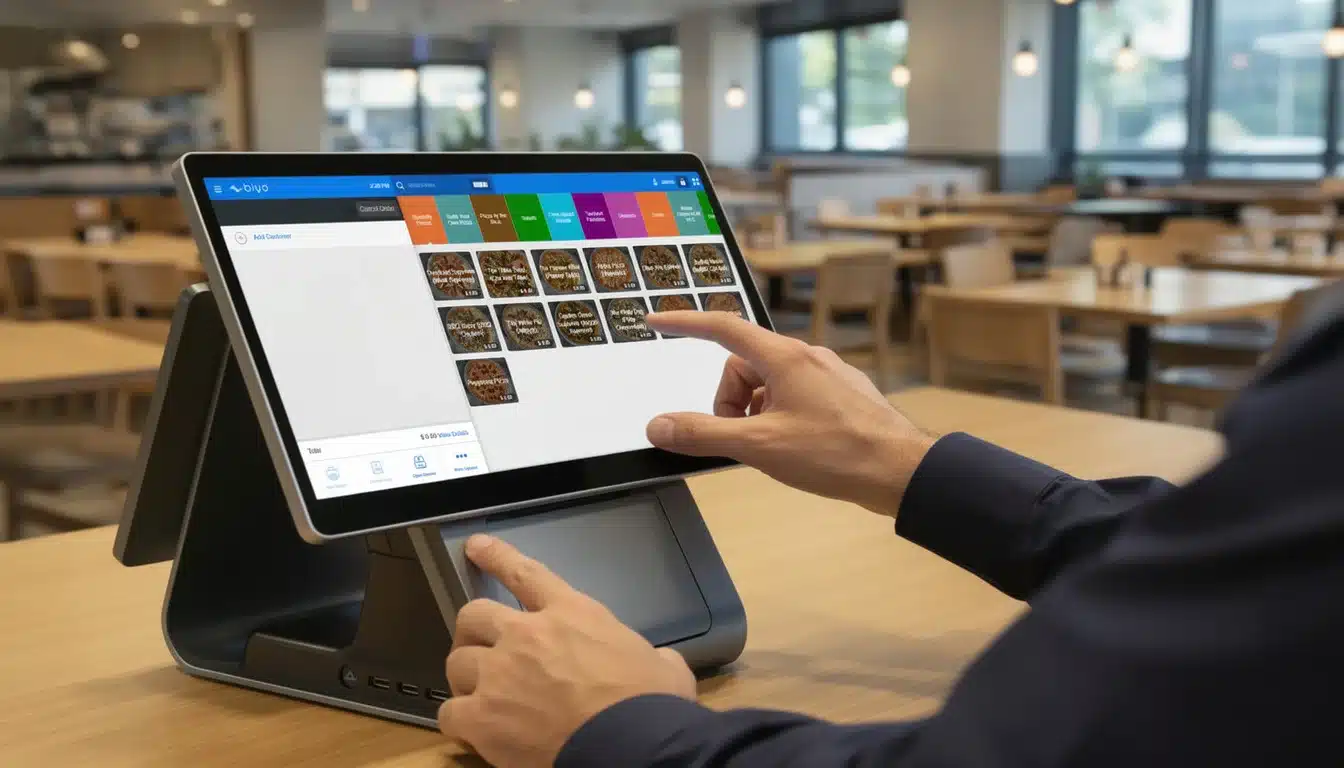
Biyo POS helps grocery store owners manage operations more efficiently by integrating POS systems with inventory management, sales tracking, and financial reporting. With features like AI-powered ordering, offline support, and multi-location dashboards, Biyo POS makes running a retail grocery business smoother and more profitable. Interested owners can sign up here to get started quickly.
FAQ
How much capital do I need to start a grocery store?
Startup costs vary depending on location and store size. Small stores may need $50,000–$150,000, while supermarkets may require over $1 million. A detailed business plan clarifies exact funding needs.
What should be included in financial projections?
Key components include sales forecasts, expense tracking, break-even analysis, income statements, and cash flow projections. These documents reassure investors and guide management decisions.
How do I improve profit margins in a grocery store?
Profit margins can be improved by negotiating supplier discounts, introducing high-margin products, and reducing operating costs. Efficient inventory management also prevents losses due to spoilage or overstocking.
Why is market research important in a grocery store plan?
Market research identifies customer preferences and competitor strategies. This ensures your business model matches demand and allows for accurate sales projections.
How often should financial projections be updated?
Financial projections should be reviewed quarterly or whenever market conditions change. Regular updates ensure the plan remains realistic and actionable.