Creating a successful restaurant is far more complex than simply serving good food. The restaurant industry is one of the most competitive business environments in the world, with thousands of establishments competing for customer attention, loyalty, and spending. Restaurants that succeed long term are rarely successful by accident. They combine strategic planning, operational discipline, customer experience optimization, financial control, and strong leadership into a system that consistently delivers value.
Modern restaurant success depends on much more than recipes or location. Consumer expectations continue to evolve rapidly, influenced by technology, delivery convenience, online reviews, personalization, and social media visibility. A successful restaurant today must balance operational efficiency with hospitality, branding with profitability, and innovation with consistency.
According to industry research, many independent restaurants struggle within the first few years due to weak financial planning, inconsistent customer experiences, poor operational systems, or lack of differentiation. On the other hand, restaurants that maintain structured management systems, customer-focused operations, and scalable processes often build sustainable long-term growth.
This guide explores the most important factors behind building a successful restaurant, including branding, menu strategy, customer satisfaction, operational excellence, leadership, financial performance, and technology integration.
Table of Contents
- Restaurant Success Strategies
- Innovative Menu Design
- Customer Satisfaction
- Effective Leadership
- Cost Control Strategies
- Strategic Marketing for Restaurants
- Achieving Operational Excellence
- How Biyo Helps Restaurants Operate Efficiently
- Frequently Asked Questions
Restaurant Success Strategies
The foundation of every successful restaurant begins with a clearly defined strategy. Restaurants that operate without a structured growth plan often struggle with inconsistency, weak financial management, and customer retention problems. A successful restaurant strategy combines branding, operational systems, financial planning, customer engagement, and long-term scalability.
One of the most important early decisions involves defining the restaurant’s identity. Restaurants that clearly understand their target audience are usually better positioned to create memorable customer experiences. A fine dining restaurant targeting affluent professionals requires a completely different atmosphere, pricing strategy, staffing structure, and marketing approach compared to a casual family-focused restaurant.
Successful restaurants also understand that consistency builds trust. Customers return when they know they can expect the same food quality, service standards, cleanliness, and atmosphere every visit. Consistency often becomes a restaurant’s strongest competitive advantage because reliability builds customer loyalty over time.
Operational planning is equally important. Restaurants with strong operational systems typically maintain better food quality, faster service times, improved labor management, and healthier profit margins. Structured systems reduce chaos during peak service periods and allow restaurants to scale more efficiently as demand grows.
Define Your Brand and Target Market
A strong restaurant brand creates recognition, emotional connection, and customer loyalty. Branding goes beyond logos or colors. It includes the restaurant’s atmosphere, menu style, pricing, customer service philosophy, online presence, and overall dining experience.
Restaurants must clearly identify who they are serving and why customers should choose them over competitors. A restaurant targeting families may focus on affordability, convenience, large portions, and child-friendly environments. A restaurant targeting younger urban customers may prioritize aesthetics, social media appeal, customization, and delivery convenience.
Location also plays a major role in brand positioning. Restaurants located near business districts may benefit from fast lunch service and mobile ordering systems, while tourist-heavy locations may focus more heavily on visual appeal and experiential dining.
Restaurants that align their concept, branding, and operations around a clearly defined audience are usually more effective at building customer loyalty and long-term recognition.
Build a Strong Team
Employees directly influence customer experience, operational efficiency, and restaurant reputation. Even the best restaurant concepts can struggle if staffing quality is inconsistent.
Successful restaurants invest heavily in hiring, training, and leadership development. Employees who understand service standards, operational expectations, and restaurant values are more likely to contribute positively to customer satisfaction.
Training should cover:
- Customer service standards
- Menu knowledge
- Food safety procedures
- POS system operation
- Conflict resolution
- Upselling techniques
Strong leadership also reduces staff turnover, which remains one of the biggest operational challenges in the restaurant industry. Restaurants with positive workplace culture often experience higher employee retention, stronger teamwork, and more consistent customer experiences.
Monitor Financial Performance
Financial discipline separates sustainable restaurants from struggling ones. Restaurants operate on relatively tight margins, meaning small operational inefficiencies can significantly affect profitability.
Restaurant owners should regularly monitor key performance indicators such as:
- Food cost percentage
- Labor cost percentage
- Average ticket size
- Table turnover rates
- Daily revenue trends
- Profit margins
Modern POS systems help automate financial reporting and provide real-time operational visibility. Restaurants that actively track performance metrics can make faster and more informed decisions regarding staffing, pricing, promotions, and inventory management.
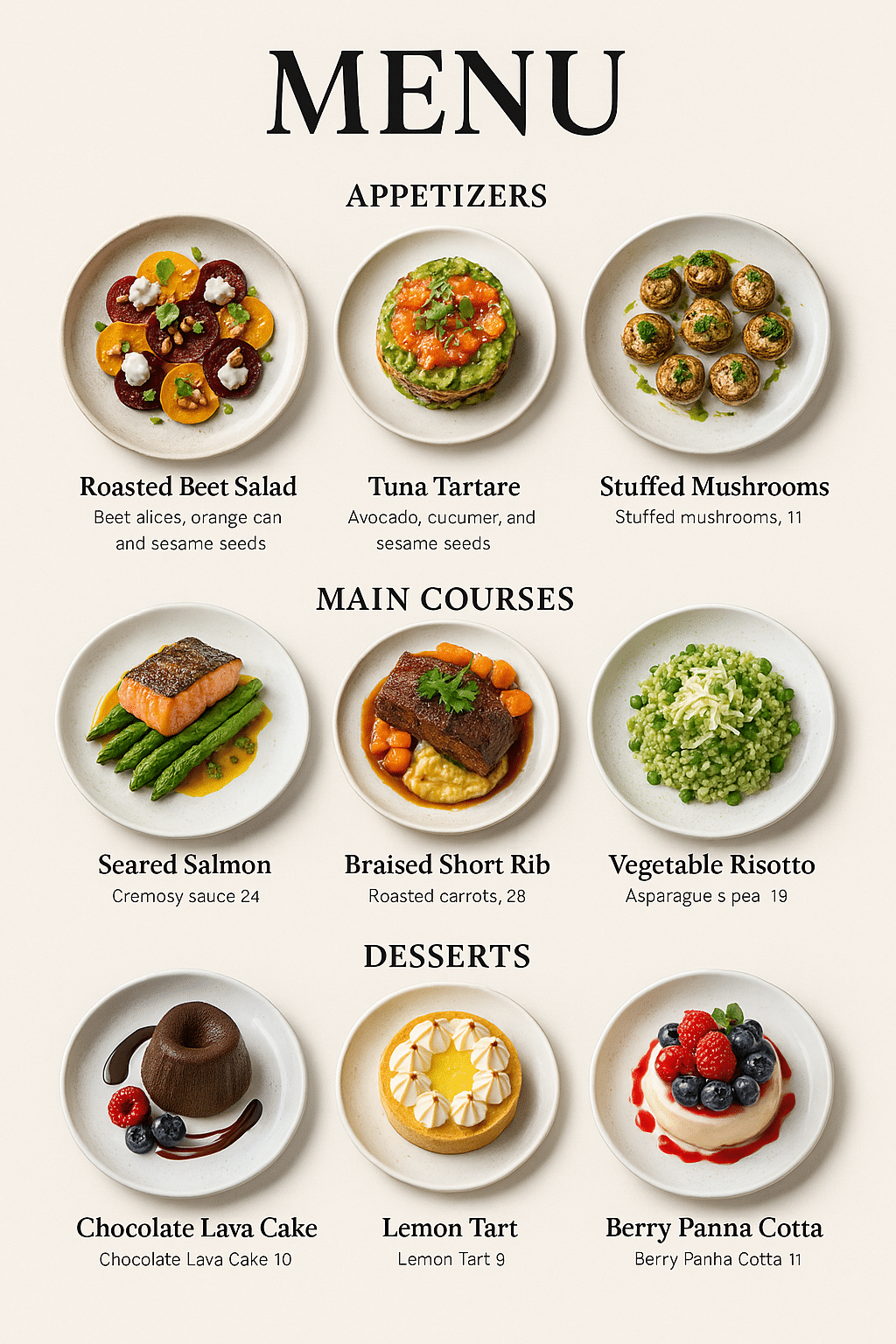
Innovative Menu Design
The menu is one of the most important operational and marketing tools in any successful restaurant. A well-designed menu influences customer perception, purchasing behavior, operational efficiency, and profitability simultaneously.
Restaurants that succeed long term typically maintain menus that balance creativity with operational practicality. Extremely large menus often increase kitchen complexity, food waste, inventory costs, and service delays. Smaller, focused menus generally improve consistency, simplify inventory management, and increase kitchen efficiency.
Menu design also directly affects profitability. High-performing restaurants strategically position high-margin items, optimize pricing psychology, and engineer menu layouts to influence customer decision-making.
Balance Creativity with Customer Preferences
Innovation is important, but restaurants must ensure creativity aligns with customer demand. Successful menus introduce unique offerings while still remaining accessible and appealing to target audiences.
Customer feedback is extremely valuable for menu refinement. Restaurants that actively analyze sales trends and guest feedback can identify which items perform best and which items underperform operationally or financially.
Seasonal menu rotations also help maintain customer interest while allowing restaurants to capitalize on fresh ingredients and market trends.
Consider Pricing and Profit Margins
Pricing strategy has a direct impact on restaurant profitability. Restaurants must balance perceived customer value with sustainable margins.
Menu engineering often involves categorizing items based on:
- Popularity
- Profitability
- Preparation complexity
- Inventory requirements
Restaurants frequently use descriptive menu language, premium placement positioning, and bundled offers to increase perceived value and encourage higher spending.
Strategic pricing adjustments, even small ones, can dramatically affect long-term profitability without significantly reducing customer demand.
Streamline Menu for Operational Efficiency
Operational simplicity often improves restaurant performance. Menus that are too large can overwhelm kitchen staff, increase food waste, and reduce service consistency.
Restaurants that streamline menu offerings generally experience:
- Faster ticket times
- Reduced inventory waste
- Improved food consistency
- Lower labor complexity
- Healthier margins
Efficient menu design creates smoother workflows during peak operational periods while improving overall guest satisfaction.
Customer Satisfaction
Customer satisfaction remains one of the most important drivers of restaurant success. Positive customer experiences increase repeat visits, improve online reviews, strengthen word-of-mouth marketing, and increase customer lifetime value.
Restaurants that consistently deliver strong customer experiences often outperform competitors even when pricing is higher because customers value reliability, hospitality, and emotional connection.
Provide Outstanding Service
Exceptional service significantly influences customer perception. Friendly, attentive, and knowledgeable staff create stronger emotional connections with guests and improve the overall dining experience.
Service quality includes:
- Greeting guests promptly
- Menu knowledge
- Fast issue resolution
- Personalized recommendations
- Attentiveness without pressure
Restaurants that respond quickly and professionally to customer complaints often recover customer trust and protect long-term reputation.
Maintain Cleanliness and Ambiance
Cleanliness directly affects customer trust. Guests associate clean environments with professionalism, food safety, and operational quality.
Restaurants should maintain high cleanliness standards across:
- Dining areas
- Restrooms
- Kitchen spaces
- Entryways
- Tables and seating
Ambiance also shapes customer perception. Lighting, music, décor, seating layout, and noise levels all contribute to the emotional dining experience.
Leverage Customer Feedback
Customer feedback provides valuable operational insight. Restaurants that actively collect and analyze reviews, surveys, and social feedback can identify recurring issues and improvement opportunities.
Listening to customer concerns and adapting operations accordingly strengthens customer trust and demonstrates responsiveness.
Effective Leadership
Strong leadership creates operational stability and workplace culture. Restaurant managers and owners set the tone for service quality, staff accountability, and customer experience.
Successful restaurant leaders typically:
- Communicate clearly
- Lead by example
- Handle pressure calmly
- Support employee development
- Maintain operational standards
Poor leadership often leads to inconsistent service, high staff turnover, operational confusion, and declining customer satisfaction.
Restaurants with strong leadership structures usually maintain better long-term stability and scalability.
Cost Control Strategies
Controlling operational costs is essential for maintaining restaurant profitability. Even restaurants with strong revenue can struggle financially if expenses are poorly managed.
Key areas for cost control include:
- Food waste reduction
- Inventory optimization
- Labor scheduling efficiency
- Utility management
- Vendor negotiations
Restaurants that regularly audit expenses and monitor operational metrics are usually more capable of protecting margins during economic fluctuations.
Inventory management is especially important because over-ordering increases waste while under-ordering creates stock shortages and lost sales opportunities.
Strategic Marketing for Restaurants
Marketing plays a critical role in attracting new customers and maintaining visibility in competitive markets. Modern restaurant marketing combines digital visibility, customer engagement, promotions, and brand storytelling.
Successful restaurant marketing strategies often include:
- Local SEO optimization
- Social media marketing
- Email campaigns
- Loyalty programs
- Referral incentives
- Online reputation management
Restaurants with strong digital presence generally experience better customer acquisition and stronger long-term brand recognition.
Online reviews are especially influential because many customers research restaurants digitally before visiting.
Achieving Operational Excellence
Operational excellence is the foundation that supports every successful restaurant. Efficient operations improve customer satisfaction, reduce errors, control costs, and increase scalability.
Restaurants that achieve operational excellence typically focus on:
- Workflow optimization
- Staff training
- Inventory accuracy
- Technology integration
- Kitchen efficiency
- Performance tracking
Operational consistency becomes increasingly important as restaurants grow because complexity increases with customer volume and staffing demands.

How Biyo Helps Restaurants Operate Efficiently
Biyo POS helps restaurants improve operational efficiency through integrated tools for order management, inventory tracking, financial reporting, and customer analytics.
The system provides restaurant operators with real-time visibility into sales performance, inventory movement, labor efficiency, and customer behavior. This data allows restaurants to make faster operational decisions and reduce inefficiencies.
Key features include:
- Order management automation
- Inventory tracking
- Sales reporting
- Customer analytics
- Multi-location management
- Real-time operational dashboards
Restaurants using Biyo POS can streamline workflows, reduce operational errors, improve service speed, and maintain stronger financial control while delivering better guest experiences.
Frequently Asked Questions
What are the key factors for running a successful restaurant?
The most important factors include strong leadership, operational efficiency, customer satisfaction, financial management, menu optimization, marketing strategy, and consistent service quality.
Why is customer satisfaction important for restaurant success?
Customer satisfaction drives repeat visits, online reviews, referrals, and long-term loyalty, all of which contribute directly to restaurant growth and profitability.
How can restaurants improve profitability?
Restaurants improve profitability by controlling costs, optimizing menus, increasing operational efficiency, improving inventory management, and increasing average customer spending.
How important is staff training in restaurants?
Staff training is extremely important because well-trained employees improve service consistency, operational efficiency, food safety compliance, and customer satisfaction.
How does Biyo POS help restaurants?
Biyo POS helps restaurants manage operations more efficiently through real-time reporting, inventory management, order tracking, customer analytics, and integrated financial tools.