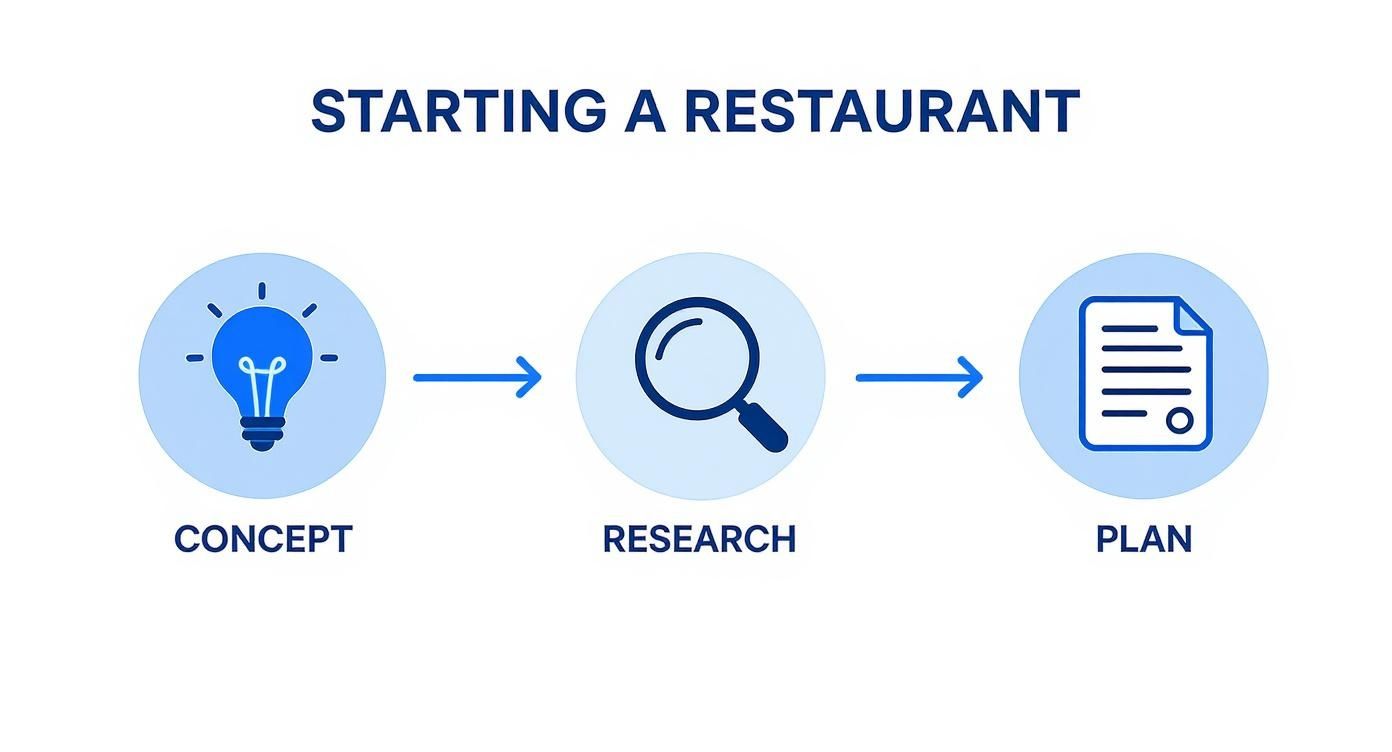
Opening a small restaurant starts with two essential ingredients: a strong concept that makes your business stand out and a well-structured business plan that keeps your goals clear. With the right preparation, you can turn a passion for food into a successful restaurant that attracts loyal customers and long-term profitability.
Table of Contents
- Defining Your Concept and Business Plan
- Securing Funding and Handling Legal Requirements
- Designing Your Menu and Choosing Suppliers
- Setting Up Your Kitchen and Dining Space
- Building Your Team and Operations
- Marketing Your Grand Opening
- Frequently Asked Questions
Defining Your Concept and Business Plan
Every successful restaurant begins with a clear concept. Your concept defines the atmosphere, cuisine style, and overall experience customers can expect. A strong concept helps differentiate your restaurant from competitors and creates a memorable brand identity.
Alongside the concept, a well-prepared business plan outlines your financial strategy, operational structure, and marketing approach. It acts as a roadmap for your restaurant’s growth and helps secure funding from lenders or investors.
Choose a Unique Restaurant Concept
Your concept should clearly define what makes your restaurant special. This could include specializing in a particular cuisine, offering a unique dining experience, or serving a specific community need.
- Specialized Cuisine: Focus on doing one cuisine exceptionally well.
- Unique Dining Experience: Create memorable environments such as themed dining or interactive service.
- Community-Focused Restaurants: Cater to specific groups such as families, professionals, or students.
Conduct Market Research
Before opening your restaurant, it’s essential to evaluate local demand and competition. Visit nearby restaurants, analyze menu pricing, and observe customer demographics. This research helps identify gaps in the market where your concept could succeed.
A strong restaurant concept placed in the wrong location often struggles to succeed. Market research ensures your idea aligns with real customer demand.
Create a Comprehensive Business Plan
A restaurant business plan should include financial projections, operational strategies, and marketing plans. Investors and lenders often review the financial section first, so your startup cost estimates and expected revenue projections must be accurate.
The global foodservice industry is projected to exceed $4.1 trillion by 2033. Despite the large market, restaurants typically operate with slim profit margins between 3% and 5%, making careful financial planning essential.
Startup Cost Estimates for Small Restaurants
| Expense Category | Estimated Cost Range |
|---|---|
| Licenses and Permits | $500 – $2,000 |
| Lease Deposit | $2,000 – $12,000 |
| Renovations | $10,000 – $75,000+ |
| Kitchen Equipment | $15,000 – $100,000 |
| POS System | $1,500 – $7,000 |
| Initial Inventory | $5,000 – $15,000 |
| Marketing and Branding | $2,000 – $8,000 |
| Staff Hiring and Training | $3,000 – $10,000 |
For a full guide on planning finances, see our restaurant business plan template.
Securing Funding and Handling Legal Requirements
Once your business plan is complete, the next step is securing funding and meeting legal requirements. Most restaurant owners rely on a mix of personal savings, loans, or investors to finance their startup costs.
Funding Options
- Bank Loans: Traditional loans typically require strong credit and collateral.
- SBA Loans: Government-backed loans that reduce lender risk.
- Private Investors: Individuals who invest capital in exchange for equity.
- Crowdfunding: Platforms that allow supporters to fund your restaurant concept.
Essential Licenses and Permits
- Business License
- Employer Identification Number (EIN)
- Food Service Permit
- Food Handler Certifications
- Liquor License (if applicable)
Design Your Menu and Choose Reliable Suppliers
Your menu defines your restaurant’s identity and profitability. A focused menu with carefully calculated pricing ensures consistency and reduces food waste.
Menu Costing and Pricing
Every dish should be priced based on ingredient cost and desired profit margin. Most restaurants aim for a food cost percentage between 28% and 35%.
Working with Food Suppliers
Reliable suppliers ensure consistent ingredient quality and delivery schedules. Many restaurants combine national distributors with local farms and specialty suppliers.
Learn more about supplier selection in our restaurant supplier guide.
Outfitting Your Kitchen and Dining Space
Designing your restaurant layout affects both operational efficiency and the guest experience. A well-organized kitchen reduces service delays, while an inviting dining room encourages repeat visits.
Essential Kitchen Equipment
Your kitchen will likely require refrigeration units, cooking ranges, prep stations, dishwashing equipment, and storage solutions. Many new restaurant owners combine new and used equipment to manage startup costs.
Designing the Dining Experience
Lighting, seating layout, decor, and music all contribute to the dining atmosphere. A well-designed dining space reinforces your brand identity and encourages customers to stay longer.
Building Your Team and Operational Systems
Your restaurant staff plays a critical role in delivering exceptional customer experiences. Hiring the right team and providing effective training ensures smooth daily operations.
Key Restaurant Roles
- Head Chef or Kitchen Manager
- Line Cooks
- Servers or Front-of-House Staff
- Dishwashers
Training and Retention
Consistent training ensures every customer receives the same quality service. Investing in a positive work environment and fair wages can also reduce employee turnover.
Marketing Your Grand Opening and Growing Your Brand
Marketing begins before your restaurant opens. Building excitement early helps ensure a successful launch and steady customer traffic afterward.
Pre-Launch Marketing
Share progress updates on social media, introduce your team, and show sneak previews of menu items to generate excitement before opening day.
Long-Term Marketing Strategies
- Optimize your Google Business Profile
- Encourage customer reviews
- Run targeted social media ads
- Build an email list for promotions
Frequently Asked Questions
How much does it cost to open a small restaurant?
The cost varies widely but typically ranges between $50,000 and $250,000 depending on location, renovations, and equipment needs.
How long does it take to open a restaurant?
Most restaurant openings take between 6 and 12 months from concept development to launch.
Do I need restaurant experience to open one?
While experience helps, many successful restaurant owners partner with experienced chefs or managers.
How Biyo Helps New Restaurants Operate Efficiently
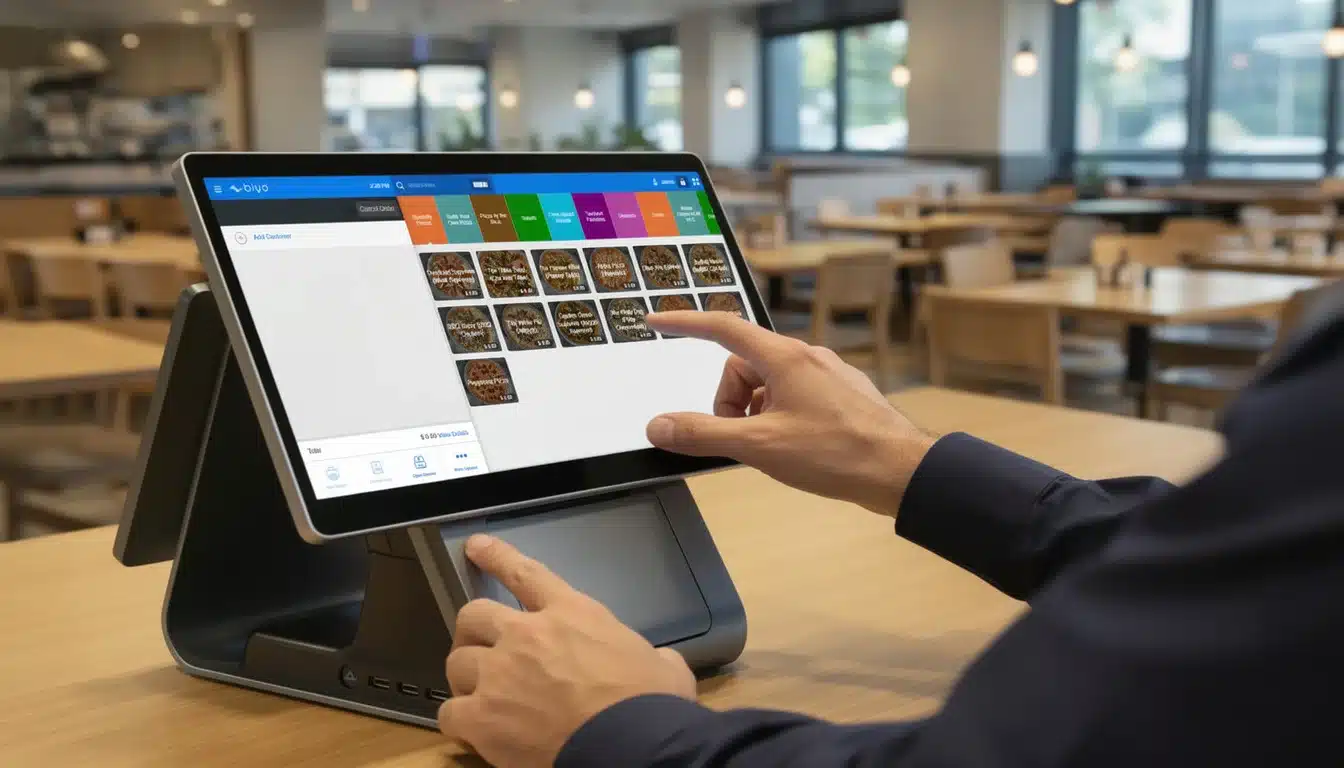
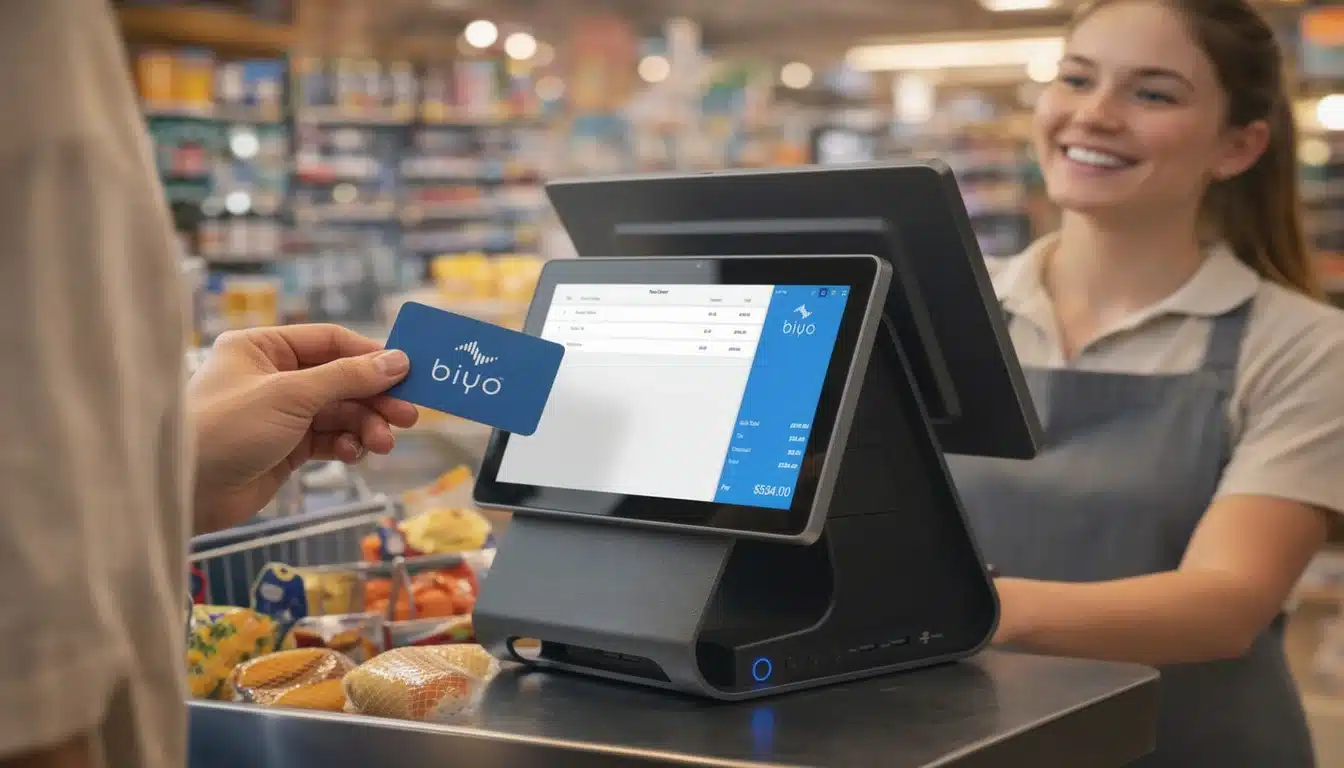
Opening a restaurant requires reliable technology to manage orders, inventory, and sales. Biyo POS provides restaurant owners with powerful tools to track sales, manage staff, and streamline operations.
With real-time analytics, menu management, and integrated reporting, Biyo POS helps restaurants improve efficiency while delivering better customer experiences.