Opening a small restaurant starts with two essential ingredients: a strong concept that makes your business stand out and a well-structured business plan that keeps your goals clear. While many aspiring restaurant owners focus primarily on food and recipes, long-term success depends on careful planning, financial management, operational efficiency, and customer experience. The restaurant industry can be highly rewarding, but it is also highly competitive, making preparation one of the most important factors in determining whether a new restaurant thrives or struggles.
A successful restaurant combines a clear vision with practical execution. From choosing a profitable concept and securing funding to hiring staff and marketing your opening, every decision contributes to the customer experience and the financial health of the business. Restaurants that enter the market with realistic budgets, efficient systems, and a strong understanding of their target audience are far more likely to build sustainable growth.
According to industry research, independent restaurants continue to represent a significant portion of the foodservice industry, yet many new establishments face challenges during their first few years. Common obstacles include underestimating startup costs, choosing poor locations, ineffective marketing, and insufficient operational planning. Understanding these challenges before opening can help entrepreneurs avoid costly mistakes.
This guide walks through every major step involved in opening a small restaurant, from creating a business concept and securing funding to designing menus, building a team, and attracting customers.
Table of Contents
- Defining Your Concept and Business Plan
- Securing Funding and Handling Legal Requirements
- Choosing the Right Restaurant Location
- Designing Your Menu and Choosing Suppliers
- Setting Up Your Kitchen and Dining Space
- Choosing Restaurant Technology and POS Systems
- Building Your Team and Operations
- Marketing Your Grand Opening
- Common Mistakes New Restaurant Owners Make
- How Biyo Helps New Restaurants Operate Efficiently
- Frequently Asked Questions
Defining Your Concept and Business Plan
Every successful restaurant begins with a clear concept. Your concept defines the atmosphere, cuisine style, pricing strategy, service model, and overall experience customers can expect. A strong concept helps differentiate your restaurant from competitors and creates a memorable identity that customers can easily recognize and remember.
Without a clear concept, it becomes difficult to make decisions regarding menu design, branding, marketing, pricing, staffing, and décor. Customers should immediately understand what your restaurant offers and why they should choose it over alternatives.
Choose a Unique Restaurant Concept
Your concept should clearly define what makes your restaurant special. This could include specializing in a particular cuisine, offering a unique dining experience, or serving a specific community need. The most successful restaurant concepts are often focused rather than attempting to appeal to everyone.
- Specialized Cuisine: Focus on doing one cuisine exceptionally well.
- Unique Dining Experience: Create memorable environments such as themed dining or interactive service.
- Community-Focused Restaurants: Cater to specific groups such as families, professionals, students, or health-conscious consumers.
- Fast-Casual Concepts: Combine convenience with higher-quality food offerings.
- Niche Dining Experiences: Focus on vegan, organic, gluten-free, or locally sourced menus.
Conduct Market Research
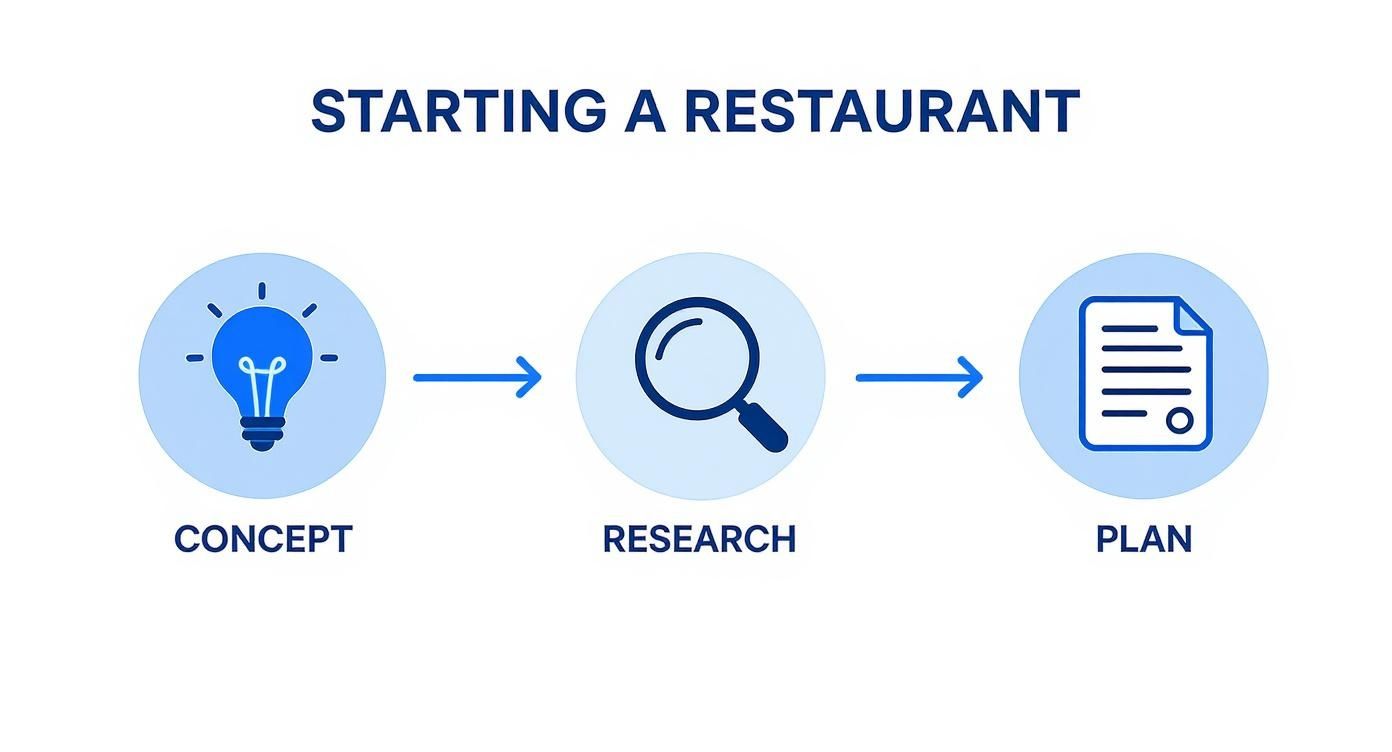
Before investing money into a restaurant, it is essential to understand your local market. Research should include customer demographics, nearby competitors, traffic patterns, spending habits, and dining preferences. A concept that performs well in one neighborhood may struggle in another.
Visit competing restaurants to evaluate menu pricing, customer volume, service quality, and marketing strategies. Understanding the strengths and weaknesses of competitors can reveal opportunities to position your restaurant differently.
A strong restaurant concept placed in the wrong location often struggles to succeed. Market research ensures your idea aligns with actual customer demand rather than assumptions.
Create a Comprehensive Business Plan
A restaurant business plan acts as both a strategic roadmap and a financial blueprint. It should outline startup costs, operating expenses, revenue projections, staffing plans, marketing strategies, and growth objectives. Lenders and investors typically review the business plan before providing funding.
The global foodservice industry is projected to exceed $4.1 trillion by 2033. Despite the industry’s size, restaurants often operate on relatively slim profit margins between 3% and 5%, making careful financial planning essential.
Startup Cost Estimates for Small Restaurants
| Expense Category | Estimated Cost Range |
|---|---|
| Licenses and Permits | $500 – $2,000 |
| Lease Deposit | $2,000 – $12,000 |
| Renovations | $10,000 – $75,000+ |
| Kitchen Equipment | $15,000 – $100,000 |
| POS System | $1,500 – $7,000 |
| Initial Inventory | $5,000 – $15,000 |
| Marketing and Branding | $2,000 – $8,000 |
| Staff Hiring and Training | $3,000 – $10,000 |
For a full guide on planning finances, see our restaurant business plan template.
Securing Funding and Handling Legal Requirements
Once your business plan is complete, the next step is securing funding and meeting legal requirements. Most restaurant owners rely on a combination of personal savings, business loans, investors, or alternative funding sources to finance startup expenses.
Obtaining sufficient capital is critical because many restaurants require several months before generating consistent profitability. Having adequate reserves helps cover payroll, rent, utilities, and inventory during the early stages of operation.
Funding Options
Restaurant financing comes from various sources, each with advantages and limitations. Entrepreneurs should carefully evaluate funding options based on repayment terms, ownership implications, and long-term business goals.
- Bank Loans: Traditional financing with fixed repayment schedules.
- SBA Loans: Government-backed loans designed for small businesses.
- Private Investors: Capital provided in exchange for ownership equity.
- Crowdfunding: Community-supported fundraising platforms.
- Personal Savings: Self-funding that avoids debt but increases personal risk.
Essential Licenses and Permits
Restaurant regulations vary by location, but most businesses require several licenses before opening. Failure to obtain proper permits can result in fines, delays, or closure.
- Business License
- Employer Identification Number (EIN)
- Food Service Permit
- Food Handler Certifications
- Health Department Approval
- Fire Department Inspection
- Liquor License (if applicable)
Choosing the Right Restaurant Location
Location remains one of the most important factors influencing restaurant success. Even excellent food and service may struggle if the restaurant lacks visibility, accessibility, or customer demand.
When evaluating locations, consider traffic volume, parking availability, nearby businesses, competition, demographics, and rental costs. The best location is not necessarily the cheapest one—it is the one that aligns most closely with your target customer base.
Restaurants located near office buildings may benefit from lunch traffic, while locations near residential neighborhoods may perform better during evenings and weekends. Understanding local customer behavior helps determine whether a site supports your concept.
Designing Your Menu and Choosing Suppliers
Your menu defines your restaurant’s identity and directly influences profitability. A focused menu with carefully calculated pricing helps maintain consistency, control food costs, and reduce waste.
Menu Costing and Pricing
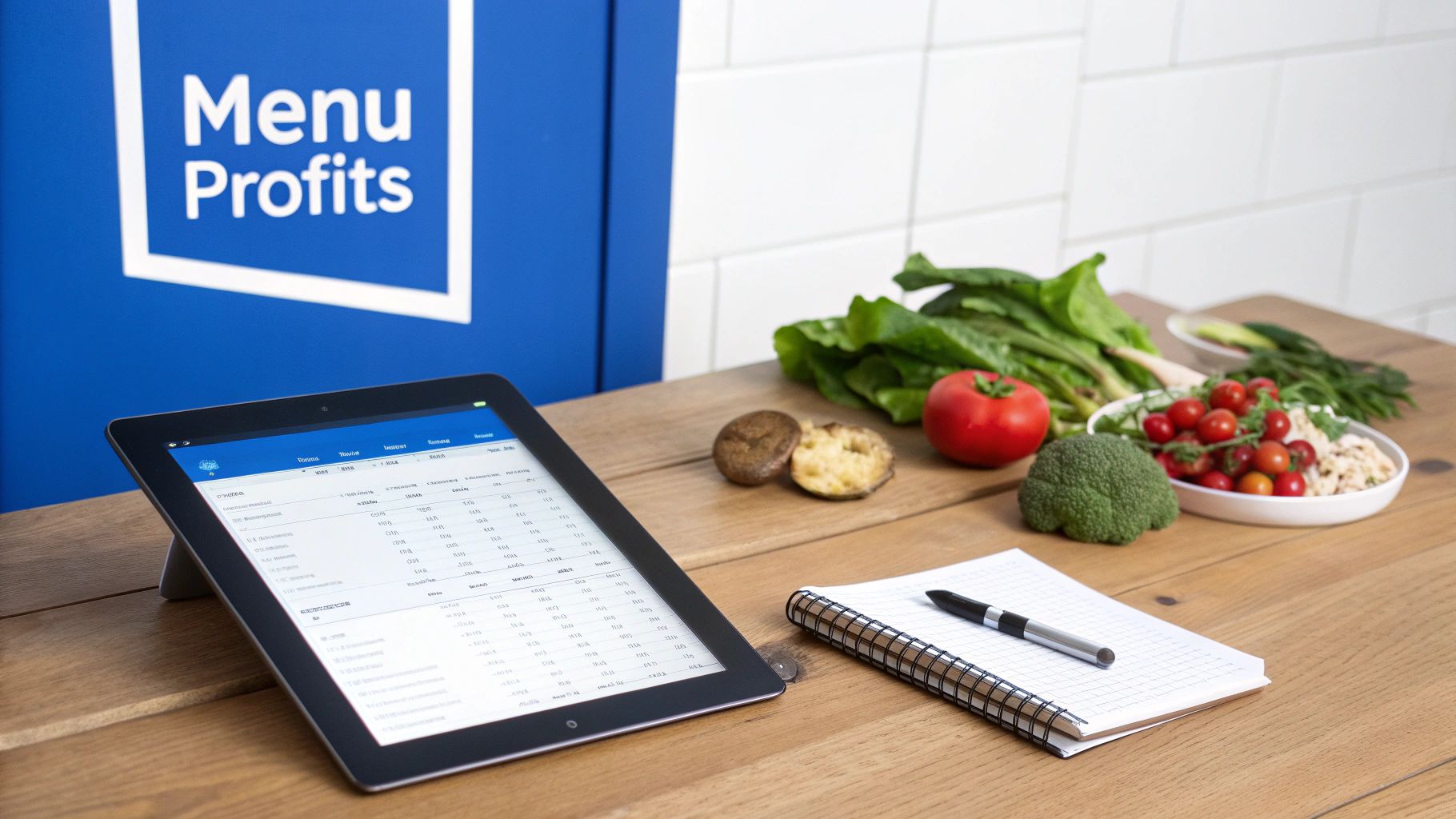
Every menu item should be analyzed based on ingredient cost, preparation time, labor requirements, and desired profit margins. Most restaurants target food cost percentages between 28% and 35%, although this varies by concept.
Menu engineering helps identify high-profit and low-profit items, allowing restaurant owners to optimize pricing and promotional strategies. Regular menu reviews help maintain profitability as ingredient costs fluctuate.
Working with Food Suppliers
Reliable suppliers play a critical role in maintaining product quality and consistency. Establish relationships with vendors who can provide dependable delivery schedules, competitive pricing, and consistent ingredient quality.
Many successful restaurants combine national distributors with local suppliers to balance cost efficiency and product uniqueness.
Learn more about supplier selection in our restaurant supplier guide.
Setting Up Your Kitchen and Dining Space
Restaurant layout affects both operational efficiency and customer satisfaction. A poorly designed kitchen slows service, while an uncomfortable dining area discourages repeat visits.
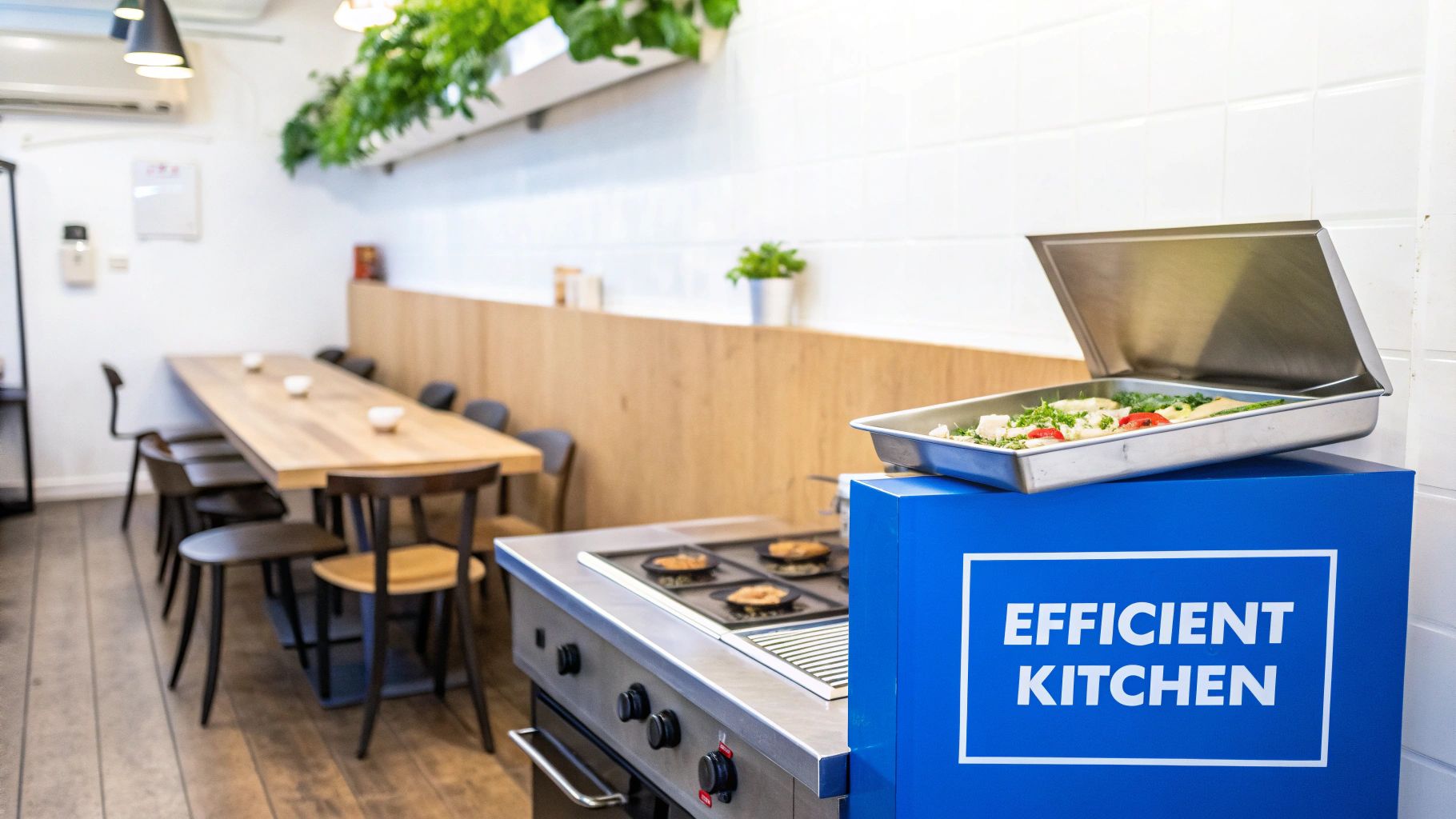
Essential Kitchen Equipment
The equipment required depends on your menu and service style. Most restaurants require refrigeration systems, ovens, cooking ranges, preparation tables, storage solutions, and dishwashing equipment.
Investing in reliable equipment reduces maintenance issues and improves operational consistency. Some restaurant owners purchase used equipment to reduce startup expenses, provided it meets health and safety requirements.
Designing the Dining Experience
Customers evaluate more than food when visiting a restaurant. Lighting, music, seating arrangements, temperature, décor, and cleanliness all influence the overall experience.
A thoughtfully designed dining room reinforces your brand identity and encourages positive reviews, repeat visits, and customer loyalty.
Choosing Restaurant Technology and POS Systems
Modern restaurants rely heavily on technology to manage operations efficiently. A reliable POS system serves as the operational hub for sales, inventory, reporting, employee management, and customer engagement.
Restaurants using modern POS technology gain better visibility into sales performance, labor costs, inventory usage, and customer preferences. These insights support smarter business decisions and improve profitability.
Additional technology solutions may include online ordering systems, reservation platforms, kitchen display systems, loyalty programs, and digital payment options.
Building Your Team and Operations
Your employees are responsible for delivering the customer experience that ultimately determines whether guests return. Hiring carefully and investing in training creates operational consistency and stronger customer satisfaction.
Key Restaurant Roles
- Head Chef or Kitchen Manager
- Line Cooks
- Prep Cooks
- Servers or Front-of-House Staff
- Hosts and Hostesses
- Dishwashers
- Restaurant Managers
Training and Retention
Comprehensive training ensures every employee understands service standards, food safety procedures, and operational expectations. Consistency across shifts improves customer experiences and reduces costly mistakes.
Employee retention also matters. High turnover increases recruiting and training expenses while disrupting service quality. Creating a positive work environment often leads to stronger team performance and lower turnover rates.
Marketing Your Grand Opening and Growing Your Brand
Marketing should begin long before opening day. Building anticipation creates awareness and helps generate traffic immediately after launch.

Pre-Launch Marketing
Use social media to document construction progress, introduce team members, showcase menu development, and share behind-the-scenes content. Early engagement helps establish a community before opening.
Long-Term Marketing Strategies
- Optimize your Google Business Profile
- Encourage customer reviews
- Run targeted social media campaigns
- Develop loyalty programs
- Build an email marketing list
- Partner with local organizations and events
Restaurants that consistently market themselves often maintain stronger customer awareness and more stable traffic throughout the year.
Common Mistakes New Restaurant Owners Make
Many restaurant owners enter the industry with enthusiasm but underestimate the complexity of running a profitable operation. Recognizing common mistakes early can significantly improve long-term success.
One common error is creating an overly large menu. Extensive menus increase inventory costs, waste, training complexity, and kitchen inefficiencies. Focused menus often outperform larger ones.
Another frequent mistake is underestimating operating expenses. Rent, labor, utilities, insurance, repairs, and inventory costs add up quickly. Maintaining cash reserves is essential during the early months.
Poor hiring decisions can also affect service quality and team morale. Investing time in recruitment and training often pays significant dividends later.
Finally, many restaurants neglect marketing after opening. Continued promotion is necessary to maintain visibility and attract new customers consistently.
How Biyo Helps New Restaurants Operate Efficiently
Opening a restaurant requires more than great food—it requires efficient systems that help owners manage sales, inventory, employees, and customer experiences. Biyo POS provides restaurant operators with tools designed to simplify daily operations and support long-term growth.
With Biyo POS, restaurant owners can track sales in real time, manage menus, monitor inventory levels, generate detailed reports, and gain valuable insights into business performance. These features help reduce operational inefficiencies while improving decision-making.
Restaurants can also benefit from streamlined order management, staff accountability tools, and analytics that identify trends and opportunities for growth. By centralizing operational data, Biyo helps restaurant owners spend less time managing systems and more time focusing on customers.
Businesses interested in learning more can schedule a consultation with Biyo POS. Restaurant owners ready to explore the platform can also create an account and get started.
Frequently Asked Questions
How much does it cost to open a small restaurant?
The cost varies depending on location, concept, equipment needs, and renovations. Many small restaurants require between $50,000 and $250,000 to open, although some concepts may require significantly more.
How long does it take to open a restaurant?
Most restaurant openings take between six and twelve months from concept development to launch, depending on permits, construction, staffing, and funding.
Do I need restaurant experience to open one?
Restaurant experience is helpful but not mandatory. Many successful owners partner with experienced chefs, managers, or consultants to strengthen operational expertise.
What is the biggest challenge for new restaurant owners?
Managing cash flow is often one of the biggest challenges. Careful budgeting, inventory control, and labor management are essential for long-term sustainability.
How many employees does a small restaurant need?
Staffing requirements vary by concept and operating hours. Many small restaurants operate with teams ranging from 5 to 25 employees.
How important is location when opening a restaurant?
Location is one of the most critical factors influencing success. Visibility, accessibility, customer demographics, and traffic patterns all impact restaurant performance.
Should I buy new or used restaurant equipment?
Many restaurant owners use a combination of both. New equipment offers warranties and reliability, while used equipment can significantly reduce startup costs.
What profit margin should a restaurant target?
Most restaurants operate with net profit margins between 3% and 10%, depending on concept, location, efficiency, and cost control.