How to Prevent Retail Theft in Your Store

How to Prevent Retail Theft in Your Store

Preventing retail theft isn't about turning your store into a fortress. It's about creating a smarter environment—one that subtly discourages theft while actually making the shopping experience better for your honest customers. This means weaving together intelligent store design, a sharp and well-trained team, and the right technology.

Building a Smart Defense Against Retail Theft

Let's be honest: retail theft is a persistent, frustrating problem. The financial hit is bad enough—a huge number of retailers report losing anywhere from $500 to $2,500 every month. But the real damage goes deeper. It chips away at employee morale, erodes customer trust, and can throw your whole operation off balance.

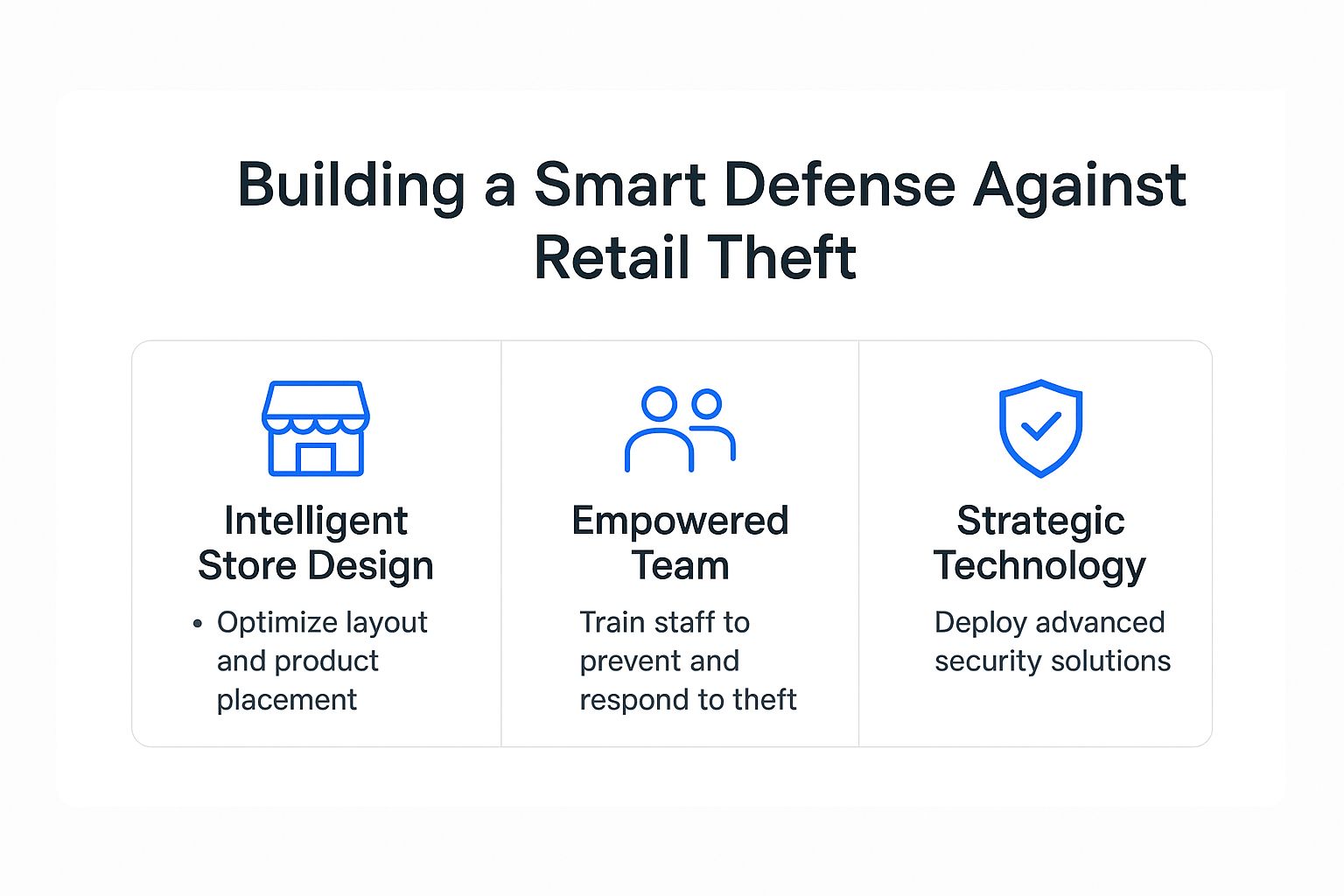
A truly effective defense isn't just one thing; it's a combination of several key pillars working together. Think of it as a three-pronged strategy.

Infographic about how to prevent retail theft

As you can see, no single solution does the trick. Lasting success comes from integrating smart store design, an empowered team, and strategic technology into one cohesive system.

Understand Who You're Up Against

Before you can build a solid defense, you have to know what you’re defending against. Not all theft is created equal, and different threats demand different responses. Broadly speaking, you'll face two main types of thieves.

  • Opportunistic Shoplifters: These are the impulse thieves. They usually work alone and might pocket a single high-value item or grab something when they think no one is looking. Their methods are typically simple and not well-planned.
  • Organized Retail Crime (ORC): This is a whole different ballgame. ORC involves coordinated groups, often called "rings," that steal massive quantities of specific products to resell them. Their tactics are calculated, often involving choreographed distractions, large foil-lined bags, and sometimes aggressive behavior.

The rise of ORC is a serious concern for every retailer. We're seeing nationwide crackdowns involving major retailers and law enforcement that have led to hundreds of arrests across 28 states, which really underscores the scale of this problem.

Key Theft Tactics and How to Counter Them

The first step to stopping theft is recognizing how it happens. Each method has its own signature, which means each has a specific counter-strategy that works best as a first line of defense.

A proactive security posture begins with anticipating threats. By identifying the most common theft tactics, you can fortify your weakest points before they are exploited.

To give you a clearer picture, I've put together a quick table outlining common theft methods and the best initial strategies to shut them down.

Retail Theft Prevention at a Glance

Type of Theft Primary Prevention Strategy Key Focus Area
Concealment Attentive Customer Service Staff visibility and engagement on the floor.
Distraction Zone Coverage Training Ensuring all areas of the store remain monitored during an incident.
Internal Theft POS Analytics & Audits Identifying unusual transaction patterns (voids, returns, discounts).

Let's break these down a bit further.

Concealment is the classic shoplifting move—hiding merchandise in a bag, under a coat, or even inside another product's box. The single most effective counter is simply great customer service. When your staff is visible, active, and engaging with shoppers, it makes would-be thieves feel seen and incredibly uncomfortable.

Distraction is a favorite tactic of organized groups. One person will create a scene—maybe a loud argument, a staged spill, or asking for help with a complex issue—to pull employees' attention. While everyone is focused on the commotion, another person steals merchandise. The key to stopping this is training your team on zone coverage. Not everyone should rush to one spot, leaving other areas of the store wide open.

Internal theft can be sneaky and damaging, from an employee processing fake returns for cash to "forgetting" to scan items for their friends. Your primary defense here is technology. Robust point-of-sale (POS) analytics and regular inventory checks can flag patterns the human eye would miss, like an unusual number of voids or discounts linked to a specific cashier.

Understanding these dynamics is where it all starts. When you can spot the difference between a casual shoplifter and a coordinated ORC group, you're already on your way to building security measures that actually work.

Designing Your Store Layout for Security

Your store's layout is your first line of defense against theft, and it's one of the most powerful tools you have. Long before a customer ever sees a camera or interacts with an employee, the design of your space is already sending a clear message. A smart floor plan does more than just look good; it actively discourages theft by making it harder for people to act without being seen.

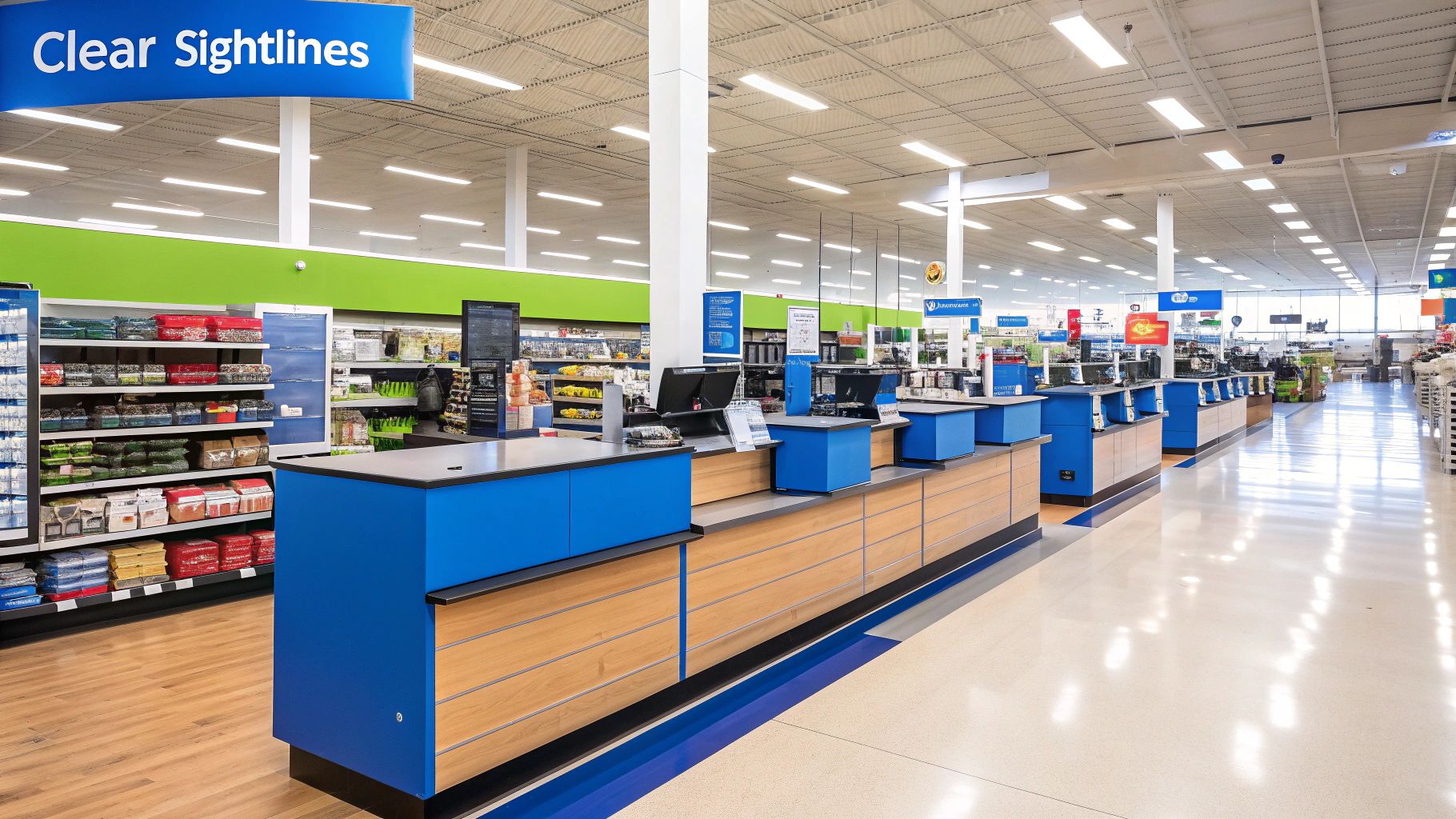
A well-lit and organized retail store with clear sightlines

It all boils down to one simple idea: make potential thieves feel visible. Uncomfortable, even. This starts by getting rid of obstructions. Your cash wrap should be your command center, giving you and your team a clear line of sight to the entrance, exits, and most of the sales floor. Ditch the tall, bulky displays that create hiding spots.

Eliminating Blind Spots and High-Risk Zones

Every store has them—those little nooks and crannies shielded from view by shelving, pillars, or just an awkward corner. These are magnets for theft, and your job is to systematically hunt them down and eliminate them.

One of the best, and cheapest, ways to do this is with convex mirrors. Placed strategically at the end of long aisles or in tricky corners, these mirrors instantly open up your field of view. They're also a very visible reminder that someone is always watching.

Think about the natural flow of traffic in your store. Where do people linger? Where are they out of sight? The usual suspects for high-risk zones include:

  • Fitting Rooms: The classic spot for snipping tags and stuffing items into a bag.
  • Dead-End Aisles: They offer a quiet, private space that shoplifters love.
  • Cluttered Corners: A chaotic pile of merchandise provides the perfect cover for someone to pocket an item or two.

Once you’ve identified these problem areas, you can fix them. Turn that dead-end aisle into a loop that forces traffic to flow through it. Place a key employee workstation near a historically risky corner. Small changes can completely alter the security dynamic.

A clean, bright, and organized store doesn't just feel better to shop in—it's a powerful psychological deterrent. An environment that looks well-cared-for sends a message that the staff is attentive, making potential thieves think twice.

Strategic Merchandise Placement

It's not just about how your aisles are arranged; it's also about what you put in them. Your most vulnerable assets are those high-value, easy-to-pocket items. Leaving them in a quiet back corner is practically begging for trouble.

Instead, pull those items front and center. Place them in high-traffic, high-visibility spots, especially near your cash registers where they’re under constant watch. If they have to be on the sales floor, keep them on lower shelves or, even better, in locked display cases that require an employee to open. That forced interaction is often all it takes to deter a theft.

A well-organized store also makes it easier for your team to spot when something's wrong. When every product has its home, a missing item sticks out like a sore thumb. This level of order should extend beyond your sales floor, too. To tighten security from the moment inventory arrives, check out these effective stockroom organization strategies.

Designing Secure Customer Journey Points

Think through the path a customer takes in your store. There are a few key touchpoints you can easily secure without creating a poor shopping experience.

Fitting Rooms
There's a reason retailers limit how many items a customer can take into a fitting room—it works. Have an attendant manage the area, counting items on the way in and on the way out. Pay attention to the doors, too. Make sure there aren't large gaps at the top or bottom that could be used to pass merchandise to an accomplice.

Checkout Queues
Even the design of your checkout line can help prevent last-minute thefts. Single-line "serpentine" queues that feed into multiple registers are fantastic. They keep people moving forward and under observation as they approach the point of sale, cutting down on the chances someone will ditch merchandise or make a run for it.

At the end of the day, a security-conscious layout makes honest customers feel welcome while making potential thieves feel exposed. It’s a silent security guard that’s on duty 24/7.

Empowering Your Team as Your Best Asset

You can install all the cameras and alarms in the world, but your people will always be your most powerful asset in the fight against theft. They’re on the floor, they’re interacting with shoppers, and they have the intuition to spot when something just isn’t right. A well-trained team is more than just a deterrent; they're your dynamic, thinking, and most responsive line of defense.

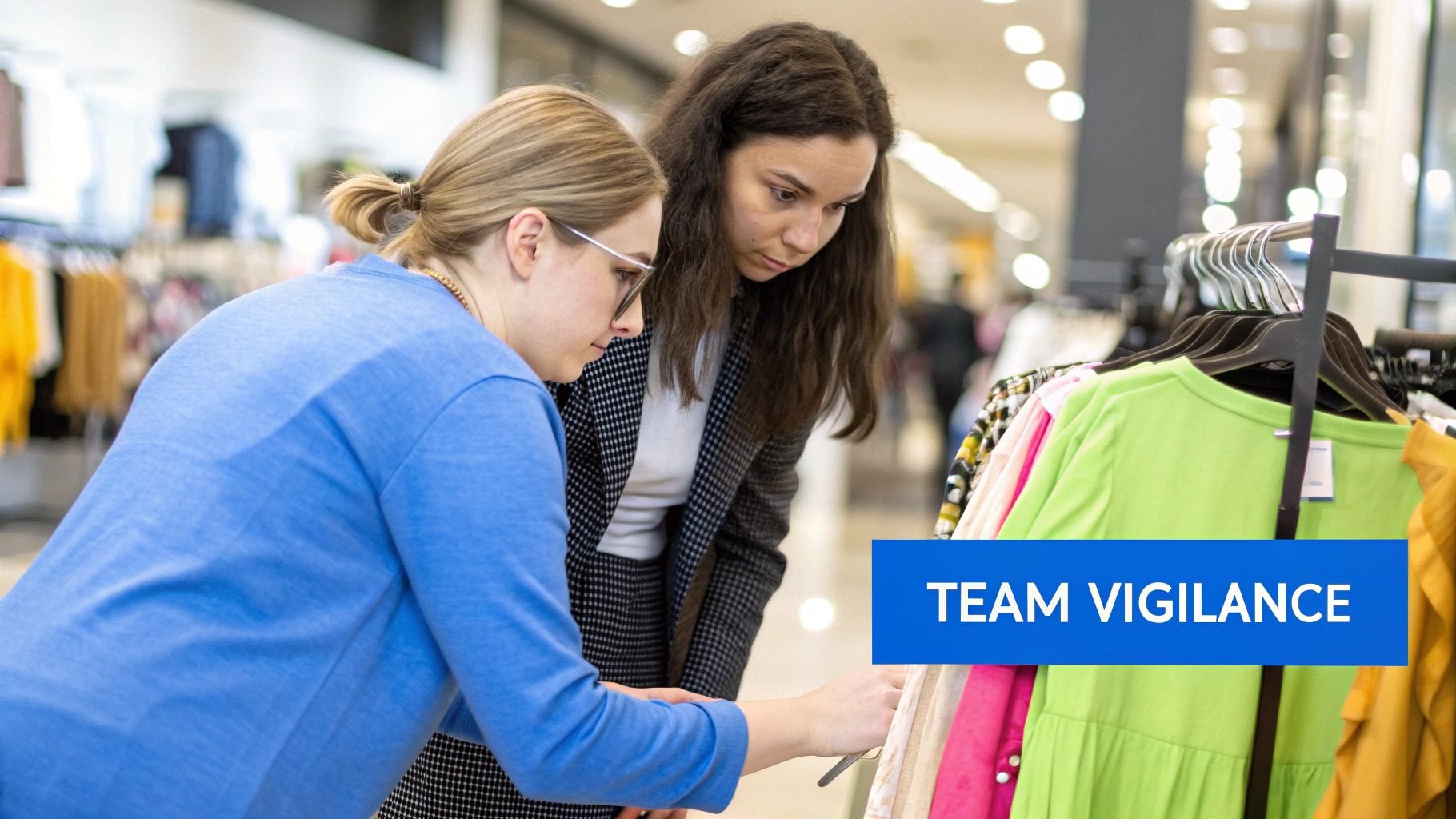
A retail employee assisting a customer in a well-organized store.

The goal isn't to turn your cashiers and stockers into security guards. It’s about building their confidence and giving them the skills to spot and respond to potential threats safely and effectively. It’s about transforming them from passive observers into active partners in loss prevention.

Turn Proactive Customer Service Into a Deterrent

Your team's most effective tool is something they should already be doing: providing exceptional customer service. We often call this "aggressive hospitality," and it's a simple but brilliant strategy. The idea is to make sure every single person who walks through your doors feels seen.

A simple, "Hi, welcome! Let me know if you need help finding anything," or even just making direct eye contact is often all it takes. To a regular customer, it's just friendly service. To someone planning to shoplift, it’s a bright, flashing sign that says, "I see you." That single interaction can be enough to make them rethink their plan and walk right back out.

Teach Your Team to Spot Behaviors, Not People

This is critical: you must train your team to recognize suspicious behaviors, not to profile people. Profiling is not only wrong and alienating to good customers, but it's also just plain ineffective. The real red flags are in the actions, not the appearance.

Here are a few classic behaviors your team should know how to spot:

  • Watching the Watchers: They seem far more interested in the cameras, staff members, and store layout than the actual products.
  • Creating Chaos: Often working in groups, one person will cause a scene or a distraction to pull staff attention while another person conceals merchandise.
  • Bringing the Right Tools: Carrying oversized, empty bags, backpacks, or foil-lined "booster bags" is a huge giveaway.
  • Nervous Energy: People who are constantly fidgeting, avoiding eye contact at all costs, or darting away when an employee gets close.

It's vital to stress that these are just indicators, not proof of a crime. The correct response is always to approach and offer help. This either assists a legitimate customer or deters the potential thief—a win-win. To make this training stick, you can explore new technologies like augmented reality for training, which lets staff practice these skills in realistic, immersive scenarios without any real-world risk.

Create and Drill Clear Protocols

When your team suspects a theft is happening, the last thing you want is confusion. Ambiguity leads to bad decisions and puts people at risk. Your store needs a rock-solid, non-negotiable set of rules for handling both internal and external theft.

A well-defined protocol removes the guesswork during a high-stress incident. It ensures every employee knows their exact role, their limitations, and the precise steps to take to maintain safety for everyone.

For example, the most important rule should be crystal clear: employees must never physically confront or try to stop a shoplifter. Their personal safety is always the number one priority, period. The policy should instead give them a playbook for observing, communicating, and reporting.

Real-World Scenario: The Distraction Team
Let's say a team of three comes in. Person A starts a loud, complicated argument at the checkout. At the same time, Person B pulls an employee to the back of the store with a dozen questions. This leaves Person C free to start loading a bag with high-value items.

A trained employee knows exactly what to do:

  1. Spot the Play: They immediately recognize this as a coordinated distraction tactic.
  2. Hold Your Ground: Staff avoid rushing to one problem, which would leave the rest of the store unprotected.
  3. Alert the Team: They use a predetermined code word over the headset ("Can I get a price check in aisle three?") to discreetly alert management and other staff.
  4. Observe & Document: From a safe distance, the employee notes descriptions of the people involved and what they took.
  5. Follow Procedure: They contact the manager or security as outlined in the store protocol, never escalating the situation themselves.

This kind of structured response keeps everyone safe while ensuring you have the details needed for a police report. The impact of this human element is huge. Retailers who truly invest in these training programs have seen as much as a 15% drop in losses from shoplifting. This is especially important today, as some hard-hit stores are now locking up 35% of their inventory, a move that can frustrate honest shoppers and underscores the need for vigilant, well-trained staff.

Using Technology as Your Eyes and Ears

https://www.youtube.com/embed/njS1HiywPUg

While a well-trained team is your first line of defense, technology is the silent partner that never sleeps. The right tech stack works 24/7 to deter thieves, capture evidence, and reveal patterns a busy manager might miss. Think of it as a layered security system where each piece of technology makes the others more powerful.

The whole idea is to build layers of protection that cover different weak spots, from the front door and the sales floor all the way back to the stockroom. Integrating these tools smartly is what separates a truly secure store from one that just looks secure.

Smart Cameras Are More Than Just Recorders

Today's security cameras are a world away from the grainy, passive recorders of the past. High-definition is now the bare minimum, giving you crystal-clear images that are actually useful for identifying people and helping police.

But the real leap forward has been the integration of artificial intelligence. AI-powered cameras don't just record—they actively watch for trouble.

  • Spotting loiterers: The system can flag someone hanging around a high-value display case for too long.
  • Catching "sweepers": It can identify the classic grab-and-go tactic where a thief clears an entire shelf in seconds. This is a huge help against organized retail crime.
  • Identifying known offenders: Some systems use facial recognition to discreetly alert your team the moment a known shoplifter walks through the door.

These AI interventions are making a real difference. In fact, retailers using facial recognition have reported a 30% drop in repeat offenders. And we need every tool we can get—shoplifting incidents in the U.S. have skyrocketed by 93% since 2019, making a strong tech defense absolutely essential.

Making Electronic Article Surveillance (EAS) Work for You

Those security tags and towers at the exit—Electronic Article Surveillance (EAS)—are a classic for a reason: they work. The concept is simple. A tag on an item triggers an alarm if it passes through the exit sensors without being deactivated at the register.

But if you’ve ever been in a store with a constantly beeping alarm that everyone ignores, you know a poorly run EAS system is useless. To make it a real deterrent, you have to be smart about it.

  • Use the right tags for the right products. Sturdy hard tags are perfect for clothing, while subtle adhesive labels are better for electronics or packaged goods.
  • Train your staff properly. Everyone needs to know how to apply, deactivate, and remove tags correctly. This cuts down on false alarms that frustrate honest customers and create "alarm fatigue" for your team.
  • Have a plan for when the alarm goes off. Your team needs a consistent, non-confrontational script. The goal is customer service, not accusation. Something simple like, "Hi, it looks like we may have missed a security tag. Could I help you with that?" works wonders.

A well-managed EAS system is a powerful psychological weapon. Just seeing the tags and towers is often enough to make a potential thief think twice and move on to an easier target.

Finding Theft in Your Sales Data

Some of your biggest losses can come from right behind the counter. Internal theft is a tricky problem, but your Point of Sale (POS) system holds the key to uncovering it. Modern POS analytics can automatically flag suspicious transactions that are almost impossible to catch by hand.

Keep an eye out for red flags like:

  • A single employee processing an unusually high number of voids, returns, or refunds.
  • Someone consistently using employee discounts more than anyone else.
  • Frequent "no sale" transactions that open the cash drawer for no reason.

This isn't about playing "gotcha." It's about using data to spot irregularities. It gives you the concrete information you need to investigate discreetly or simply have a conversation with an employee to review procedures. This data is also directly linked to your stock counts. You can learn more about how to track your stock effectively with our guide on what is inventory management software.

Ultimately, these digital tools work together to create a robust security net. But don't forget about physical security. For threats like ram-raids, retailers should also look into how innovative parking bollard technologies can bolster their defenses. When you pair smart digital surveillance with strong physical deterrents, you create a truly formidable security posture.

Securing Your Point of Sale and Checkout

Think of your checkout area as the final line of defense. It's the last chance you have to stop merchandise from walking out the door unpaid, making it a hotspot for both shoplifters and dishonest employees. Fortifying your point of sale (POS) isn't just about taking payments—it's about plugging security gaps where you're most vulnerable.

This critical zone has changed a lot, especially with the rise of self-service. While convenient, this shift has opened up a Pandora's box of theft-related issues.

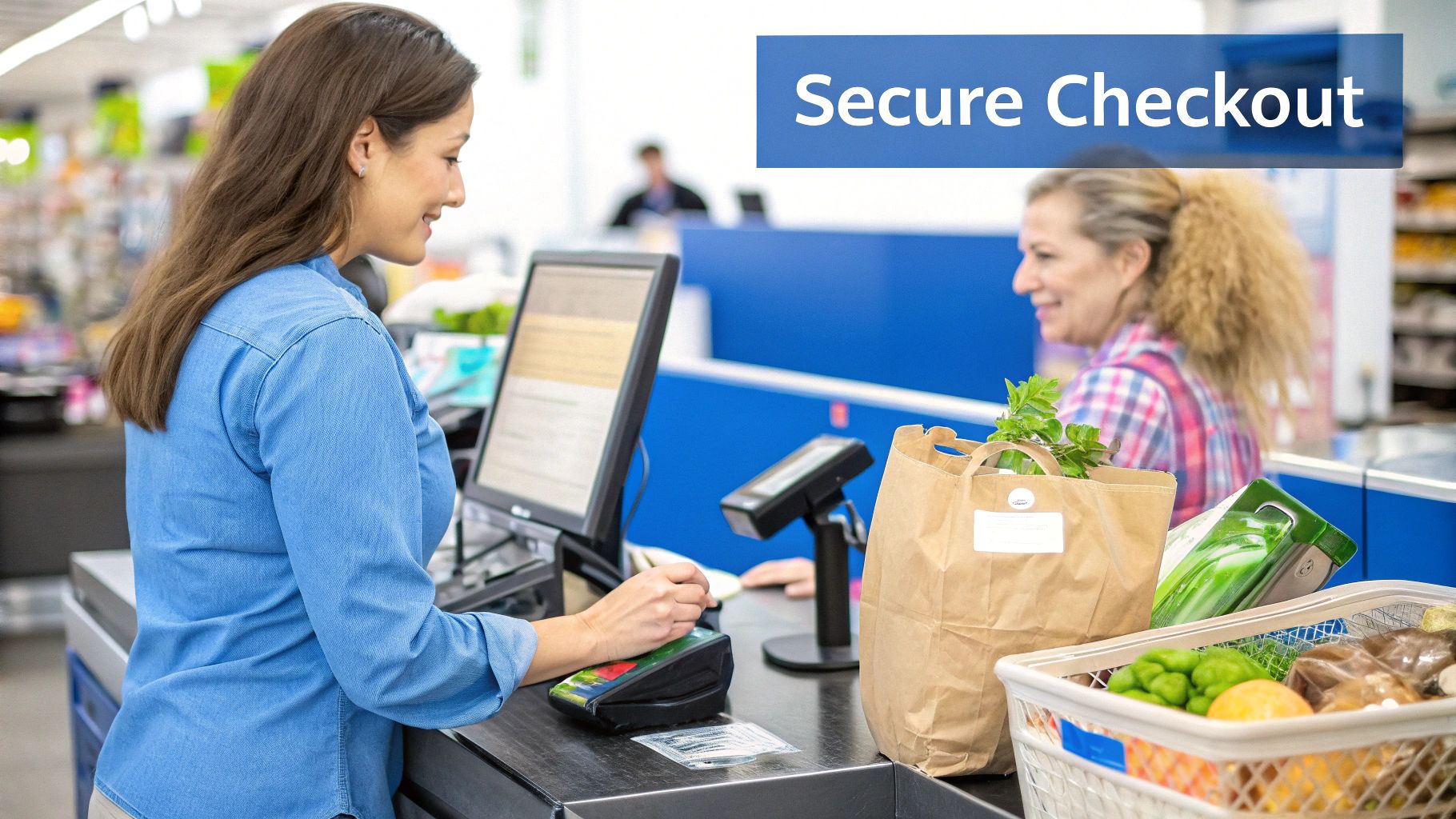
A modern, secure point of sale terminal in a retail store

The industry's experiment with self-checkout has been a real eye-opener. Research shows that in the U.S., self-checkout is responsible for a staggering 20–25% of all unknown store losses. It's no wonder big players are rethinking their strategies. Target now limits its self-checkout lanes to 10 items or less, and Dollar General saw a major drop in shrink just months after pulling the plug on self-checkout in most of its stores.

Rethinking Self-Checkout Vulnerabilities

Self-checkout stations create a unique set of problems. Without an employee watching every scan, it becomes incredibly easy for people to make "mistakes"—whether intentional or not. They might mis-scan an item, use a barcode from a cheaper product (the classic "banana trick"), or just forget to scan a few things at the bottom of the cart. This is often called "pass-through" theft.

To tackle these risks without completely ditching the convenience customers love, many retailers are finding a middle ground.

  • Set Item Limits: When you cap self-checkout at 10 or 15 items, it's much harder for a thief to sneak a large haul through unnoticed.
  • Station an Attendant: Having a dedicated employee actively monitoring the self-checkout area is non-negotiable. Their job isn't just troubleshooting—it's to be a visible deterrent.
  • Bring in AI Monitoring: Modern systems are a game-changer. They use cameras and AI to spot when an item is bagged but not scanned, instantly alerting the staff member on duty.

Fortifying Traditional Checkout Lanes

Even at a traditional cashier-run checkout, you're not out of the woods. Internal theft and return fraud are constant threats. Your POS system is your best friend here, but you need to know what to look for. The right system can make all the difference; it's worth exploring the best retail POS software with built-in inventory management to see how powerful an integrated setup can be.

Data analytics from your POS can quickly shine a light on suspicious employee behavior.

Your POS data tells a story about every transaction. By learning to read that story, you can spot the telltale signs of internal theft long before they become a major financial drain.

Keep an eye out for red flags. Is one employee logging an unusually high number of voids, manual discounts, or "no sale" transactions? These are classic moves to cover up cash skimming or giving deep discounts to friends and family.

To really lock down your traditional checkout, you need clear, firm procedures. For example, make it a rule that a manager must approve any return without a receipt or any voided sale over a specific amount. On top of that, running regular, unannounced cash drawer audits keeps everyone honest. By securing every part of the transaction, you build a checkout process that protects your bottom line from every possible angle.

Common Questions on Preventing Retail Theft

When you start putting a loss prevention strategy into action, a lot of practical questions bubble up. Getting solid answers is what separates a plan on paper from one that actually works on your sales floor, protecting your inventory without killing the customer experience.

How Can I Prevent Theft Without Making Honest Customers Feel Policed?

This is the classic balancing act, isn't it? The best tool you have here isn't a camera or a tag—it's phenomenal customer service.

Seriously. Train your team to greet everyone who walks through the door with a genuine hello and an offer to help. Some people call it "aggressive hospitality," and it works because it makes honest shoppers feel seen and valued, while simultaneously telling potential thieves, "We see you." That simple bit of human interaction is a powerful deterrent.

When it comes to technology, think subtle. Modern security cameras are tiny and can blend right in. Instead of slapping every expensive item in a locked case, look into things like security tethers or low-profile EAS tags. This way, customers can still touch and feel the products, which is crucial for sales, but you've still got a layer of protection. The vibe you're going for is attentive and helpful, not suspicious and locked-down.

What Are the Biggest Red Flags for Employee Theft?

Internal theft is tricky because it's often buried in your everyday data. Your Point-of-Sale system is your best friend here, but you have to know what you're looking for. It's all about spotting the patterns that just don't add up.

Keep an eye out for these tell-tale signs:

  • A suspicious number of voids or returns: Is one cashier constantly voiding sales, hitting "no sale" to open the drawer, or processing a ton of refunds? That's a classic red flag.
  • Inventory holes: Are you consistently short on stock in one particular area or after a specific person’s shift? That’s not a coincidence; it's a lead.
  • Weird behavior: Watch for employees who get territorial about their register, refuse to let anyone else handle their cash drops, or seem to have a constant stream of friends and family coming through their line.

Regular, random cash drawer audits and actually using the analytics your POS system provides are the best ways to catch these things early. You can stop a small problem before it turns into a massive loss.

A consistent and transparent process for monitoring transactions is key. It doesn't just protect your business; it protects your honest employees from ever being unfairly suspected.

Should I Prosecute Every Shoplifter We Catch?

This is a tough one, and honestly, there's no single right answer. It's a business decision that really depends on your local laws and your relationship with the police.

A "zero-tolerance" policy sounds great in theory, but in practice, prosecution can be a huge drain on your resources. It costs money and pulls you and your managers off the floor for hours at a time.

Many experienced retailers take it case by case. Think about the value of what was stolen. Is this a kid who swiped a candy bar, or part of an organized ring that just cleared out a whole shelf? For a minor, first-time offense, a ban from the store might be the most effective solution. But for high-value theft or repeat offenders, you absolutely have to bring in law enforcement to send a message that you’re not an easy target.

My best advice? Go have a conversation with your local police. Understanding their priorities will help you create a policy that makes sense for your store and your community.


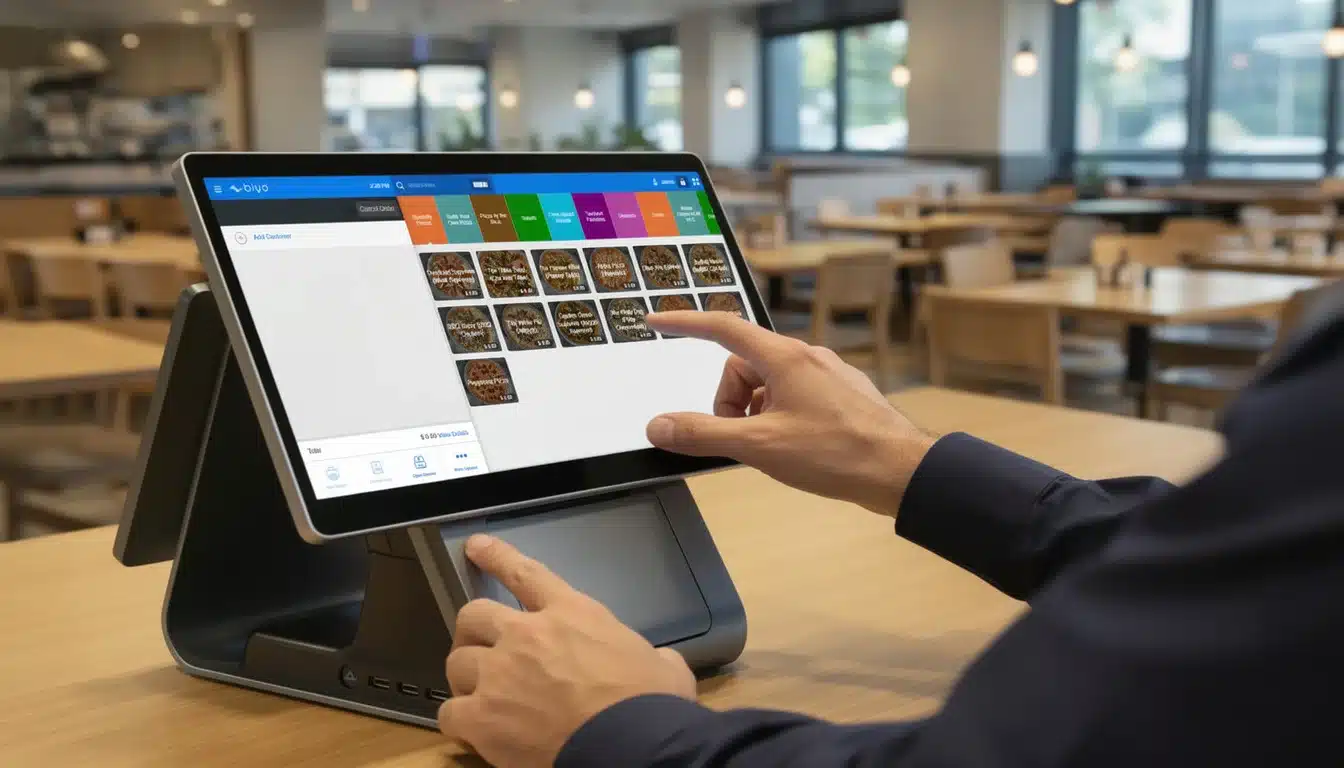
Biyo POS can help you secure your checkout and monitor transaction data for signs of theft. Our all-in-one system provides the advanced analytics you need to protect your bottom line. Find out more at the Biyo POS website.

Related Posts