Opening a bar, restaurant, or retail shop that sells alcohol requires more than a good business plan—it requires securing the proper liquor license in Minnesota. The state has detailed rules around alcohol permits, municipal approvals, compliance requirements, and renewal processes. If you are preparing to serve or sell alcohol, understanding these regulations is critical for both legal and financial success. This guide covers everything from license types to application steps, permit fees, and ongoing compliance so you can confidently navigate Minnesota liquor control laws.
Table of Contents
- Types of Liquor Licenses in Minnesota
- Key Requirements for Obtaining a Liquor License
- Application Process and Municipal Approval
- Compliance, Training, and Renewal Obligations
- Special Permits and Temporary Licensing Options
- FAQ: Liquor License in Minnesota
Types of Liquor Licenses in Minnesota
Minnesota liquor laws establish different categories of licenses depending on how and where alcohol is sold. Choosing the right license is the first and most important step in the alcohol licensing process.
On-Sale Liquor License
An on-sale liquor license in Minnesota allows alcohol to be sold and consumed on the premises. Bars, restaurants, clubs, and hotels rely on this license type to legally serve customers. The state issues variations that cover beer, wine, or distilled spirits depending on the nature of the establishment.
Municipalities often set limits on the number of on-sale licenses available. In a small town, this can mean only a handful of bars are permitted to operate, creating stiff competition among applicants. For that reason, business owners should apply early and demonstrate clear community benefits in their proposals.
Permit fees for on-sale licenses vary by region and may start at a few thousand dollars annually. Entrepreneurs must also budget for insurance, server training, and compliance costs. Because these expenses add up quickly, financial planning becomes just as important as securing the license itself.
Beyond the costs, on-sale license holders commit to ongoing responsibilities such as compliance inspections and staff training. Successful businesses treat these obligations as long-term investments in reputation and safety.
Between on-sale and off-sale licensing, understanding local rules will help you avoid application delays and costly mistakes.
Off-Sale Liquor License
Off-sale licenses permit the sale of packaged alcohol for consumption outside the premises. Liquor stores, grocery markets, and convenience shops typically apply for these licenses. In Minnesota, an off-sale liquor license carries restrictions on operating hours and includes specific rules for Sunday sales permits.
Municipal zoning plays a significant role in off-sale licensing. For example, many communities prohibit liquor stores from opening near schools, daycare centers, or churches. Applicants must study zoning maps and consult with city officials to confirm whether their proposed location is viable.
Renewal of off-sale licenses requires businesses to show compliance with age verification laws and inspection standards. Owners should keep detailed training logs, point-of-sale safeguards, and inspection reports ready for review. A well-documented compliance program reassures regulators and streamlines renewal.
Because off-sale operations focus on packaged sales, they must also adapt to evolving state regulations around hours and distribution. Flexibility and compliance awareness help maintain long-term success in this segment.
While on-sale and off-sale licenses are the most common, many Minnesota businesses also explore specialized options.
Sunday Sales Permit
Minnesota recently changed its alcohol sales laws to allow Sunday sales, provided businesses hold a Sunday sales permit. This type of permit enables restaurants, bars, and stores to sell alcohol on a traditionally restricted day. For many establishments, Sundays represent high-revenue opportunities.
Municipalities may restrict Sunday sales hours differently than weekday operations. For example, some cities only allow Sunday liquor sales between late morning and early evening. Applicants must verify local rules before applying to ensure their business plan aligns with community standards.
Securing a Sunday sales permit often pays off quickly. Restaurants capture family dining traffic, while liquor stores benefit from weekend shopping crowds. Permit fees are additional but generally affordable compared to the increased profits that come with seven-day sales.
Since Sunday sales remain subject to inspection and compliance, businesses must uphold the same high standards they follow during the week. Strong training and monitoring practices prevent violations that could threaten both permits.
Key Requirements for Obtaining a Liquor License
Before applying for a liquor license in Minnesota, applicants must meet several state and local requirements. These ensure that only responsible, law-abiding individuals and businesses can sell alcohol.
Background Checks and Eligibility
State and municipal agencies conduct background checks on all stakeholders listed in the application. They review criminal history, tax records, and financial disclosures to confirm the applicant’s integrity. Felony convictions tied to alcohol or controlled substances almost always disqualify applicants.
Residency requirements may also apply. Some cities require that applicants be Minnesota residents or U.S. citizens to ensure accountability to local communities. This rule prevents outside groups from operating without community involvement.
Passing background checks demonstrates credibility to regulators. Business owners who prepare accurate documentation and disclose relevant information tend to avoid delays. Transparency becomes a critical asset during this stage of the licensing process.
Applicants who anticipate potential issues should consult with legal advisors before filing. Proactive planning helps reduce the risk of rejection based on incomplete or incorrect disclosures.
Alongside eligibility, zoning regulations play a major role in determining approval.
Zoning Laws and Location Restrictions
Every Minnesota municipality enforces zoning laws that limit where alcohol can be sold. For instance, liquor stores may not open within a designated distance from schools or houses of worship. These restrictions maintain community balance and safety.
Applicants must confirm zoning eligibility before signing leases or purchasing property. A location that fails zoning standards almost always leads to application denial, wasting time and financial investment. City zoning boards and maps provide essential guidance during site selection.
Businesses can request zoning variances in some cases, but approval is never guaranteed. Boards often weigh community feedback heavily when reviewing requests. Strong relationships with local residents improve the likelihood of success in variance hearings.
By carefully researching zoning rules in advance, businesses avoid costly setbacks and strengthen their applications. A proactive approach reduces the chance of disputes during the licensing process.
After clearing background and zoning requirements, applicants must also prepare for compliance checks.
Compliance and Age Verification
Compliance with age verification laws represents one of the most important requirements. Businesses must implement clear policies for checking identification and document employee training in this area. Tools such as POS-based ID scanners add an extra layer of protection against violations.
Penalties for selling alcohol to minors are severe. Minnesota regulators can issue large fines, suspend licenses, or permanently revoke them after repeated offenses. For new businesses, a single violation could derail long-term growth plans.
Local and state inspectors regularly visit establishments to confirm compliance. These inspections may occur without notice, making consistent policies vital. Organized training records and enforcement procedures help businesses pass inspections without complications.
Responsible alcohol service builds community trust. When customers and city officials see a business prioritizing safety, they are more likely to support its continued success.
Application Process and Municipal Approval
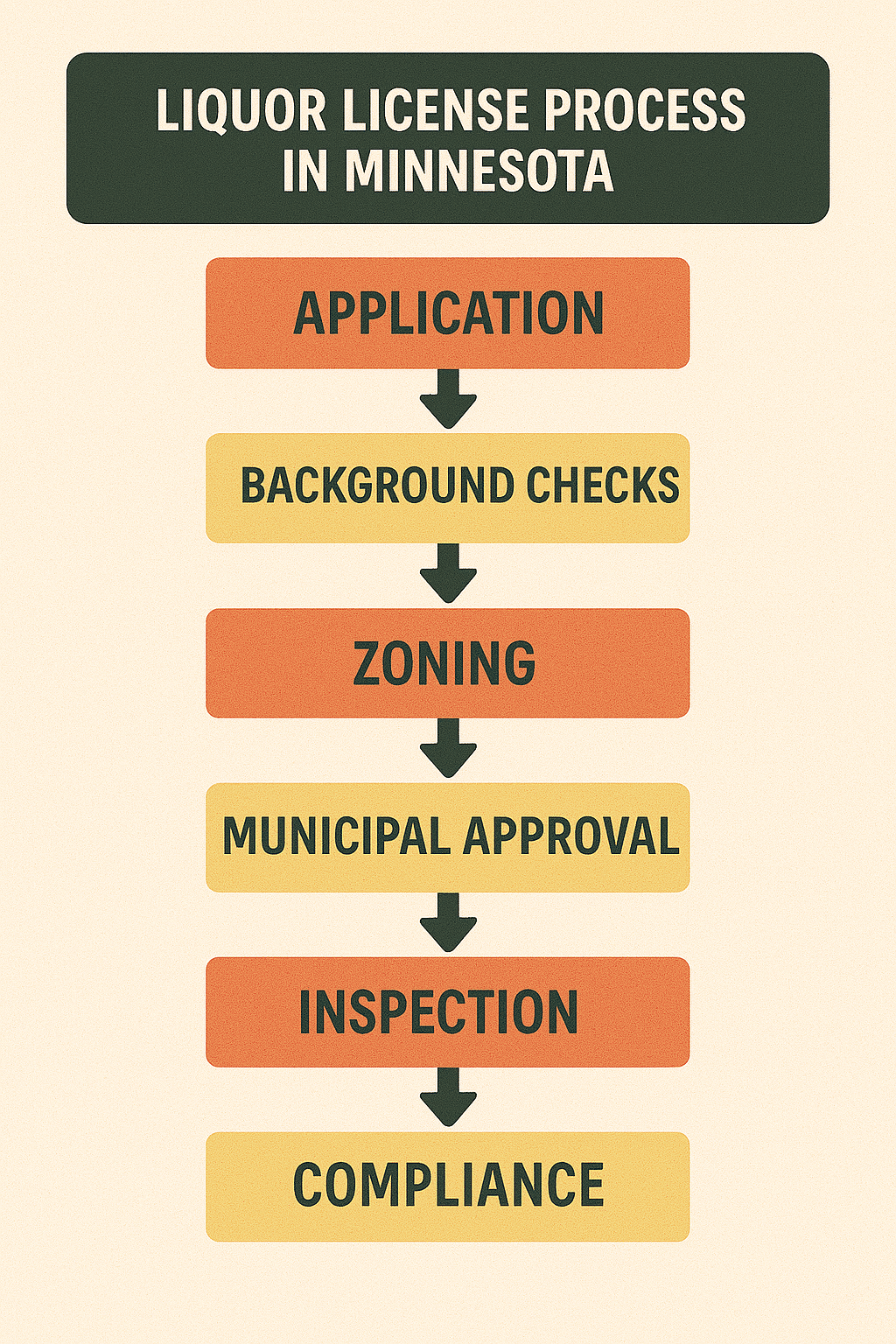
The process for obtaining a liquor license in Minnesota involves multiple steps at both state and municipal levels. Proper preparation saves time and reduces the risk of rejection.
Submitting the License Application
The Minnesota Department of Public Safety’s Alcohol and Gambling Enforcement Division provides the official application forms. Applicants must include ownership information, financial statements, and a detailed business plan that explains how the establishment will operate responsibly.
Fees depend on license type and city regulations, often ranging from hundreds to thousands of dollars. Since these payments are non-refundable, applicants must carefully review instructions and submit complete documentation. Errors or omissions cause delays and can force resubmission.
Many applications also require proof of insurance and site control, such as a lease agreement. These documents reassure officials that the business is financially and logistically prepared to manage alcohol sales safely.
Strong preparation during the application stage reduces complications later in the process. Applicants who consult with legal or industry experts often navigate these steps more smoothly.
Once the application is submitted, the municipal approval process begins.
Municipal Hearings and Approval
Most municipalities schedule public hearings to review liquor license applications. These hearings allow residents and local officials to voice concerns or support for new alcohol-related businesses. The process adds transparency and community involvement to licensing decisions.
Applicants should prepare presentations that emphasize community benefits. Job creation, responsible service policies, and economic development are persuasive arguments. Cities want reassurance that new businesses will strengthen, not disrupt, their neighborhoods.
Building positive relationships with city councils or county boards can make the difference between approval and denial. Clear communication, responsiveness to concerns, and demonstration of compliance readiness improve approval chances significantly.
Municipal approval lays the foundation for final inspections and issuance of the liquor license in Minnesota.
Inspection and Final Approval
Before issuing the license, inspectors visit the premises to ensure compliance with fire safety, building codes, and sanitation standards. They also verify security systems and alcohol storage areas. Business owners must address any deficiencies immediately to avoid delays.
Inspectors may also test the business’s ID verification systems and review staff training documentation. These steps prove that alcohol will be sold responsibly from day one. Businesses that fail inspections risk postponement or outright denial of their licenses.
Once inspections are passed and all fees are paid, municipalities grant final approval. The business can then legally sell alcohol under the authority of its liquor license in Minnesota. Ongoing compliance remains critical, but this step marks the official start of licensed operations.
Securing final approval gives businesses a legal foundation to operate confidently while preparing for routine inspections in the future.
Compliance, Training, and Renewal Obligations
Maintaining a liquor license requires consistent compliance with Minnesota liquor control laws. Renewal deadlines, mandatory training, and inspection readiness are key parts of ongoing operations.
Server Training and Education
Server training programs teach employees to recognize intoxication, enforce age verification, and handle alcohol responsibly. Many cities in Minnesota require staff to complete training within a certain number of days after hire. Employers must maintain documentation to prove compliance.
Training protects both the business and the community. A trained server knows how to refuse service when necessary and how to intervene in difficult situations. These skills reduce liability risks and prevent incidents that could harm a business’s reputation.
Businesses that prioritize ongoing training often see better customer satisfaction. Responsible service builds trust with patrons and reassures municipalities that alcohol is being sold under safe conditions.
As regulations evolve, regular training updates keep staff prepared. Forward-thinking businesses treat training as an ongoing investment rather than a one-time obligation.
Training is only one part of compliance; renewal is another critical responsibility.
License Renewal and Fees
Liquor licenses in Minnesota typically require annual renewal. Renewal applications request updated ownership details, financial documents, and compliance records. Owners must also show proof of insurance and continued adherence to alcohol sales laws.
Renewal fees vary depending on license type and municipality. Some cities raise fees annually to cover enforcement and inspection costs. Missing deadlines leads to fines and can even terminate the license, forcing the business to reapply from the beginning.
Organized businesses create compliance calendars to track renewal deadlines and required documents. This proactive approach eliminates last-minute stress and ensures licenses remain active year after year.
Renewal also signals a business’s commitment to ongoing responsibility. Municipalities view timely renewals as proof that owners respect the licensing process and community standards.
Renewals also involve ongoing municipal oversight.
Ongoing Inspections and Compliance Checks
After a license is granted, local and state inspectors continue monitoring establishments. Surprise visits are common, allowing inspectors to review ID check procedures, training records, and storage compliance. Business owners must prepare staff to handle these visits professionally.
Violations discovered during inspections can result in steep fines or even license suspension. Multiple offenses often lead to permanent revocation. Because of this risk, daily adherence to compliance requirements is essential.
Businesses that consistently perform well during inspections earn stronger reputations with both regulators and customers. A record of compliance helps during renewals and protects against costly interruptions.
For long-term stability, compliance must become part of the company culture. Owners who instill responsibility into everyday operations reduce risks and build sustainable growth.
Special Permits and Temporary Licensing Options
Not all alcohol sales require a permanent retail liquor license. Minnesota offers special permits and temporary licenses to meet unique needs such as festivals, weddings, or nonprofit fundraising events.
Temporary Licenses
Temporary licenses allow alcohol sales during short-term events such as fairs, markets, or private gatherings. Event organizers often use these licenses to serve alcohol at seasonal or cultural festivals. Municipalities typically require organizers to submit detailed safety and security plans before approval.
These licenses still involve background checks and zoning review. However, the process is simpler than that for permanent licenses. Event organizers can usually secure approval faster, provided they meet safety and compliance standards.
Nonprofits often rely on temporary licenses to raise funds through alcohol sales. For example, a local charity might use a temporary license for its annual gala, ensuring both compliance and revenue opportunities.
Temporary licenses give flexibility without long-term commitments. Businesses and nonprofits benefit from access to alcohol sales while avoiding permanent obligations.
Special event permits are another option for short-term alcohol sales.
Special Event Permits
Special event permits allow alcohol service at one-time gatherings like concerts, sporting matches, or weddings. Organizers must demonstrate clear plans for age verification, crowd management, and safety enforcement. Municipalities review these details before granting approval.
Costs for special event permits differ by location but remain lower than permanent license fees. This makes them attractive for groups planning community events. Many cities even streamline the process for nonprofits to encourage local cultural activities.
Violations during special events can cause immediate permit revocation. Future applications may also be denied if past compliance issues exist. For that reason, careful planning and adherence to alcohol regulations are vital.
Event organizers who treat compliance seriously create safer, more successful gatherings while protecting their ability to host future events.
For long-term needs, retail liquor licenses remain the primary option, but temporary and special permits give businesses and organizations flexible alternatives.
Retail Liquor Licenses
Retail liquor licenses apply to stores that sell packaged alcohol for off-premise consumption. Unlike on-sale licenses, these focus on take-home sales. Businesses must meet all zoning, inspection, and training requirements before approval.
In some cities, retail liquor licenses are capped, creating a competitive environment. Limited availability can drive license values up, and some businesses purchase existing licenses from current holders. This secondary market adds significant cost to entry.
Holders of retail liquor licenses must track renewal dates carefully. Missing deadlines or failing inspections puts their operations at risk. Strong recordkeeping and compliance systems ensure continued operation without interruptions.
Retailers that prioritize compliance gain competitive advantages. Customers value safe, professional establishments, and municipalities reward responsible operators with smoother renewals.

Grow Your Business with Biyo POS
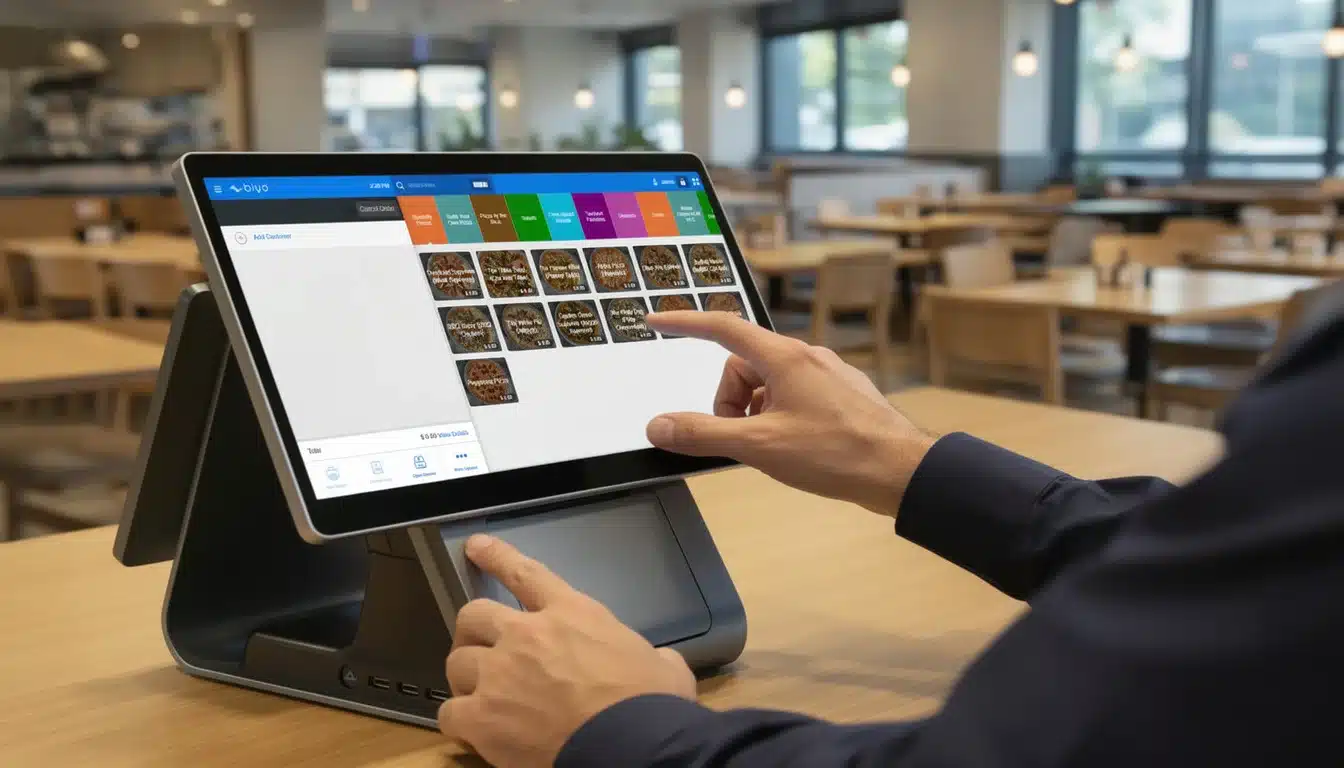
Running a business that sells alcohol requires careful attention to detail, from compliance with liquor license in Minnesota requirements to managing daily sales. That’s where Biyo POS can help. With advanced inventory management, integrated compliance tools, and smart POS features, Biyo POS simplifies alcohol sales while keeping you compliant. Whether you need better age verification systems, streamlined server training records, or easy reporting for license renewal, our solution is built to support your growth. Ready to get started? Sign up today at Biyo POS Signup.
FAQ: Liquor License in Minnesota
- How much does a liquor license in Minnesota cost?
Fees vary by license type and municipality but typically range from $1,500 to $15,000 per year. - How long does it take to get a liquor license in Minnesota?
The process can take several months due to background checks, zoning reviews, municipal hearings, and inspections. - Can I sell alcohol on Sundays in Minnesota?
Yes, but you need a Sunday sales permit in addition to your on-sale or off-sale liquor license. - Do I need server training for my staff?
Yes, most municipalities require documented server training as part of license compliance and renewal. - What is the difference between on-sale and off-sale licenses?
On-sale licenses allow consumption on-site, while off-sale licenses permit take-home sales of packaged alcohol.