Essential Tips for Managing Cash Flow in Small Business
When it comes to managing cash flow in a small business, most owners focus too heavily on profit while ignoring the actual movement of money. That’s a dangerous mistake.
A business can look profitable on paper and still collapse because it runs out of usable cash.
This happens more often than most entrepreneurs realize.
You may have unpaid invoices sitting in your accounting software, future revenue expected next month, and strong sales reports showing growth. But if payroll is due today, suppliers need payment now, and your account balance is running low, profit becomes irrelevant in that moment.
Cash flow is what keeps operations alive.
It’s the daily movement of money entering and leaving your business. Strong cash flow allows you to pay employees, purchase inventory, invest in marketing, cover emergencies, and grow confidently without constantly worrying about survival.
Poor cash flow management creates a completely different reality. Businesses begin delaying vendor payments, struggling with payroll timing, using credit cards to cover operational costs, and making desperate short-term decisions that slowly weaken the company further.
This issue affects businesses across every industry.
Restaurants, retail stores, service companies, agencies, contractors, and eCommerce brands all face the same fundamental challenge:
keeping enough cash available at the right time.
The good news is that cash flow management is not about financial genius or advanced accounting complexity. Most improvements come from building consistent habits, creating accurate visibility into your finances, tightening operational systems, and making proactive decisions before problems become emergencies.
In this guide, we’ll break down practical and realistic strategies for managing cash flow in a small business, including forecasting, expense control, payment optimization, inventory management, technology tools, and operational habits that help businesses maintain financial stability long term.
Table of Contents
- Why Cash Flow Matters More Than Profit
- How to Build a Realistic Cash Flow Forecast
- Strategies to Accelerate Incoming Payments
- Smart Ways to Control Cash Outflow
- How Inventory Impacts Cash Flow
- Using Technology to Improve Financial Visibility
- Common Cash Flow Mistakes Small Businesses Make
- Preparing for Cash Flow Emergencies
- Building Long-Term Financial Stability
- How Biyo POS Helps Businesses Improve Cash Flow
- Frequently Asked Questions
Why Cash Flow Matters More Than Profit
Many small business owners mistakenly believe profitability automatically guarantees financial stability.
It does not.
Profit measures revenue minus expenses on paper. Cash flow measures actual money moving through your business bank account in real time.
That difference is enormous.
For example, imagine a business completes a large $25,000 project and invoices the client successfully. Technically, the company appears profitable immediately. However, if the client pays 60 days later while payroll, rent, and operational bills are due this week, the business may still face a serious financial squeeze.
This timing gap is where many businesses struggle.
Healthy cash flow creates flexibility and operational confidence. Weak cash flow creates constant pressure and reactive decision-making.
Businesses with strong cash flow can:
- Handle unexpected expenses calmly
- Purchase inventory strategically
- Invest in marketing opportunities
- Pay employees consistently
- Negotiate better vendor relationships
- Scale operations sustainably
Businesses with poor cash flow often:
- Delay payments repeatedly
- Accumulate high-interest debt
- Miss growth opportunities
- Reduce operational quality
- Experience chronic financial stress
Cash flow is not just an accounting metric.
It directly affects operational stability, employee morale, customer experience, and long-term survival.
How to Build a Realistic Cash Flow Forecast
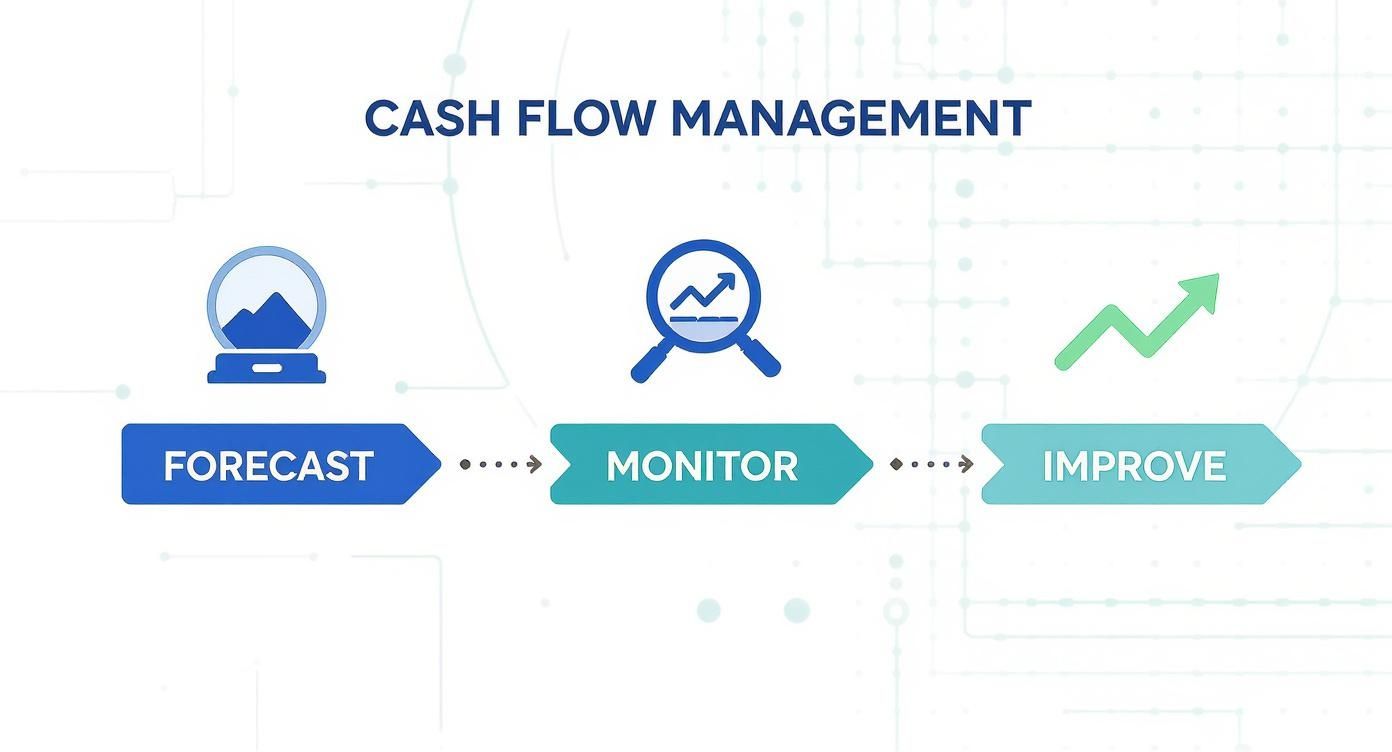
A cash flow forecast helps businesses predict future financial conditions before problems appear.
Instead of reacting emotionally when cash becomes tight, forecasting allows owners to identify risks early and make adjustments proactively.
The process itself is simpler than many people assume.
You estimate:
- Expected incoming revenue
- Planned outgoing expenses
- Timing differences between both
Good forecasting should always rely on realistic data rather than optimistic assumptions.
One of the biggest mistakes small businesses make is projecting future revenue based purely on best-case scenarios.
Historical trends matter far more.
For example, many retail businesses experience predictable seasonal fluctuations throughout the year. Restaurants may see higher weekend sales but slower weekday performance. Service businesses often face delayed payment cycles depending on client invoicing terms.
Your forecast should reflect these real operational patterns.
Track Fixed and Variable Expenses Separately
Separating expenses into categories improves forecast accuracy significantly.
Fixed expenses remain relatively stable every month, including:
- Rent
- Salaries
- Insurance
- Software subscriptions
- Loan payments
Variable expenses fluctuate based on business activity, including:
- Inventory purchases
- Hourly labor
- Marketing costs
- Shipping expenses
- Utilities
Understanding the difference helps businesses identify where adjustments can be made during slower financial periods.
Use Rolling Forecasts Instead of Static Forecasts
Many businesses create annual forecasts and never update them again.
That approach becomes useless quickly.
A rolling 12-week forecast works far better because it continuously updates based on actual business performance.
Each week, businesses:
- Review actual cash movement
- Adjust future projections
- Identify upcoming shortages early
- Respond before problems escalate
This keeps financial planning connected to operational reality rather than outdated assumptions.
Strategies to Accelerate Incoming Payments
One of the fastest ways to improve cash flow is reducing the delay between completing work and receiving payment.
Many businesses unintentionally create payment friction through slow invoicing systems, limited payment methods, or weak collection procedures.
Small improvements here can dramatically improve liquidity.
Invoice Immediately
Delaying invoices delays cash.
Businesses should send invoices immediately after completing services or delivering products.
Waiting until the end of the week or month unnecessarily extends payment timelines.
Fast invoicing creates faster collection cycles.
Offer Multiple Payment Methods
Customers pay faster when payment options are convenient.
Businesses should support:
- Credit cards
- ACH transfers
- Digital wallets
- Online payment links
- Integrated payment portals
Modern digital payment systems reduce payment delays significantly compared to traditional paper invoicing methods.
Use Automated Payment Reminders
Many overdue invoices happen simply because customers forget.
Automated reminders improve collections without requiring uncomfortable manual follow-ups constantly.
Businesses should schedule:
- Upcoming due date reminders
- Past-due notifications
- Follow-up payment requests
Consistency matters more than aggressiveness.
Request Deposits for Large Projects
Large projects create financial risk when businesses front all operational costs themselves.
Deposits improve immediate liquidity while reducing exposure.
Many businesses require:
- 30% upfront
- 50% upfront
- Milestone-based payments
This approach protects operational cash reserves during project execution.

Smart Ways to Control Cash Outflow
Managing outgoing expenses carefully is equally important as improving incoming revenue.
Strong businesses control spending intentionally rather than emotionally.
Review Expenses Regularly
Many businesses accumulate unnecessary recurring expenses over time.
Unused software subscriptions, duplicate tools, unnecessary services, and inefficient vendor contracts slowly drain cash every month.
Quarterly expense audits help identify:
- Unused subscriptions
- Overspending patterns
- Poor vendor pricing
- Operational inefficiencies
Small recurring savings compound significantly over time.
Negotiate Vendor Terms
Supplier payment terms directly affect cash flow timing.
Businesses with strong vendor relationships may negotiate:
- Longer payment windows
- Installment arrangements
- Volume discounts
- Flexible seasonal terms
Even extending payment terms from Net 30 to Net 45 can improve short-term liquidity considerably.
Delay Non-Essential Purchases
Many businesses overspend during growth periods without fully evaluating necessity.
Before major purchases, owners should ask:
Does this investment improve revenue, efficiency, or customer experience enough to justify immediate cash usage?
Not every operational improvement needs to happen immediately.
How Inventory Impacts Cash Flow
Inventory is one of the largest hidden cash flow drains for product-based businesses.
Every unsold item sitting on shelves represents money that cannot currently be used elsewhere.
Overstocking traps cash.
Understocking creates lost sales.
The goal is balance.
Track Inventory Performance Closely
Businesses should identify:
- Fast-moving products
- Slow-moving inventory
- Seasonal demand patterns
- Dead stock
Data-driven inventory decisions prevent excessive purchasing while maintaining strong product availability.
Use Real-Time Inventory Systems
Modern POS systems improve inventory visibility dramatically.
Businesses can track:
- Sales velocity
- Stock levels
- Reorder timing
- Inventory valuation
This helps businesses avoid tying unnecessary cash into excess stock.
Using Technology to Improve Financial Visibility
Technology plays a major role in modern cash flow management.
Businesses relying on spreadsheets alone often struggle with:
- Delayed visibility
- Human error
- Fragmented financial data
- Slow reporting processes
Modern accounting and POS systems provide real-time financial insight instead.
Cloud-Based Accounting Software
Cloud accounting tools automatically synchronize:
- Bank activity
- Expenses
- Invoices
- Payments
- Financial reporting
This improves forecasting accuracy while reducing manual administrative work.
POS Systems Improve Operational Visibility
A modern POS system does far more than process transactions.
It helps businesses monitor:
- Sales trends
- Inventory turnover
- Customer behavior
- Payment processing
- Revenue timing
Real-time visibility allows owners to make faster and smarter financial decisions.
Common Cash Flow Mistakes Small Businesses Make
Many cash flow problems come from operational habits rather than external circumstances.
Growing Too Fast Without Cash Reserves
Rapid growth often increases:
- Inventory requirements
- Payroll costs
- Marketing expenses
- Operational complexity
Businesses sometimes expand faster than their cash position can support.
Ignoring Late Payments
Businesses that avoid confronting overdue invoices often create major collection problems later.
Consistent follow-up matters.
Mixing Personal and Business Finances
Blending personal and business spending creates poor financial visibility and forecasting confusion.
Separate accounts are essential for accurate cash management.
Preparing for Cash Flow Emergencies
Unexpected disruptions happen in every business eventually.
Equipment failures, economic slowdowns, supplier disruptions, legal issues, or seasonal downturns can create sudden financial pressure.
Emergency preparation reduces panic during difficult periods.
Maintain a Cash Reserve
Businesses should ideally maintain enough reserves to cover:
three to six months of operating expenses.
This provides flexibility during revenue disruptions.
Establish a Line of Credit Early
Securing financing is easier when a business is financially healthy.
Waiting until a crisis occurs limits options.
A business line of credit can provide short-term liquidity during temporary cash gaps.
Building Long-Term Financial Stability
Strong cash flow management is not about temporary survival tactics.
It’s about building a financially resilient business capable of handling both growth and uncertainty.
Long-term stability comes from:
- Consistent forecasting
- Operational discipline
- Smart inventory management
- Fast payment collection
- Controlled spending
- Financial visibility
Businesses that manage cash flow proactively operate with significantly less stress and stronger decision-making confidence.
Instead of constantly reacting to emergencies, they focus on growth opportunities strategically.

How Biyo POS Helps Businesses Improve Cash Flow
Biyo POS helps small businesses improve financial visibility and operational efficiency through integrated cloud-based POS technology.
The platform supports:
- Real-time sales tracking
- Inventory management
- Payment processing
- Customer analytics
- Operational reporting
- Business performance monitoring
Biyo POS helps businesses:
process payments faster, reduce inventory inefficiencies, improve transaction visibility, and make more informed financial decisions.
By combining operational data with real-time reporting, businesses gain stronger control over day-to-day cash movement.
If you want to improve operational efficiency and strengthen financial visibility, you can explore the platform directly through the Biyo POS signup page.
Frequently Asked Questions
What is cash flow management?
Cash flow management involves tracking, forecasting, and optimizing money moving into and out of a business to maintain financial stability.
Why is cash flow more important than profit?
Profit measures accounting performance, while cash flow determines whether a business can actually pay bills, employees, and operational expenses in real time.
How often should small businesses review cash flow?
Most small businesses should review cash flow weekly, while high-volume or rapidly growing businesses may benefit from daily monitoring.
What causes poor cash flow?
Common causes include slow customer payments, excessive inventory, overspending, weak forecasting, rapid growth, and poor expense control.
How can businesses improve cash flow quickly?
Businesses can improve cash flow by invoicing faster, reducing unnecessary expenses, negotiating vendor terms, collecting overdue payments, and improving inventory management.
How does Biyo POS help with cash flow management?
Biyo POS helps businesses track sales, manage inventory, process payments faster, monitor operational performance, and improve financial visibility through integrated cloud-based POS tools.