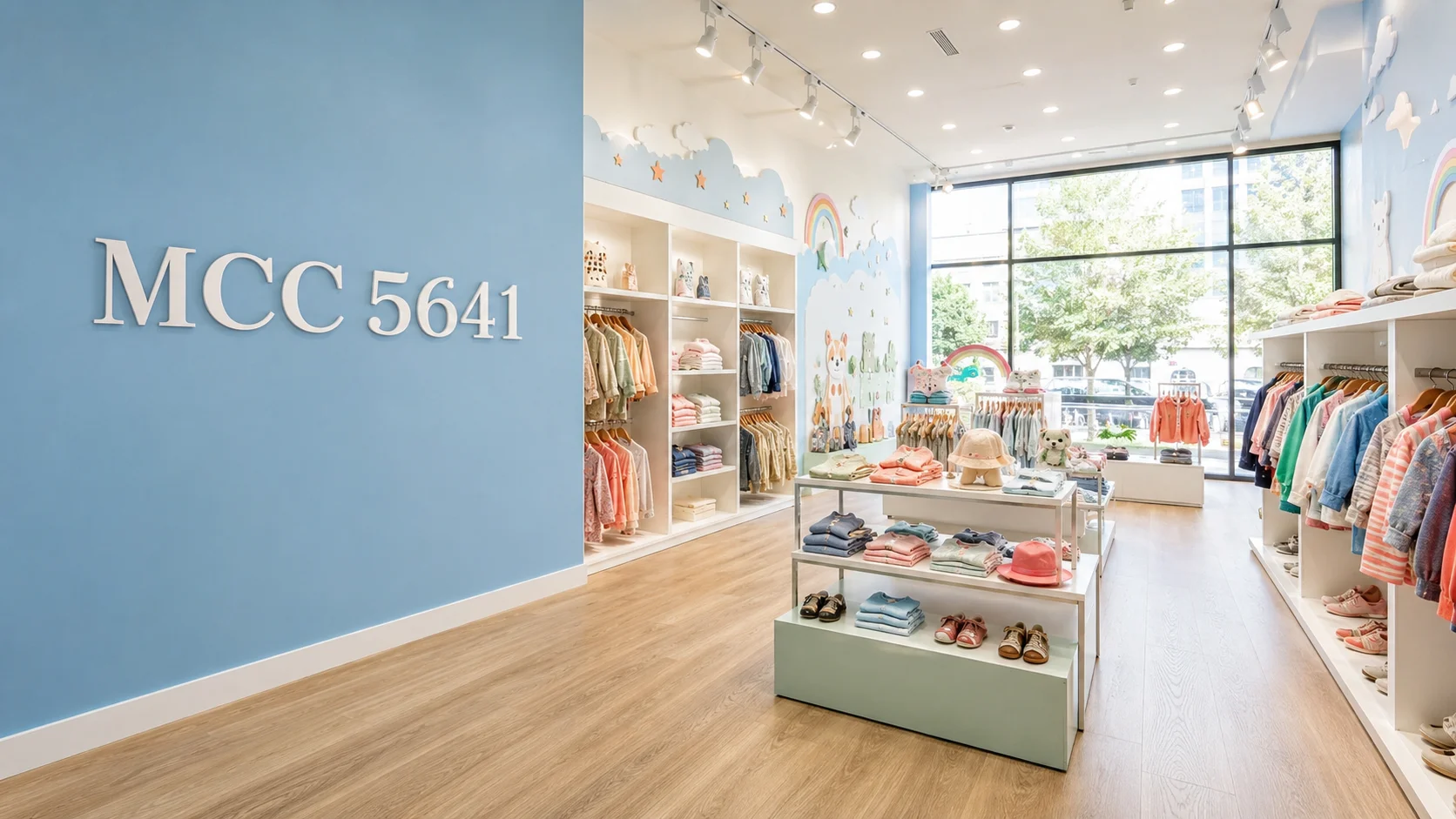

Children outgrow clothing faster than almost any other consumer product, making children’s apparel one of the most dynamic segments of the retail industry. From newborn essentials and school uniforms to seasonal outfits and special occasion wear, children’s and infants’ clothing stores help families find apparel that balances comfort, durability, safety, and style. These retailers serve parents, grandparents, and caregivers looking for quality clothing that keeps pace with every stage of childhood.
Businesses specializing in these products are commonly classified under Merchant Category Code (MCC) 5641. Payment processors, acquiring banks, and major card networks use this Merchant Category Code to identify merchants whose primary business involves selling children’s and infants’ clothing and related apparel. Although customers rarely notice these classifications, they play an important role in payment processing, merchant reporting, transaction categorization, and certain credit card rewards programs.
This guide explains what MCC 5641 covers, the businesses that typically qualify, the products commonly sold, why proper merchant classification matters, and how modern retail technology helps children’s apparel retailers streamline inventory management and deliver a better shopping experience.
Table of Contents
Understanding MCC 5641
What Is Merchant Category Code 5641?
MCC 5641 is the Merchant Category Code assigned to businesses whose primary activity is selling clothing for infants, toddlers, children, and young adolescents. Rather than offering apparel for all age groups, these retailers specialize in clothing designed specifically for younger customers, often carrying products that accommodate rapid growth, changing seasons, and different stages of childhood.
This Merchant Category Code helps distinguish children’s apparel retailers from family clothing stores, department stores, and general apparel merchants, ensuring businesses are classified according to their primary line of business.
How Payment Networks Use MCC 5641
Every credit and debit card transaction includes a Merchant Category Code that identifies the merchant’s primary business activity. Card networks, payment processors, and acquiring banks use MCC 5641 to classify children’s clothing retailers for transaction processing, merchant reporting, fraud monitoring, payment analytics, and certain credit card reward programs.
Although shoppers rarely interact with this classification, it helps create consistency across payment systems while supporting accurate financial reporting.
Why Correct Merchant Classification Matters
Using the correct Merchant Category Code ensures retailers are accurately categorized within payment networks. Businesses that primarily sell children’s and infants’ apparel generally qualify under MCC 5641, while merchants specializing in adult clothing, footwear, or accessories are assigned different Merchant Category Codes. Proper classification supports reliable reporting and consistent payment processing.
 Businesses Classified Under MCC 5641
 Businesses Classified Under MCC 5641
Children’s Clothing Stores
Specialty children’s apparel retailers make up the largest group operating under MCC 5641. These stores focus on clothing for infants, toddlers, boys, and girls, offering everything from everyday basics to seasonal collections and formal attire designed for growing children.
Infant and Baby Boutiques
Many boutiques dedicated to newborns and infants also qualify under MCC 5641. Their product selection often includes baby bodysuits, sleepers, dresses, rompers, blankets, bibs, hats, and coordinated clothing sets designed with comfort and safety in mind.
Youth Apparel Retailers
Some retailers specialize in clothing for older children and pre-teens, carrying casual wear, school uniforms, activewear, jackets, sleepwear, and accessories that meet the changing needs of school-age customers while following current fashion trends.
Products Commonly Sold
Everyday Children’s Clothing
Retailers classified under MCC 5641 typically sell T-shirts, jeans, leggings, dresses, shorts, sweaters, pajamas, jackets, and school uniforms for children of various ages. Many stores organize inventory by age group, size, and season to make shopping easier for parents and caregivers.
Infant Essentials
Baby-focused retailers often carry bodysuits, sleepers, onesies, receiving blankets, socks, hats, mittens, bibs, and coordinated newborn outfits. These products are designed with soft fabrics, safety features, and comfort as top priorities for infants and young babies.
Seasonal and Special Occasion Apparel
Children’s clothing stores frequently update their collections throughout the year with holiday outfits, swimwear, winter coats, rainwear, back-to-school apparel, formal wear, and special occasion clothing. Seasonal merchandise allows retailers to meet changing customer needs while encouraging repeat visits throughout the year.
Why MCC 5641 Matters
Supports Accurate Payment Processing
Merchant Category Codes help payment processors consistently identify the type of merchant accepting each transaction. Using MCC 5641 ensures children’s clothing retailers are accurately categorized within payment networks while supporting reliable payment processing and merchant reporting.
Improves Financial Reporting
Correct merchant classification contributes to organized accounting records, payment reporting, transaction analysis, and financial reporting. Consistent merchant data benefits both retailers and payment providers by improving reporting accuracy across multiple systems.
May Influence Credit Card Rewards
Some credit card issuers use Merchant Category Codes to determine cashback categories and bonus reward eligibility. Depending on the issuer’s rewards program, purchases made at merchants classified under MCC 5641 may qualify differently than purchases made at businesses operating under other retail categories.
MCC 5641 Comparison Table
| Category | MCC 5641 Children’s and Infants’ Wear Stores |
|---|---|
| Primary Business | Retail sale of children’s and infants’ clothing and related apparel |
| Typical Customers | Parents, grandparents, caregivers, gift buyers, and families |
| Common Products | Baby clothing, children’s apparel, school uniforms, sleepwear, outerwear, and seasonal clothing |
| Sales Channels | Children’s boutiques, shopping centers, standalone stores, and online retailers |
| Inventory Characteristics | Age-specific sizing with seasonal collections and frequent inventory turnover |
| Peak Seasons | Back-to-school, holidays, spring collections, and winter apparel season |
| Operational Priorities | Inventory planning, size availability, merchandising, and customer service |
Industry Operations
Managing Rapid Inventory Turnover
Children’s apparel retailers operate in a unique retail environment where customers return frequently because children quickly outgrow their clothing. Unlike adult fashion, which may remain in a wardrobe for years, children’s clothing often needs to be replaced every season or growth stage. Retailers must carefully plan inventory to ensure popular sizes remain available while introducing new collections that reflect changing weather, school calendars, and fashion trends.
Maintaining the right balance across infant, toddler, and youth sizes requires continuous inventory analysis and timely replenishment to avoid stock shortages during peak shopping periods.
Creating a Family-Friendly Shopping Experience
Parents and caregivers value convenience when shopping for children’s clothing. Stores often organize merchandise by age group, size, gender, and product type, making it easier for customers to find what they need without spending unnecessary time browsing. Helpful staff, spacious layouts, fitting rooms, and clearly labeled collections contribute to a more enjoyable shopping experience for busy families.
Many retailers also merchandise complete outfits together, encouraging customers to purchase coordinating tops, bottoms, jackets, shoes, and accessories during a single visit.
Selling Through Physical and Digital Channels
Modern children’s clothing retailers increasingly combine in-store shopping with eCommerce websites, mobile shopping, and social media marketing. Parents often browse products online before visiting a store or purchase seasonal collections through digital channels for home delivery. Keeping inventory synchronized across every sales platform helps retailers maintain accurate stock availability while providing a consistent customer experience.
Inventory and Operational Challenges
Managing Multiple Size Variations
Unlike many retail categories, children’s apparel stores must stock every style in multiple sizes that correspond to different ages and stages of growth. Even a single clothing collection may require dozens of individual SKUs across infant, toddler, and youth sizing. Maintaining sufficient inventory without overstocking slower-moving sizes is an ongoing operational challenge.
Preparing for Seasonal Shopping Cycles
Demand for children’s clothing changes significantly throughout the year. Back-to-school shopping, holiday collections, winter outerwear, spring apparel, and summer clothing all create predictable spikes in customer demand. Retailers must forecast these seasonal trends accurately to ensure popular products arrive before peak shopping periods begin.
Balancing Fashion with Practicality
Parents often consider more than appearance when purchasing children’s clothing. Durability, comfort, safety, easy care, and affordability all influence buying decisions. Retailers must carefully curate inventory that reflects current fashion trends while meeting the practical expectations of families looking for quality clothing that can withstand everyday use.
Industry Trends
Sustainable Children’s Fashion Is Growing
Many parents are becoming more interested in clothing made from organic cotton, recycled fibers, and responsibly sourced materials. As sustainability becomes a greater priority, children’s apparel retailers are expanding eco-friendly collections that offer both quality and environmental responsibility.
Comfort-Focused Apparel Continues to Lead Sales
Demand for comfortable everyday clothing, activewear, and versatile basics continues to grow as families prioritize clothing that supports school, play, sports, and daily activities. Retailers are responding by expanding collections that combine durability with comfort and easy maintenance.
Technology Is Improving Children’s Apparel Retail
Cloud-based POS systems, barcode scanning, real-time inventory management, integrated eCommerce platforms, and advanced sales reporting are helping children’s clothing retailers operate more efficiently. These technologies improve inventory accuracy, simplify replenishment decisions, streamline checkout, and provide valuable insights into purchasing trends across different age groups and seasonal collections.
How Biyo Helps Children’s and Infants’ Wear Stores
 How Biyo Helps Children’s and Infants’ Wear Stores
Children’s apparel retailers manage fast-moving inventory across multiple age groups, sizes, colors, and seasonal collections. From newborn essentials to school uniforms and holiday outfits, keeping shelves stocked with the right products at the right time requires accurate inventory management and reliable retail technology. Biyo POS helps simplify these daily operations by providing a cloud-based solution designed to support modern retail businesses.
With real-time inventory tracking, every sale automatically updates stock levels, giving employees immediate visibility into available sizes, colors, and styles. Barcode scanning speeds up receiving shipments, inventory counts, and checkout while reducing manual errors. This helps retailers quickly replenish popular items, avoid stock shortages, and maintain accurate inventory throughout changing seasons.
Biyo also supports retailers that operate both physical stores and online shops. Inventory remains synchronized across every sales channel, helping prevent overselling and improving order fulfillment. Businesses with multiple locations can monitor inventory, transfer products between stores, compare sales performance, and manage operations from a centralized dashboard, making it easier to maintain consistency across the entire business.
Built-in reporting provides valuable insights into bestselling collections, size performance, seasonal buying trends, inventory turnover, and customer purchasing behavior. These analytics help retailers make smarter purchasing decisions, optimize merchandising strategies, and ensure the right products are available during busy shopping periods like back-to-school and the holiday season.
Whether you operate a children’s boutique, an infant clothing store, or a growing multi-location apparel business, Biyo provides the tools needed to streamline operations and improve the shopping experience. You can sign up for Biyo POS or schedule a personalized demo to see how the platform can help your retail business grow.
Frequently Asked Questions
What is MCC 5641?
MCC 5641 is the Merchant Category Code assigned to businesses that primarily sell children’s and infants’ clothing. Payment processors use this code to classify merchants for transaction processing, reporting, and payment analytics.
Which businesses qualify for MCC 5641?
Children’s clothing stores, infant boutiques, baby apparel retailers, and youth clothing shops generally qualify under MCC 5641 when children’s apparel represents their primary business activity.
What products are commonly sold under MCC 5641?
Businesses classified under MCC 5641 typically sell baby clothing, children’s apparel, school uniforms, outerwear, pajamas, seasonal outfits, infant essentials, and clothing designed for toddlers and young children.
Does MCC 5641 affect credit card rewards?
It may. Some credit card issuers use Merchant Category Codes to determine cashback categories or bonus reward eligibility. Whether purchases qualify depends on the card issuer and its specific rewards program.
Why is Merchant Category Code 5641 important?
MCC 5641 helps banks, payment processors, and card networks accurately classify children’s apparel retailers. It supports payment processing, merchant reporting, fraud monitoring, transaction categorization, and financial analytics.
How can children’s clothing stores improve inventory management?
Modern POS systems with real-time inventory tracking, barcode scanning, cloud reporting, integrated eCommerce, and detailed sales analytics help retailers maintain accurate stock levels, manage multiple size variations, optimize seasonal purchasing, and provide a better shopping experience.