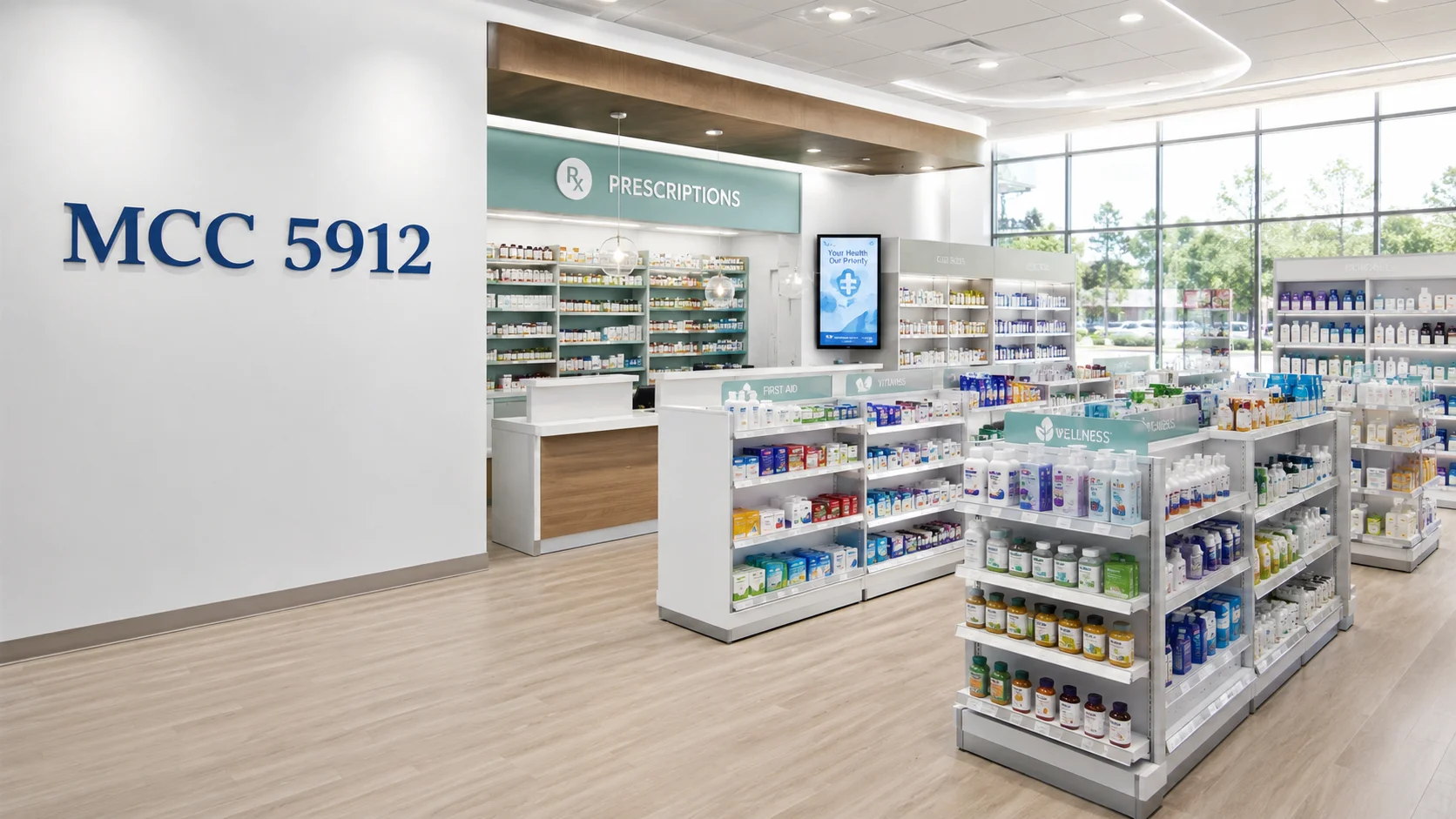

Merchant Category Codes (MCCs) help payment processors and card networks categorize businesses based on the products and services they provide. These four-digit codes influence payment processing, merchant reporting, interchange fees, fraud monitoring, and even the credit card rewards customers receive. Businesses that primarily sell prescription medications, over-the-counter healthcare products, and pharmacy-related items are generally classified under MCC 5912.
MCC 5912 applies to pharmacies and drug stores that dispense prescription medications while offering a broad selection of health, wellness, and personal care products. Many pharmacies also provide immunizations, medication counseling, health screenings, and clinical services alongside traditional retail operations. Understanding this Merchant Category Code helps pharmacy owners maintain accurate payment processing while giving consumers and financial institutions a clear understanding of the business’s primary activity.
Table of Contents
Understanding MCC 5912
What Is MCC 5912?
MCC 5912 is the Merchant Category Code assigned to drug stores and pharmacies. These businesses primarily dispense prescription medications while selling over-the-counter medicines, health products, vitamins, first aid supplies, and personal care items. The code identifies merchants whose core business revolves around pharmaceutical and healthcare retail services.
How Businesses Receive This Classification
When a pharmacy establishes a merchant account, the payment processor evaluates its primary business activities before assigning a Merchant Category Code. Businesses whose primary revenue comes from dispensing medications and selling pharmacy-related products are typically classified under MCC 5912, even if they also offer convenience merchandise, seasonal products, or limited grocery items.
Common Transactions Processed Under MCC 5912
Transactions processed under MCC 5912 commonly include prescription purchases, over-the-counter medications, vitamins and supplements, personal care products, medical supplies, vaccinations, wellness services, and other healthcare-related retail purchases made within pharmacies and drug stores.
 Businesses Classified Under MCC 5912
 Businesses Classified Under MCC 5912
Retail Drug Stores
Independent and chain drug stores represent the largest group of businesses classified under MCC 5912. These retailers combine licensed pharmacy services with a broad selection of healthcare products, personal care essentials, beauty items, household goods, and convenience merchandise, making them an important part of many communities.
Community and Independent Pharmacies
Many independently owned pharmacies also fall under MCC 5912. These businesses often emphasize personalized customer service, prescription management, medication counseling, prescription refills, and long-term relationships with local patients while offering many of the same healthcare products found in larger pharmacy chains.
Specialty Pharmacies
Some specialty pharmacies qualify under MCC 5912 when they primarily dispense prescription medications for patients with chronic, complex, or specialized medical conditions. These pharmacies frequently provide medication management, patient education, and coordination with healthcare providers in addition to prescription fulfillment.
Products and Services Offered by MCC 5912 Businesses
Prescription Medications
The primary service provided by businesses classified under MCC 5912 is dispensing prescription medications prescribed by licensed healthcare professionals. Pharmacists also verify prescriptions, counsel patients on proper medication use, monitor potential drug interactions, and assist with prescription refills to promote safe and effective treatment.
Over-the-Counter Healthcare Products
Drug stores and pharmacies typically stock a wide selection of over-the-counter medications, vitamins, nutritional supplements, first aid supplies, pain relievers, allergy treatments, digestive health products, cold and flu remedies, and other healthcare essentials that customers can purchase without a prescription.
Health and Wellness Services
Many modern pharmacies have expanded beyond prescription dispensing by offering immunizations, health screenings, medication therapy management, blood pressure monitoring, wellness consultations, and other clinical services. These additional healthcare offerings improve patient convenience while creating valuable community health resources.
Why MCC 5912 Matters
Supports Accurate Payment Processing
Using the correct Merchant Category Code allows payment processors to accurately classify pharmacies and drug stores according to industry standards. Proper classification supports efficient payment processing, merchant account management, and accurate financial reporting.
Influences Credit Card Rewards
Many credit card issuers recognize pharmacies as a separate spending category. Depending on the card issuer’s rewards program, purchases processed under MCC 5912 may qualify for enhanced cashback, healthcare-related rewards, or bonus points.
Strengthens Financial Reporting and Compliance
Accurate MCC classification helps financial institutions analyze transaction activity, improve fraud monitoring, support regulatory reporting, and generate meaningful business insights while allowing pharmacy owners to better understand payment trends and operational performance.
MCC 5912 Compared to Similar Merchant Categories
| Merchant Category Code | Primary Business Type | Typical Products and Services |
|---|---|---|
| MCC 5912 | Drug Stores and Pharmacies | Prescription medications, OTC medicines, health products, pharmacy services |
| MCC 5499 | Miscellaneous Food Stores | Specialty foods, convenience items, beverages, grocery products |
| MCC 5977 | Cosmetics and Beauty Supply Stores | Cosmetics, skincare, beauty products, fragrances |
| MCC 5999 | Miscellaneous Specialty Retail Stores | Various specialty retail products not classified elsewhere |
How Drug Stores and Pharmacies Operate
Managing Prescription Fulfillment
Prescription dispensing is the core operation of most businesses classified under MCC 5912. Pharmacists receive prescriptions electronically or in person, verify their accuracy, review potential drug interactions, prepare medications, and counsel patients on proper usage. Many pharmacies also coordinate with physicians, insurance providers, and pharmacy benefit managers (PBMs) to ensure prescriptions are processed accurately and efficiently.
Managing Retail and Healthcare Services
In addition to filling prescriptions, pharmacies operate retail departments that offer over-the-counter medications, vitamins, personal care products, medical devices, and wellness essentials. Many locations also provide immunizations, health screenings, medication therapy management, and prescription synchronization services, allowing customers to address multiple healthcare needs during a single visit.
Maintaining Regulatory Compliance
Pharmacies operate within a highly regulated environment and must comply with federal, state, and local healthcare regulations. Daily operations include maintaining accurate prescription records, protecting patient information, securing controlled substances, monitoring medication storage requirements, and ensuring licensed pharmacists supervise prescription dispensing activities.
Inventory and Operational Challenges
Managing Medication Inventory
Drug stores must maintain accurate inventory levels for thousands of prescription medications, over-the-counter products, and healthcare supplies. Effective inventory management helps prevent stock shortages, reduces expired medications, and ensures patients have timely access to essential treatments while minimizing unnecessary carrying costs.
Handling Insurance and Reimbursement Processes
Processing prescription claims often involves communicating with insurance providers and pharmacy benefit managers to verify coverage, calculate patient copayments, and resolve claim issues. Managing these reimbursement processes efficiently is essential for maintaining cash flow and providing a positive customer experience.
Balancing Healthcare and Retail Operations
Modern pharmacies must balance clinical responsibilities with retail operations. While pharmacists focus on patient care and medication safety, staff also manage merchandising, inventory replenishment, customer service, and point-of-sale transactions. Coordinating these responsibilities efficiently helps improve productivity and customer satisfaction.
Industry Trends
Growth of Clinical Pharmacy Services
Many pharmacies are expanding beyond prescription dispensing by offering vaccinations, preventive health screenings, chronic disease management, medication counseling, and other clinical services. This shift positions pharmacies as convenient healthcare destinations within their communities.
Digital Prescription Management
Electronic prescribing, online prescription refills, mobile pharmacy apps, automated refill reminders, and digital patient communication tools continue to improve efficiency for both pharmacies and customers. These technologies help reduce wait times while making medication management more convenient.
Increased Focus on Personalized Healthcare
Community pharmacies are placing greater emphasis on personalized patient care through medication reviews, adherence programs, wellness consultations, and individualized healthcare recommendations. By strengthening relationships with patients, pharmacies can improve treatment outcomes while enhancing customer loyalty.
How Biyo Helps Drug Stores and Pharmacies
 How Biyo Helps Drug Stores and Pharmacies
Drug stores and pharmacies often manage thousands of SKUs across prescription medications, over-the-counter products, vitamins, personal care items, medical supplies, and seasonal merchandise. Biyo POS helps simplify retail operations with real-time inventory tracking, barcode scanning, centralized reporting, and cloud-based management, giving pharmacy operators greater visibility into inventory levels and sales performance across their retail departments.
Whether you operate an independent pharmacy or manage multiple retail pharmacy locations, Biyo provides the tools needed to improve inventory control, streamline point-of-sale transactions, and make better business decisions. You can sign up for Biyo POS or schedule a personalized demo to learn how Biyo can support your pharmacy business.
Frequently Asked Questions
What is MCC 5912?
MCC 5912 is the Merchant Category Code assigned to drug stores and pharmacies that primarily dispense prescription medications and sell healthcare-related products.
Which businesses qualify for MCC 5912?
Retail drug stores, independent pharmacies, community pharmacies, and many specialty pharmacies generally qualify under MCC 5912 when their primary business is providing prescription medications and pharmacy services.
What products are commonly sold by MCC 5912 businesses?
Businesses classified under MCC 5912 commonly sell prescription medications, over-the-counter medicines, vitamins, nutritional supplements, first aid supplies, medical devices, personal care products, and other health and wellness essentials.
Does MCC 5912 affect credit card rewards?
Yes. Many credit card issuers use Merchant Category Codes to determine cashback categories and rewards eligibility. Purchases made at businesses classified under MCC 5912 may qualify for pharmacy or healthcare-related rewards depending on the card issuer’s program.
Why is MCC 5912 important?
MCC 5912 helps payment processors accurately classify pharmacies for payment processing, financial reporting, fraud monitoring, and merchant account management while ensuring transactions are categorized correctly.
How can pharmacies improve operational efficiency?
Pharmacies can improve efficiency by using integrated inventory management, barcode scanning, modern POS systems, automated stock replenishment, and real-time reporting to better manage retail operations and improve customer service.