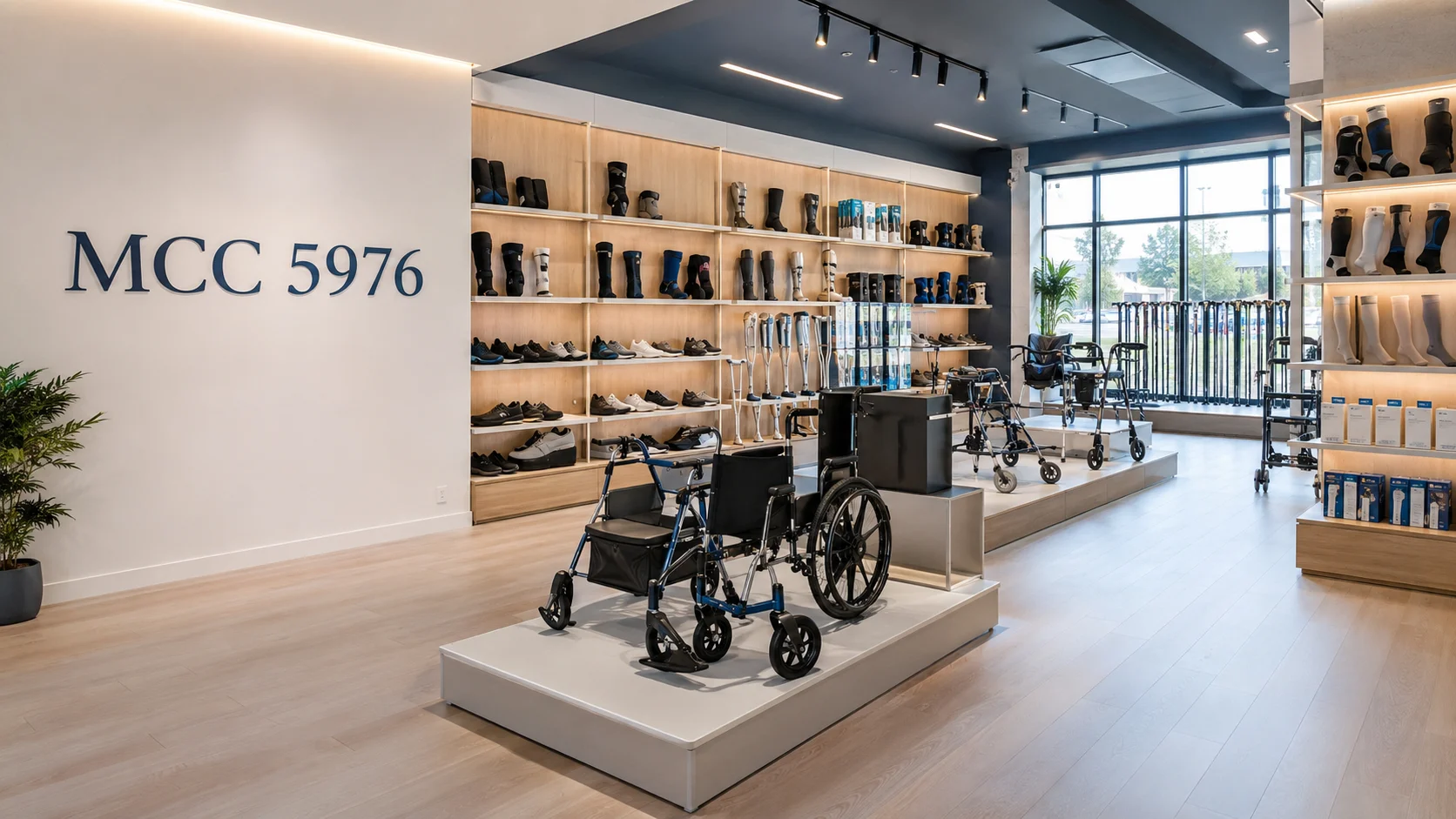

Merchant Category Codes (MCCs) help payment processors, financial institutions, and card networks classify businesses based on the products and services they primarily provide. These four-digit codes influence payment processing, merchant reporting, interchange fees, fraud monitoring, and, in some cases, credit card rewards. Businesses specializing in orthopedic products, prosthetic devices, mobility equipment, and rehabilitation supplies are generally classified under MCC 5976.
MCC 5976 applies to merchants that primarily sell orthopedic goods, prosthetic limbs, orthotic braces, mobility aids, and other medical devices designed to improve mobility, restore function, or support physical rehabilitation. Many businesses operating under this classification also provide custom fittings, product adjustments, repairs, patient education, and ongoing support. Understanding how MCC 5976 works helps business owners ensure accurate merchant classification while giving payment providers a clear understanding of their primary business activities.
Table of Contents
- Understanding MCC 5976
- Businesses Classified Under MCC 5976
- Products and Services Offered by MCC 5976 Businesses
- Why MCC 5976 Matters
- MCC 5976 Compared to Similar Merchant Categories
- How Orthopedic Goods and Prosthetic Businesses Operate
- Inventory and Operational Challenges
- Industry Trends
- How Biyo Helps Orthopedic Goods Businesses
- Frequently Asked Questions
Understanding MCC 5976
What Is MCC 5976?
MCC 5976 is the Merchant Category Code assigned to businesses that primarily sell orthopedic goods, prosthetic devices, orthotic supports, and mobility-related medical equipment. These merchants help individuals recover from injuries, manage chronic conditions, regain mobility, and improve their quality of life by providing specialized medical products supported by professional fitting and personalized care.
How Businesses Receive This Classification
When an orthopedic supply company or prosthetic device retailer applies for a merchant account, the payment processor reviews its primary business activities before assigning a Merchant Category Code. Businesses whose primary revenue comes from orthopedic products, prosthetic devices, rehabilitation equipment, and mobility aids are typically classified under MCC 5976. Additional services such as product fitting, adjustments, repairs, and follow-up care generally remain part of this classification because they directly support the sale and use of these medical devices.
Common Transactions Processed Under MCC 5976
Transactions processed under MCC 5976 commonly include prosthetic limbs, orthopedic braces, compression garments, walkers, wheelchairs, crutches, mobility scooters, orthopedic footwear, rehabilitation products, custom orthotics, replacement components, fitting services, repair work, and maintenance appointments. Many businesses also process payments for consultations and customized product modifications that improve patient comfort and functionality.
 Businesses Classified Under MCC 5976
 Businesses Classified Under MCC 5976
Orthopedic Medical Supply Stores
Orthopedic supply retailers represent one of the largest groups of businesses classified under MCC 5976. These stores offer products designed to improve mobility, support injury recovery, and assist individuals living with musculoskeletal conditions. Customers often visit these retailers for braces, orthopedic supports, rehabilitation products, compression therapy items, and mobility equipment recommended by healthcare professionals.
Prosthetic and Orthotic Providers
Many prosthetic and orthotic clinics also qualify under MCC 5976 when their primary business involves supplying custom prosthetic limbs, orthotic braces, and related medical devices. These providers frequently work with physicians, physical therapists, and rehabilitation specialists to design, fit, adjust, and maintain devices tailored to each patient’s medical needs and lifestyle.
Mobility Equipment Specialists
Some businesses operating under MCC 5976 specialize in mobility equipment such as manual wheelchairs, power wheelchairs, walkers, rollators, mobility scooters, transfer aids, and patient safety products. Many also provide equipment demonstrations, professional fittings, maintenance services, and replacement parts to ensure customers can safely and comfortably use their mobility devices.
Products and Services Offered by MCC 5976 Businesses
Orthopedic Supports and Rehabilitation Products
Businesses classified under MCC 5976 offer a broad selection of orthopedic braces, joint supports, compression garments, cervical collars, back braces, wrist splints, ankle supports, knee braces, and rehabilitation products designed to stabilize injuries, reduce pain, and support recovery. These products are commonly recommended following surgery, sports injuries, or chronic orthopedic conditions.
Prosthetic Devices and Custom Orthotics
Many providers specialize in custom prosthetic limbs, prosthetic components, artificial joints, shoe inserts, custom foot orthotics, and personalized orthopedic solutions. These products are individually fitted to each patient using specialized measurements and advanced manufacturing techniques that improve comfort, mobility, and long-term functionality.
Mobility Aids and Patient Support Equipment
Beyond orthopedic products, many businesses sell mobility aids including wheelchairs, walkers, canes, rollators, crutches, mobility scooters, lift chairs, bathroom safety equipment, and transfer devices. Many retailers also provide product assembly, fitting, maintenance, repairs, and educational support to help customers safely use their equipment and maintain long-term independence.
Why MCC 5976 Matters
Supports Accurate Merchant Classification
Using MCC 5976 enables payment processors to accurately identify businesses that specialize in orthopedic goods and prosthetic devices. Proper merchant classification supports efficient payment processing while ensuring transactions are categorized according to industry standards.
Improves Financial Reporting and Payment Analytics
Merchant Category Codes provide valuable transaction data that supports business reporting, payment analytics, fraud monitoring, and financial benchmarking. Accurate classification also helps merchants better understand purchasing trends while assisting payment providers with industry-specific reporting.
Supports Healthcare-Related Payment Programs
Many orthopedic products and prosthetic devices are purchased using health savings accounts (HSAs), flexible spending accounts (FSAs), insurance reimbursements, or healthcare financing programs. Accurate merchant classification helps facilitate appropriate payment processing while improving reporting for healthcare-related purchases.
MCC 5976 Compared to Similar Merchant Categories
| Merchant Category Code | Primary Business Type | Typical Products and Services |
|---|---|---|
| MCC 5976 | Orthopedic Goods and Prosthetic Devices | Prosthetics, braces, mobility aids, orthotics, rehabilitation equipment |
| MCC 5975 | Hearing Aid Sales and Supplies | Hearing aids, hearing accessories, fittings, hearing care products |
| MCC 5912 | Drug Stores and Pharmacies | Prescription medications, OTC medicines, pharmacy services |
| MCC 8099 | Health Practitioners | Professional healthcare and specialized medical services |
How Orthopedic Goods and Prosthetic Businesses Operate
Evaluating Patient Needs and Recommending Products
Many businesses classified under MCC 5976 begin by assessing a customer’s medical needs, mobility challenges, or rehabilitation goals before recommending appropriate products. Depending on the business model, staff may work from physician prescriptions, physical therapist recommendations, or detailed patient consultations to identify suitable orthopedic braces, prosthetic devices, orthotic supports, or mobility equipment. This personalized approach helps ensure customers receive products that match their medical requirements, physical measurements, and daily lifestyle.
Custom Fitting and Device Adjustments
Unlike conventional retail products, many orthopedic and prosthetic devices require professional fitting and customization. Prosthetic limbs, custom orthotics, spinal braces, and compression garments often need precise measurements and multiple adjustments to maximize comfort, mobility, and long-term effectiveness. Businesses frequently schedule follow-up appointments to fine-tune fit, replace worn components, and ensure the equipment continues to perform as intended throughout the patient’s recovery or long-term care.
Providing Ongoing Maintenance and Customer Support
Customer relationships often continue long after the initial purchase. Many orthopedic suppliers provide repair services, replacement parts, preventive maintenance, equipment inspections, and product upgrades to extend the life of mobility devices and prosthetic equipment. Staff also educate customers on proper product use, cleaning procedures, maintenance schedules, and safety recommendations, helping improve both product performance and patient confidence.
Inventory and Operational Challenges
Managing Specialized Medical Inventory
Orthopedic retailers carry a diverse inventory that includes braces, prosthetic components, compression products, mobility aids, rehabilitation equipment, and replacement accessories in multiple sizes and configurations. Maintaining accurate inventory levels is essential because many products are highly specialized, expensive, and ordered less frequently than standard retail merchandise. Effective inventory management helps reduce excess stock while ensuring commonly prescribed items remain readily available.
Balancing Custom Orders with In-Stock Products
Many businesses must manage both ready-to-sell inventory and custom-manufactured medical devices. While products such as walkers, canes, and support braces are typically stocked for immediate purchase, custom prosthetics and orthotics often require measurements, fabrication, fitting appointments, and follow-up adjustments. Coordinating these workflows efficiently helps reduce delivery times while maintaining high standards of patient care.
Meeting Regulatory and Documentation Requirements
Orthopedic and prosthetic providers operate within a highly regulated healthcare environment. Businesses must maintain detailed product records, supplier documentation, warranty information, patient measurements, and reimbursement documentation while complying with applicable healthcare regulations. Strong operational processes help improve traceability, support insurance claims, and maintain product quality throughout the supply chain.
Industry Trends
Advancements in Prosthetic Technology
Modern prosthetic devices continue to evolve through lightweight materials, carbon fiber construction, microprocessor-controlled joints, and sensor-assisted movement technologies. These innovations improve comfort, durability, and mobility while allowing providers to offer more personalized solutions that support a wider range of daily activities.
Growth of Digital Scanning and Custom Manufacturing
Many orthopedic providers are replacing traditional casting methods with digital body scanning, computer-aided design (CAD), and advanced manufacturing technologies. These tools improve measurement accuracy, shorten production timelines, and create more precise prosthetic and orthotic devices that deliver improved fit and patient satisfaction.
Increasing Demand for Mobility and Rehabilitation Solutions
Growing demand for orthopedic products is being driven by an aging population, rising participation in sports and physical activities, advances in rehabilitation medicine, and greater awareness of mobility solutions. As more individuals seek products that support recovery, independence, and long-term mobility, businesses are expanding their product offerings while investing in personalized patient services and innovative assistive technologies.
How Biyo Helps Orthopedic Goods and Prosthetic Device Businesses
 How Biyo Helps Orthopedic Goods and Prosthetic Device Businesses
Orthopedic retailers and prosthetic device providers manage a diverse inventory that ranges from high-value prosthetic components and orthopedic braces to mobility aids, compression garments, rehabilitation products, and replacement accessories. Biyo POS helps simplify retail operations with real-time inventory tracking, barcode scanning, centralized reporting, and cloud-based management, giving businesses greater visibility into inventory levels, product movement, and sales performance across multiple product categories.
Whether you operate an independent orthopedic supply store or manage multiple locations specializing in mobility and rehabilitation equipment, Biyo provides the tools needed to improve inventory accuracy, streamline point-of-sale transactions, and support informed business decisions. You can sign up for Biyo POS or schedule a personalized demo to learn how Biyo can support your orthopedic retail business.
Frequently Asked Questions
What is MCC 5976?
MCC 5976 is the Merchant Category Code assigned to businesses that primarily sell orthopedic goods, prosthetic devices, mobility aids, orthotic supports, and rehabilitation equipment.
Which businesses qualify for MCC 5976?
Orthopedic medical supply stores, prosthetic and orthotic providers, mobility equipment retailers, and businesses specializing in rehabilitation products generally qualify under MCC 5976 when these products represent their primary business activity.
What products are commonly sold under MCC 5976?
Businesses classified under MCC 5976 commonly sell prosthetic limbs, orthopedic braces, custom orthotics, wheelchairs, walkers, mobility scooters, compression garments, rehabilitation equipment, patient support products, and replacement components.
Does MCC 5976 affect credit card rewards?
Yes. Some credit card issuers use Merchant Category Codes to determine cashback categories and rewards eligibility. Depending on the card issuer’s program, purchases processed under MCC 5976 may qualify for healthcare-related benefits or other eligible rewards.
Why is MCC 5976 important?
MCC 5976 helps payment processors accurately classify orthopedic and prosthetic businesses for payment processing, transaction reporting, fraud monitoring, merchant account management, and healthcare-related financial reporting.
How can orthopedic retailers improve operational efficiency?
Businesses can improve efficiency by implementing inventory management software, barcode scanning, integrated POS systems, real-time reporting, and automated stock monitoring to better manage medical devices, mobility equipment, and customer transactions.