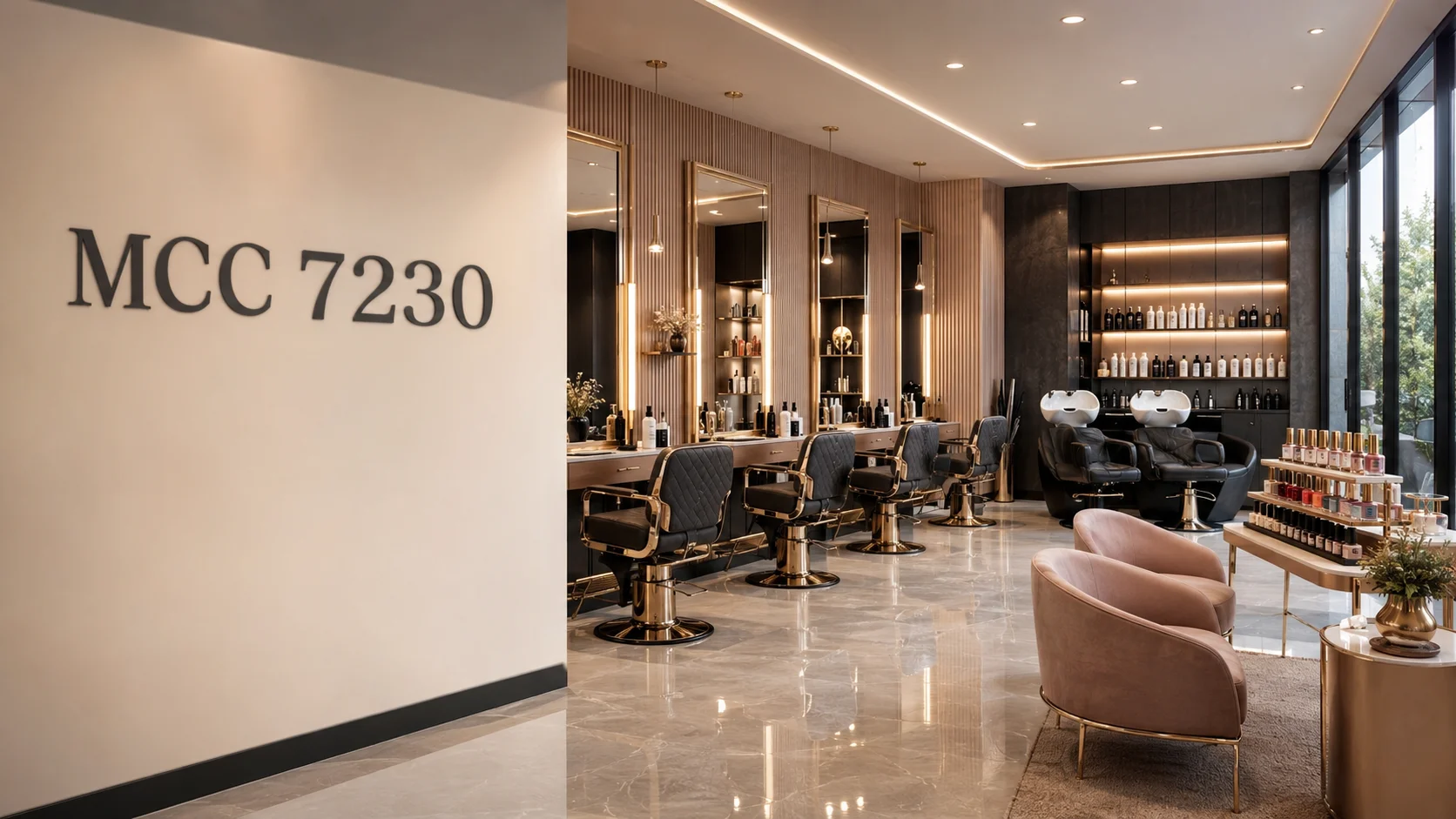

Merchant Category Codes (MCCs) help payment processors, financial institutions, and card networks classify businesses based on the products and services they primarily provide. These four-digit codes play an important role in payment processing, interchange fees, merchant reporting, fraud prevention, and even certain credit card rewards programs. Businesses that primarily provide hair care, barbering, and beauty services are generally classified under MCC 7230.
MCC 7230 applies to beauty salons, barber shops, hair studios, and similar personal grooming businesses that specialize in haircuts, hairstyling, coloring, shaving, and related beauty services. Many establishments also generate revenue by selling professional hair care products, styling tools, and grooming accessories alongside their salon services. Understanding how MCC 7230 works helps business owners maintain accurate merchant classification while ensuring payment providers correctly identify their primary business activities.
Table of Contents
- Understanding MCC 7230
- Businesses Classified Under MCC 7230
- Products and Services Offered by MCC 7230 Businesses
- Why MCC 7230 Matters
- MCC 7230 Compared to Similar Merchant Categories
- How Beauty Salons and Barber Shops Operate
- Inventory and Operational Challenges
- Industry Trends
- How Biyo Helps Beauty and Barber Businesses
- Frequently Asked Questions
Understanding MCC 7230
What Is MCC 7230?
MCC 7230 is the Merchant Category Code assigned to beauty salons, barber shops, and businesses that primarily provide professional hair care and grooming services. These merchants specialize in improving their clients’ appearance through haircuts, styling, coloring, chemical treatments, beard grooming, and other salon services. While many businesses also sell retail hair care products, their primary source of revenue comes from providing professional personal care services.
How Businesses Receive This Classification
When a beauty salon or barber shop opens a merchant account, the payment processor reviews its primary business activities before assigning a Merchant Category Code. Businesses whose core operations revolve around professional hair care, barbering, and grooming services are generally classified under MCC 7230. Additional retail sales of shampoos, conditioners, styling products, and grooming accessories typically remain part of this classification because they directly support the salon’s service offerings.
Common Transactions Processed Under MCC 7230
Transactions processed under MCC 7230 commonly include haircuts, beard trims, hair coloring, highlights, balayage, hair treatments, blowouts, shampoo services, hair extensions, perms, straightening treatments, children’s haircuts, bridal hairstyling, grooming packages, and retail purchases of professional hair care products and styling tools.
 Businesses Classified Under MCC 7230
 Businesses Classified Under MCC 7230
Beauty Salons
Beauty salons represent the largest group of businesses classified under MCC 7230. These establishments provide a wide variety of professional hair services, including cutting, coloring, styling, conditioning treatments, and chemical services for clients of all ages. Many salons also offer premium consultation services to help clients select hairstyles and treatments that complement their hair type, lifestyle, and personal preferences.
Barber Shops
Traditional and modern barber shops also fall under MCC 7230. In addition to men’s haircuts, many barber shops provide beard shaping, straight razor shaves, mustache grooming, scalp treatments, and personalized grooming consultations. Modern barbering businesses often combine classic techniques with contemporary styling services to serve a broad customer base.
Hair Studios and Specialty Hair Care Businesses
Many independent hair studios, salon suites, and specialty hair care businesses qualify under MCC 7230 when their primary business involves professional hairstyling and grooming services. Some specialize in curly hair, textured hair, color correction, hair restoration consultations, or luxury hair treatments, while others focus on bridal styling, event hair services, or premium salon experiences.
Products and Services Offered by MCC 7230 Businesses
Haircuts, Styling, and Grooming Services
The primary services provided by businesses classified under MCC 7230 include professional haircuts, hairstyling, beard grooming, blow-drying, shampooing, and finishing services. Many salons also provide styling for weddings, proms, corporate events, and other special occasions, helping clients achieve personalized looks for important events.
Hair Coloring and Specialty Treatments
Many beauty salons offer advanced color services such as highlights, lowlights, balayage, ombré, color correction, root touch-ups, gray coverage, and fashion colors. Additional specialty treatments often include deep conditioning, keratin smoothing, scalp treatments, perms, relaxers, and hair repair services designed to improve hair health and appearance.
Professional Hair Care Products
Retail sales are an important source of additional revenue for many salons and barber shops. Businesses commonly sell professional shampoos, conditioners, styling products, hair masks, serums, oils, brushes, combs, clippers, trimmers, and other salon-quality products that help clients maintain their hairstyles and hair health between appointments.
Why MCC 7230 Matters
Supports Accurate Merchant Classification
Using MCC 7230 enables payment processors to accurately identify businesses specializing in beauty and barber services. Proper merchant classification helps ensure transactions are processed according to industry standards while supporting accurate merchant account management.
Improves Financial Reporting and Business Analytics
Merchant Category Codes provide valuable transaction data that supports payment reporting, financial analysis, fraud monitoring, and business benchmarking. Accurate classification allows salon owners to better understand sales trends while helping financial institutions categorize transactions correctly.
Supports Customer Payment Experiences
Beauty salons and barber shops process a wide variety of payments, including in-store purchases, appointment deposits, gratuities, gift cards, and retail product sales. Accurate merchant classification helps support efficient payment processing while improving reporting for both merchants and payment providers.
MCC 7230 Compared to Similar Merchant Categories
| Merchant Category Code | Primary Business Type | Typical Products and Services |
|---|---|---|
| MCC 7230 | Beauty and Barber Shops | Haircuts, hairstyling, beard grooming, hair coloring, salon products |
| MCC 7298 | Health and Beauty Spas | Spa treatments, massages, facials, wellness services |
| MCC 5977 | Cosmetics and Beauty Supply Stores | Cosmetics, skincare, beauty products, fragrances |
| MCC 7299 | Miscellaneous Personal Services | Various personal care and specialty services not classified elsewhere |
How Beauty Salons and Barber Shops Operate
Managing Appointments and Client Schedules
Daily operations at beauty salons and barber shops revolve around appointment scheduling, walk-in services, staff availability, and customer communication. Many businesses use digital booking systems that allow clients to reserve appointments online, receive automated reminders, and select their preferred stylist or barber. Efficient scheduling helps reduce wait times, maximize chair utilization, and improve the overall customer experience while allowing business owners to better manage staffing throughout the day.
Delivering Personalized Beauty and Grooming Services
Each client typically receives a personalized consultation before a service begins. Stylists and barbers evaluate hair type, texture, growth patterns, facial features, and individual preferences before recommending haircuts, color treatments, styling techniques, or grooming services. Throughout the appointment, professionals use specialized equipment and salon-grade products to deliver consistent results while maintaining hygiene standards and ensuring customer comfort.
Managing Retail Sales and Customer Relationships
Many salons and barber shops supplement service revenue by selling professional hair care products, styling tools, beard care products, and grooming accessories. Staff often recommend products used during appointments, helping clients maintain their hairstyles at home while creating additional retail sales opportunities. Customer loyalty programs, membership packages, gift cards, and personalized product recommendations also help strengthen long-term client relationships and encourage repeat visits.
Inventory and Operational Challenges
Managing Professional Product Inventory
Beauty businesses rely on a steady supply of shampoos, conditioners, hair color, developers, styling products, disinfectants, gloves, towels, foils, and other salon essentials. Maintaining accurate inventory levels helps prevent service interruptions, reduces product waste, and ensures popular retail items remain available for customers. Inventory tracking is particularly important for color products, where multiple shades and formulas must be carefully managed.
Balancing Staff Productivity and Appointment Availability
Revenue depends heavily on maximizing appointment schedules while avoiding long customer wait times or underutilized staff. Unexpected cancellations, late arrivals, and seasonal fluctuations can disrupt daily operations, making flexible scheduling and efficient staff management essential for maintaining profitability and delivering excellent customer service.
Maintaining Consistent Service Quality
Customer satisfaction depends on consistent service quality across every appointment. Salon owners must invest in ongoing staff training, sanitation procedures, equipment maintenance, and customer service standards while keeping up with evolving beauty trends and styling techniques. Delivering consistently high-quality results helps generate repeat business, positive online reviews, and valuable word-of-mouth referrals.
Industry Trends
Growth of Online Booking and Digital Customer Engagement
Digital appointment scheduling, mobile booking apps, automated reminders, online consultations, and social media marketing have become standard tools for modern beauty businesses. These technologies simplify appointment management, reduce missed appointments, and improve communication between businesses and their clients while making it easier for customers to discover new services.
Increasing Demand for Premium and Personalized Services
Many customers now seek customized beauty experiences rather than standardized salon services. Personalized consultations, premium hair treatments, customized color services, scalp care, and specialized grooming packages allow businesses to differentiate themselves while increasing customer satisfaction and average transaction values.
Expansion of Retail Product Sales
Retail sales continue to play a growing role in salon profitability. Many beauty salons and barber shops now offer professional hair care collections, sustainable beauty products, styling tools, beard care products, and exclusive product lines that complement their services. By combining professional expertise with carefully selected retail products, businesses create additional revenue streams while helping clients maintain salon-quality results between appointments.
How Biyo Helps Beauty Salons and Barber Shops
 How Biyo Helps Beauty Salons and Barber Shops
Beauty salons and barber shops manage more than appointments—they also track retail inventory, process service payments, sell gift cards, and manage customer relationships. Biyo POS helps simplify these daily operations with real-time inventory tracking, barcode scanning, cloud-based reporting, and centralized sales management. This gives salon owners greater visibility into product sales, inventory levels, employee performance, and overall business operations from a single platform.
Whether you operate an independent barber shop, a full-service beauty salon, or multiple salon locations, Biyo provides the tools needed to streamline checkout, improve inventory accuracy, and support informed business decisions. You can sign up for Biyo POS or schedule a personalized demo to learn how Biyo can help simplify your salon operations.
Frequently Asked Questions
What is MCC 7230?
MCC 7230 is the Merchant Category Code assigned to beauty salons, barber shops, and businesses that primarily provide professional hair care, hairstyling, and grooming services.
Which businesses qualify for MCC 7230?
Beauty salons, barber shops, hair studios, salon suites, and specialty hair care businesses generally qualify under MCC 7230 when professional hair services represent their primary business activity.
What services are commonly offered under MCC 7230?
Businesses classified under MCC 7230 commonly provide haircuts, hairstyling, beard grooming, hair coloring, highlights, chemical treatments, scalp treatments, bridal styling, and professional grooming services. Many also sell salon-quality hair care and styling products.
Does MCC 7230 affect credit card rewards?
Yes. Some credit card issuers use Merchant Category Codes to determine cashback categories and rewards eligibility. Depending on the issuer’s program, purchases processed under MCC 7230 may qualify for personal care or lifestyle-related rewards.
Why is MCC 7230 important?
MCC 7230 helps payment processors accurately classify beauty salons and barber shops for payment processing, financial reporting, fraud monitoring, and merchant account management while ensuring transactions are categorized correctly.
How can beauty salons and barber shops improve operational efficiency?
Businesses can improve efficiency by implementing appointment scheduling software, inventory management systems, integrated POS solutions, customer loyalty programs, and real-time reporting to better manage services, retail sales, and client relationships.