How a business values inventory is one of the most important financial decisions it can make. Inventory pricing affects profitability, taxes, financial reporting, operational planning, and even how investors or lenders evaluate the company. While many business owners initially think inventory valuation is simply an accounting requirement, the reality is far more strategic.
The inventory pricing method you choose directly impacts your Cost of Goods Sold (COGS), reported profits, ending inventory value, and tax obligations. Two companies selling identical products can report very different profits simply because they use different inventory accounting methods.
That difference matters.
Inventory is often one of the largest assets businesses hold, especially in retail, wholesale, manufacturing, food service, and eCommerce industries. Poor inventory management can distort profitability, create inaccurate financial reporting, and reduce operational visibility.
At the same time, businesses dealing with inflation, changing supplier costs, and fluctuating demand need inventory pricing systems that reflect operational reality.
Modern inventory management is no longer just about counting products on shelves. Businesses now rely on accurate inventory costing to improve forecasting, manage cash flow, evaluate margins, and make smarter purchasing decisions.
Choosing the correct inventory pricing method helps create a clearer financial picture while improving long-term business planning.
In this guide, we’ll break down the major inventory pricing methods, explain how FIFO, LIFO, and Weighted Average Cost work, explore their financial impact, compare advantages and disadvantages, and examine how businesses choose the right approach for their operations.
Table of Contents
- Understanding the Core Methods of Inventory Pricing
- How the FIFO Method Works
- Using the LIFO Method
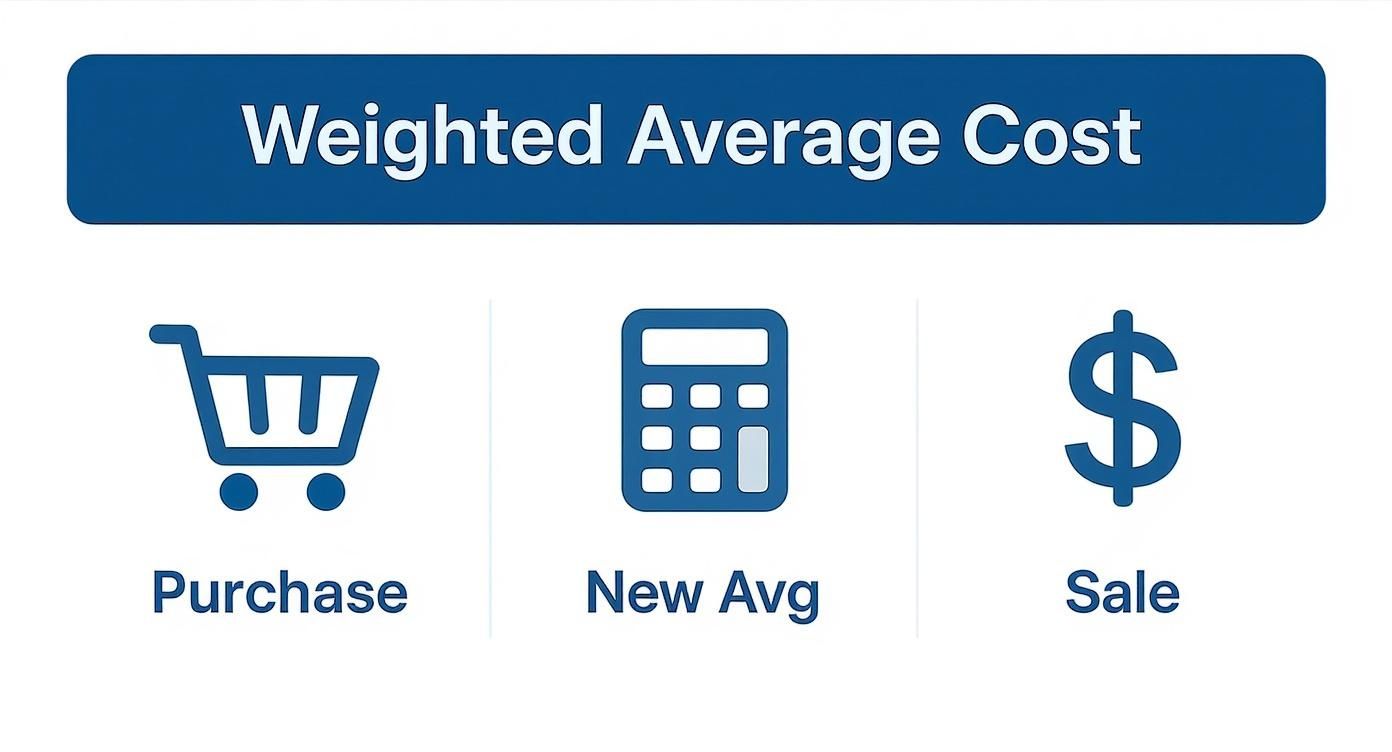
- Understanding Weighted Average Cost
- How Inventory Methods Affect Financial Reports
- Choosing the Right Inventory Pricing Method
- Common Inventory Pricing Mistakes
- Modern Inventory Management Challenges
- How Biyo POS Helps Businesses Manage Inventory
- Frequently Asked Questions
Understanding the Core Methods of Inventory Pricing
Inventory pricing methods determine how businesses assign costs to products sold and products remaining in inventory.
These methods influence two major financial areas:
Cost of Goods Sold (COGS) and ending inventory valuation.
Because product prices constantly change due to inflation, supplier costs, transportation expenses, and market conditions, businesses need a structured method for deciding which inventory costs are assigned to sales.
The four primary inventory pricing methods are:
- FIFO (First-In, First-Out)
- LIFO (Last-In, First-Out)
- Weighted Average Cost (WAC)
- Specific Identification
Each method follows different assumptions about how inventory flows through the business.
These assumptions can dramatically affect profitability during periods of rising or falling prices.
For example, during inflation:
FIFO usually produces higher profits, while LIFO often lowers taxable income.
Weighted Average Cost creates a middle-ground approach that smooths out price fluctuations.
Specific Identification is primarily used for unique, high-value items where each product can be individually tracked.
Businesses must choose inventory methods carefully because consistency in accounting practices is important for reliable financial reporting.
The chosen method should reflect both operational reality and financial strategy.

How the FIFO Method Works
FIFO stands for First-In, First-Out.
This method assumes the oldest inventory purchased is sold first.
In practical terms, FIFO often mirrors how businesses physically manage inventory, especially when products have expiration dates, seasonal relevance, or risk of obsolescence.
Examples include:
groceries, pharmaceuticals, cosmetics, electronics, and fashion retail.
Under FIFO, the oldest inventory costs are assigned to Cost of Goods Sold first, while the newest inventory remains on the balance sheet as ending inventory.
During inflationary periods, FIFO generally creates:
lower COGS, higher reported profits, and higher ending inventory values.
This happens because older inventory costs are usually cheaper than current replacement costs.
As a result, businesses using FIFO often appear more profitable on financial statements.
That stronger profitability can help when seeking:
investors, financing, or business expansion opportunities.
FIFO also produces ending inventory values closer to current market prices because unsold inventory reflects more recent purchases.
For example, imagine a coffee shop purchasing coffee beans in three batches:
- 10 pounds at $10 per pound
- 10 pounds at $12 per pound
- 10 pounds at $15 per pound
If the business sells 15 pounds using FIFO:
the first 10 pounds sold are valued at $10 each, and the next 5 pounds are valued at $12 each.
The total Cost of Goods Sold becomes:
$100 + $60 = $160.
The remaining inventory is valued using the newest purchases, resulting in higher inventory value on the balance sheet.
FIFO is accepted under both Generally Accepted Accounting Principles (GAAP) and International Financial Reporting Standards (IFRS), making it globally recognized.
However, higher reported profits can also increase income tax obligations.
This creates a trade-off between stronger profitability reporting and larger tax expenses.

Using the LIFO Method
LIFO stands for Last-In, First-Out.
This method assumes the most recently purchased inventory is sold first.
Unlike FIFO, LIFO does not always reflect physical inventory movement. Instead, it is primarily used for financial and tax strategy purposes.
Under LIFO during inflationary periods:
higher recent inventory costs are matched against current sales revenue.
This creates higher Cost of Goods Sold and lower reported profits.
Lower profits usually result in lower taxable income, which explains why many U.S.-based businesses historically preferred LIFO during periods of rising costs.
For example, using the same coffee bean purchases:
- 10 pounds at $10 per pound
- 10 pounds at $12 per pound
- 10 pounds at $15 per pound
If the coffee shop sells 15 pounds using LIFO:
the first 10 pounds sold are valued at $15 each, while the next 5 pounds are valued at $12 each.
The total Cost of Goods Sold becomes:
$150 + $60 = $210.
Compared to FIFO, LIFO produces significantly higher COGS and lower profits.
That lower profitability can reduce tax liability and improve short-term cash flow.
However, LIFO also creates disadvantages.
Ending inventory may appear undervalued because older, cheaper inventory remains on the balance sheet.
This can distort the company’s financial position and reduce comparability with international businesses.
One major limitation is that LIFO is prohibited under International Financial Reporting Standards (IFRS).
It is mainly used in the United States under GAAP regulations.
Businesses considering LIFO must also understand the risk of LIFO liquidation.
This occurs when companies sell older inventory layers accumulated during previous years.
Because those older inventory costs are usually much lower, profits can suddenly spike unexpectedly, creating larger tax obligations.
LIFO works best for certain businesses seeking tax advantages during inflation, but it requires careful financial planning and accounting oversight.

Understanding Weighted Average Cost
The Weighted Average Cost method provides a middle-ground approach between FIFO and LIFO.
Instead of tracking specific inventory layers, businesses calculate one blended average cost for all similar inventory items.
This method is especially useful for companies selling:
large quantities of identical products where individual tracking is impractical.
Industries commonly using Weighted Average Cost include:
fuel distribution, agriculture, hardware supply, and manufacturing.
The formula is straightforward.
Businesses divide total inventory cost by total inventory units available for sale.
For example:
- 10 units purchased at $10 each = $100
- 10 units purchased at $12 each = $120
Total inventory cost becomes $220 across 20 units.
The weighted average cost equals:
$220 ÷ 20 = $11 per unit.
Every sale afterward uses this average cost until new inventory is purchased and the average is recalculated.
If the company sells 15 units:
COGS becomes 15 × $11 = $165.
This result falls between FIFO and LIFO values, creating smoother financial reporting.
Weighted Average Cost offers several advantages.
It simplifies accounting, reduces administrative complexity, and minimizes dramatic swings in profitability caused by fluctuating supplier prices.
Because inventory costs are blended together, businesses achieve more stable margins and more predictable financial reporting.
However, Weighted Average Cost may not reflect current replacement costs as accurately as FIFO during periods of rapid inflation.
Still, for many businesses, the simplicity and consistency of Weighted Average Cost outweigh its limitations.
How Inventory Methods Affect Financial Reports
The inventory pricing method a business chooses directly affects its financial statements.
Inventory accounting influences:
Cost of Goods Sold, gross profit, net income, taxes, and ending inventory valuation.
During inflationary periods:
- FIFO typically creates lower COGS and higher profits
- LIFO creates higher COGS and lower profits
- Weighted Average Cost creates moderate blended results
These differences can significantly alter how profitable and financially stable a business appears.
For example, two companies with identical sales may report different profits simply because they use different inventory accounting methods.
Investors and lenders often analyze:
gross margins, profitability trends, inventory values, and operational efficiency.
That means inventory accounting choices directly influence business perception.
FIFO often appeals to businesses focused on:
strong profitability reporting and healthier balance sheets.
LIFO appeals more to businesses seeking:
tax reduction and cash preservation during inflation.
Weighted Average Cost appeals to companies wanting:
stable reporting and simplified accounting.
Inventory methods also affect operational analysis.
Metrics such as:
inventory turnover, gross margin percentage, and carrying costs can appear different depending on the chosen pricing approach.
Because of this, consistency in inventory accounting is critical for accurate long-term comparisons.
Choosing the Right Inventory Pricing Method
There is no universal “best” inventory pricing method.
The correct approach depends on:
industry, product type, financial goals, operational workflows, and tax strategy.
Businesses selling perishable or time-sensitive products usually benefit from FIFO because it aligns naturally with physical inventory movement.
Examples include:
food retail, pharmaceuticals, and fashion.
Businesses focused heavily on reducing taxable income during inflation may prefer LIFO if allowed under their accounting framework.
Companies dealing with bulk identical inventory often benefit from Weighted Average Cost because tracking individual layers becomes impractical.
Management goals matter too.
If a company wants to appear more profitable for investors or lenders, FIFO may provide stronger financial presentation.
If preserving cash through lower taxes is more important, LIFO may become attractive.
Businesses should also consider:
international operations, accounting compliance requirements, and future growth plans.
Since IFRS prohibits LIFO, multinational businesses often avoid it entirely.
Changing inventory methods later can become complicated and may require tax authority approval.
Because of this, businesses should evaluate inventory pricing carefully before implementation.
Common Inventory Pricing Mistakes
Many businesses underestimate how much inventory accounting affects overall financial health.
One common mistake is choosing a method solely for short-term tax benefits without considering long-term reporting consequences.
Another major problem is inconsistent inventory tracking.
Even the best pricing method becomes unreliable if inventory counts are inaccurate.
Businesses also frequently ignore inventory carrying costs such as:
storage, spoilage, insurance, depreciation, and obsolescence.
Failing to integrate inventory systems with accounting and operational software can also create reporting errors.
Manual inventory management increases the risk of:
duplicate entries, missing stock, pricing mistakes, and inaccurate forecasting.
Another mistake involves failing to monitor inventory turnover.
Businesses holding excess inventory tie up cash unnecessarily while increasing storage and operational costs.
Effective inventory pricing must work alongside strong inventory management practices.
Modern Inventory Management Challenges
Modern businesses face inventory challenges far beyond basic accounting.
Global supply chain disruptions, inflation, transportation delays, and changing consumer demand all affect inventory strategy.
Businesses now require real-time visibility into:
inventory levels, supplier pricing, stock movement, and profitability trends.
eCommerce growth has also increased complexity.
Many businesses now manage inventory across:
physical stores, warehouses, online marketplaces, and third-party fulfillment centers simultaneously.
Without accurate inventory systems, businesses risk:
stockouts, overstocking, inaccurate financial reporting, and lost sales opportunities.
Modern inventory management increasingly depends on automation, reporting tools, barcode systems, and cloud-based software platforms.
Strong inventory visibility helps businesses make faster and more informed operational decisions.
How Biyo POS Helps Businesses Manage Inventory
Biyo POS helps businesses streamline inventory management through cloud-based operational tools designed for modern retail and business environments.
The platform supports:
inventory tracking, real-time reporting, product management, barcode systems, sales analytics, purchase monitoring, and multi-location inventory visibility.
Businesses can monitor inventory movement more accurately while reducing manual errors and improving operational efficiency.
Biyo POS also helps businesses simplify reporting and gain better visibility into profitability, stock performance, and inventory trends.
If you want to modernize your inventory management systems, you can explore the platform directly through the Biyo POS signup page.
Frequently Asked Questions
What is the most common inventory pricing method?
FIFO is one of the most widely used inventory pricing methods because it aligns naturally with physical inventory flow and is accepted internationally.
Why do businesses use LIFO?
Businesses often use LIFO during inflation because it creates higher Cost of Goods Sold and lower taxable income.
What is Weighted Average Cost?
Weighted Average Cost calculates one blended average cost for all similar inventory items rather than tracking individual inventory layers.
Is LIFO allowed internationally?
No. LIFO is prohibited under International Financial Reporting Standards (IFRS) but allowed under U.S. GAAP.
Why does inventory pricing matter?
Inventory pricing affects profitability, taxes, Cost of Goods Sold, financial reporting, and overall business decision-making.
How does Biyo POS help with inventory management?
Biyo POS helps businesses manage inventory tracking, reporting, stock monitoring, analytics, and operational workflows through integrated cloud-based tools.
fileciteturn33file0