
Reduce Chargebacks With Better POS Setup is not just a payment issue, it is an operational issue. Many merchants focus on fighting chargebacks after they happen, yet most disputes begin much earlier at the point of sale. The way a POS system is configured, secured, and used daily plays a major role in whether transactions later turn into disputes.
Chargebacks drain revenue, increase processing costs, and damage a merchant’s standing with payment providers. While fraud is one cause, many disputes result from simple mistakes such as unclear receipts, weak verification, or inconsistent transaction records. These issues are often preventable.
This article explains how merchants can reduce chargebacks with better POS setup. It covers practical configuration steps, security tools, and workflow improvements that help prevent disputes before they start.
Table of Contents
Understanding Why Chargebacks Happen
To reduce chargebacks with better POS setup, merchants must first understand why disputes occur. Chargebacks rarely happen for a single reason. Instead, they result from a combination of customer behavior, payment security gaps, and operational weaknesses.
When merchants identify these root causes, they can adjust POS settings and workflows to prevent disputes from happening in the first place.
Fraud-Related Chargebacks
Fraud remains one of the most common reasons for chargebacks. Stolen card data, unauthorized transactions, and weak verification all contribute to fraud disputes.
When POS systems lack proper security tools, fraud becomes easier. As a result, merchants face higher dispute rates.
Strong POS configuration helps block suspicious transactions before they go through.
Customer Confusion and Friendly Fraud
Not all chargebacks involve criminals. Many disputes come from customers who do not recognize a charge.
Unclear receipts, vague business names, or missing transaction details often lead customers to contact their bank.
Clear transaction records help customers understand what they paid for, reducing unnecessary disputes.
Operational Errors at Checkout
Simple mistakes also cause chargebacks. Incorrect amounts, duplicate charges, or manual entry errors create frustration.
When customers see inconsistencies, they often dispute the charge rather than contacting the merchant.
Accurate POS setup minimizes these avoidable errors.
 Building a Secure POS Foundation
 Building a Secure POS Foundation
Merchants who want to reduce chargebacks with better POS setup must start with security fundamentals. A secure foundation protects transactions at every stage.
POS systems that follow modern security standards reduce exposure to fraud and disputes.
EMV Compliance and Chip Card Processing
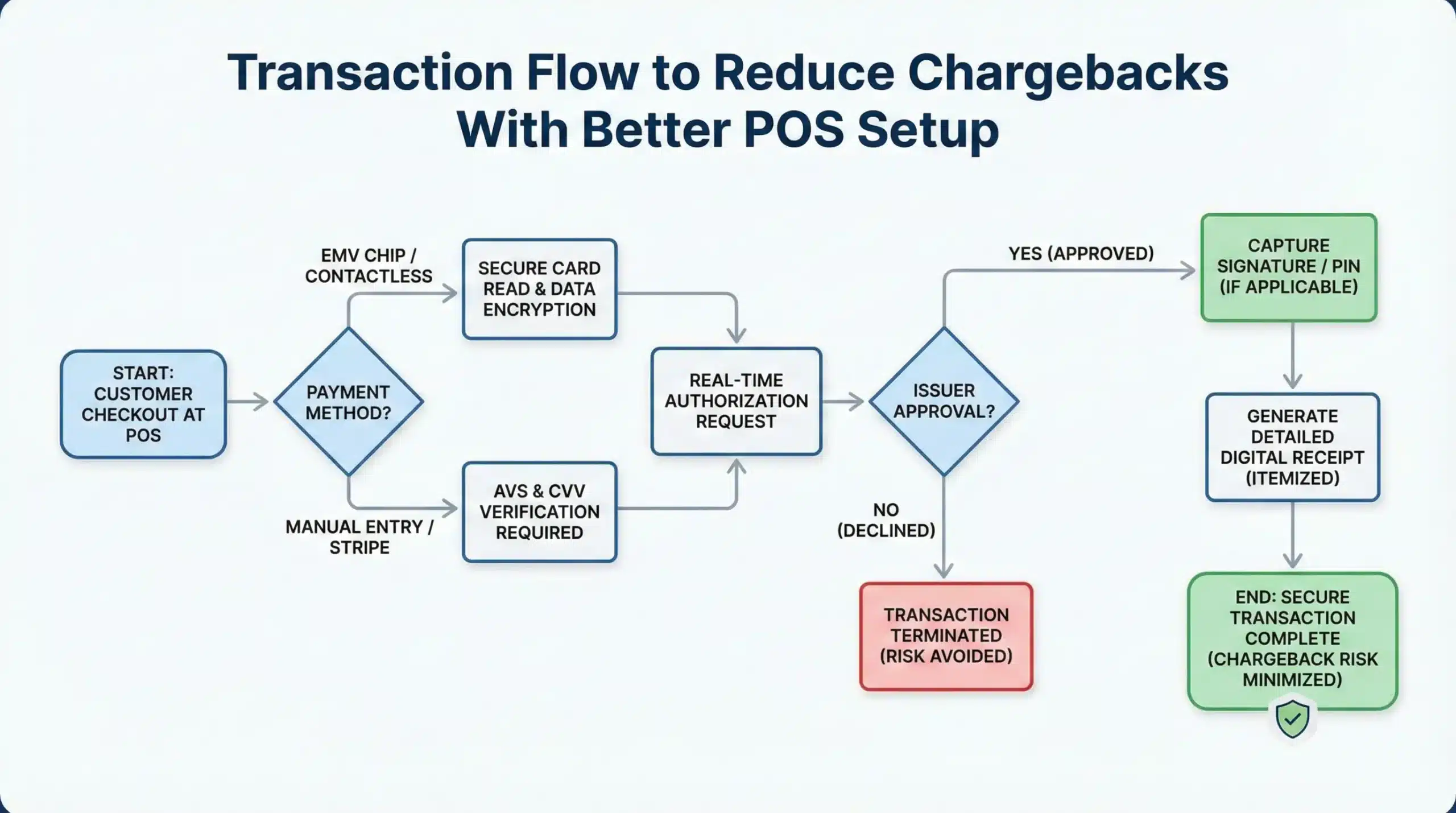
EMV compliance plays a critical role in chargeback prevention. Chip card transactions offer stronger protection than magnetic stripe swipes.
When merchants process EMV transactions correctly, liability for many fraud-related chargebacks shifts away from the business.
Ensuring that the POS system always prompts chip usage helps reduce fraud exposure.
Secure POS Hardware and Software
Outdated hardware increases risk. Older terminals may lack encryption and security updates.
Modern POS systems encrypt transaction data at the point of entry.
Encryption protects sensitive information and reduces the chance of data compromise.
User Permissions and Access Controls
Internal misuse also leads to disputes. When too many employees have full access, mistakes increase.
Role-based permissions limit who can issue refunds or adjust transactions.
Clear access controls help maintain accountability.
Improving Transaction Verification at Checkout
Transaction verification directly impacts dispute rates. Merchants can reduce chargebacks with better POS setup by strengthening verification steps.
These measures confirm that the cardholder is present and aware of the transaction.
Cardholder Verification Methods
Verification methods such as PIN entry, signature capture, or contactless confirmation add security.
When customers actively confirm payments, disputes become harder to justify.
POS systems should enable appropriate verification for each payment type.
Address and CVV Verification for Manual Entries
Manual card entry increases risk. Without safeguards, fraud becomes more likely.
Address verification and CVV checks help confirm legitimacy.
POS systems should require these fields for keyed transactions.
Clear Transaction Review Before Completion
Customers should see order details before finalizing payment.
Review screens allow customers to catch mistakes early.
Early confirmation reduces post-transaction disputes.
Receipt Management and Transaction Records
Proper documentation strengthens a merchant’s ability to reduce chargebacks with better POS setup. Receipts and records serve as proof during disputes.
When records are incomplete, banks often side with customers.
Detailed Digital and Printed Receipts
Receipts should clearly show business name, items purchased, date, and amount.
Digital receipts offer long-term storage and easy retrieval.
Clear receipts reduce customer confusion.
Consistent Business Identification
Chargebacks often happen when customers do not recognize a charge description.
POS systems should use consistent merchant names across receipts and statements.
Consistency helps customers connect charges to purchases.
Centralized Transaction History
Centralized records simplify dispute responses.
Merchants can quickly retrieve transaction data when needed.
Fast responses improve dispute outcomes.
Ongoing POS Management to Reduce Disputes
Chargeback prevention does not stop at setup. Ongoing management ensures systems stay effective.
Regular reviews help merchants adapt to new risks.
Monitoring Chargeback Patterns
POS reports reveal trends in disputes.
Identifying patterns helps merchants address root causes.
Data-driven decisions reduce repeat issues.
Staff Training and Consistency
Staff behavior impacts chargebacks.
Training ensures employees follow verification procedures.
Consistency improves transaction reliability.
Regular POS Updates and Audits
Security updates address vulnerabilities.
Regular audits catch misconfigurations.
Proactive maintenance prevents future disputes.
Why Merchants Choose Biyo POS
 Why Merchants Choose Biyo POS
Biyo POS helps merchants reduce chargebacks with better POS setup by combining secure payment processing, detailed transaction records, and flexible access controls in one system. Built-in tools support EMV compliance, transaction verification, and receipt management.
Because Biyo POS integrates payment security directly into daily workflows, merchants reduce errors and disputes without slowing down checkout. Centralized reporting helps businesses monitor chargeback trends and improve operations.
If you want to explore how Biyo POS can help protect your business, you can schedule a call with the Biyo POS team. Merchants ready to move forward can also sign up and strengthen their POS setup.
FAQs
Can a better POS setup really reduce chargebacks?
Yes. Proper POS configuration prevents many disputes before they occur.
What POS features help prevent chargebacks?
EMV compliance, transaction verification, and detailed receipts are key.
Do chargebacks always indicate fraud?
No. Many disputes result from confusion or operational errors.
How often should POS settings be reviewed?
Regular reviews help keep systems secure and effective.