Before you can tackle food waste, you have to get real about what it’s actually costing you. It’s not just about the food in the bin; it’s about a smarter way of running your entire operation. Systematically auditing your waste, tightening up inventory, and building a menu that works with you are the keys to turning that loss into profit.
The Real Cost of Food Waste in Your Kitchen
It’s tempting to glance at a trash can full of food scraps and just see the price you paid for those ingredients. But that’s a dangerously narrow view. The true cost of food waste is a hidden drain on your restaurant, silently chipping away at your profits and operational health.
Think about a single tomato that gets thrown out. You didn’t just lose the 50 cents you paid for it. You also lost the money you paid an employee to receive it, wash it, and prep it. You lost the electricity costs to keep it cool in the walk-in and the slice of your rent that paid for the space it took up.
Now, multiply that by every bit of food that gets tossed—from potato peels to a case of avocados that went bad. The financial hit is massive.
Unpacking the Hidden Expenses
To really wrap your head around the damage, you have to look past the sticker price of the food. The real costs piling up are:
- Labor Costs: All the time your team spends ordering, receiving, prepping, and then throwing away food is wasted payroll. That’s time they could have spent creating amazing dishes or serving guests.
- Utility Costs: Every wasted ingredient sat in a refrigerator or freezer, burning electricity. That’s a sunk cost with zero return on investment.
- Disposal Costs: Heavier trash bins often mean higher hauling fees from your waste management company. It’s a direct hit to your monthly budget.
This isn’t just a problem inside your four walls, either. Globally, about one-third of all food produced is wasted every year. That’s a staggering 1.3 billion metric tons. This level of waste contributes to about 8% of global greenhouse gas emissions and ties up 30% of the world’s farmland.
A restaurant’s profitability is often a game of inches, won by controlling the costs that others overlook. Food waste isn’t an unavoidable byproduct; it’s a controllable expense. Treating it that way is the first step toward a much healthier bottom line.
Beyond the numbers, food waste is a huge missed opportunity to help with food insecurity in our communities. Learning how organizations plan to use surplus food and the process for securing food pantry grants can open your eyes to better alternatives for unavoidable excess.
When you make waste reduction a core part of your business, you’re not just making an ethical choice. You’re implementing a powerful strategy that boosts your efficiency and gives you a real competitive edge.
How to Run a Smart Food Waste Audit
If you want to get a handle on food waste, you have to know exactly what you’re throwing away, why, and how much it’s costing you. Just guessing that your kitchen tosses “a lot of produce” isn’t a strategy—it’s a blind spot. A proper food waste audit gives you the hard data you need to see the problem clearly and make changes that actually work.
The process is a lot less complicated than it sounds. It’s all about turning that big, anonymous trash can into specific, measurable information. You’ll start by setting up a few distinct, clearly labeled bins for your team. This isn’t about adding extra work; it’s about creating clarity.
Categorizing Your Waste for Clear Insights
To get information you can actually use, you need to separate your waste into three main buckets. This simple sorting is the heart of the audit and will quickly show you where your biggest money leaks are.
These categories are your starting point:
- Spoilage Waste: This is anything that goes bad before you can use it. Think of that case of avocados that turned brown overnight or the milk that soured in the back of the walk-in. It’s often a sign of over-ordering or poor inventory rotation.
- Preparation Waste: These are the scraps from the prep line—vegetable peels, meat and fish trimmings, and coffee grounds. While some of this is unavoidable, tracking it can spark some real creativity, like turning trim into stocks or specials.
- Plate Waste: This is everything that comes back from the dining room uneaten. It’s a direct signal from your guests. Are portion sizes too big? Is a certain side dish always left behind? This feedback is pure gold.
This is exactly what the process looks like in action. A team member measuring waste is the critical first step in turning discarded food into valuable data.
As the image shows, an effective audit all comes down to accurate measurement. Without it, you’re just guessing.
From Raw Data to Real Action
With your categories set, the next step is to track everything. For one full week, have your team weigh the contents of each bin at the end of every shift. You don’t need fancy software to start—a simple log sheet taped to the wall next to the bins will do the trick.
Here is a straightforward template you can use to get started with a manual tracking system. It helps you see not just what you’re wasting, but why.
Sample Food Waste Audit Tracking Sheet
| Date | Item | Weight (kg/lbs) | Reason for Waste (Spoilage, Prep, Plate) | Estimated Cost |
|---|---|---|---|---|
Just fill this out consistently for a week, and you’ll have a clear snapshot of where your money is going.
You’ll be surprised by what you find. It’s one thing to know you have waste; it’s another to see that you threw away $200 worth of spoiled herbs and 40 lbs of a single, unpopular side dish in just seven days.
This data becomes your roadmap. High spoilage points directly to over-ordering or a flaw in your “first-in, first-out” system. A mountain of prep waste might inspire your chefs to create a new soup special. And a ton of plate waste is your cue to rethink portion sizes or ask guests for feedback on a specific dish.
The audit connects the trash can to your bottom line, showing you exactly where to focus your efforts for the biggest impact.
Mastering Inventory to Prevent Spoilage
If you’ve ever looked at an overflowing walk-in cooler and felt a sense of dread, you’re not alone. That sight often means one thing: future waste. Over-purchasing and poor stock rotation are two of the biggest culprits behind spoilage, but the good news is they are completely within your control. Getting a handle on these issues is one of the most direct ways to slash food waste and protect your profits.
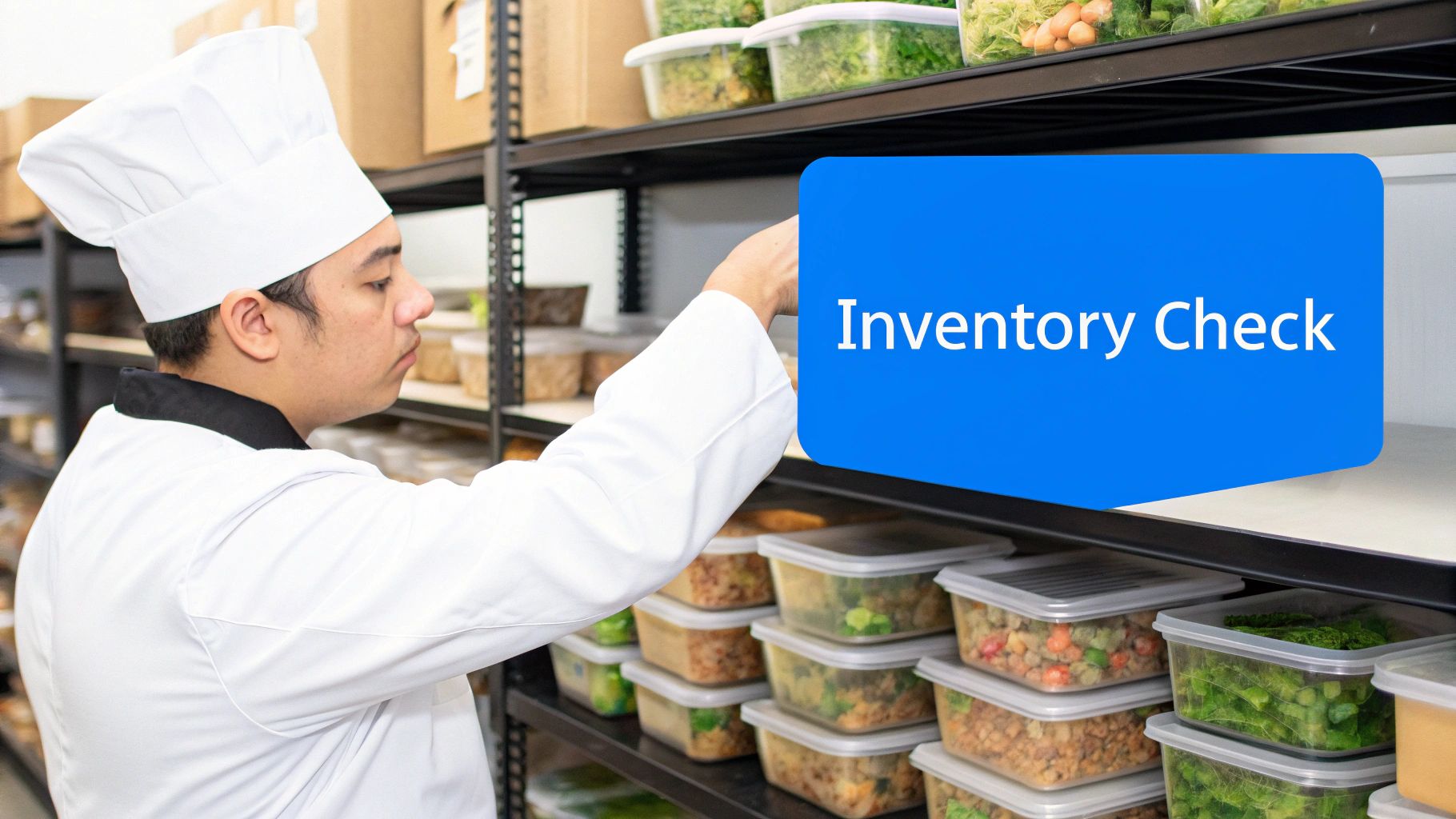
Your inventory control process needs to kick in the second a delivery truck pulls up. It’s not about just shoving boxes onto a shelf; it’s about having a system. A messy, disorganized cooler is where profits go to die, hiding ingredients until they expire. This kind of spoilage is a huge factor in the 17 million tons of food waste that comes from businesses like ours every year.
Implementing a Strict FIFO System
We’ve all heard of “First-In, First-Out” (FIFO), but are you actually living it? This simple idea—using your oldest products before opening the new stuff—is the bedrock of any kitchen serious about cutting down on spoilage.
But FIFO is more than just a good idea; it requires a disciplined, visual system that your whole team can follow without thinking. Here’s how you get it done right:
- Label Everything. No Exceptions. Every single item, whether it’s a case of avocados or a cryo-vacced steak, needs a clear label with its delivery date and a “use-by” date the moment it hits the receiving dock.
- Organize for Success. Set up your shelves with designated spots for different food categories. When a new case of anything arrives, it always goes behind what you already have. This physically pushes the older items to the front, making them the first thing your cooks grab.
- Do Quick Audits. Walk through your storage areas daily or at least a few times a week. The goal is to spot items that are nearing their expiration date. This gives you a chance to run a feature or a special to move that product instead of tossing it.
A rock-solid FIFO system costs nothing more than a bit of time and team discipline. In return, it can save a restaurant thousands of dollars a year in lost product. It’s the easiest win you’ll find in the fight against spoilage.
Leveraging Data for Smarter Purchasing
Beyond getting your shelves in order, your POS system is your secret weapon for smarter purchasing. Buried in your sales reports is a roadmap telling you exactly what you need to buy and when. By digging into which dishes are flying out of the kitchen and which are gathering dust, you can stop guessing and start making data-driven ordering decisions. You’ll stop buying a full case of an ingredient when you really only sell through half of one between deliveries.
Finally, don’t forget the hardware. All the organization in the world won’t matter if your equipment fails you. A faulty walk-in or a freezer on the fritz can destroy thousands of dollars of inventory in a single night. It’s worth learning how regular refrigeration maintenance can prevent major food loss to safeguard your investment.
When you combine smart organization, data-backed ordering, and reliable equipment, you create a powerful defense against spoilage that shows up directly on your bottom line.
Engineering Your Menu for Zero Waste
Think of your menu as the blueprint for your entire kitchen. It’s not just a list of what you sell; it’s your single most powerful tool for cutting down on food waste before you even place an order. A well-designed menu makes every single ingredient work harder and smarter.
It all starts with cross-utilization. You need to constantly look for ways to share ingredients across multiple dishes. For example, that beautiful ribeye on your dinner menu? The trim from that steak doesn’t have to be waste. It could be the star of a steak quesadilla for lunch or the base for a killer beef and barley soup special. This simple shift in thinking gets rid of those “orphan ingredients”—the ones that just sit on a shelf, waiting for a single, low-selling dish.

Transforming Scraps into Revenue
Getting creative with “root-to-stem” or “nose-to-tail” cooking isn’t just a trendy hashtag; it’s a straight line to better profits. The parts of ingredients you’d normally toss are often packed with flavor and potential. Right now, they’re a sunk cost, but with a little ingenuity, you can turn them into a brand new revenue stream.
Here are a few real-world examples I’ve seen work wonders:
- Vegetable Peels and Trim: Don’t throw away your carrot, potato, or parsnip peels. Fry them up into crispy, unique garnishes. Onion skins and celery ends? They add an incredible depth to your house-made stocks.
- Herb Stems: Those parsley and cilantro stems are pure flavor. Muddle them a bit and infuse oils or vinegars for amazing dressings, or blitz them into a vibrant pesto or chimichurri.
- Protein Scraps: Trim from filleting fish is perfect for brandades, croquettes, or fish cakes. Little bits of leftover chicken or pork can easily be used to fill tacos, spring rolls, or become the heart of a daily special.
Every piece of trim or off-cut represents an opportunity. By seeing value where others see waste, you unlock new menu items, reduce your food costs, and create a more sustainable kitchen.
This dedication to smart menu design should also be reflected in its physical form. When you’re engineering a zero-waste menu, investing in high-quality menu printing can elevate the whole experience. A great-looking menu not only reinforces your brand’s commitment to quality but can also subtly guide customers toward your most waste-efficient dishes.
Fine-Tuning Portions with Data
That food waste audit you did? It’s giving you direct feedback from your customers. If you consistently see that a certain side dish is coming back to the kitchen barely touched, that’s a bright red flag. The data from your plate waste is your roadmap to getting portion sizes just right.
Now, reducing a portion doesn’t mean you’re being cheap or shorting the customer. More often than not, it’s about rebalancing the plate to add more value. Let’s say big piles of fries are always coming back. You could slightly reduce the fry portion and add a small, high-impact item like a house-made aioli or a unique dipping sauce. Suddenly, you’ve lowered your food costs and waste while actually making the dish feel more special to your guests. Use your sales data to see what’s popular and focus your portion-control efforts there for the biggest wins.
Using Technology to Fight Food Waste
Let’s be honest, manual tracking sheets and pure guesswork aren’t going to cut it. If you’re serious about getting a handle on food waste in your restaurant, it’s time to bring in the heavy hitters: modern technology. The best part? You probably already have the core of a powerful system sitting on your counter—your Point of Sale (POS).
Your POS is so much more than a digital cash register. It’s a goldmine of data. Every single order that gets punched in tells a story about what’s popular, what’s flopping, and when your peak times are. Tapping into this data is how you shift from just reacting to waste to proactively preventing it.
Unlocking Insights with Inventory Management Software
When you pair your POS with integrated inventory management software, that raw sales data transforms into real, actionable intelligence. These systems take over the tedious, error-prone tasks and reveal insights you’d never catch on your own. For a modern restaurant, this isn’t a luxury; it’s essential.
So, what can a good system actually do for your kitchen?
- Automate Inventory Tracking: Forget the late-night manual counts. The software automatically deducts ingredients from your stock as items are sold. This gives you a live, constantly accurate view of what’s on your shelves.
- Generate Smart Order Suggestions: By digging into your sales history, the software can forecast how much of each ingredient you’ll actually need. This puts a stop to the over-purchasing that leads directly to spoilage.
- Flag Slow-Moving Items: Get automatic alerts for ingredients that are just sitting there. This is a game-changer, giving you a crucial heads-up to run a special or feature an item before it ends up in the bin.
By directly connecting your sales to your stock levels, you create a powerful feedback loop that tightens up your entire operation. You stop buying what you don’t need and start getting the most out of every single dollar you spend on inventory.
The Bigger Picture from Analytics and Digital Platforms
Technology can also help you see beyond the day-to-day grind. Analytics platforms can dive deep into your POS data, uncovering subtle patterns that help you build smarter prep schedules and fine-tune your menu. For instance, you might discover a particular fish dish only sells on weekends, which means you can prep much smaller batches during the week and avoid waste.
This data-driven approach is making a huge impact on a larger scale, too. Take the global food company Danone. They managed to slash their food waste by nearly 20% by using digital platforms that connect their surplus food with buyers. This single strategy boosted their sell-through rate for those excess products by a whopping 50%. It’s a perfect example of how technology can turn potential waste directly into revenue. You can dig into more data on how businesses are tackling this issue and coming out ahead.
From advanced inventory systems to apps that connect you with customers looking to buy surplus food, technology makes the goal of reducing waste more achievable than ever. It gives you the power to make smarter, data-backed decisions that are good for the planet and, just as importantly, fantastic for your bottom line.
Your Top Questions About Restaurant Food Waste, Answered
Diving into a new waste reduction program can feel overwhelming. You’ve probably got a dozen practical questions floating around. Let’s tackle some of the most common challenges and concerns I hear from restaurant owners all the time.
How Do I Get My Kitchen Staff Invested in Reducing Food Waste?
You have to make it real for them. It’s one thing to talk about “waste,” but it’s another thing entirely to show them the actual numbers from your audit. Seeing that $500 in perfectly good produce was tossed last week hits a lot harder.
Explain how that waste eats directly into the restaurant’s profits—the same profits that secure their jobs and could fund raises or bonuses. A little friendly competition can also work wonders. Try offering a small bonus or a team lunch for the shift that cuts its waste the most. Once your team understands the “why” and sees themselves as part of the solution, you’ll see a real shift in their mindset.
What Is the Best First Step if Our Budget Is Tight?
If you’re watching every penny, the most powerful and cost-effective first move is to get serious about FIFO (First-In, First-Out). This costs nothing but a bit of time, organization, and discipline from the team.
Seriously, it’s that simple. Get a marker and date everything the second it comes through the door. Then, organize your walk-in and dry storage so the older items are always at the front, ready to be used first. This one process change directly attacks spoilage—a massive and completely preventable source of waste—without spending a dime on fancy tech.
Can We Legally Donate Our Surplus Prepared Food?
Absolutely. In most places, donating surplus food is not only legal but strongly encouraged. Many regions have “Good Samaritan” laws that are specifically designed to protect businesses from liability when they donate food in good faith to non-profits.
The key is to connect with a local food bank or a food rescue charity. They’re the experts and will give you the exact guidelines on what they can accept, how to package and store it safely, and when they can pick it up. A quick phone call is all it takes to get the ball rolling and make a real difference in your community.
Is Investing in Food Waste Technology Really Worth It?
For a lot of restaurants, it’s a game-changer. I know the upfront cost can seem daunting, but modern waste tracking systems often pay for themselves surprisingly fast. These platforms use smart scales and cameras to automatically log what’s being thrown away, giving you incredibly accurate data without the headache of manual tracking.
This isn’t just data for data’s sake. It allows you to make much smarter calls on purchasing and menu planning, often leading to a 2-6% drop in total food costs. For an average restaurant, that can mean tens of thousands of dollars back in your pocket each year. Suddenly, that initial investment looks like a pretty smart financial move.
Ready to use technology to get a handle on your inventory and reduce food waste? Biyo POS integrates powerful inventory management and sales analytics to give you the data you need to make smarter purchasing decisions. See how it can transform your operations and boost your bottom line.