
Hiring and staffing for a grocery store is one of the most important responsibilities in retail management. A grocery store depends on coordinated teamwork to maintain inventory, assist customers, process transactions, and keep operations running smoothly throughout the day. Without the right staffing strategy, even a well-stocked grocery store can struggle with poor customer service, long checkout lines, inventory problems, and rising labor costs.
Modern grocery stores face unique workforce challenges. Employee turnover is high, customer expectations are rising, and scheduling has become more complex with changing shopping patterns. Because of this, hiring and staffing for a grocery store is no longer just about filling open positions. It requires long-term planning, employee development, workforce flexibility, and smart technology that helps managers make better staffing decisions.
In this guide, we’ll explore how grocery stores can build effective staffing plans, improve recruitment strategies, train employees efficiently, manage scheduling and payroll, and improve retention. We’ll also look at how modern POS technology like Biyo POS helps simplify workforce management while improving operational efficiency.
Table of Contents
- Creating a Grocery Store Staffing Plan
- Employee Recruitment and Job Postings
- Employee Training and Onboarding
- Scheduling, Payroll, and Workforce Management
- Employee Retention and Seasonal Hiring
- How Biyo POS Supports Grocery Store Staffing
- Frequently Asked Questions
Creating a Grocery Store Staffing Plan
A strong staffing plan creates structure and stability within a grocery store. Without proper planning, stores often experience understaffing during busy hours or unnecessary labor expenses during slower periods. An effective staffing plan helps balance customer service expectations with labor efficiency while ensuring every department has adequate coverage.
Identifying Key Roles in a Grocery Store
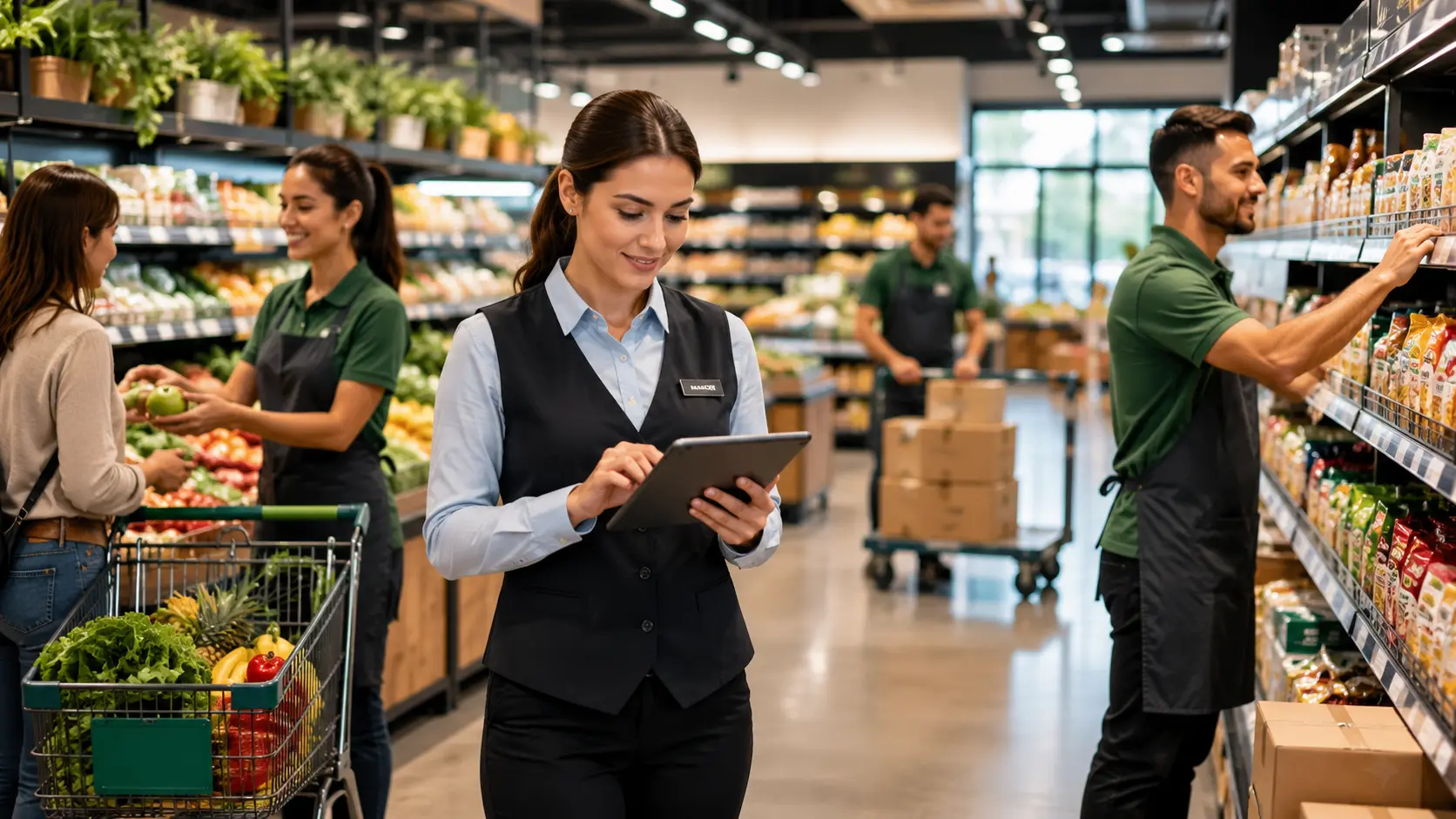
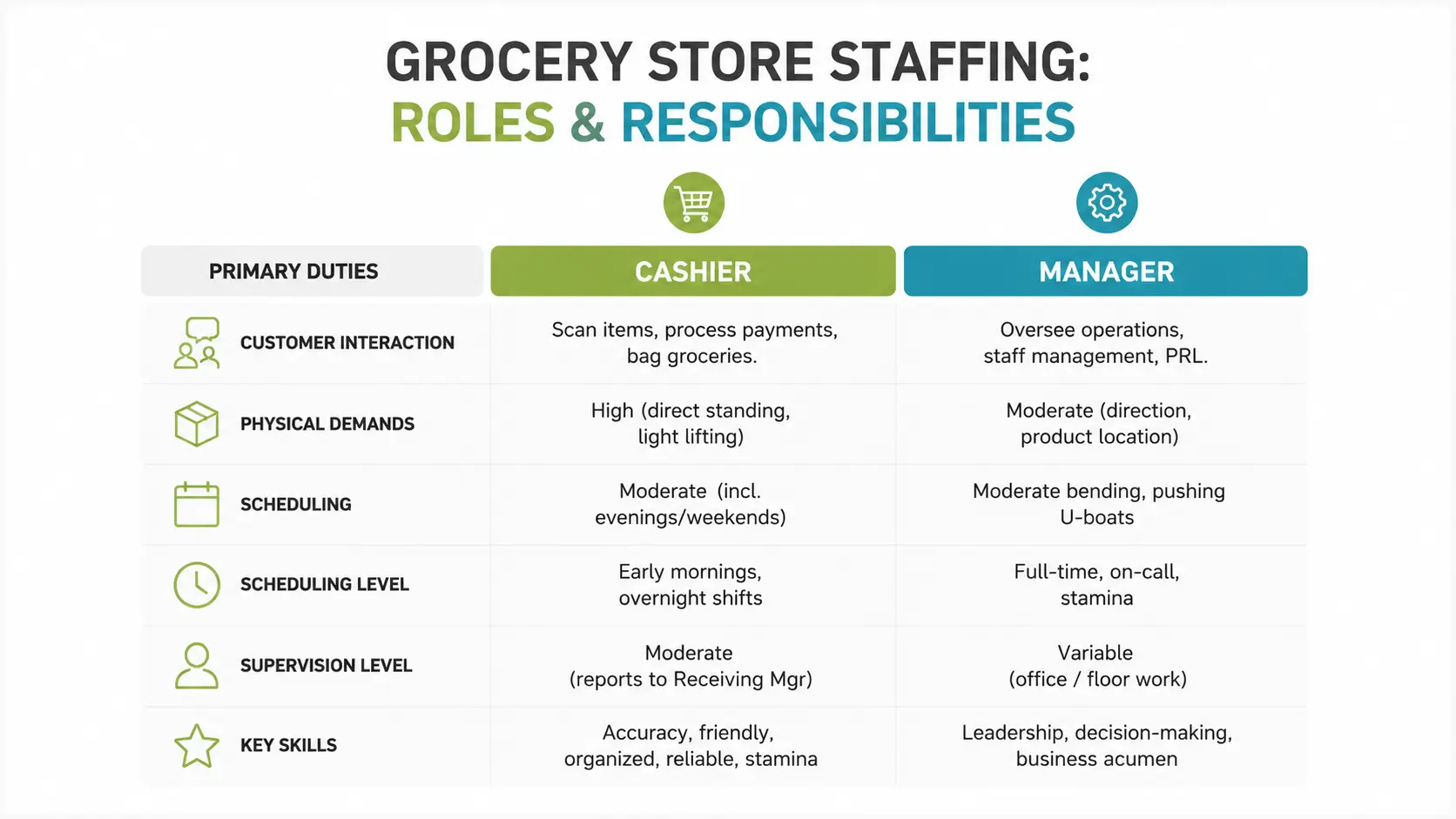
Every grocery store relies on several essential positions working together throughout the day. Cashiers manage customer transactions and maintain checkout efficiency. Stock clerks organize shelves, rotate products, and manage inventory replenishment. Customer service representatives handle returns, complaints, and general inquiries. Department managers supervise operations while ensuring productivity and compliance with company policies.
Specialized departments often require additional expertise. Bakery staff, deli workers, butchers, and produce specialists may require food handling certifications or product knowledge that standard retail employees do not possess. Identifying these department-specific staffing needs early helps grocery stores avoid service disruptions and maintain operational quality.
Cross-training employees can significantly improve staffing flexibility. A cashier who can assist with stocking shelves during slower checkout periods creates operational efficiency and reduces downtime. Cross-trained employees also help grocery stores manage unexpected absences without sacrificing service quality.
Balancing Labor Costs and Customer Service
Labor costs represent one of the largest operational expenses in grocery retail. However, cutting labor too aggressively often creates negative customer experiences. Long checkout lines, empty shelves, and slow service can quickly damage customer loyalty and reduce repeat business.
Successful grocery stores balance labor efficiency with customer satisfaction. Peak shopping periods such as evenings, weekends, and holidays require additional staffing support, while slower periods may operate with leaner teams. Understanding traffic patterns allows managers to schedule employees strategically instead of relying on guesswork.
Modern scheduling software helps managers forecast staffing needs using historical sales data and customer traffic patterns. These tools automate scheduling decisions, reduce overtime costs, and help ensure adequate coverage during high-demand periods. Stores that use workforce data effectively often improve both profitability and customer satisfaction simultaneously.
Building Staffing Flexibility
Flexibility is critical in grocery retail because staffing demands constantly change. Employee absences, seasonal traffic spikes, and unexpected demand increases require stores to adapt quickly without disrupting operations.
Part-time employees and on-call workers provide valuable flexibility during emergencies or peak periods. Seasonal hiring during holidays also helps stores handle temporary increases in customer traffic without permanently increasing labor costs.
Communication is equally important. Employees should have clear channels for requesting schedule changes, reporting conflicts, or communicating emergencies. A collaborative scheduling environment builds trust while reducing scheduling disputes and last-minute staffing problems.
Employee Recruitment and Job Postings
Recruitment plays a major role in hiring and staffing for a grocery store. The quality of your employees directly impacts customer service, operational efficiency, and long-term retention. A strong hiring process helps grocery stores attract reliable candidates who fit the company culture and operational demands.
Writing Effective Job Postings
Job postings are often a candidate’s first impression of your grocery store. Poorly written postings attract unqualified applicants or discourage strong candidates from applying. Clear and detailed descriptions improve applicant quality while reducing hiring inefficiencies.
Each job listing should clearly explain responsibilities, required skills, scheduling expectations, and compensation details. For example, cashier positions should emphasize communication skills, transaction accuracy, and customer interaction. Stock clerk positions should explain physical requirements, inventory responsibilities, and organization skills.
Highlighting benefits such as flexible schedules, advancement opportunities, employee discounts, or training programs can significantly improve applicant interest. Employees are more likely to apply to businesses that demonstrate long-term career potential rather than temporary work.
The Interview and Hiring Process
Interviews help managers evaluate both technical skills and personality fit. Grocery retail depends heavily on teamwork and customer interaction, so communication skills and reliability matter just as much as experience.
Behavioral interview questions often provide better insight than simple yes-or-no questions. Asking candidates how they would handle customer complaints or stressful situations reveals problem-solving ability and professionalism.
Reference checks and background screening add another layer of protection. While these steps require additional time, they reduce hiring risks and improve long-term workforce stability. Hiring mistakes are expensive, especially in retail environments where turnover already presents challenges.
Building a Long-Term Talent Pipeline
Successful grocery stores don’t recruit only when positions become available. Building a long-term talent pipeline helps reduce hiring delays and ensures qualified candidates are available when staffing needs change.
Partnerships with schools, workforce programs, and local community organizations create a steady stream of potential applicants. Seasonal employees who perform well can also transition into permanent roles, reducing future recruitment costs.
Maintaining relationships with previous applicants and strong former employees can also strengthen future recruitment efforts. Proactive hiring strategies reduce operational disruptions caused by sudden turnover.
Employee Training and Onboarding
Hiring strong employees is only the beginning. Without proper training and onboarding, even talented employees may struggle to succeed. Structured training programs improve confidence, increase productivity, and reduce turnover.
Creating an Effective Onboarding Process
Onboarding introduces employees to company culture, workplace expectations, and operational procedures. Employees who feel welcomed and supported during onboarding typically adapt faster and remain longer with the company.
Strong onboarding programs include orientation sessions, policy reviews, safety procedures, and introductions to supervisors and coworkers. Employees should understand customer service standards, attendance expectations, and workplace compliance requirements from day one.
Providing digital handbooks, training guides, or video tutorials allows employees to revisit important information as needed. This reduces confusion and improves consistency across departments.
Role-Specific Training
Different grocery store roles require different skill sets. Cashiers need POS training, payment processing knowledge, and customer service skills. Stock clerks require training in inventory handling, shelf organization, and product rotation procedures.
Hands-on practice is especially important. Employees learn faster when they apply training directly within real work environments under supervision. This practical approach improves confidence and reduces mistakes once employees begin working independently.
Management positions also require leadership development. Scheduling, payroll management, conflict resolution, and workforce supervision are critical management skills that influence overall store performance.
Ongoing Employee Development
Training should continue long after onboarding ends. Ongoing development improves employee engagement and creates stronger internal promotion opportunities.
Cross-training programs help employees develop additional skills while improving operational flexibility. Employees who understand multiple departments provide valuable support during staffing shortages or busy periods.
Performance reviews, coaching sessions, and recognition programs also support employee growth. Workers who feel invested in are more likely to stay loyal and perform at a higher level over time.
Scheduling, Payroll, and Workforce Management
Managing grocery store schedules can quickly become complicated. Multiple departments, rotating shifts, part-time employees, and seasonal workers create scheduling challenges that require efficient systems and strong organization.
Shift Planning and Scheduling Software
Scheduling software has become essential for modern grocery stores. These systems help managers align labor hours with customer traffic patterns while reducing scheduling conflicts.
Digital scheduling tools allow employees to view schedules remotely, request shift changes, and communicate availability more efficiently. This reduces confusion while improving schedule transparency.
Using scheduling software also helps prevent overstaffing and understaffing. Accurate labor planning improves profitability while maintaining strong customer service standards.
Payroll Management and Compliance
Payroll accuracy directly impacts employee trust and retention. Errors in wages, overtime calculations, or tax reporting can quickly damage morale and create legal risks.
Modern payroll systems automate calculations while improving accuracy and compliance. Integrating payroll with scheduling systems ensures employee hours are tracked correctly and reduces administrative workload for managers.
Compliance with labor regulations is equally important. Grocery stores must follow overtime rules, break requirements, and tax reporting obligations carefully to avoid penalties and legal complications.
Performance Management and Workforce Optimization
Workforce management extends beyond scheduling and payroll. Performance tracking helps identify top performers, training opportunities, and areas requiring improvement.
Clear performance metrics create fairness and accountability. Metrics such as checkout accuracy, customer feedback, attendance reliability, and productivity provide measurable standards for evaluations.
Employees who receive regular feedback often feel more engaged and motivated. Strong workforce management creates a healthier workplace culture while improving operational efficiency.
Employee Retention and Seasonal Hiring
Employee retention is one of the biggest challenges in grocery retail. High turnover increases recruitment costs, disrupts operations, and negatively affects customer experience. Retaining strong employees creates stability and improves overall store performance.
Creating a Positive Work Environment
Employees stay longer when they feel respected, valued, and supported. Recognition programs, fair treatment, and positive communication significantly influence retention.
Even simple gestures such as acknowledging strong performance or celebrating milestones can improve morale. Employees who feel appreciated are more likely to remain committed to the organization.
Career growth opportunities also matter. Employees who see clear advancement potential often develop stronger loyalty and long-term commitment.
Managing Seasonal Hiring
Seasonal hiring helps grocery stores handle increased demand during holidays and peak shopping seasons. Planning ahead is critical because delayed seasonal recruitment can create operational strain during busy periods.
Seasonal workers should still receive proper onboarding and training despite temporary employment. Well-trained seasonal staff improve customer service and reduce stress on permanent employees.
Strong seasonal workers may eventually transition into permanent roles. This creates an effective recruitment pipeline while reducing future hiring costs.
Employee Engagement and Retention
Engaged employees are more productive, reliable, and customer-focused. Open communication, feedback opportunities, and team-building initiatives improve engagement and workplace culture.
Managers who listen to employee concerns and involve staff in operational improvements often build stronger loyalty. Employees who feel heard are more likely to remain committed long term.
Retention strategies ultimately reduce hiring costs while creating a more experienced and stable workforce. Consistency among staff also improves customer trust and operational performance.
 How Biyo POS Supports Grocery Store Staffing
 How Biyo POS Supports Grocery Store Staffing
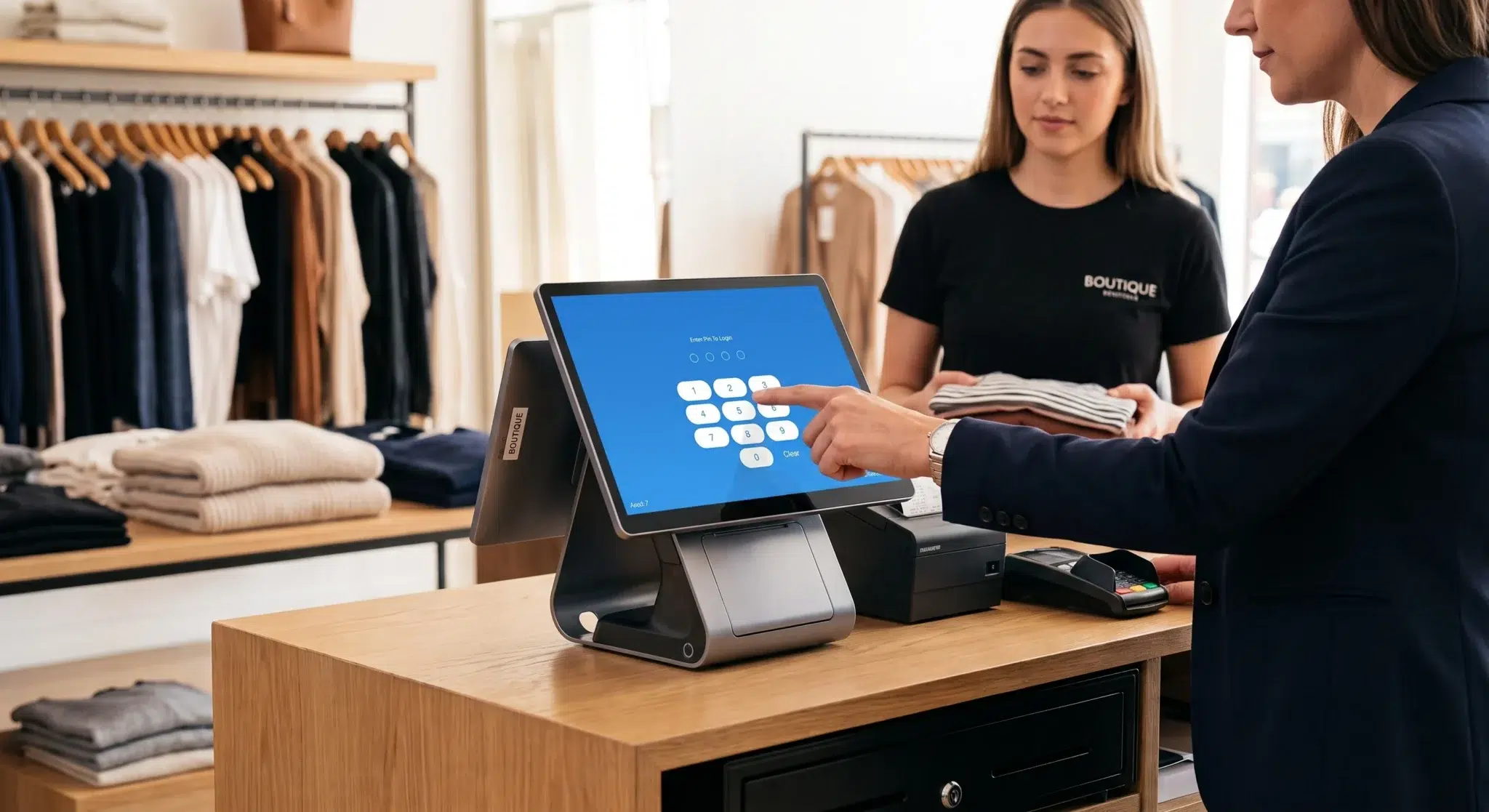
Managing grocery store staffing becomes significantly easier with the right technology. Biyo POS provides tools that simplify scheduling, payroll integration, employee tracking, and workforce management in one centralized platform.
Managers can monitor labor costs, optimize schedules, and track employee performance using real-time operational data. This reduces administrative workload while helping stores improve staffing efficiency.
Biyo POS also simplifies employee training with an intuitive interface that new hires can learn quickly. Faster onboarding reduces training time while improving checkout speed and operational consistency.
If you want to improve hiring and staffing for your grocery store, you can schedule a call with the Biyo POS team to explore the platform. You can also sign up here and start using Biyo POS to streamline workforce management, reduce labor inefficiencies, and improve daily operations.
Frequently Asked Questions
How many employees does a small grocery store need?
The number depends on store size, operating hours, and department structure. Small grocery stores often require between 8 and 15 employees, including cashiers, stock clerks, customer service staff, and management.
What is the biggest staffing challenge for grocery stores?
Employee turnover is one of the biggest challenges. Retail environments often experience high turnover due to scheduling issues, burnout, and competition for workers.
How can grocery stores reduce employee turnover?
Providing fair pay, flexible scheduling, career growth opportunities, and a supportive work culture significantly improves retention.
Why is cross-training important in grocery store staffing?
Cross-training improves flexibility by allowing employees to support multiple departments during busy periods or staff shortages.
How does technology improve grocery store workforce management?
Technology simplifies scheduling, payroll, labor tracking, and performance management while improving operational efficiency and reducing administrative workload.