Opening a grocery store is an exciting venture, but success requires far more than stocking shelves with products. The real challenge lies in developing an effective marketing strategy that attracts customers, builds trust, and turns occasional shoppers into loyal regulars. Strong marketing for a new grocery store creates visibility in a competitive marketplace where national chains, independent retailers, and specialty food shops all compete for the same customers.
For many new grocery businesses, the first few months are critical. This period determines how quickly the community discovers your store and whether shoppers view it as a convenient, trustworthy place to buy groceries. Research consistently shows that most consumers rely on only a handful of preferred grocery stores for their weekly shopping routines. Securing a place in that rotation early can significantly improve long-term success.
Modern grocery marketing requires a blend of traditional outreach and digital engagement. Community involvement, local advertising, social media, loyalty programs, and seasonal promotions all play important roles in shaping how customers interact with your brand. Successful grocery stores understand that marketing is not a one-time campaign but an ongoing strategy that evolves alongside customer behavior, seasonal trends, and local competition.
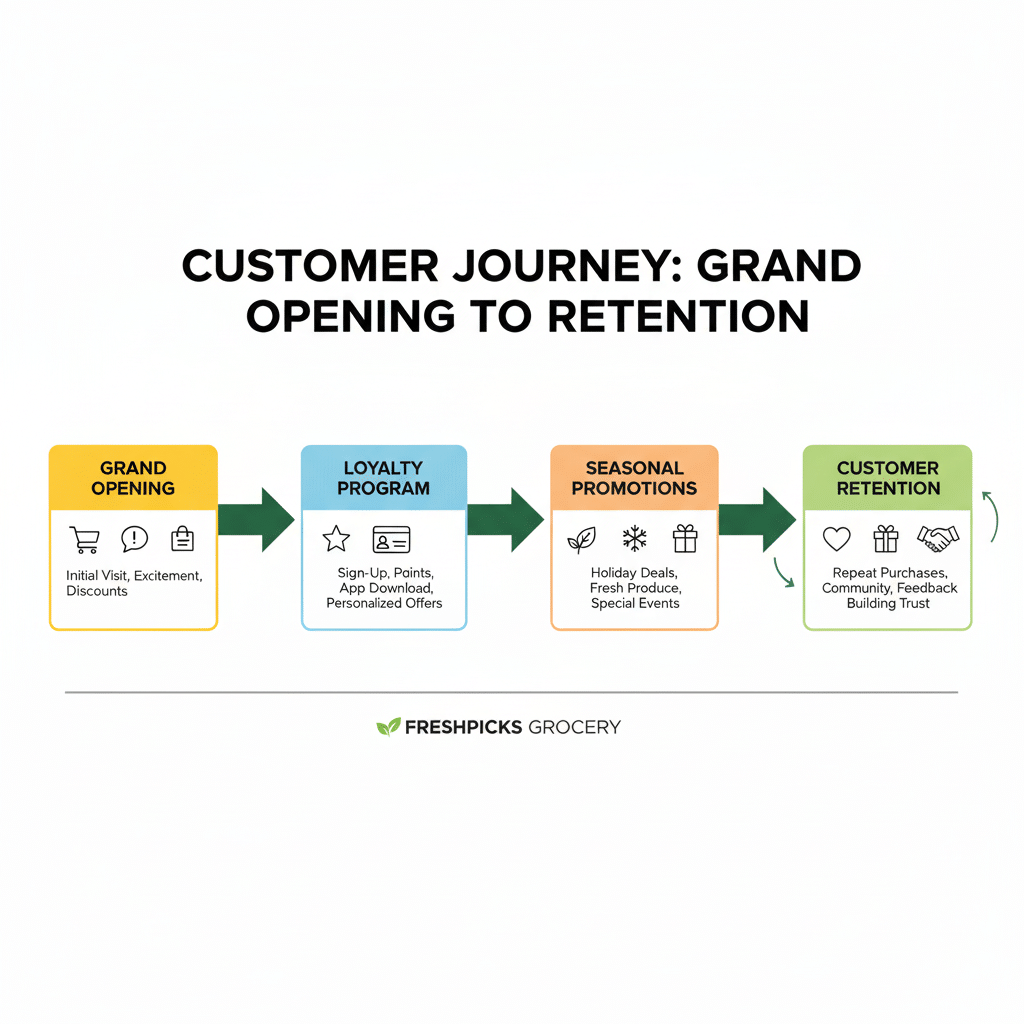
This guide explores proven strategies for marketing a new grocery store. You will learn how to create impactful grand opening campaigns, build brand awareness through advertising and digital outreach, engage customers through loyalty programs, and sustain growth through long-term retention strategies.
Table of Contents
- Grand Opening Promotions and Community Buzz
- Local Advertising and Digital Outreach
- Customer Engagement and Loyalty Programs
- Seasonal Promotions and In-Store Campaigns
- Customer Retention and Long-Term Growth
- How Biyo Helps Grocery Stores Strengthen Marketing
- Frequently Asked Questions
Grand Opening Promotions and Community Buzz
The launch of a grocery store is one of the most important marketing opportunities your business will ever have. A well-planned grand opening introduces your brand to the community and creates the first impression customers will carry with them long after the event.
A successful launch should attract immediate foot traffic, generate local awareness, and encourage repeat visits. Accomplishing these goals requires a combination of compelling promotions, community involvement, and memorable customer experiences.
Creating Excitement Before Opening Day
Building anticipation should begin several weeks before the official opening. Social media teasers, neighborhood flyers, local newspaper announcements, and email campaigns can all help create awareness. Sharing behind-the-scenes updates, store preparation photos, and product previews encourages curiosity and keeps potential customers engaged.
Limited-time opening promotions can create urgency and motivate customers to visit during the launch period. Discounts on everyday essentials, free product samples, and special offers for first-time shoppers often generate strong early traffic.
Many grocery stores also distribute branded tote bags, reusable shopping bags, or promotional merchandise during grand opening events. These items continue promoting the business long after the event has ended.
Building Community Connections
Community involvement helps transform a grocery store from a retail business into a neighborhood destination. Hosting a ribbon-cutting ceremony with local officials, business leaders, or community organizations signals commitment to the area and generates positive publicity.
Family-friendly activities such as live demonstrations, product tastings, children’s entertainment, and local vendor showcases can significantly increase attendance while creating a welcoming atmosphere.
Partnering with local schools, charities, or food banks can further strengthen community relationships. Supporting local causes demonstrates social responsibility and helps establish trust among residents.
Using Local Influencers and Brand Ambassadors
Local content creators can help amplify awareness during the launch period. Food bloggers, nutrition experts, family lifestyle creators, and community personalities often have highly engaged audiences within specific geographic areas.
Inviting influencers to preview the store before opening allows them to share authentic experiences with their followers. Store tours, product demonstrations, giveaways, and recipe collaborations can generate valuable local exposure.
Even smaller creators with modest audiences can deliver meaningful results when their followers closely match your target market.
Local Advertising and Digital Outreach
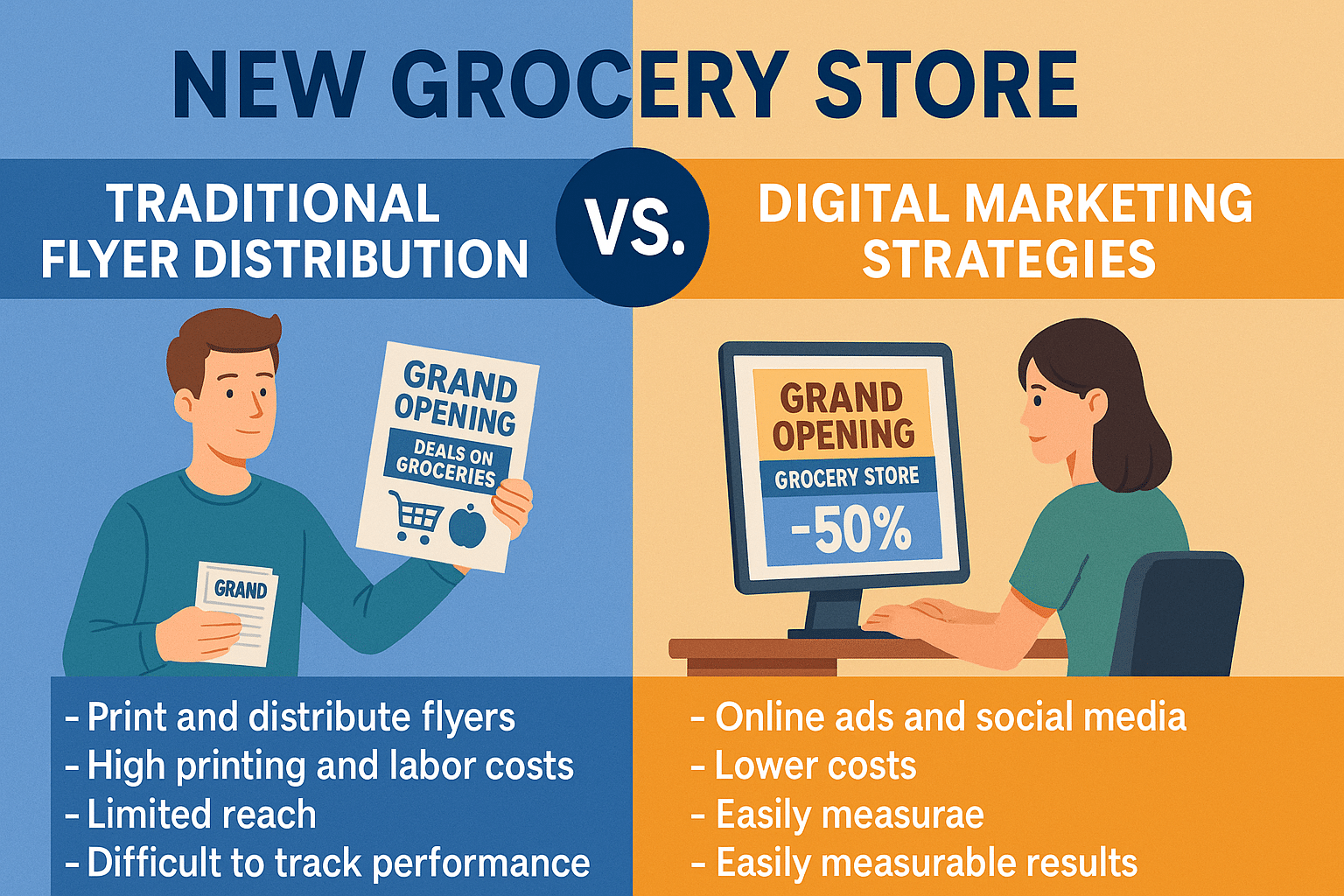
Successful grocery marketing combines traditional advertising methods with modern digital channels. Each platform reaches different audiences, and using multiple approaches increases overall visibility.
Traditional Advertising That Still Delivers Results
Despite the growth of digital marketing, traditional advertising remains highly effective for grocery stores. Printed flyers, newspaper inserts, direct mail campaigns, and community bulletin boards continue to influence shopping behavior, particularly among local households.
Outdoor advertising such as billboards and roadside signage can also increase brand recognition. Simple messages that highlight convenience, product selection, or competitive pricing often perform well.
Local radio advertising remains valuable for reaching commuters and nearby residents. Combining traditional media with trackable offers or promotional codes helps measure campaign effectiveness.
Social Media Marketing for Grocery Stores
Social media allows grocery stores to build relationships with customers while showcasing products, promotions, and community involvement. Platforms such as Facebook, Instagram, and TikTok provide opportunities to reach different audience segments through engaging content.
Posting recipes, seasonal product highlights, meal ideas, local supplier stories, and behind-the-scenes content helps humanize the brand and encourage interaction.
Interactive content such as polls, contests, and customer spotlights can further increase engagement while strengthening relationships with shoppers.
Paid social advertising allows businesses to target users within specific geographic areas, helping ensure marketing budgets reach potential customers who are most likely to visit the store.
Search Visibility and Digital Marketing
Many customers search online before choosing where to shop. Optimizing your website and business listings for local search terms such as “grocery store near me” or “fresh produce near me” can significantly improve visibility.
Maintaining accurate business information across search engines, maps platforms, and local directories helps customers find your store more easily.
Email marketing also remains a powerful tool for grocery retailers. Weekly specials, seasonal promotions, recipes, and personalized offers help keep your store top of mind while encouraging repeat visits.
Customer Engagement and Loyalty Programs
Attracting customers is only the beginning. Long-term success depends on building relationships that encourage shoppers to return regularly.
Developing an Effective Loyalty Program
Loyalty programs reward repeat purchases and encourage continued engagement. Many grocery stores implement points-based systems that allow customers to earn rewards based on spending levels.
Digital loyalty programs simplify participation by allowing customers to track rewards through mobile apps, online accounts, or email updates. These systems also provide valuable insight into purchasing behavior and customer preferences.
Well-designed loyalty programs help increase visit frequency while creating additional opportunities for personalized marketing.
Encouraging Customer Referrals
Referral marketing leverages existing customer satisfaction to attract new shoppers. Programs that reward both the referring customer and the new customer often generate strong participation.
Because recommendations from friends and family carry significant credibility, referral campaigns frequently outperform traditional advertising when it comes to conversion rates.
Simple incentives such as store credits, coupons, or discounts can motivate customers to share their positive experiences with others.
Creating Meaningful Customer Experiences
Events such as cooking demonstrations, nutrition workshops, product tastings, and seasonal celebrations help create memorable shopping experiences.
Sampling events are particularly effective because they allow customers to discover new products before making purchasing decisions. These interactions often increase both sales and customer satisfaction.
Inviting customers to participate in product selection surveys or community feedback initiatives can further strengthen engagement and loyalty.
Seasonal Promotions and In-Store Campaigns
Seasonal marketing helps grocery stores remain relevant throughout the year. Consumer purchasing habits shift based on holidays, weather, and cultural events, creating opportunities for targeted promotions.
Holiday Marketing Opportunities
Major holidays naturally create increased grocery demand. Meal bundles, recipe kits, themed displays, and limited-time promotions help simplify shopping while increasing basket sizes.
Seasonal decorations and merchandising strategies can also enhance the shopping experience and encourage customers to explore additional product categories.
Promoting seasonal offers through both digital and in-store channels maximizes visibility and helps drive traffic during key shopping periods.
Experiential In-Store Marketing
Experiential marketing transforms routine shopping trips into engaging experiences. Product tastings, chef demonstrations, specialty food showcases, and cultural food events encourage customers to spend more time in the store.
For example, a themed international food week can introduce customers to new products while creating excitement around specific categories.
Sharing these events through social media and email marketing further extends their impact.
Partnerships With Local Businesses
Collaborating with nearby businesses can expand your reach while reducing marketing costs. Partnerships with bakeries, cafés, fitness centers, farmers, and specialty retailers create opportunities for cross-promotion.
These collaborations help introduce your store to new audiences while strengthening your presence within the local business community.
Customer Retention and Long-Term Growth
Long-term success depends on retaining customers and consistently delivering positive shopping experiences. Customer retention provides stability, increases profitability, and reduces dependence on continuous customer acquisition.
Personalized Communication
Personalized marketing often produces stronger results than generic campaigns. Email promotions tailored to customer purchase history feel more relevant and are more likely to drive engagement.
For example, customers who regularly purchase organic products may appreciate updates about new organic offerings, recipes, or related promotions.
Relevant communication strengthens customer relationships and encourages repeat business.
Using Technology to Improve Retention
Modern retail technology helps grocery stores understand customer behavior more effectively. Purchase histories, loyalty data, and promotional performance metrics provide valuable insights into shopping habits.
Mobile apps, SMS campaigns, and automated marketing tools allow businesses to deliver timely, personalized offers directly to customers.
These technologies help create more meaningful customer experiences while improving marketing efficiency.
Strengthening Brand Recognition
Consistent branding helps grocery stores build familiarity and trust over time. Logos, colors, messaging, customer service standards, and marketing materials should remain consistent across all channels.
Encouraging customers to leave online reviews can further strengthen credibility while helping attract new shoppers.
Gathering feedback through surveys and customer conversations demonstrates a commitment to continuous improvement and customer satisfaction.
How Biyo Helps Grocery Stores Strengthen Marketing
Executing effective grocery marketing strategies becomes much easier when supported by the right technology. Biyo helps grocery store owners streamline customer engagement, loyalty programs, promotions, and data-driven marketing decisions from a centralized platform.
Using Biyo, retailers can track customer purchase patterns, manage loyalty rewards, create targeted promotions, and gain deeper insight into shopping behavior. These capabilities allow stores to develop marketing campaigns that are more relevant and effective.
Businesses interested in learning how these tools support growth can schedule a personalized consultation to explore the platform’s capabilities.
By combining operational efficiency with customer intelligence, Biyo helps grocery stores attract new shoppers, increase retention, and build stronger long-term customer relationships.
Frequently Asked Questions
How do I attract customers to a new grocery store?
Attracting customers requires a combination of grand opening promotions, local advertising, social media marketing, community engagement, and referral programs. Creating strong first impressions and offering compelling incentives can accelerate customer acquisition.
What is the most effective digital marketing strategy for grocery stores?
A combination of local SEO, social media marketing, email campaigns, and targeted digital advertising often produces the best results. Each channel supports different stages of the customer journey.
Why are loyalty programs important for grocery stores?
Loyalty programs encourage repeat purchases, improve customer retention, and provide valuable purchasing data that supports more personalized marketing campaigns.
How can seasonal promotions increase grocery sales?
Seasonal promotions align with changing customer needs and shopping habits. Holiday bundles, themed campaigns, and limited-time offers often increase traffic and average transaction values.
What role does technology play in grocery store marketing?
Technology helps businesses track customer behavior, automate promotions, manage loyalty programs, personalize communication, and measure marketing performance more effectively.
Why are community partnerships valuable for grocery marketing?
Community partnerships help build trust, expand local visibility, strengthen brand reputation, and introduce your store to new customer groups through shared marketing efforts.