Setting the right price for every dish can quickly transform your bottom line. The impact of menu pricing on restaurant profits appears not only in daily revenue but also in weekly margins and long-term financial sustainability. Restaurants that price strategically—balancing costs, demand, and brand perception—often see improved profitability without sacrificing customer satisfaction.
Menu pricing is more than a simple calculation of ingredients plus markup. It is a strategic tool that influences guest perception, purchasing behavior, and operational performance. Studies in restaurant management show that even small price adjustments of 1–3% on high-volume items can significantly improve profit margins when combined with careful cost control and menu engineering.
Understanding the impact of menu pricing on restaurant profits requires connecting pricing decisions to broader financial metrics such as cost of goods sold (COGS), labor expenses, demand forecasting, and customer behavior. By evaluating these elements together, restaurant operators can make informed pricing decisions that support both growth and stability.
This guide explores the financial, psychological, and operational factors that influence restaurant pricing strategies. You will learn how pricing models affect profitability, how to test pricing scenarios safely, and how modern restaurant technology helps owners optimize menus with real-time data.
Why Pricing Shapes Profitability
Menu pricing directly influences how much profit each dish contributes to the restaurant’s overall financial performance. Because restaurants operate with relatively tight margins—often between 5% and 15% net profit—even small adjustments in pricing can dramatically affect profitability.
Pricing decisions influence not only revenue but also customer expectations and perceived value. When pricing aligns with brand positioning, menu design, and service quality, restaurants can maintain customer loyalty while improving margins. Conversely, poor pricing strategies can reduce demand or compress profits even when sales volumes appear healthy.
Understanding the impact of menu pricing on restaurant profits requires examining both numerical data and customer psychology. Restaurants that combine cost analysis with behavioral insights can design menus that guide customers toward profitable choices while maintaining a satisfying dining experience.
Price Signals, Perceived Value, and Purchase Behavior
Customers often interpret menu prices as signals of quality and value. A lower price may suggest affordability, while a higher price may indicate premium ingredients or craftsmanship. These perceptions influence how customers evaluate menu options and decide what to order.
For example, a mid-tier entrée priced slightly below a premium item often becomes the most popular choice because it appears to offer strong value relative to the higher-priced option. This phenomenon, known as price anchoring, demonstrates how menu design can guide customer decisions.
Restaurants that apply pricing psychology carefully often increase average check sizes without significantly affecting demand. When executed correctly, these techniques amplify the impact of menu pricing on restaurant profits by shifting sales toward high-margin items.
Menu layout also plays an important role. Highlighting profitable dishes with design elements such as boxes, icons, or chef recommendations encourages guests to choose items that contribute more strongly to profitability.
COGS Discipline and Ingredient Volatility
Cost of goods sold (COGS) represents one of the most important factors influencing restaurant pricing. Because ingredient costs fluctuate frequently due to seasonality, supply chain disruptions, or inflation, restaurants must monitor costs carefully.
For instance, rising beef prices may reduce profit margins on steak dishes unless prices are adjusted or portion sizes are modified. Restaurants that track ingredient costs in real time can respond quickly to these changes.
Many restaurants aim to maintain food cost percentages between 28% and 34%, depending on the concept. Maintaining this balance requires constant monitoring of ingredient prices and sales performance.
Tools such as inventory systems and cost-tracking software make it easier to analyze COGS and adjust pricing accordingly. By maintaining accurate cost data, restaurants protect margins and maintain a positive impact of menu pricing on restaurant profits even when supply costs fluctuate.
Break-Even Math and Seat Utilization
Break-even analysis helps restaurant owners understand how pricing decisions influence overall financial performance. The break-even point represents the number of covers required to cover all fixed and variable costs.
For example, if a restaurant’s monthly fixed costs total $50,000 and the average contribution per guest is $10, the restaurant must serve approximately 5,000 guests per month to break even.
Even small increases in average menu prices can significantly reduce the number of customers required to reach profitability. This demonstrates the powerful impact of menu pricing on restaurant profits when applied strategically.
Seat utilization also influences profitability. Restaurants that adjust prices based on peak demand periods—such as weekend evenings—can increase revenue without expanding seating capacity.

Financial Foundations for Pricing Decisions
Effective pricing strategies depend on accurate financial data. Restaurants must track revenue, expenses, and cash flow carefully to understand how pricing adjustments affect profitability.
When financial records are incomplete or inaccurate, pricing decisions become guesswork rather than strategy. Restaurants that maintain strong financial reporting systems gain a clearer view of how pricing changes influence revenue and margins.
Because the impact of menu pricing on restaurant profits affects every financial metric—from daily revenue to annual profit—data accuracy is essential for informed decision-making.
Revenue Forecasting and Sales Projections
Revenue forecasting helps restaurants anticipate demand and plan pricing strategies accordingly. Forecasting models typically include expected covers, average check size, and sales by menu category.
Restaurants that regularly update sales projections can evaluate how pricing adjustments influence demand. If a small price increase results in minimal changes to order volume, the adjustment may significantly improve profitability.
For example, increasing the price of a popular entrée by $1 may generate thousands of additional dollars in annual revenue without reducing demand significantly.
This type of analysis allows operators to measure the impact of menu pricing on restaurant profits through realistic financial projections rather than assumptions.
Operating Expenses, Expense Tracking, and Cash Flow
Operating expenses—including rent, utilities, labor, and marketing—must be considered when designing pricing strategies. Restaurants that underestimate these expenses may struggle to maintain positive cash flow even with strong sales.
Expense tracking systems allow restaurant owners to categorize costs and monitor spending trends. These insights help determine whether pricing adjustments are necessary to maintain profitability.
Cash flow management is particularly important because restaurants often face irregular revenue patterns. Promotions, seasonal demand fluctuations, and economic conditions can all affect cash inflows.
By aligning menu pricing with operating expenses, restaurants can maintain stable cash flow while maximizing the impact of menu pricing on restaurant profits.
Market Research and Competitive Positioning
Pricing decisions should not occur in isolation. Restaurants must evaluate local market conditions and competitor pricing to determine how their menu compares within the dining landscape.
Market research helps identify customer expectations and willingness to pay for specific dishes or dining experiences.
Guest Insights, Willingness to Pay, and Menu Fit
Understanding customer preferences is essential when determining appropriate price points. Restaurants can collect insights through customer surveys, online reviews, and sales data analysis.
For example, customers seeking quick lunch options may prioritize speed and affordability, while dinner guests may be more willing to pay for premium ingredients or presentation.
By analyzing purchasing patterns, restaurants can identify opportunities to adjust prices without reducing demand.
Competitive Analysis and Local Benchmarks
Competitive analysis helps restaurants understand how their pricing compares with nearby establishments. Evaluating menu prices, portion sizes, and service quality provides context for pricing decisions.
If a restaurant offers higher-quality ingredients or a unique dining experience, slightly higher prices may be justified. Conversely, competing solely on low prices can reduce profitability and damage brand perception.
Pricing Psychology, Anchors, and Decoys
Pricing psychology techniques such as anchoring and decoy pricing influence how customers evaluate menu options. A premium item placed at the top of the menu may make mid-range dishes appear more affordable by comparison.
Restaurants can also design bundles or meal combinations that provide perceived value while increasing average check size.
These strategies demonstrate how thoughtful menu design strengthens the impact of menu pricing on restaurant profits.
Strategic Pricing Models That Work
Different restaurant concepts benefit from different pricing models. Choosing the right model depends on factors such as target audience, operational costs, and brand positioning.
Value-Based Pricing for Signature Items
Value-based pricing focuses on perceived value rather than strictly on ingredient costs. Signature dishes that showcase unique flavors, craftsmanship, or premium ingredients often justify higher prices.
For example, a specialty ramen dish prepared with a long-simmered broth may command a higher price than standard menu items.
Dynamic, Seasonal, and Daypart Bands
Restaurants can adjust prices based on time of day, seasonal demand, or special events. Happy hour pricing, seasonal menu changes, and weekend pricing strategies help maximize revenue during peak demand periods.
Dynamic pricing models allow restaurants to capture higher margins when customer demand is strongest.
Bundles, Upsells, and Limited-Time Offers
Bundles and limited-time promotions encourage customers to purchase additional items. For example, a meal bundle that includes an entrée, side, and beverage often increases average check size while simplifying the ordering process.
Upselling techniques such as suggesting premium toppings or desserts further increase revenue while enhancing the guest experience.
Pricing for Growth and Multi-Location Scale
As restaurants expand into multiple locations, pricing strategies must adapt to different markets while maintaining brand consistency.
Business Model Fit, Startup Costs, and Funding Needs
Opening a new restaurant location requires careful financial planning. Startup expenses—including construction, equipment, and staffing—must be balanced with realistic pricing strategies.
For example, evaluating equipment investments alongside projected menu prices helps determine whether a new concept will achieve profitability.
Financial Reporting, Inventory Control, and Forecast Loops
Consistent financial reporting allows restaurant groups to compare performance across locations. Inventory tracking systems help maintain consistent food costs and reduce waste.
These systems also help evaluate how pricing strategies perform across different markets.
Technology, AI Insights, and Role-Based Controls
Modern restaurant technology platforms analyze menu performance and suggest pricing adjustments based on sales patterns and cost changes.
AI-powered insights can identify underpriced items or highlight opportunities to optimize menu layout and pricing tiers.
These technologies allow restaurant owners to adjust pricing strategies quickly, maximizing the positive impact of menu pricing on restaurant profits.
- Create cost cards for each menu item and track ingredient yields.
- Use break-even analysis to evaluate pricing scenarios.
- Apply pricing psychology techniques such as anchors and bundles.
- Monitor customer demand and adjust pricing accordingly.
- Protect delivery margins with channel-specific pricing.

About Biyo POS
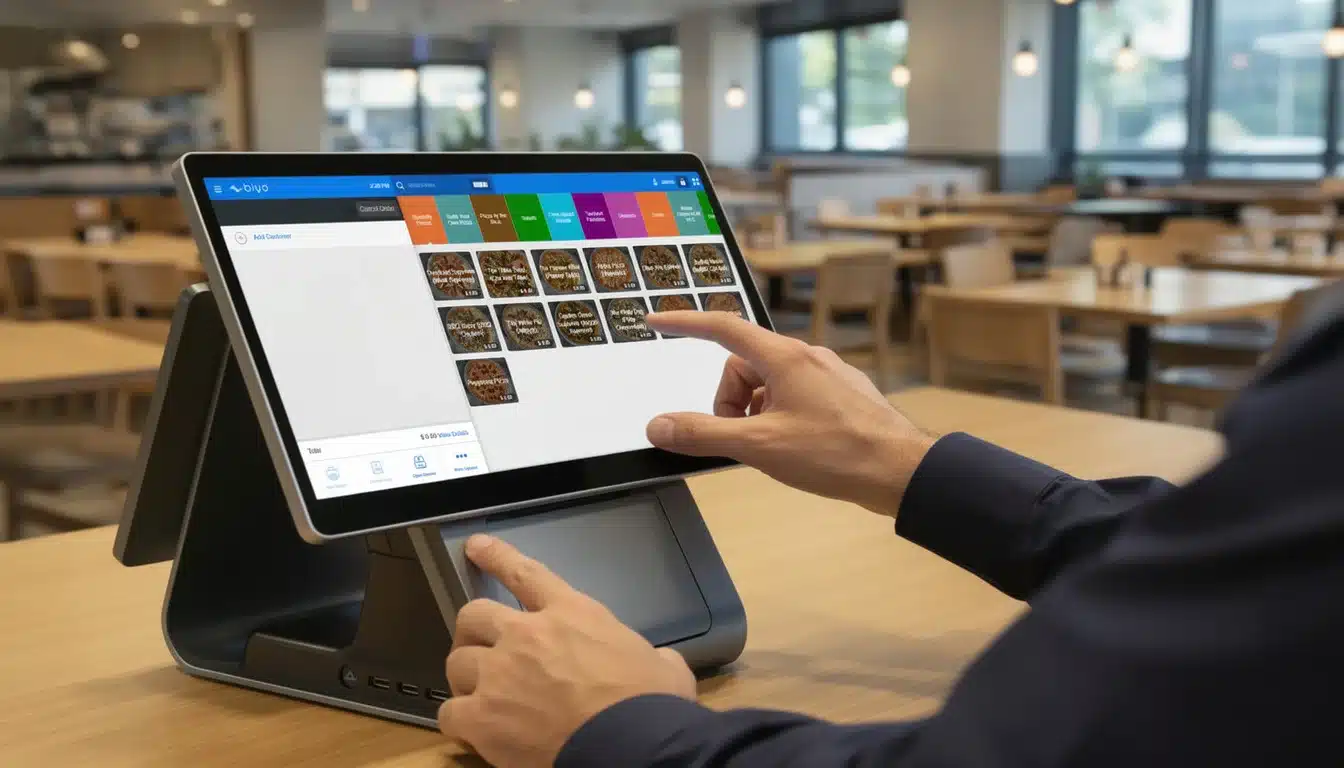
Modern restaurant pricing decisions rely heavily on accurate data and real-time analytics. Platforms like Biyo POS help restaurant operators monitor inventory, analyze menu performance, and track sales trends to support smarter pricing decisions.
With integrated tools for inventory management, expense tracking, and reporting, Biyo POS allows restaurants to evaluate how pricing changes influence profitability. Restaurant operators can identify high-performing menu items, track food costs, and adjust pricing strategies quickly.
Businesses interested in improving operational efficiency and gaining deeper financial insights can begin optimizing their systems by creating an account through the Biyo POS platform.
FAQ
How often should restaurants adjust menu prices?
Most restaurants review pricing monthly for key items and conduct full menu evaluations quarterly. Adjustments may be necessary when ingredient costs change or demand patterns shift.
What is a typical food cost target for restaurants?
Food cost targets vary by concept but typically range between 28% and 34% for full-service restaurants and slightly lower for quick-service establishments.
Can restaurants use different prices for delivery and dine-in?
Yes. Many restaurants use channel-specific pricing to offset third-party delivery fees and maintain healthy profit margins.
Do pricing strategies apply to grocery or retail food businesses?
Yes. Similar pricing principles apply to grocery stores and food retailers, where margin analysis, cost tracking, and demand forecasting determine profitable pricing strategies.
How can pricing strategies be presented to investors?
Restaurant owners often present pricing strategies through financial projections, break-even analysis, and revenue forecasts. These models demonstrate how menu pricing decisions influence long-term profitability.