
Deploying an effective multi-store loyalty program becomes an operational necessity when a retail or hospitality brand expands across multiple commercial locations. In modern multi-unit commerce, customer retention drives enterprise valuation. Acquiring a new retail customer costs up to seven times more than retaining an existing patron, while increasing customer retention rates by just five percent can expand operating profits by twenty-five to ninety-five percent. However, as independent brands scale from two storefronts to ten, twenty, or fifty branches, customer relationship management often breaks down into isolated data silos.
Traditionally, multi-unit operators managed rewards through fragmented, store-level databases. A customer who frequently spent money at a flagship downtown boutique would visit a newly opened suburban branch, only to discover that their accumulated reward points, VIP tier status, and promotional vouchers were completely inaccessible. Frontline cashiers could not locate the customer’s account, forcing patrons to register duplicate profiles or forfeit their earned discounts. Consequently, this disconnected experience erodes shopper goodwill, increases counter transaction friction, and undermines the primary objective of a retention program.
Fortunately, modern cloud enterprise architecture eliminates the barriers between physical storefronts. By replacing isolated register databases with a universal, cloud-synced loyalty ledger, multi-unit retailers can execute seamless multi-store loyalty programs from a single centralized platform. When an omnichannel customer completes a purchase at Store A, their earned points post to an immutable cloud ledger in real time, allowing them to redeem rewards at Store B seconds later. This comprehensive architectural guide details the engineering behind universal customer ledgers, solves the accounting complexities of cross-franchise point clearing, and provides an implementation blueprint for scaling enterprise customer retention.
Table of Contents
- The Multi-Location Data Silo: Why Legacy Loyalty Programs Fail Across Chains
- The Mechanics of a Universal Loyalty Ledger: Real-Time Cloud Synchronization
- Multi-Unit Accounting and Cross-Franchise Clearinghouse Settlements
- Omnichannel Customer Identification: Phone, NFC, QR, and Card-Linked ID
- Program Architecture: Tiered Status, Expirations, and Dynamic Rewards
- The 5-Step Operational Blueprint for Centralized Loyalty Deployment
- Side-by-Side Comparison
- How Biyo POS Powers Unified Multi-Store Loyalty and Instant Redemption
- Frequently Asked Questions
The Multi-Location Data Silo: Why Legacy Loyalty Programs Fail Across Chains
When a retail brand expands across multiple metropolitan markets, technological fragmentation becomes a major operational threat. Legacy point-of-sale systems were engineered around local server architectures where each physical storefront operated as an independent computing island.
Consequently, failing to unify customer data across these locations creates administrative chaos and damages customer trust.
Store-Level Database Isolation and Franchise Silos
Store-level database isolation occurs when customer transaction histories and reward balances reside exclusively on local hard drives or regional servers. In this legacy model, if a customer enrolls in a loyalty program at Location 1, their digital identity exists solely within Location 1’s local database. When that same customer visits Location 2, the register terminal searches its local customer index and returns zero results.
To accommodate the customer, cashiers at Location 2 create a secondary profile. Over several months of shopping across different regional branches, a single consumer might accumulate four distinct loyalty accounts under identical phone numbers or email addresses. As a result, corporate marketing teams lose consolidated visibility into customer lifetime value (LTV). Merchandisers cannot determine whether forty separate transactions represent forty distinct individual shoppers or a single high-net-worth VIP patron visiting multiple branches.
The Frustration of Fragmented Customer Profiles
From the consumer perspective, fragmented reward databases represent an infuriating customer service breakdown. Modern shoppers perceive a multi-unit brand as a single, cohesive entity. A consumer does not care about franchise boundaries, legal operating entities, or store-level database architecture; they expect their brand relationship to follow them wherever they shop.
When a customer is informed at checkout that their fifty dollars in reward credits cannot be applied because they were earned at another branch across town, brand trust evaporates:
- Counter Queue Delays: Cashiers spend valuable minutes arguing over unearned points, searching alternative spellings, or manually calling other store managers to verify balances.
- Increased Churn Rates: Frustrated shoppers abandon their transactions at the counter or choose competing retail chains that offer seamless digital experiences.
- Inaccurate Campaign Targeting: Marketing engines send conflicting automated emails and text messages because customer purchase records remain split across multiple unmerged profiles.
 The Mechanics of a Universal Loyalty Ledger: Real-Time Cloud Synchronization
 The Mechanics of a Universal Loyalty Ledger: Real-Time Cloud Synchronization
Solving the multi-store data disconnect requires replacing localized databases with a centralized, event-driven ledger architecture. In an enterprise cloud setup, the point of sale does not maintain an isolated customer balance; instead, it acts as a client terminal communicating with an authoritative central cloud ledger.
Therefore, implementing synchronized multi-store loyalty infrastructure ensures that point balances update enterprise-wide within sub-second timeframes.
Centralized Event Streams and Sub-Second Balance Updates
A modern universal loyalty platform relies on event-driven cloud streaming architecture. When a cashier scans an item and finalizes payment at any branch terminal, the local POS generates an encrypted transaction event payload. This payload contains the unique customer identifier, store location ID, terminal timestamp, itemized SKU breakdown, and total currency spent.
The transaction payload broadcasts immediately to the centralized cloud ledger via persistent WebSockets or lightweight REST APIs:
- The central ledger processes the transaction event, calculates earned reward points based on enterprise business rules, and appends a cryptographically verified ledger entry.
- The customer’s universal account balance increments in the centralized database.
- The cloud engine broadcasts the updated balance across the entire store network in under 300 milliseconds.
Because balance calculation occurs centrally rather than locally, every register across the enterprise accesses the identical customer record simultaneously.
Solving Race Conditions and Double-Redemption Exploits
A primary technical challenge in multi-location point management is the prevention of race conditions, commonly known as the “double-spend” or “double-burn” exploit. In poorly synchronized systems with five-to-ten-minute database polling intervals, dishonest customers can exploit replication latency. A shopper could redeem 500 reward points for a fifty-dollar discount at Store A, immediately sprint to Store B or open the brand’s mobile app, and redeem those identical 500 points a second time before Store A’s transaction syncs to the rest of the network.
Enterprise cloud ledgers eliminate double redemption using atomic transactions and distributed lock protocols:
- Distributed Record Locking: The moment a cashier initiates a reward redemption at Store A, the central ledger places an atomic, sub-second lock on the customer’s point balance.
- Strict Serialization: Any simultaneous redemption request originating from another storefront or an online eCommerce portal is queued and evaluated sequentially.
- Instant Balance Depletion: The central engine deducts the redeemed points and releases the lock only after the ledger transaction finalizes, preventing any unauthorized duplicate claims.
Multi-Unit Accounting and Cross-Franchise Clearinghouse Settlements
While corporate-owned store chains can treat customer reward points as a consolidated internal marketing expense, franchise networks and multi-entity partnerships face severe accounting hurdles. When independent franchisees operate under a unified retail banner, points earned at one location and redeemed at another create inter-business financial liabilities.
Consequently, building an enterprise multi-store loyalty framework requires establishing an automated internal clearinghouse to reconcile cross-entity debts cleanly.
The Inter-Store Liability Problem: Earn at Store A, Burn at Store B
Consider the financial friction that occurs in a multi-franchise network without automated clearinghouse mechanics:
- The Earning Event (Franchise A): A customer spends $200 at Franchise A. Franchise A collects the full gross revenue, deposits the cash into their operating account, and awards the customer 200 reward points (representing a $20 future discount liability).
- The Burning Event (Franchise B): The following week, the customer visits Franchise B and redeems those 200 points for a $20 discount on a $50 purchase. The customer pays Franchise B only $30 out of pocket.
In this scenario, Franchise B has sacrificed twenty dollars in gross margin and inventory value, while Franchise A retained one hundred percent of the original transaction revenue that generated the reward. If cross-store redemptions occur thousands of times per month without accounting reconciliation, franchisees located in high-redemption residential areas will suffer severe margin compression, while stores in high-traffic commuter zones accumulate unearned cash reserves.
Automated Internal Clearinghouse and Digital Settlement Ledgers
Enterprise point-of-sale architectures resolve this inter-franchise friction by functioning as an automated internal clearinghouse. Every point transaction is treated as a micro-financial contract governed by standardized internal transfer pricing:
- Point Issuance Surcharge: When Franchise A awards 200 points to a customer, the POS accounting engine automatically debits Franchise A’s internal corporate account by the baseline actuarial cost of those points (e.g., $0.08 per point, totaling $16.00). This capital routes directly into a Central Loyalty Escrow Reserve.
- Point Redemption Credit: When Franchise B accepts those 200 points at checkout, the clearinghouse system automatically credits Franchise B’s corporate account with the full $16.00 reimbursement from the central escrow fund.
- Automated End-of-Month Clearing: At the conclusion of every billing cycle, the cloud system generates consolidated inter-company settlement reports, detailing net amounts owed or receivable between each franchise entity and corporate headquarters.
By automating the financial clearinghouse, multi-unit brands eliminate franchise disputes and ensure that every branch welcomes reward redemptions enthusiastically.
Omnichannel Customer Identification: Phone, NFC, QR, and Card-Linked ID
A universal loyalty program is only as effective as its counter lookup velocity. If identifying a loyalty member requires a forty-five-second interrogation involving paper cards, misspelled physical addresses, or complex manual searches, checkout queues will back up, and cashiers will abandon the loyalty lookup process entirely during sales rushes.
Modern retail environments require multiple frictionless customer identification pathways that integrate directly into the checkout workflow.
Frictionless Counter Lookup: Avoiding Queue Bottlenecks
To maintain transaction speed, point-of-sale hardware must empower cashiers to link transactions to customer profiles in under three seconds:
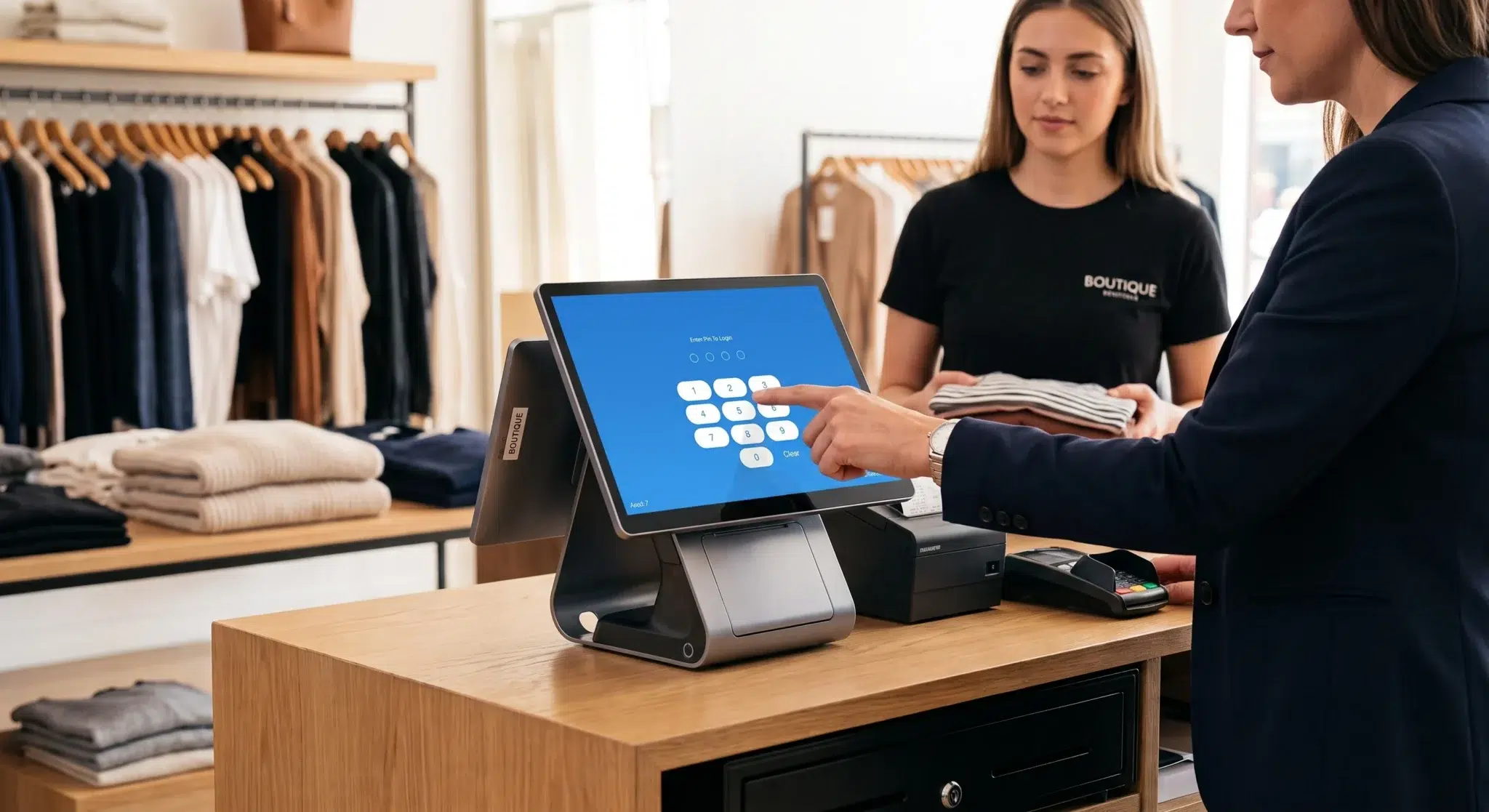
- Ten-Digit Mobile Number Indexing: The most universal identification method remains the customer’s primary mobile phone number. The register interface must feature an optimized numeric keypad allowing cashiers to type the digits in two seconds, with real-time fuzzy search matching customer names instantly.
- Customer-Facing Terminal Entry: Equipping checkout counters with customer-facing touchscreens (CDS) allows shoppers to input their own phone numbers while the cashier scans physical merchandise, completely eliminating front-counter transcription delays.
- Dynamic In-App QR Scanning: Customers open the brand’s mobile app to display a single, dynamic 2D barcode. A single scan of this QR code at the register identifies the member, applies eligible digital coupons, and tracks reward points in a single optical read.
Digital Pass Integration: Apple Wallet and Google Pay Passes
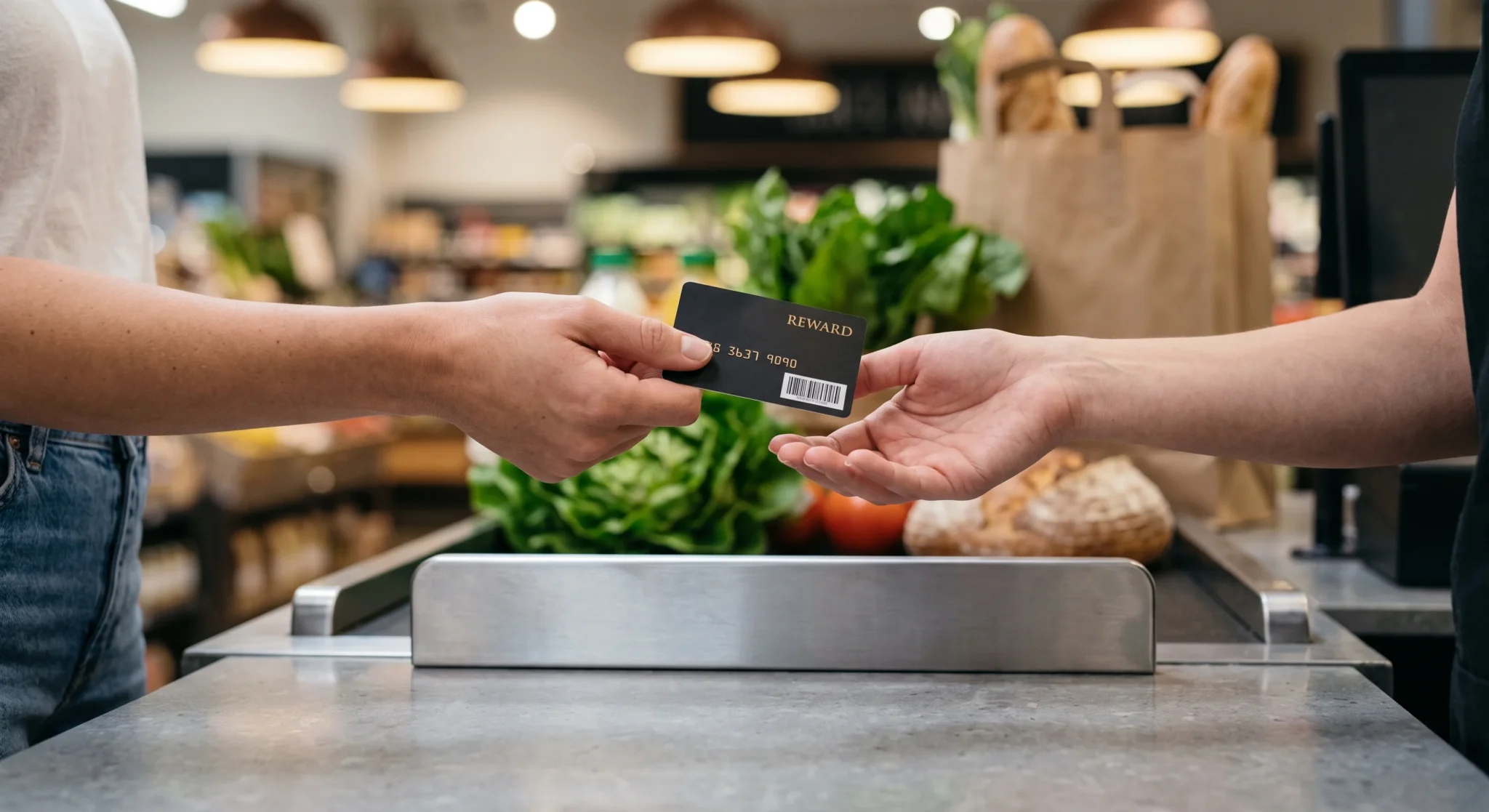
Physical plastic barcode cards are obsolete; modern consumers refuse to carry bulky keyfob tags or plastic membership cards. Leading retail chains deploy native mobile wallet passes that reside inside Apple Wallet and Google Pay.
These digital wallet passes leverage advanced smartphone hardware:
- NFC Tap-to-Identify (Apple VAS & Google Smart Tap): Using Value Added Services (VAS) protocols, the customer simply taps their iPhone, Apple Watch, or Android device against the payment terminal. The terminal reads the encrypted loyalty pass credentials over Near-Field Communication (NFC) before processing payment, identifying the member effortlessly.
- Geofenced Lock-Screen Prompts: When a customer walks within one hundred yards of any corporate or franchise storefront, the smartphone’s operating system detects local GPS coordinates or micro-location Bluetooth beacons. The digital loyalty card automatically appears on the customer’s lock screen, allowing the shopper to pull up their pass with a single swipe upon entering the store.
Program Architecture: Tiered Status, Expirations, and Dynamic Rewards
Architecting an enterprise multi-store loyalty program requires balancing compelling customer incentives with strict corporate margin protection. A generic “spend one dollar, get one point” model fails to drive meaningful behavioral changes among high-value demographic cohorts.
Structuring dynamic reward tiers and automated balance governance turns customer retention into a predictable revenue engine.
Unified Spending Tiers and Multi-Tier Progression Rules
High-performing retail chains utilize multi-tiered VIP frameworks (such as Silver, Gold, and Platinum status) to incentivize higher annual spend. However, in a multi-unit network, tier progression must calculate across all physical branches and digital channels simultaneously.
Enterprise tier governance follows structured mathematical milestones:
- Tier 1 (Base Member / Entry Tier): Automatic enrollment upon first purchase. Members earn a standard 1 point per $1.00 spent, redeemable for basic discount vouchers (representing a 5% net cash-back equivalent).
- Tier 2 (Preferred VIP / $500 Annual Spend): Unlocked across any combination of store branches. Members earn an accelerated 1.25 points per $1.00 spent, access free standard alterations or delivery, and receive exclusive seasonal preview invitations.
- Tier 3 (Elite Ambassador / $1,500+ Annual Spend): Unlocked by top-tier spenders. Members earn 1.5 points per $1.00 spent, receive dedicated personal styling appointments, and access permanent 10% private discounts across all enterprise branches.
Because customer spend tallies continuously across all twenty locations via the cloud ledger, a customer who spends $200 at Store A, $200 at Store B, and $100 on the brand’s web store unlocks Tier 2 status instantly, reinforcing cross-store brand loyalty.
Automated Point Expiration Policies and Liability Deprecation
Under standard accounting guidelines (such as GAAP ASC 606 and IFRS 15), unredeemed loyalty points represent an active deferred revenue liability on a company’s balance sheet. If a retailer allows points to accumulate indefinitely without expiration, that balance sheet liability balloons, threatening enterprise solvency during financial audits.
Modern loyalty systems enforce automated, policy-driven point expiration:
- Rolling Inactivity Windows: Points remain active as long as the customer completes at least one qualifying purchase or redemption transaction every 12 months at any network branch.
- Automated Re-Engagement Notifications: At 60 days and 30 days prior to point expiration, the cloud engine dispatches automated SMS text messages and emails alerting the customer to their expiring balance, sparking urgent return visits.
- Automated Ledger Deprecation: If the customer fails to transact within the statutory window, the system automatically writes off the expired points from the universal ledger, releasing the deferred liability cleanly into recognized revenue.
The 5-Step Operational Blueprint for Centralized Loyalty Deployment
Migrating twenty independent retail locations from disconnected customer lists to a synchronized universal loyalty ledger requires systematic execution. Merging messy databases without rigorous data validation creates widespread customer account duplication and ledger corruption.
Following this 5-step implementation blueprint ensures a seamless enterprise transition.
Phase 1 & 2: Legacy Profile Deduplication and Master CRM Migration
1. Export and Stage Customer Data: Extract all legacy customer records, transaction histories, and point totals from all twenty individual store databases into a secure cloud staging environment.
2. Execute Fuzzy-Logic Deduplication: Run automated deduplication algorithms that match records across multiple fields: standardized ten-digit phone numbers, normalized email addresses, and postal addresses.
3. Consolidate Historical Balances: Merge duplicate accounts into a single Master Customer Record, combining historical lifetime spend metrics and establishing an accurate starting point balance.
4. Establish Universal Customer IDs: Assign a unique, immutable UUID (Universally Unique Identifier) to every consolidated customer profile, linking all historical transaction records across every physical branch.
Phase 3 to 5: Real-Time API Configuration, Staff Training, and Rollout
1. Configure Enterprise Clearinghouse Rules: Define internal point valuation metrics and automated cross-franchise financial transfer rules inside your central POS back-office dashboard.
2. Deploy Dynamic Mobile Wallet Passes: Generate branded Apple Wallet and Google Pay loyalty pass templates equipped with dynamic barcodes and NFC push capabilities.
3. Conduct Frontline Cashier Training: Train store associates on rapid customer lookup protocols, emphasizing that counter identification must take less than three seconds to prevent line bottlenecks.
4. Execute Phased Cluster Rollouts: Launch the universal ledger across a pilot cluster of three high-volume stores for two weeks, verifying sub-second balance replication and cross-store redemption accuracy before deploying chain-wide.
Side-by-Side Comparison
Data Architecture and Customer Experience
| Operational Dimension | Fragmented Store-Level Databases | Universal Cloud Loyalty Ledger (Biyo POS) |
|---|---|---|
| Customer Account Creation | Duplicate profiles created at every new branch | Single universal profile recognized across all branches |
| Cross-Store Point Earning | Points trapped inside the specific branch where earned | Points accumulate enterprise-wide on a single ledger |
| Cross-Store Redemption Speed | Impossible, or requires slow manual manager verification | Sub-second instant redemption at any network terminal |
| Double-Redemption Protection | Highly vulnerable due to multi-hour sync latency | Atomic distributed locks prevent double-burn exploits |
| Customer Lookup Methods | Slow manual typing and searching through paper/local lists | Instant 10-digit lookup, dynamic QR scan, or NFC tap |
Financial Governance and Enterprise Reporting
| Financial Governance Metric | Fragmented Store-Level Databases | Universal Cloud Loyalty Ledger (Biyo POS) |
|---|---|---|
| Inter-Franchise Accounting | Disputed losses; store redeeming points absorbs full margin loss | Automated internal clearinghouse reconciles liabilities |
| Customer Lifetime Value (LTV) Tracking | Completely obscured; spend divided across separate silos | Consolidated omnichannel reporting across all 20+ stores |
| Balance Sheet Liability Compliance | Unmonitored point inflation creates hidden fiscal risk | GAAP ASC 606 compliant point expiration & depreciation |
| Targeted Marketing Capabilities | Generic, uncoordinated blasts sent from individual stores | Automated SMS/email triggers based on global spend habits |
| Offline Resilience & Sync | Registers crash or fail to record loyalty when offline | Local transaction caching auto-syncs to cloud when online |
How Biyo POS Powers Unified Multi-Store Loyalty and Instant Redemption
 How Biyo POS Powers Unified Multi-Store Loyalty and Instant Redemption
Biyo POS delivers a modern cloud point-of-sale and customer relationship management operating system engineered specifically to eliminate multi-unit retail data silos. Operating natively inside the Google Chrome web browser on any standard PC, Mac, iPad, or Android tablet, Biyo provides enterprise retail operators with the centralized infrastructure required to deploy multi-store loyalty across 20 or more storefronts from a single dashboard without purchasing expensive proprietary server hardware.
Real-Time Cloud CRM and Instant Cross-Branch Sync
With Biyo’s powerful enterprise multi-store architecture, customer profiles exist as living, real-time cloud entities rather than static local records. When a customer completes a purchase at Location A, Biyo’s sub-second cloud synchronization updates their loyalty points, purchase history, and VIP tier status instantaneously. That exact same customer can walk into Location B ten seconds later, and the cashier’s terminal will display their updated reward balance, available promotional discounts, and custom customer notes in real time. Cashiers simply type a phone number or scan a dynamic barcode to pull up comprehensive customer data, keeping checkout lines moving at maximum velocity while delivering a personalized VIP shopping experience.
Mobile Auditing, Kitchen Integration, and Resilient Offline Operations
Furthermore, Biyo connects your customer loyalty program with an expansive suite of operations tools. Retail stockroom teams can download the Biyo POS Inventory Scanner app directly from the Apple App Store onto an iPhone or iPad to execute rapid inter-store stock transfers, verifying that high-demand reward redemption items remain stocked across every branch. If your retail enterprise incorporates food, beverage, or coffee concepts within its storefronts, route preparation tickets smoothly using the Biyo Kitchen Display (KDS) app available on Google Play or consolidate multi-station operations through Kitchen Hub. Best of all, Biyo’s true offline transaction mode ensures that if a store’s internet connection drops, registers continue scanning items, accepting payments, and logging customer loyalty transactions locally—automatically synchronizing cached loyalty ledgers to corporate headquarters the moment connectivity returns.
To discover how easily your growing retail chain can centralize customer relationship management, automate universal reward ledgers, and scale customer retention, you can schedule a live demo with an enterprise retail consultant or create your account today on the Biyo signup page.
Frequently Asked Questions
Technical Architecture and Real-Time Synchronization
What is a universal loyalty ledger in multi-store retail?
A universal loyalty ledger is a centralized, cloud-synced database architecture that tracks customer reward points, purchase histories, and promotional statuses across an entire network of physical storefronts and eCommerce channels in real time, rather than storing data on isolated local store registers.
How do cloud POS systems prevent customers from double-redeeming points?
Cloud POS platforms utilize atomic transactions and distributed record locking. The moment a customer initiates a point redemption at Store A, the central ledger temporarily locks their account balance, preventing simultaneous redemptions at Store B or online before deducting the redeemed balance permanently.
How quickly does Biyo POS synchronize loyalty points between locations?
Biyo POS operates on an ultra-low-latency cloud infrastructure that synchronizes transaction events, customer point balances, and profile updates across all connected store terminals enterprise-wide in under 500 milliseconds.
Franchise Accounting and Store Operations
How does inter-store accounting handle loyalty redemption between franchises?
Enterprise multi-store platforms operate an internal clearinghouse. When a customer earns points at Franchise A, that branch pays a fractional fee into a central loyalty reserve account. When those points are redeemed at Franchise B, the system automatically reimburses Franchise B from that central fund.
Can customers earn and redeem loyalty points when a store register is offline?
Yes. Biyo POS features true offline transaction caching that allows cashiers to continue logging customer transactions locally during network drops. The system timestamps all offline purchases and reconciles point balances sequentially with the central cloud ledger once the internet reconnects.
What is the fastest way for cashiers to identify loyalty members at checkout?
The fastest methods include a rapid 10-digit mobile number entry on customer-facing displays, scanning dynamic in-app QR codes from the customer’s smartphone, or reading digital Apple Wallet and Google Pay passes via Near-Field Communication (NFC) tap-to-identify protocols.