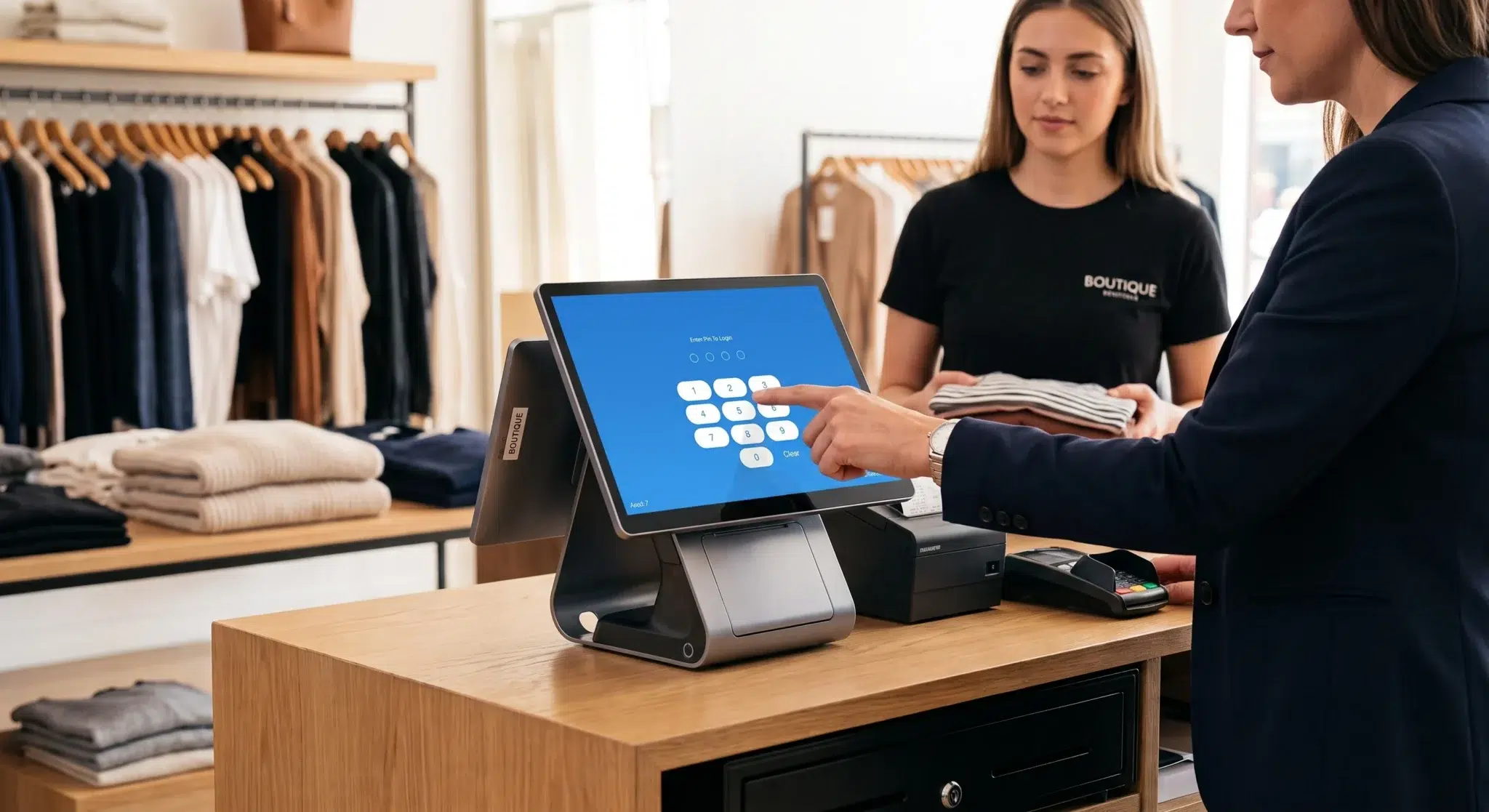
Think of inventory management software as the central nervous system for any business that sells physical products. It's the digital tool that tracks your goods from the moment they arrive from a supplier to the second they land in a customer's hands.
Gone are the days of relying on clunky spreadsheets and pure guesswork. This software gives you a real-time, accurate picture of your stock levels, sales trends, and purchase orders, all in one place. It’s the backbone of a smooth, efficient operation.
Your Business’s Air Traffic Control System

Trying to run a warehouse with just a clipboard is a recipe for disaster. It’s chaotic, riddled with errors, and impossible to scale. This is where inventory management software steps in.
Think of it as the air traffic control tower for your products. It monitors every single item, providing a clear view of its entire journey through your business. This central hub consolidates all your inventory data, so you always know exactly what you have, where it is, and how fast it’s moving.
Turning Guesswork into Strategy
Without a solid system, businesses get stuck in a painful cycle. They either overstock, tying up precious cash in products that just sit there, or they understock, leading to missed sales and frustrated customers. Both are costly mistakes.
An effective inventory platform helps you find that sweet spot. It gives you the hard data you need to make smart purchasing decisions and maintain optimal stock levels. By taking over the tedious, manual tasks of counting and tracking, it frees up your team to focus on what really matters—growing the business.
To give you a clearer picture, this table breaks down the essential tasks these systems handle.
Core Functions of Inventory Management Software at a Glance
| Core Function | How It Helps Your Business |
|---|---|
| Real-Time Stock Tracking | Provides an up-to-the-minute count of all products across all locations, preventing stockouts and overstocking. |
| Order Management | Automates the process of receiving, processing, and fulfilling customer orders from multiple sales channels. |
| Supplier and Purchase Orders | Manages supplier information and automates the creation and tracking of purchase orders when stock runs low. |
| Barcode Scanning | Simplifies receiving, picking, and packing by using scanners to reduce human error and speed up processes. |
| Forecasting and Reporting | Generates reports on sales trends and product performance, helping you predict future demand and make smarter buying decisions. |
As you can see, each function directly tackles a common operational headache, replacing manual effort with automated precision.
This level of control isn't just for retail, either. It’s crucial in many fields. For instance, a dedicated restaurant inventory management system is designed to track perishable ingredients, which is absolutely vital for cutting down on food waste and protecting profits. At the end of the day, this technology brings clarity and order to your entire operation, making your business far more efficient and resilient.
What Are the Must-Have Features?
So, you get the basic idea of what inventory management software is. But what does it actually do for you on a day-to-day basis? Let's peel back the layers and look at the core functions that bring order to the chaos of managing stock.
These aren't just fancy add-ons; they are the gears that make the entire machine run smoothly, preventing costly mistakes and helping you make smarter business decisions.
The Core Engine: Tracking, Automation, and Ordering
First and foremost is real-time inventory tracking. Think of it as a live, bird's-eye view of every single item you own, no matter where it is—on a warehouse shelf, in a back room, or even in transit. This is what stops you from selling a product you just ran out of, a mistake that can instantly damage a customer's trust.
Then you have barcode scanning. It might seem basic, but its impact is huge. Manually typing in SKUs is a recipe for typos and errors. In fact, studies show manual data entry has an error rate of about 1%. That doesn't sound like much, but over thousands of transactions, those little mistakes snowball into major stock discrepancies. Scanning makes everything faster and virtually error-proof.
Good software also includes order management. This feature is your central command center, pulling in orders from all your sales channels—your website, a physical store, online marketplaces—and syncing them up. When an item sells online, the system automatically adjusts the stock count everywhere else. No more overselling.
The image below gives you a great visual of how these fundamental pieces fit together.

As you can see, tracking, reordering, and analysis aren't separate tasks. They're interconnected parts of a single, powerful system.
The real magic happens when these features work together. The live data from your inventory tracking feeds directly into your reordering alerts and powers the insights in your reports. It’s about creating a connected ecosystem, not just counting boxes.
Finally, we have reporting and analytics. This is what truly separates simple stock-counting from genuine inventory intelligence. These tools dig into your sales history to help you forecast future demand. You can finally get clear answers to questions like, "Which products are my bestsellers?" and "What's that slow-moving stock that's just sitting there tying up cash?"
This is how you shift from constantly reacting to problems to proactively planning for growth. You start making purchasing decisions based on solid data, not just a gut feeling.
The Real-World Benefits of Smart Inventory Control

It’s one thing to read about the features of inventory management software, but it’s another to see how they actually make a difference in the real world. This is where the theory hits the road. Smart inventory control directly impacts your bottom line, swapping out chaotic manual tasks for smooth, automated workflows that genuinely save time and money.
At its heart, this is all about improving your cash flow. By giving you a crystal-clear view of every item you have in stock, the software stops you from tying up precious capital in products that just aren't selling. That money is freed up to be put to better use, whether that’s a new marketing campaign or developing your next big product.
From Putting Out Fires to Fueling Growth
Picture an online store constantly dealing with angry customers because of backorders. With real-time, accurate stock data, they can stop selling products they don't actually have. This simple fix can do wonders for customer satisfaction and build the kind of loyalty that leads to repeat business. It’s a fundamental shift from constantly reacting to problems to proactively preventing them.
This newfound visibility ripples through your entire supply chain. Suddenly, you have the hard data you need to make smarter purchasing decisions, slash carrying costs, and make your whole operation run more efficiently. For a restaurant, getting a better handle on ingredients can be a massive profitability lever. Our guide on https://biyopos.com/blog/how-to-increase-restaurant-sales/ digs into how small operational tweaks like this can have a huge impact.
The real magic is what it does for your team. Instead of being bogged down for hours counting boxes and wrestling with spreadsheets, they can focus on what really matters—activities that actually grow the business.
A Market That Speaks for Itself
The results are so clear that more and more businesses are getting on board. The global market for inventory management software was valued at a whopping USD 3.58 billion in 2023 and is on track to hit USD 7.52 billion by 2033.
That kind of growth doesn't happen by accident; it’s proof that this software delivers real efficiency and cost savings. To get the most out of the technology, it helps to pair it with proven strategies. You can learn more by checking out these best practices for efficient inventory management.
How Different Industries Master Their Stock
Inventory management isn't a single puzzle with one solution. Think of it more like a toolkit, where different businesses pull out the specific tools they need. The challenges of a fast-fashion retailer are worlds away from those of a hospital, but the right system can adapt to both.
Take an e-commerce seller, for example. They might be juggling sales on Amazon, their own website, and even a pop-up shop. Without a central hub tracking inventory, it's incredibly easy to sell the same last t-shirt twice, which means one customer walks away disappointed. The software connects these channels, ensuring that when an item sells on one platform, it's instantly marked as unavailable on all the others.
For brick-and-mortar stores, this integration is just as crucial. A point-of-sale system, for instance, can do more than just process payments; it can tie every single transaction directly to your stock levels. Every scan of a barcode is an immediate, real-time update to your inventory count.
From Raw Materials to Patient Safety
Now, let's step into a factory. A manufacturer's needs are far more complex. They aren't just tracking finished products; they have to monitor raw materials, work-in-progress (WIP) components on the assembly line, and the final goods ready for shipment. Proper software provides a clear view of this entire lifecycle, preventing costly delays caused by a surprise shortage of a single screw or bracket.
In healthcare, the stakes are even higher. Hospitals and clinics use inventory systems to manage life-saving medical supplies. Here, it’s not just about how many of something you have, but how safe those items are.
An inventory system in a hospital can track expiration dates on sensitive medications and sterile equipment, automatically flagging items that are nearing their use-by date. This capability directly enhances patient safety and ensures compliance with strict regulations.
From online stores to operating rooms, these examples show just how flexible a good inventory platform can be. It solves the universal business problem: knowing exactly what you have, where it is, and when you'll need more.
How to Choose the Right Inventory Software

Picking the right inventory software is a big deal. It's not just about ticking boxes on a feature list; it's about finding a true partner for your business's growth. The best platform won’t just fix your current headaches—it will be ready to grow right alongside you.
So, how do you start? By asking the right questions. Forget the sales pitch for a moment and zero in on what your daily operations actually need. Can this system handle your current order volume and, more importantly, can it keep up when you start to scale? A system that’s fine for 100 orders a month might completely fall apart when you hit 1,000.
Evaluate Key Vendor Attributes
Before you even think about signing a contract, you need a solid checklist to vet potential vendors. This isn't just a casual comparison; it's a deep dive into whether they're the right fit for your business.
Here's what to look for:
- Integration Capabilities: How well does the software play with the tools you already use? I'm talking about your accounting platform, your e-commerce store, and especially your POS system. A smooth connection means no more mind-numbing manual data entry and ensures everyone is working from the same real-time information.
- Pricing Model: You have to understand the total cost of ownership. Is it a straightforward monthly subscription, or are you looking at a big, one-time license fee? Keep an eye out for hidden costs like extra fees for support, essential updates, or adding more users down the road.
- Customer Support: Because when something inevitably goes wrong, you need to know someone has your back. What are their support hours? Can you actually get a human on the phone, or are you stuck with email and chat? Check out their customer reviews—a vendor with a reputation for quick, helpful support is worth its weight in gold.
This is especially critical when you're thinking about financing your system. For more on that, take a look at our guide on acceptable POS lending criteria.
Choosing an inventory system is less about buying software and more about investing in an operational backbone. The right choice supports efficiency and growth; the wrong one creates daily friction and holds you back.
Future-Proofing Your Decision
This isn't a static industry; the technology is constantly getting better. In fact, the global inventory management software market is expected to grow at a compound annual growth rate of 13.1% through 2035, all thanks to businesses like yours going digital.
What does that mean for you? It means you need a vendor who is committed to keeping up.
By carefully weighing a system’s ability to scale, integrate, and provide solid support, you're setting yourself up to pick a platform that works for your business today and is ready for whatever comes next.
The Future of Inventory Management Technology
So, where is all this heading? The world of inventory management is on the brink of a major leap forward. We're moving away from simply counting what’s on the shelf and into the realm of predicting what you’ll need next week, next month, or even next year. What once sounded like science fiction is fast becoming the new normal for smart businesses.
At the heart of this change are technologies that don't just follow rules—they learn. Artificial intelligence (AI) and machine learning are the brains of the operation, digging deep into your sales history, spotting market trends, and even factoring in things like upcoming holidays or local weather patterns. The goal is to forecast customer demand with startling accuracy, so you can order what you need before you even realize you need it.
This isn't just a niche trend; it's a massive market shift. The inventory management software market shot up from USD 2.25 billion to about USD 2.48 billion between 2024 and 2025 alone. That's a growth rate of 10.4% in just one year. This boom is being driven by the very technologies we're talking about, like AI integration and even voice-recognition tech for hands-free work in the warehouse. For a deeper dive, you can explore more about these market insights on inventory management software.
Automation and Intelligence in the Warehouse
The changes aren't just happening on a screen; they're transforming the warehouse floor itself. Thanks to the Internet of Things (IoT), we're seeing things like "smart shelves" equipped with sensors that track stock levels 24/7. When a product gets low, the system can automatically place a reorder with your supplier. No human touch needed.
The ultimate aim here is a truly autonomous supply chain—one where the inventory essentially manages itself. By connecting physical stock to a central brain, you cut out the guesswork and can respond to supply shifts in the blink of an eye.
And it doesn't stop there. Robotics and drones are becoming common sights, completely changing how products are moved and counted. Think of automated guided vehicles (AGVs) zipping around the warehouse, carrying goods from one station to another, or drones flying overhead to conduct a full stock-take in minutes instead of days. These tools don't just make things faster; they make them incredibly accurate, slashing the kinds of human errors that can quietly drain your profits.
Getting a handle on these trends is more than just interesting—it's essential. When you're picking an inventory system, you need one that's built for today and ready for what's coming tomorrow.
Ready to bring clarity and control to your inventory? Biyo POS offers a powerful, all-in-one system that combines smart inventory management with seamless payment processing and insightful analytics. Start your 14-day free trial today and see how easy it is to manage your business.