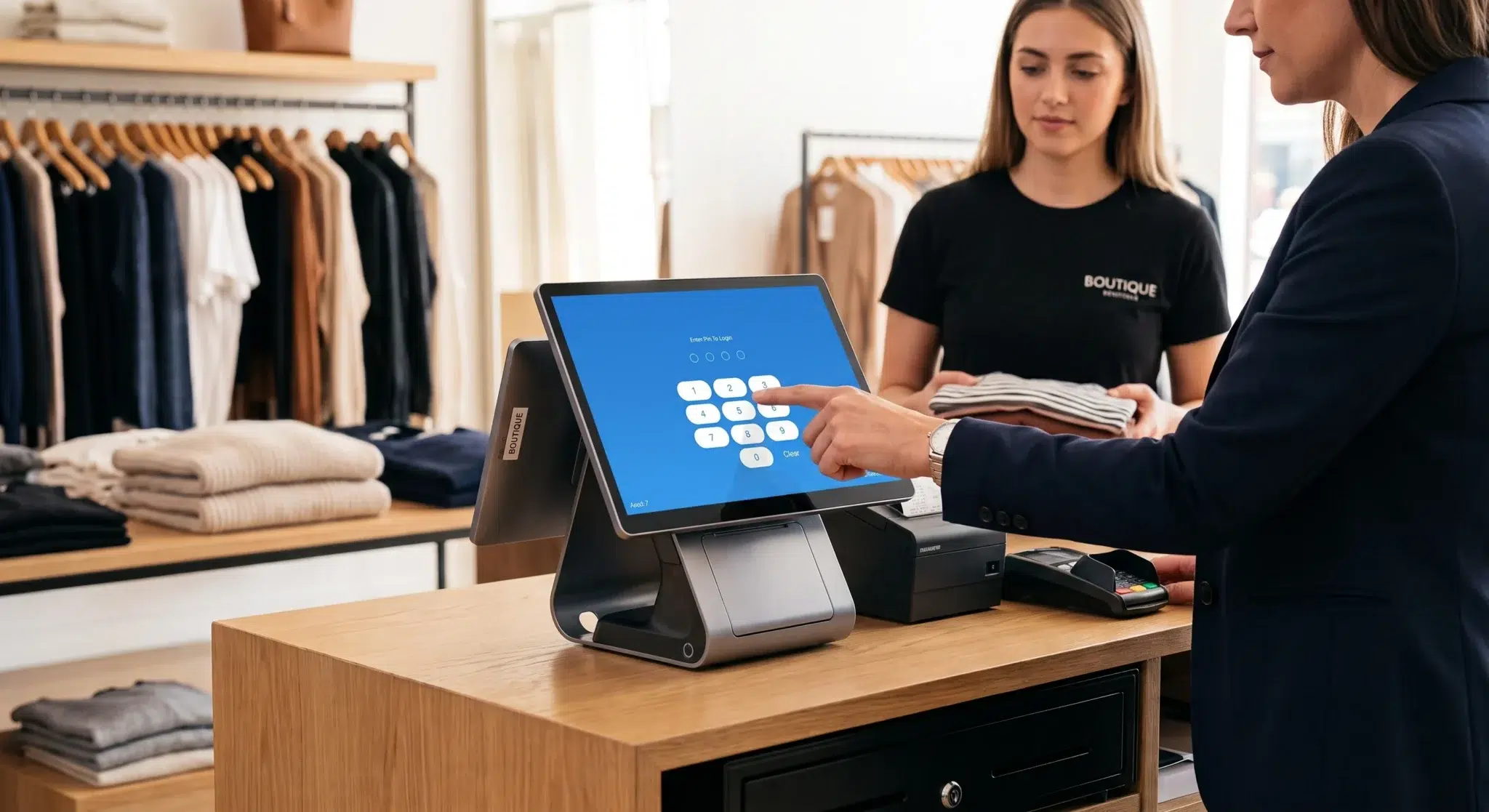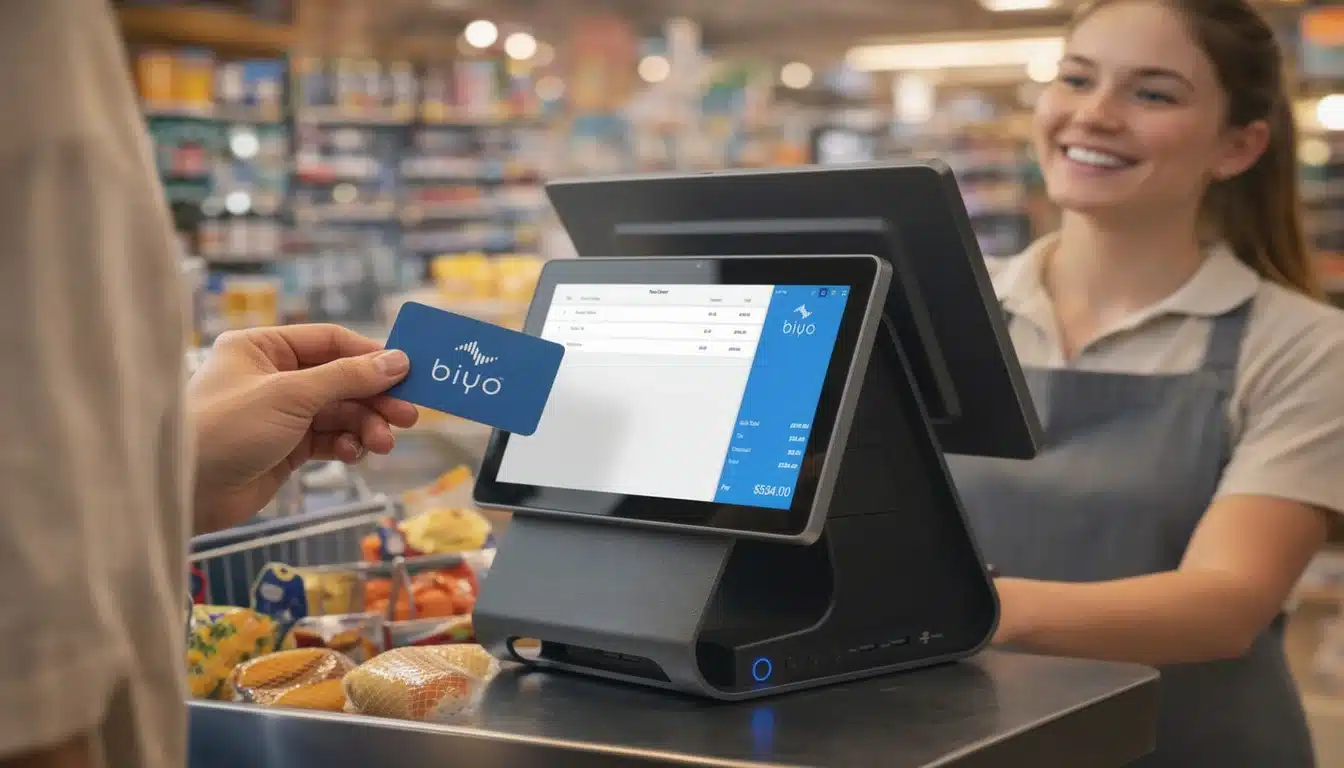

Retail Payment Processing Explained is a topic every store owner should understand. When a customer taps, inserts, or swipes a card, the transaction looks simple. However, behind the scenes, multiple systems communicate within seconds. Therefore, understanding retail payment processing helps you control costs, reduce errors, and protect your revenue.
Many retailers focus only on sales totals. Meanwhile, they overlook how credit card processing retail systems affect margins. Merchant services retail providers charge fees, route transactions, and manage authorization steps. If you do not understand payment processing basics, hidden costs can quietly reduce profitability.
This guide breaks down Retail Payment Processing Explained into clear sections. You will learn how transaction flow works, what interchange fees mean, how the authorization process operates, and how processing costs impact your bottom line. With this knowledge, you can choose smarter payment solutions for your business.
Table of Contents
- Payment Processing Basics for Retailers
- Understanding the Transaction Flow
- Interchange Fees and Processing Costs
- The Role of the Payment Gateway
- Security, Compliance, and Risk Management
- Choosing the Right Merchant Services
- How Biyo POS Simplifies Retail Payment Processing
- FAQ
Payment Processing Basics for Retailers
To understand Retail Payment Processing Explained, you must start with the basics. A retail payment transaction involves several parties working together. Although the customer sees only a receipt, a complex system operates in the background.
Who Is Involved in a Retail Transaction?
A typical retail payment includes the customer, the merchant, the issuing bank, the acquiring bank, and the card network. Each party plays a specific role. Therefore, transactions complete within seconds despite multiple steps.
The issuing bank provides the customer’s card. Meanwhile, the acquiring bank handles merchant services retail operations. The card network, such as Visa or Mastercard, connects both banks through secure systems.
Understanding these players is essential because each one contributes to processing costs and transaction rules.
Now that we know the players, let us explore how transactions move.
Types of Retail Payment Methods
Modern retail payment processing includes chip cards, tap-to-pay, NFC mobile wallets, and online payments. Each method follows similar payment processing basics but may carry different fee structures.
For instance, contactless payments use encrypted signals to complete transactions quickly. Meanwhile, online payments require additional verification steps.
Retail Payment Processing Explained must account for these differences because each method affects speed, cost, and security.
 Understanding the Transaction Flow
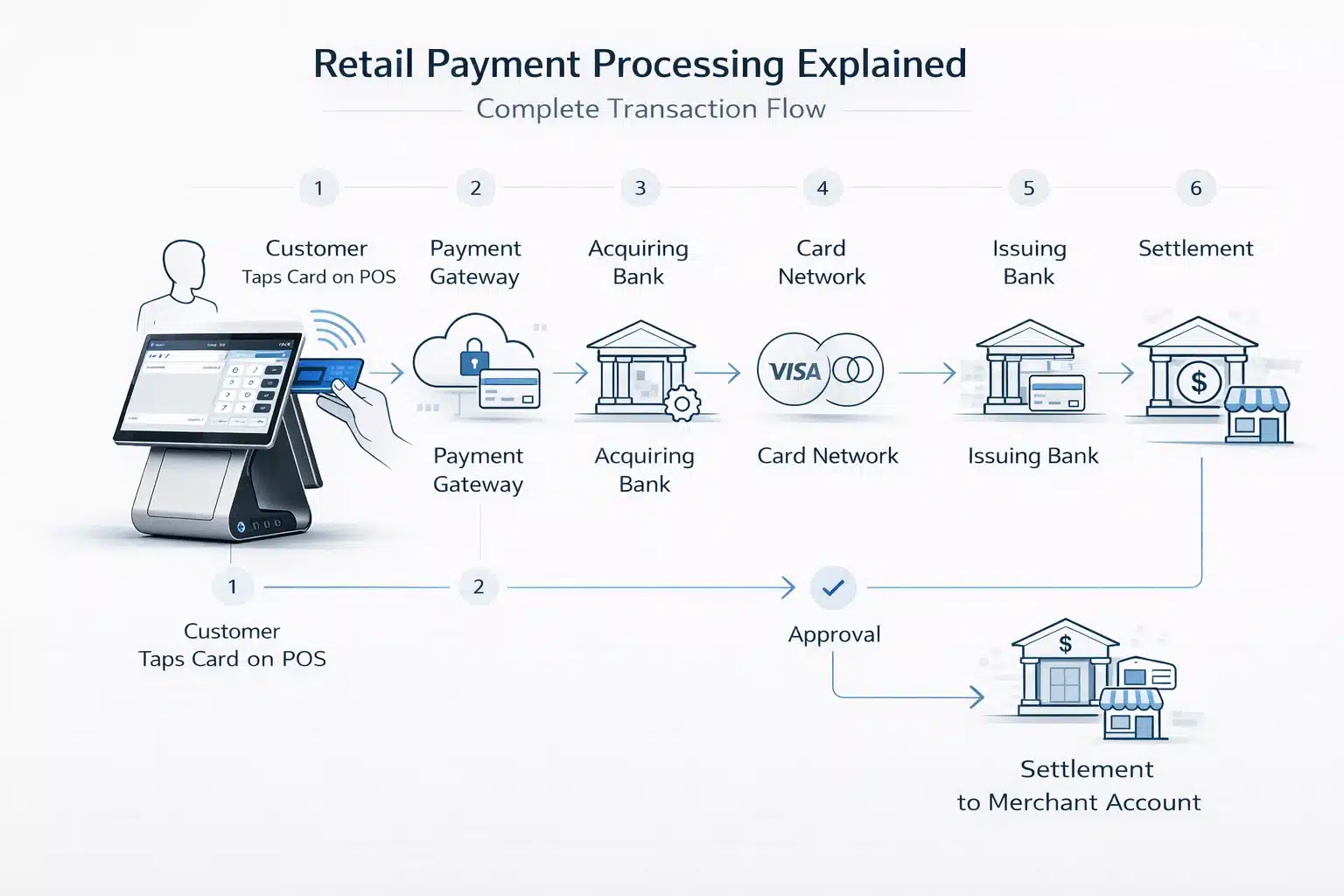 Understanding the Transaction Flow
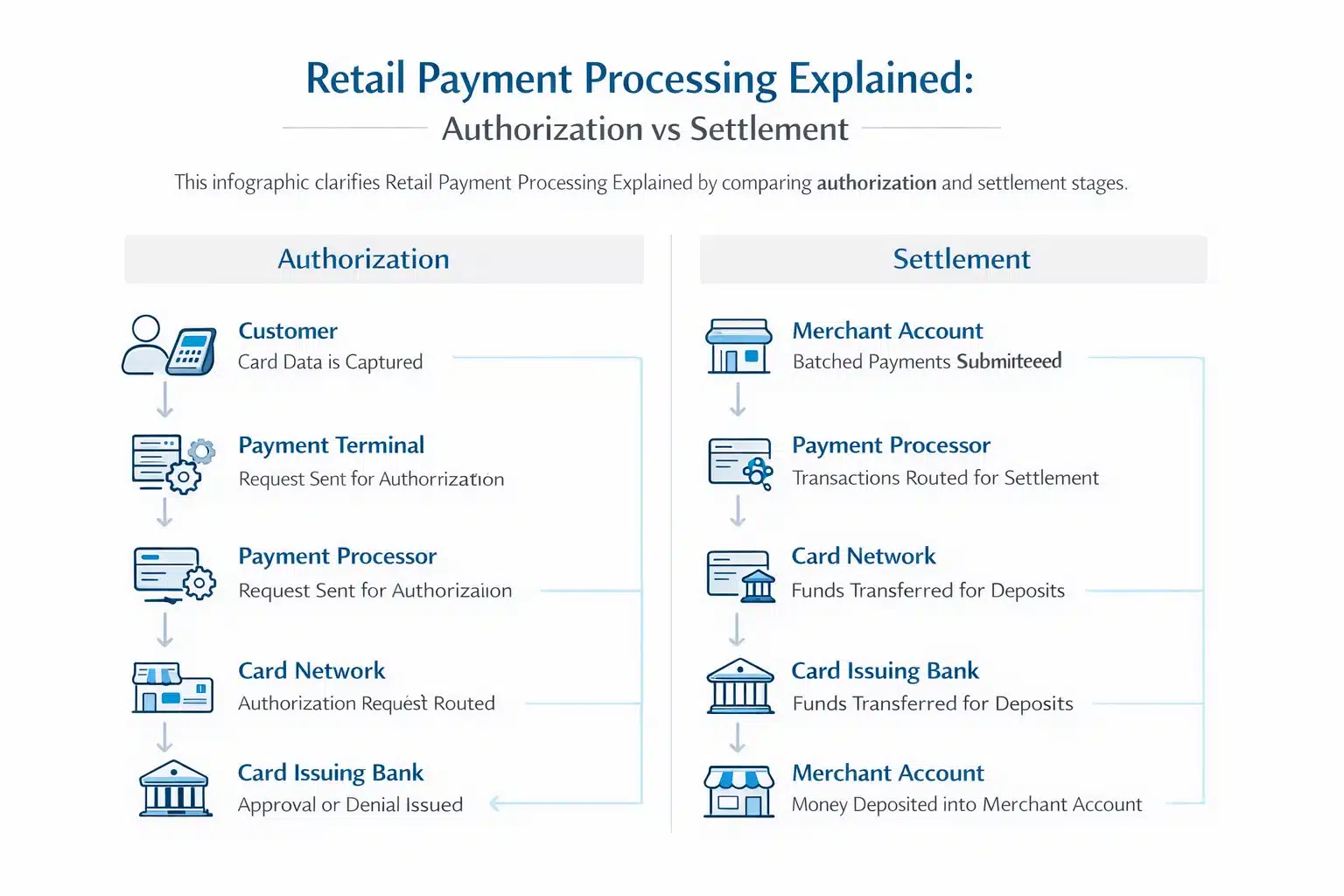
Retail Payment Processing Explained becomes clearer when you examine the transaction flow. Every payment follows a structured path from authorization to settlement.
The Authorization Process
When a customer taps or inserts a card, the POS system sends transaction data to the payment gateway. The gateway forwards it to the acquiring bank, which then contacts the issuing bank for approval.
The issuing bank verifies available funds and checks for fraud indicators. Therefore, it either approves or declines the transaction within seconds.
Once approved, the authorization process reserves funds in the customer’s account. However, actual money transfer occurs later during settlement.
Authorization is only the first stage.
Clearing and Settlement
After authorization, transactions enter the clearing stage. During this process, the merchant submits approved transactions in batches to the acquiring bank.
The acquiring bank communicates with card networks to request fund transfers. Meanwhile, issuing banks finalize payments and deduct funds from customer accounts.
Settlement completes when funds move into the merchant’s account. Retail Payment Processing Explained highlights this stage because timing affects cash flow.
Interchange Fees and Processing Costs
One of the most important aspects of Retail Payment Processing Explained is understanding fees. Payment processing costs directly impact retail margins.
What Are Interchange Fees?
Interchange fees are charges paid to the issuing bank for handling card transactions. These fees vary depending on card type and transaction method.
For example, premium rewards cards often carry higher interchange rates. Meanwhile, debit cards usually cost less to process.
Retailers must understand interchange fees because they form the largest portion of processing costs.
However, interchange is not the only cost.
Additional Processing Fees
Beyond interchange, merchants pay assessment fees to card networks and markup fees to payment processors. Therefore, total processing costs include multiple components.
Some merchant services retail providers use tiered pricing models. Meanwhile, others offer interchange-plus pricing for greater transparency.
Retail Payment Processing Explained helps store owners compare pricing models and avoid hidden charges.
The Role of the Payment Gateway
The payment gateway acts as a digital bridge between your POS system and financial institutions. Without it, electronic payments cannot process securely.
How a Payment Gateway Works
A payment gateway encrypts transaction data and sends it to the acquiring bank. Therefore, sensitive information remains protected during transmission.
Gateways also manage communication between your POS analytics dashboard and banking systems. Meanwhile, they ensure quick authorization responses.
Retail Payment Processing Explained must include the gateway because it controls both speed and security.
Integration quality also matters significantly.
Integrated vs. Standalone Gateways
An integrated gateway connects directly with your POS system. This setup simplifies reconciliation and reporting. Therefore, accounting becomes easier.
Standalone gateways require manual reconciliation steps. Meanwhile, errors may occur when systems do not sync automatically.
Choosing the right integration model reduces administrative workload and improves financial accuracy.
Security, Compliance, and Risk Management
Security plays a vital role in retail payment processing. Retail Payment Processing Explained must address compliance requirements clearly.
PCI Compliance Basics
Payment Card Industry (PCI) compliance ensures that merchants handle cardholder data securely. Retailers must follow strict standards to protect customer information.
Failure to comply can lead to fines or increased processing costs. Therefore, maintaining compliance protects both customers and profits.
Most modern POS systems simplify PCI compliance through built-in security tools.
Fraud prevention adds another layer of protection.
Fraud Detection and Chargebacks
Fraud detection systems monitor unusual transaction patterns. Therefore, they flag suspicious activity before losses escalate.
Chargebacks occur when customers dispute transactions. Meanwhile, excessive chargebacks may result in penalties from processors.
Retail Payment Processing Explained emphasizes fraud management because prevention reduces financial risk.
Choosing the Right Merchant Services
Selecting the right provider requires careful evaluation of cost, transparency, and integration capabilities.
Comparing Pricing Models
Interchange-plus pricing provides clearer breakdowns of fees. Meanwhile, flat-rate pricing offers simplicity but may cost more in some cases.
Retailers should calculate total monthly processing costs before committing. Therefore, comparing models ensures better financial planning.
Understanding payment processing basics helps you negotiate confidently.
Technology compatibility also matters.
Evaluating POS Integration
Your POS system should integrate seamlessly with payment processing tools. Integrated systems reduce reconciliation errors and improve reporting accuracy.
A unified system simplifies daily operations. Meanwhile, fragmented tools increase administrative time.
Retail Payment Processing Explained highlights integration because operational efficiency directly affects profitability.
How Biyo POS Simplifies Retail Payment Processing
 How Biyo POS Simplifies Retail Payment Processing
Biyo POS offers integrated retail payment processing designed for retailers, restaurants, and kiosks. Because Biyo combines POS analytics dashboard tools with secure payment gateway integration, businesses gain real time revenue tracking and simplified reconciliation.
The system supports chip, tap, and NFC payments while maintaining PCI compliance standards. Meanwhile, cloud functionality ensures centralized financial oversight across multiple locations.
If you want to streamline your retail payment operations, you can schedule a live demo or explore the platform directly through the Biyo signup page.
FAQ
What is retail payment processing?
Retail payment processing refers to the system that authorizes, clears, and settles electronic transactions between customers and merchants.
What are interchange fees?
Interchange fees are charges paid to issuing banks for processing card transactions.
How long does settlement take?
Settlement typically takes one to three business days, depending on the merchant services provider.
Why is an integrated payment gateway important?
An integrated gateway simplifies reporting, reduces errors, and improves overall operational efficiency.