
Retail stores move fast. Customers expect quick checkout, accurate pricing, and smooth service every time they walk in. However, even experienced employees make mistakes under pressure. Pricing errors, inventory miscounts, and checkout inaccuracies happen daily in stores of all sizes. That is exactly why understanding Retail Staff Mistakes Technology Can Prevent is critical for modern retailers who want to protect margins and customer trust.
Human error is not a character flaw. It is a natural result of repetitive tasks, multitasking, and training gaps. Meanwhile, retail environments are becoming more complex. Promotions change often, inventory moves quickly, and customer expectations continue to rise. As a result, manual processes create risk.
Fortunately, technology now solves many of these issues before they become expensive problems. By identifying the most common Retail Staff Mistakes Technology Can Prevent, store owners can turn operational weaknesses into competitive advantages.
Table of Contents
- Pricing Errors That Hurt Profits
- Inventory Miscounts and Stock Distortion
- Checkout Inaccuracies and Transaction Errors
- Training Gaps and Workflow Breakdowns
- How Retail Automation Reduces Risk
- How Biyo POS Helps Prevent Staff Errors
- FAQ
Pricing Errors That Hurt Profits
Pricing mistakes are among the most common retail employee errors. They may seem small at first. However, over time they quietly damage margins and customer confidence. When retailers analyze Retail Staff Mistakes Technology Can Prevent, pricing errors often sit at the top of the list.
Manual Price Overrides
Cashiers often override prices when tags are unclear or promotions are confusing. While they try to help customers quickly, these overrides create inconsistency. Therefore, stores lose control over margin accuracy.
In many cases, employees rely on memory or guesswork. That approach leads to undercharging or incorrect discount application. As a result, small mistakes add up across hundreds of transactions per day.
Modern POS systems eliminate this risk by automating promotional logic. Instead of relying on manual judgment, the system applies discounts correctly every time.
Promotion Setup Mistakes
Retailers frequently run limited-time offers. However, staff may forget to activate or deactivate promotions on schedule. That oversight creates confusion at checkout.
Customers become frustrated when shelf pricing does not match the register. Meanwhile, employees scramble to fix the issue. Consequently, checkout speed slows down and trust erodes.
Centralized pricing management prevents these issues. With automation, promotions start and end automatically based on preset rules.
Incorrect Labeling on Shelves
Employees sometimes place wrong tags under products. That simple mistake creates tension at checkout. It also leads to pricing disputes.
Although labeling seems basic, busy teams often rush restocking tasks. Therefore, errors slip through unnoticed.
Digital shelf labeling and centralized price syncing reduce these risks dramatically. Technology ensures the displayed price matches the system price.
 Inventory Miscounts and Stock Distortion
 Inventory Miscounts and Stock Distortion
Inventory errors represent another major category of Retail Staff Mistakes Technology Can Prevent. Even small miscounts distort purchasing decisions and cash flow planning.
Manual Stock Counting Errors
Manual inventory counts rely heavily on human attention. However, fatigue and distraction reduce accuracy.
Employees may double-count items or skip sections unintentionally. As a result, system inventory becomes unreliable.
Barcode scanning and real-time inventory updates reduce counting mistakes. Automated tracking keeps data consistent.
Receiving Mistakes During Deliveries
When new shipments arrive, staff must verify quantities quickly. In busy stores, workers rush this process.
If they accept incorrect quantities, inventory levels become inaccurate immediately. Therefore, future reports reflect false data.
Technology that integrates purchase orders with receiving workflows flags discrepancies instantly.
Inventory Shrinkage from Process Gaps
Shrinkage often occurs due to process inconsistencies. Staff may forget to record damaged goods or returns properly.
Those missing adjustments distort inventory reports. Meanwhile, managers struggle to identify the root cause.
Automated inventory adjustments tied to returns and damage reports maintain accurate stock levels.
Checkout Inaccuracies and Transaction Errors
Checkout is where mistakes become visible to customers. Therefore, analyzing Retail Staff Mistakes Technology Can Prevent must include transaction accuracy.
Incorrect Item Scanning
Cashiers occasionally scan the wrong barcode. That mistake leads to incorrect charges or missed items.
Even experienced employees make errors when lines are long. Consequently, speed often compromises accuracy.
Smart POS systems alert cashiers to duplicate scans or mismatched pricing.
Payment Processing Errors
Employees sometimes select the wrong payment method on screen. For instance, they may mark a card payment as cash.
These errors disrupt end-of-day reconciliation. Meanwhile, managers spend extra time correcting discrepancies.
Integrated payment systems reduce manual input. Therefore, transactions record automatically and accurately.
Return Processing Mistakes
Returns require careful handling. Staff may refund the wrong amount or restock items incorrectly.
Improper return handling increases fraud risk. As a result, margin erosion accelerates.
Automated return workflows ensure refund amounts and inventory updates align correctly.
Training Gaps and Workflow Breakdowns
Not all retail employee errors stem from negligence. Often, weak systems create opportunities for mistakes. That reality highlights additional Retail Staff Mistakes Technology Can Prevent.
Inconsistent Onboarding
New hires learn from different supervisors. Therefore, processes vary across shifts.
When training lacks structure, employees develop their own shortcuts. Consequently, inconsistency spreads.
Standardized POS interfaces reduce confusion and accelerate onboarding.
Communication Breakdowns Between Teams
Floor staff and checkout teams sometimes work from different information. For example, promotions may not be communicated clearly.
These communication gaps create avoidable friction. Meanwhile, customers experience delays.
Central dashboards ensure everyone accesses the same data in real time.
Manual Workflow Dependencies
Paper-based processes slow operations. Staff forget steps or misplace documentation.
Manual systems increase dependency on memory. Therefore, errors become more likely.
Workflow automation removes guesswork and standardizes tasks.
How Retail Automation Reduces Risk
Once retailers understand Retail Staff Mistakes Technology Can Prevent, the next step is implementing automation strategically.
Real-Time Data Synchronization
Real-time syncing ensures pricing, inventory, and promotions stay aligned. As a result, staff rely on accurate data.
Managers gain instant visibility into store performance. Therefore, they detect anomalies faster.
Automation reduces reliance on manual corrections.
Role-Based Permissions
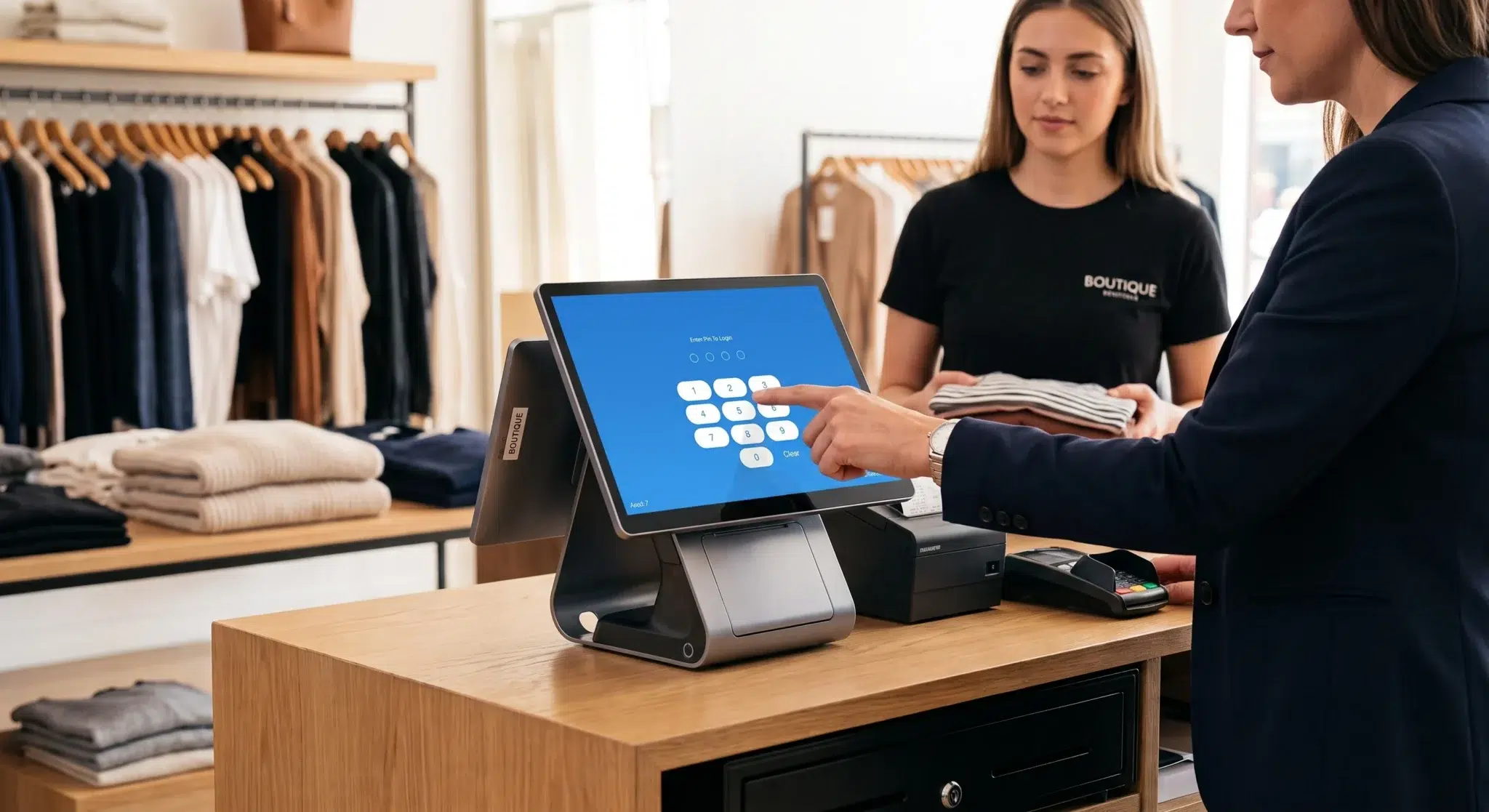
Technology limits who can override pricing or issue refunds. Consequently, stores reduce fraud risk.
Role-based permissions create accountability. Therefore, audit trails remain clear.
This structure supports stronger operational discipline.
Automated Alerts and Reporting
Modern systems generate alerts for unusual transactions. For instance, excessive voids trigger notifications.
These alerts help managers respond quickly. Meanwhile, problems remain small.
Detailed reporting highlights patterns across locations.
How Biyo POS Helps Prevent Staff Errors
 How Biyo POS Helps Prevent Staff Errors
Biyo POS is a cloud-based, all-in-one solution designed to address many of the Retail Staff Mistakes Technology Can Prevent. It offers real-time inventory management, automated pricing controls, and centralized reporting.
Because Biyo POS syncs instantly across devices and locations, employees work with accurate data at all times. The system supports payment processing, employee tracking, and role-based permissions. As a result, operational risks decrease.
If you want to see how automation can reduce staff errors in your store, schedule a consultation here: Schedule a Call. You can also explore the platform directly by signing up at Biyo POS Signup.
FAQ
What are the most common retail employee errors?
The most common errors include pricing mistakes, incorrect scanning, inventory miscounts, and improper return processing. Technology reduces these significantly.
Can POS systems really prevent staff mistakes?
Yes. Modern POS systems automate pricing, inventory updates, and transaction recording. Therefore, they reduce reliance on manual judgment.
How does automation improve inventory accuracy?
Automation tracks inventory in real time. As a result, stock levels update automatically after each sale or return.
Why do training gaps cause operational mistakes?
Inconsistent training leads to process variation. Technology standardizes workflows and reduces dependency on memory.
Is automation expensive for small retailers?
While there is an upfront cost, preventing errors saves money over time. Reduced shrinkage and higher accuracy often offset system costs quickly.