Independent Sales Organizations (ISOs) play a critical role in providing payment processing solutions to merchants. However, when it comes to point of sale (POS) systems, many ISOs rely heavily on Clover. While Clover is popular, it may not always be the best fit for every business or ISO. This article dives deep into why ISO should consider alternative to Clover, explores the landscape of competitive POS solutions, and highlights options that deliver better flexibility, affordability, and features for diverse merchant needs.
Table of Contents
- Why ISOs Need to Look Beyond Clover
- Key Alternatives to Clover for ISOs
- Benefits of Cloud-Based and Customizable POS Systems
- Criteria for Choosing the Right POS System
- How Biyo POS Stands Out as a Top Clover Alternative
- Frequently Asked Questions
Why ISOs Need to Look Beyond Clover
Many ISOs choose Clover as their go-to POS platform because of its widespread adoption and integrated payment processing. However, this reliance has drawbacks that can affect ISOs and their merchants alike. Understanding these challenges explains why ISO should consider alternative to Clover.
Limited Customization and Flexibility
Clover’s system is designed with a fixed hardware and software ecosystem, which limits customization options for merchants and ISOs. This rigidity becomes especially problematic when catering to businesses with specific operational workflows, such as restaurants requiring intricate menu modifications or retail stores needing complex inventory management. For example, a café may want to customize modifiers like milk types or cup sizes in a way that Clover’s platform does not fully support without third-party apps, which can complicate the user experience and increase costs. ISOs looking to provide tailored solutions will find Clover’s closed system restrictive and limiting for merchant growth.
Additionally, Clover’s ecosystem largely dictates the available hardware options, which may not suit all merchant needs. For instance, some businesses prefer lightweight, mobile iPad POS systems or integrated mobile POS solutions that offer mobility on the sales floor or at events. Clover’s hardware choices are more rigid, often requiring specific devices that may not fit smaller or unconventional retail spaces efficiently. This lack of hardware flexibility constrains ISOs from serving a broader spectrum of clients effectively.
Moreover, the software environment is less conducive to deep customization, making it difficult for ISOs to develop proprietary add-ons or integrations that enhance merchant operations. Unlike open or semi-open platforms, Clover limits the freedom to innovate within its POS ecosystem. Consequently, ISOs aiming to differentiate their offerings with specialized features or industry-specific adaptations will struggle under Clover’s limitations. This is a key reason why ISO should consider alternative to Clover options that offer greater adaptability and customization.
Higher Costs and Profitability Challenges
Clover’s cost structure can present significant challenges for ISOs and their merchants, often leading to reduced profitability. The hardware is typically leased or purchased at a premium, with some devices costing several hundred dollars upfront or through monthly rental fees. For small businesses or startups, these hardware costs can be prohibitive. On top of this, the monthly software fees and transaction processing costs add layers of expenses that accumulate quickly over time.
ISOs often have to negotiate margins on both the hardware and software side, and Clover’s bundled pricing model can limit these margins. For example, an ISO trying to onboard a price-sensitive café may find Clover’s combined hardware and software costs too high compared to other available systems. This situation not only limits the ISO’s potential to sign new merchants but also makes it difficult to retain them as they seek more affordable alternatives.
Furthermore, merchants increasingly demand transparent pricing, and Clover’s fees, including app charges and add-ons, can surprise users who are not fully aware of all ongoing costs. ISOs need to offer competitive, cost-effective solutions to remain relevant in the market. Alternative POS systems with more modular pricing structures, where merchants pay only for what they use, can provide better affordability and profitability for ISOs and their clients. These financial benefits highlight why ISO should consider alternative to Clover solutions.
Technology Limitations and Integration Issues
Clover operates within a relatively closed ecosystem, which can create challenges for ISOs looking to bundle their own software or integrate advanced tools. Many ISOs want to add value through proprietary merchant management systems, loyalty programs, or industry-specific analytics. Clover’s platform limits such deep integrations, as developers must work within its predefined app marketplace and API constraints.
For merchants, seamless integration between the POS and other business software is critical. Businesses often require real-time syncing between inventory, accounting, and customer relationship management systems. Clover’s integration options are more limited compared to open or cloud-based platforms that allow broader connectivity. For example, a retailer needing real-time inventory tracking synchronized with online sales may find Clover’s integration capabilities insufficient, leading to manual processes and inefficiencies.
Another technological limitation is the dependency on Clover for software updates and security patches. ISOs and merchants have little control over when and how these updates roll out, which can delay access to essential features or fixes. Additionally, ISOs must rely on Clover’s support infrastructure, which may not always meet the demands of rapidly growing or complex merchant operations. These technological constraints make exploring alternatives essential for ISOs that want to stay agile and competitive.

Key Alternatives to Clover for ISOs
Fortunately, the market offers many POS alternatives that provide ISOs with more flexible, affordable, and customizable options. Below are some of the most popular and capable Clover competitors that ISOs should evaluate.
Square POS: Simplicity Meets Versatility
Square POS has revolutionized the payment landscape by offering a simple, intuitive platform combined with transparent pricing. Its accessibility has made it a favorite for small businesses and startups, which represent a significant portion of an ISO’s potential merchant base. Square’s app-based software works across a variety of hardware, from smartphones to dedicated terminals, offering unmatched flexibility. This allows merchants to start with minimal investment and scale up as they grow.
One of Square’s strengths is its comprehensive feature set that includes inventory management, employee management, and marketing tools. ISOs can leverage these features to offer merchants a full-service package beyond just payment processing. For example, a boutique retailer can manage stock levels and run targeted promotions from the same system, streamlining operations significantly.
Moreover, Square’s transparent fee structure and absence of long-term contracts lower barriers for merchant acquisition. ISOs benefit from faster onboarding and higher satisfaction rates. While Square’s payment processing fees might be slightly higher in some cases, the overall value delivered makes it a compelling Clover alternative worth serious consideration by ISOs.
Toast POS: Tailored for the Restaurant Industry
Toast POS has carved out a strong niche as a specialized platform for the restaurant and foodservice sectors. It offers features designed to meet the unique challenges of these businesses, such as detailed menu customization, tableside ordering, and kitchen display systems that optimize order flow. ISOs serving restaurants can capitalize on Toast’s deep industry expertise to offer targeted solutions that Clover’s more generalist system does not match.
Toast’s cloud-based platform supports real-time menu updates and multi-location management, which is vital for growing restaurant chains. This flexibility enables ISOs to serve both small independent eateries and larger franchises efficiently. Additionally, Toast integrates payment processing seamlessly, reducing transaction friction and improving the customer experience.
However, Toast’s pricing can be higher compared to some other options, and its hardware selection is primarily proprietary. ISOs must weigh these factors against the benefits of a restaurant-focused system. For ISOs looking to specialize in foodservice, Toast represents a strong and proven alternative to Clover.
Lightspeed POS: Powerful Solutions for Retail and Hospitality
Lightspeed POS offers a robust platform for retailers, hospitality businesses, and even eCommerce stores. Its advanced inventory management capabilities, multi-store functionality, and detailed analytics make it ideal for merchants with complex operational needs. ISOs focused on retail and hospitality will find Lightspeed’s customization and scalability attractive.
The platform’s cloud-based infrastructure allows merchants to manage their business remotely and access real-time data insights, which are crucial for modern retail success. ISOs can also build custom integrations using Lightspeed’s open API, enabling tailored merchant solutions that add significant value beyond simple payment processing.
While Lightspeed can be more complex to implement and use, its comprehensive feature set justifies the learning curve for many merchants. ISOs willing to invest in training and support can leverage Lightspeed’s capabilities to differentiate their offerings from Clover-dependent competitors.
Benefits of Cloud-Based and Customizable POS Systems
Choosing a cloud-based and customizable POS platform provides ISOs and their merchants with numerous operational and strategic advantages. These systems support modern business needs and foster long-term growth.
Scalability and Remote Access
Cloud-based POS systems operate over the internet, enabling merchants to access their sales and business data from anywhere, at any time. This flexibility is especially useful for businesses with multiple locations or remote management teams. ISOs offering cloud-based platforms can onboard merchants faster, as the setup requires minimal on-site hardware installation and can be managed remotely.
For instance, a retailer expanding to several branches can manage inventory, pricing, and staff from a central dashboard, saving time and reducing errors. The ability to scale effortlessly as the business grows means merchants are less likely to outgrow their POS system quickly, which increases customer loyalty and reduces churn for ISOs.
Moreover, cloud systems automatically update with new features and security patches without merchant intervention. This proactive maintenance ensures businesses stay compliant with payment regulations and industry standards, a crucial consideration for ISOs wanting to offer reliable technology solutions.
Customization for Diverse Business Models
Every merchant has unique requirements, and a one-size-fits-all POS system often falls short. Customizable POS platforms allow ISOs to tailor functionality to specific verticals and workflows, providing merchants with tools that fit their daily operations precisely. For example, a café may need a POS system that supports modifiers like milk type and size, while a retail store may require detailed SKU-level inventory management and discounting rules.
Customization also means merchants can select hardware configurations that match their physical space and transaction volume, from mobile devices for pop-up shops to full countertop terminals for busy restaurants. This flexibility improves merchant satisfaction and operational efficiency.
ISOs that promote customizable POS options position themselves as partners who understand their merchants’ businesses rather than just technology providers. This deeper relationship fosters trust and opens doors for upselling complementary services such as loyalty programs or data analytics.
Enhanced Integration and Data Insights
Modern merchants depend on interconnected technology stacks to streamline operations and make data-driven decisions. Cloud-based, customizable POS systems offer extensive integration capabilities with third-party applications such as accounting software, customer relationship management (CRM), inventory platforms, and marketing tools. These integrations reduce manual data entry, minimize errors, and enhance overall productivity.
ISOs can bundle these integrations as part of their offerings, increasing the perceived value of their solutions. For example, syncing sales data automatically with accounting software simplifies tax preparation and financial reporting for merchants, saving time and reducing stress.
Access to real-time analytics and customizable reports empowers merchants to identify sales trends, optimize inventory, and improve customer engagement strategies. ISOs that provide such insights become trusted advisors and strengthen their merchant relationships beyond just payment processing.
Criteria for Choosing the Right POS System
To select the best Clover alternative, ISOs must consider several key factors that balance technology, usability, cost, and support. This ensures the chosen system meets both their business goals and merchants’ expectations effectively.
Compatibility with Payment Processors
A vital factor in POS system selection is how well it integrates with different payment processors. ISOs benefit greatly from platforms that allow flexibility in choosing or switching processors to optimize transaction costs and security. Clover’s closed payment ecosystem limits this ability, which may not suit all ISOs.
Preferred POS systems should support EMV-compliant chip cards, NFC-based mobile wallets like Apple Pay and Google Pay, and contactless payments to meet evolving consumer expectations. Tokenization and encryption ensure secure transactions, safeguarding merchants and customers from fraud.
Moreover, systems that enable ISOs to negotiate processor fees or offer tiered pricing plans provide a competitive edge. By accommodating multiple payment gateways, ISOs can cater to a wider range of merchants, from low-risk retailers to high-volume restaurants, maximizing their market reach.
User-Friendly Interface and Support
Merchants generally prefer POS systems that are easy to learn and operate, which reduces training time and minimizes errors during transactions. ISOs should choose platforms with intuitive user interfaces designed for the specific industries they serve. For example, touchscreen layouts optimized for quick service restaurants differ significantly from those intended for retail checkout counters.
Customer support quality is equally critical. ISOs benefit from partnering with POS providers offering responsive, 24/7 technical assistance. This helps resolve issues quickly, minimizing downtime and protecting merchant revenues. For example, a restaurant experiencing POS outages during peak hours needs immediate support to avoid lost sales.
Regular software updates that improve functionality and security also contribute to a smooth user experience. ISOs that prioritize these aspects provide a superior service, resulting in stronger merchant satisfaction and retention.
Cost-Effectiveness and Transparent Pricing
Cost remains a decisive factor for ISOs and merchants alike. Choosing a POS system with transparent and predictable pricing allows for better budgeting and fewer billing surprises. Clover’s bundled pricing, which can include hidden fees for hardware rentals, software licenses, and app add-ons, may discourage cost-conscious merchants.
Alternatives offering modular pricing models let merchants pay only for features and hardware they need. For example, a small boutique may opt for a basic plan with mobile POS terminals, while a multi-location café might select premium features and full countertop hardware. This scalability aligns costs with business size and complexity.
ISOs should also consider upfront hardware costs, subscription fees, transaction charges, and support costs to calculate total cost of ownership accurately. Providing affordable POS solutions enhances merchant acquisition and loyalty, helping ISOs build sustainable businesses. This financial clarity is a compelling reason ISO should consider alternative to Clover systems.
How Biyo POS Stands Out as a Top Clover Alternative
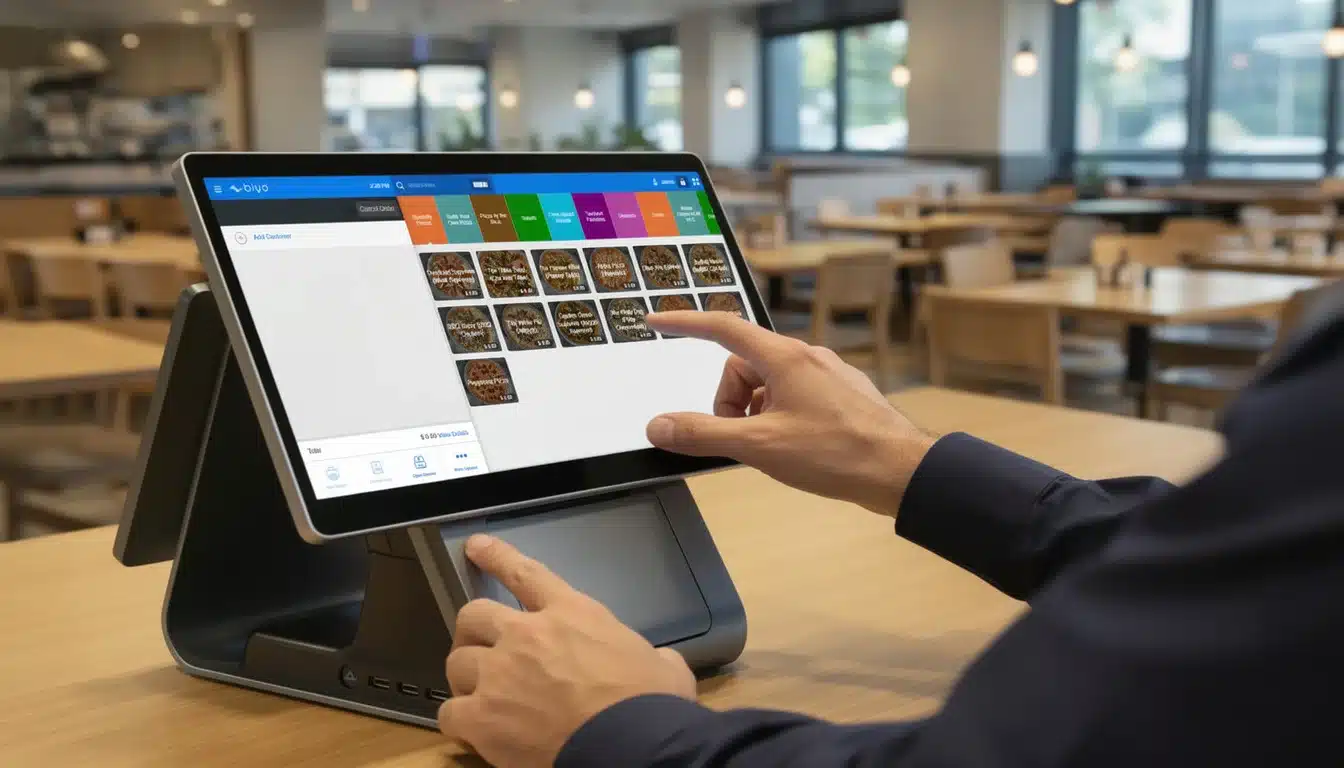
Biyo POS has emerged as a powerful alternative that meets many demands ISOs face when seeking flexible, affordable, and customizable POS solutions. It offers a compelling mix of industry-specific features, hardware versatility, and transparent pricing that sets it apart.
Comprehensive Features Tailored for Restaurants and Retail
Biyo POS is designed with the nuances of restaurants, cafes, and retail businesses in mind. It provides advanced menu and inventory management tools that allow merchants to create detailed modifiers, combo deals, and pricing rules suited to their unique offerings. For example, a café can configure different coffee sizes, milk options, and add-ons easily within the system, streamlining the ordering process and reducing errors.
Its reporting and analytics modules give merchants deep insights into sales trends, employee performance, and customer preferences. These insights help businesses optimize operations and marketing strategies. Additionally, Biyo POS incorporates loyalty and CRM features, enabling merchants to reward repeat customers and drive retention through targeted campaigns.
Unlike Clover’s generalist approach, Biyo POS’s vertical-specific design ensures that ISOs can offer their merchants solutions that truly fit their industry needs, enhancing satisfaction and long-term retention.
Flexible Hardware and Seamless Integration
Biyo POS supports a wide array of hardware options, from mobile devices like iPads to full countertop terminals, allowing merchants to configure setups that suit their space and transaction volume. For example, a small kiosk can operate efficiently on an iPad POS, while a busy restaurant can use multiple terminals integrated into a seamless system. This flexibility allows ISOs to serve diverse clients without hardware constraints.
The platform also integrates smoothly with multiple payment processors, providing ISOs the freedom to negotiate competitive rates and offer secure, EMV-compliant transactions. Support for contactless payments and mobile wallets aligns with modern consumer preferences, improving customer experience and transaction speed.
Furthermore, Biyo POS’s open API facilitates easy connections with popular accounting, inventory, and marketing tools, enabling merchants to create a cohesive technology ecosystem. This extensibility adds significant value to ISOs looking to differentiate their offerings.
Transparent Pricing and Dedicated Support
Biyo POS emphasizes transparent pricing with no hidden fees, allowing ISOs and merchants to plan finances confidently. Its flexible subscription plans cater to businesses of all sizes, from startups to multi-location chains, ensuring affordability without sacrificing features. This modular pricing approach helps ISOs present clear value propositions to merchants.
In addition, Biyo POS provides dedicated, responsive customer support designed to minimize downtime and assist with onboarding, training, and troubleshooting. For instance, merchants can access live support during business hours and comprehensive online resources for self-help. This level of service reduces friction and improves overall merchant satisfaction.
By combining affordability, strong support, and tailored features, Biyo POS exemplifies why ISO should consider alternative to Clover platforms when aiming for sustainable growth and merchant success.

Biyo POS is dedicated to empowering ISOs with customizable, cloud-based POS solutions tailored for restaurants and retail businesses. With flexible hardware options, seamless integrations, and transparent pricing, Biyo POS presents a compelling alternative to Clover, helping ISOs stay competitive and serve their merchants better.
Frequently Asked Questions
Why should ISOs consider alternatives to Clover?
Clover’s limited customization, higher costs, and closed technology ecosystem can hinder ISOs’ ability to serve diverse merchant needs effectively. Alternatives offer greater flexibility, better affordability, and enhanced integration capabilities that improve merchant satisfaction and ISO profitability.
What are some popular Clover alternatives for ISOs?
Popular alternatives include Square POS, Toast POS, Lightspeed POS, and emerging platforms like Biyo POS. These systems provide varied hardware options, industry-specific features, transparent pricing, and strong integration capabilities, allowing ISOs to tailor solutions effectively.
How does Biyo POS compare to Clover?
Biyo POS provides more extensive customization, flexible hardware support, seamless integration with multiple payment processors, and transparent pricing. Its industry-focused features make it particularly suitable for restaurants and retail businesses seeking tailored solutions beyond Clover’s generalist approach.
What features should ISOs prioritize when selecting a POS system?
ISOs should focus on payment processor compatibility, user-friendly design, customization potential, cloud-based scalability, transparent pricing, and reliable support. These criteria ensure the POS system meets both ISO business goals and merchant operational needs.
Can ISOs offer multiple POS solutions to merchants?
Yes, offering a portfolio of POS systems allows ISOs to cater to varied merchant requirements, recommend best-fit solutions, and expand their market reach effectively. This strategy enhances merchant satisfaction and supports business growth.