Running a butcher shop in today’s retail environment is no longer just about sourcing premium cuts and maintaining skilled knife work. It is about data precision, inventory control, yield optimization, shrinkage reduction, and customer experience. Independent butcher shops are competing not only with other specialty meat retailers but also with supermarkets, warehouse clubs, and online meat delivery brands.
According to industry data, meat retailers operate on average gross margins between 22% and 35%, depending on product mix and location. However, shrinkage, spoilage, mispricing, and manual errors can reduce net profitability by 3–7% annually. For a butcher shop generating $800,000 per year, that could mean $24,000–$56,000 lost due to operational inefficiencies.
This is where a butcher POS system becomes essential. Designed specifically for weight-based retail and perishable inventory, modern butcher POS platforms integrate digital scales, yield calculators, supplier tracking, batch management, wholesale pricing, and advanced reporting. This guide explores how butcher POS systems transform meat businesses from reactive operations into data-driven profit engines.
Table of Contents
- Key Features of Butcher POS Systems
- Efficient Inventory and Shrinkage Control
- Sales, Analytics, and Customer Engagement
- Operational Efficiency and Staff Management
- Maximizing Profitability with Butcher POS
- Why Biyo POS Is the Right Choice
- FAQ: Butcher POS Systems
Key Features of Butcher POS Systems
A butcher POS is fundamentally different from a generic retail POS. Meat retail is weight-driven, perishable, margin-sensitive, and compliance-heavy. The system must reflect that reality.
Weight Scale Integration and Price Per Pound Accuracy
Manual calculations create pricing errors. Even small rounding mistakes repeated dozens of times per day erode profits.
For example:
- Brisket cost: $4.80 per lb wholesale
- Retail price: $8.99 per lb
- Average sale: 5.4 lbs
If staff undercharges by just $0.20 per pound accidentally, that’s $1.08 lost per transaction. Multiply that by 30 similar transactions daily — that’s $32 per day or nearly $11,000 per year in lost revenue.
A butcher POS integrates directly with certified digital scales. The moment meat is placed on the scale, price per pound calculations are automatic and precise. No manual entry. No rounding mistakes. No margin leakage.
For customers buying premium cuts like brisket, transparency builds trust. The weight and final price display instantly, reinforcing credibility and professionalism.
Barcode Label Printing and Compliance
Meat labeling is not optional — it is regulatory. Labels must include:
- Product name
- Weight
- Price
- Sell-by date
- Batch code
- Inspection or compliance details (where required)
Integrated label printing ensures consistency and compliance. More importantly, batch-coded labeling allows traceability. In the rare event of supplier recall, affected products can be identified instantly instead of pulling entire inventory.
This protects both customers and reputation — which is priceless in food retail.
Multi-Channel Order and Payment Processing
Modern butcher shops are no longer strictly walk-in retail. Many serve:
- Restaurants
- Caterers
- Meal prep companies
- Online customers
A butcher POS centralizes retail, wholesale, and online orders into one dashboard. Integrated payment processing reduces reconciliation errors and supports:
- Card payments
- Mobile wallets
- Contactless transactions
- Invoice-based wholesale billing
Automated reporting eliminates hours of manual accounting work weekly.
Efficient Inventory and Shrinkage Control
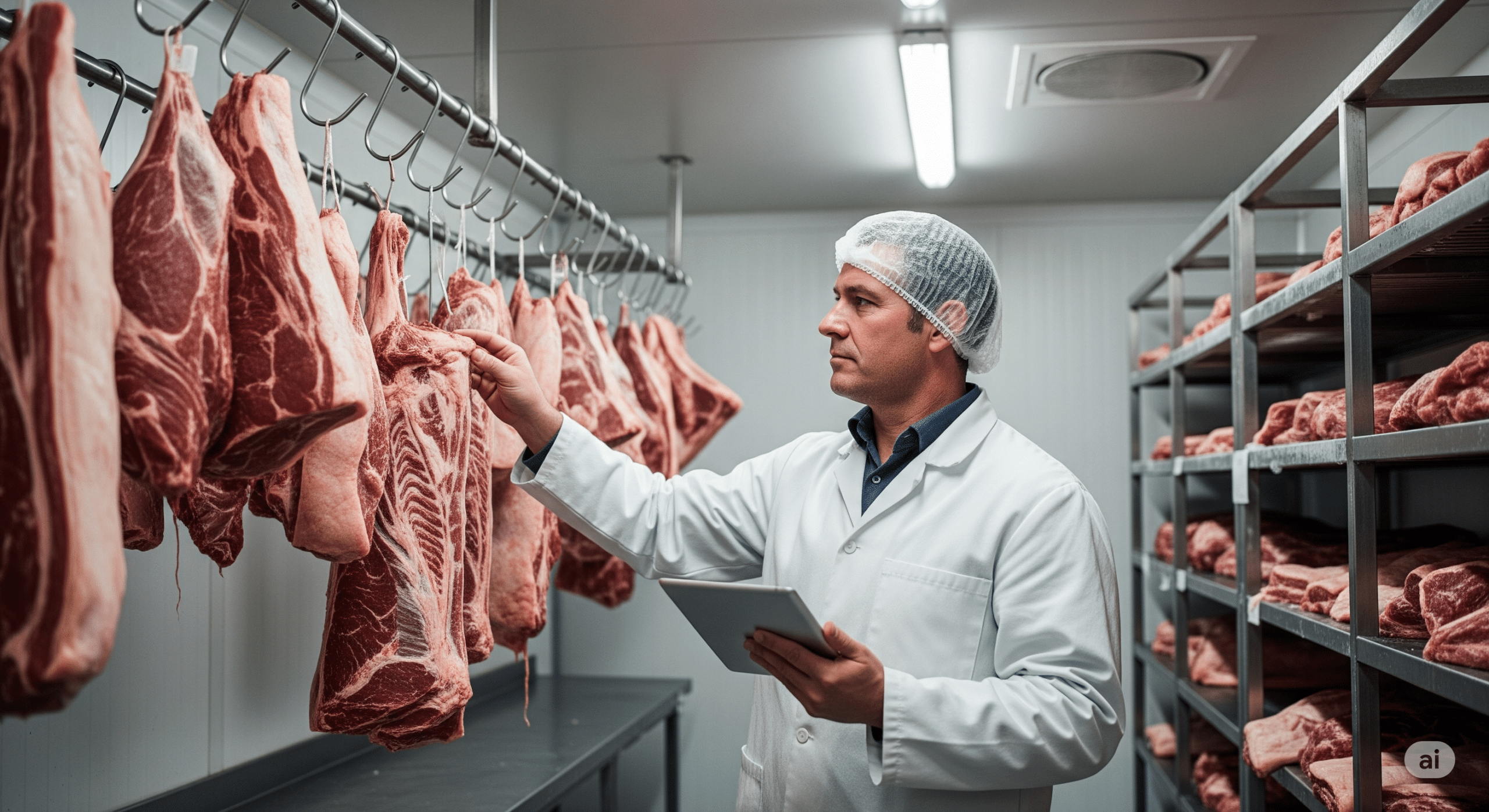
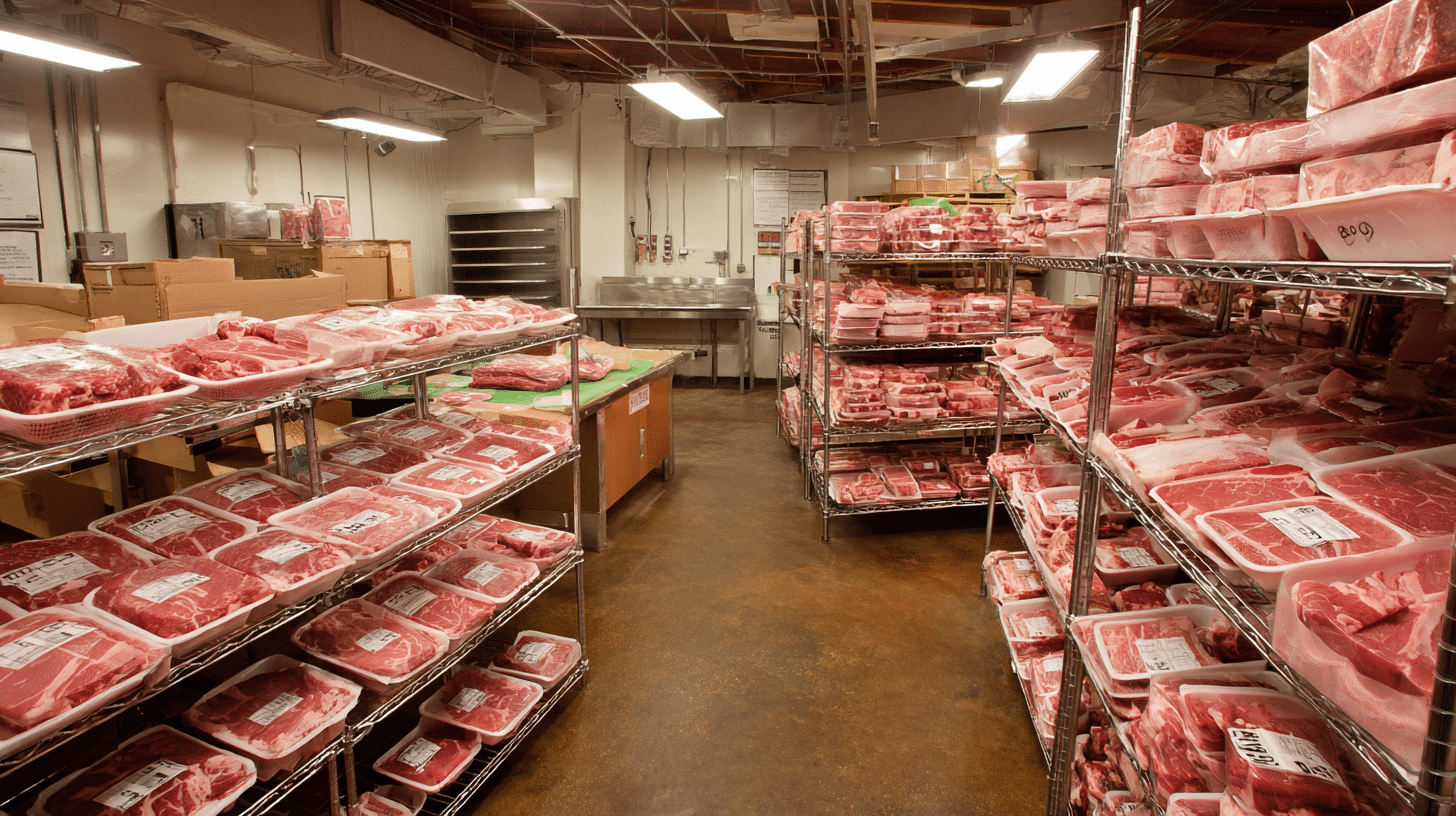
Inventory mismanagement is the silent profit killer in butcher shops. Meat is perishable. Spoilage is inevitable — but uncontrolled spoilage is preventable.
Real-Time Inventory Tracking
Manual inventory counts are reactive. Real-time POS-based inventory is proactive.
Every time 2.3 lbs of ribeye sells, inventory deducts 2.3 lbs instantly. Owners know exact remaining stock.
Benefits include:
- Reduced stockouts
- Reduced over-ordering
- Improved purchasing cycles
- Lower spoilage
If your shop carries $40,000 worth of meat inventory and reduces spoilage by just 5%, that’s $2,000 saved per cycle.
Shrinkage Monitoring and Batch-Level Tracking
Shrinkage includes:
- Trim loss
- Bone waste
- Spoilage
- Theft
- Mispricing
A butcher POS identifies abnormal patterns. If one batch consistently shows higher trim loss, supplier quality can be evaluated.
Example:
- Whole beef side weight: 220 lbs
- Usable yield: 140 lbs
- Yield percentage: 63.6%
If another supplier averages 68% yield, the difference directly impacts profit.
Supplier Cost Tracking and Wholesale Pricing
Meat prices fluctuate based on season, feed cost, and market supply. POS-based supplier tracking shows historical price trends.
This allows data-driven negotiation instead of guesswork.
Wholesale pricing tiers can be automated for restaurant clients buying high volumes. Contracts remain profitable while maintaining client relationships.
Sales, Analytics, and Customer Engagement
Advanced Sales Analytics
Analytics reveal patterns invisible to intuition.
Example insights:
- Steak sales peak Friday 4pm–7pm
- Ground beef spikes before major holidays
- Sausage sales drop during summer heat waves
With these insights, promotions and stock orders become strategic, not reactive.
Loyalty Programs for Independent Advantage
Supermarkets compete on price. Independent butchers compete on relationship.
A butcher POS tracks purchase history and supports loyalty rewards such as:
- Points per pound purchased
- Birthday discounts
- VIP bulk-buyer incentives
Retention increases average lifetime value dramatically. Increasing repeat purchase frequency by just 10% can improve profits by up to 25% due to reduced acquisition costs.
Customizable Bundles and Upselling
Pre-configured bundles like BBQ packages, holiday roasts, or family packs increase average order value.
For example:
- BBQ bundle: ribs + sausages + burgers
- Holiday roast bundle: prime rib + seasoning + marinade
Cross-selling items like seasonings or marinades boosts margin percentages.
Integration with seasonal campaigns like summer BBQ promotions increases basket size naturally.
Operational Efficiency and Staff Management
Labor Cost Control
Labor typically accounts for 25–35% of revenue in specialty retail.
POS-based staff tracking allows:
- Role-based permissions
- Performance metrics
- Sales-per-employee analysis
If one employee consistently achieves higher upsell rates, their techniques can be replicated across the team.
Order Fulfillment Accuracy
Wholesale errors are expensive. A 60 lb incorrect bulk order can destroy profit margins instantly.
Barcode verification and digital order confirmation reduce these risks significantly.
Compliance and Audit Readiness
Health inspections require documentation. POS systems digitally store:
- Batch logs
- Supplier invoices
- Sell-by records
- Temperature compliance notes
Audits become stress-free instead of chaotic paperwork hunts.
Maximizing Profitability with Butcher POS
Margin Analysis by Cut
Not all cuts contribute equally.
Example margin breakdown:
- Filet mignon margin: 38%
- Ground beef margin: 22%
- Specialty sausages: 45%
Without POS reporting, these differences remain hidden.
Yield Calculators and True Cost Analysis
Yield tracking ensures accurate retail pricing.
If a carcass costs $1,200 and yields 130 saleable pounds, true cost per pound is $9.23 — not the wholesale weight cost.
Accurate yield data prevents underpricing.
Scalability for Growth
Cloud-based butcher POS systems support:
- Multi-location reporting
- E-commerce integration
- Centralized pricing control
- Remote management
Growth becomes controlled and measurable instead of chaotic.
Why Biyo POS Is the Right Choice
Biyo POS is built specifically for weight-based retailers like butcher shops. It integrates:
- Certified scale pricing
- Batch tracking
- Yield reporting
- Wholesale tier pricing
- Cloud-based analytics
- Multi-location dashboards
Butchers can manage inventory, monitor shrinkage, analyze margins, and track supplier performance from a single system.
Schedule a demo here: Biyo POS Demo
Or get started here: Sign Up for Biyo POS
FAQ: Butcher POS Systems
How does a butcher POS improve profitability?
By eliminating mispricing, reducing shrinkage, tracking yields accurately, and providing margin visibility.
Is scale integration mandatory?
For serious meat retailers, yes. Manual pricing causes margin leakage.
Can it handle wholesale and retail simultaneously?
Yes. Modern systems support tier pricing and contract-based billing.
Does it reduce spoilage?
Yes. Real-time inventory and batch tracking significantly reduce waste.
Is it scalable?
Cloud-based systems allow expansion to multiple locations and online sales.