Obtaining a food handler permit Alaska is an essential step for anyone planning to work in the state’s food service industry. Whether you are a restaurant employee, food truck worker, caterer, or seasonal hospitality staff member, Alaska requires food handlers to understand proper food safety practices before working with food.
Foodborne illnesses remain a major public health concern across the United States. According to estimates from the Centers for Disease Control and Prevention (CDC), roughly 48 million people experience foodborne illnesses each year. Proper training and certification help reduce these risks by ensuring that food workers understand hygiene standards, safe food storage, cross-contamination prevention, and temperature control.
This guide explains everything you need to know about obtaining a food handler permit in Alaska. It covers state requirements, the application process, training expectations, renewal rules, and why compliance is essential for both workers and food businesses.
Table of Contents
- Understanding Food Handler Requirements in Alaska
- How to Apply for a Food Handler Permit Alaska
- Training, Certification, and Compliance
- Permit Renewal and Ongoing Responsibilities
- Why Compliance Matters for Food Businesses in Alaska
- Frequently Asked Questions
Understanding Food Handler Requirements in Alaska
Alaska’s food industry operates under strict public health regulations designed to protect consumers from foodborne illness. Restaurants, cafés, bakeries, catering services, and temporary food vendors must follow these regulations to maintain safe food handling environments.
The food handler permit Alaska ensures that employees understand these standards before working with food. Certification verifies that workers know how to maintain hygiene, store ingredients safely, and prevent contamination throughout the food preparation process.
State Regulations and Legal Framework
Food safety regulations in Alaska are enforced by state and local health departments through the Alaska Food Code. These laws outline sanitation standards, food storage requirements, employee hygiene practices, and inspection procedures.
Workers who handle food must complete training that covers essential topics such as:
- Safe cooking and holding temperatures
- Preventing cross-contamination
- Handwashing and personal hygiene
- Cleaning and sanitizing kitchen equipment
- Food storage and labeling requirements
Restaurants are responsible for ensuring that employees comply with these rules. During routine health inspections, inspectors may verify employee permits, observe food handling procedures, and review sanitation practices.
Failure to comply with food safety laws can result in fines, penalties, or temporary business closures.
Who Needs a Food Handler Permit Alaska?
Most employees working with food in Alaska must obtain a food handler permit. This requirement applies to a wide range of hospitality roles.
Positions that typically require certification include:
- Chefs and line cooks
- Restaurant servers and bartenders
- Food truck operators
- Catering staff
- Café and coffee shop employees
- Temporary or seasonal hospitality workers
Even employees who do not directly cook food may still need certification if they handle food-contact surfaces, utensils, or food storage areas.
Employers must verify that new hires obtain certification within the timeframe required by their local health department.
Permit Application and Documentation
The permit application process typically requires applicants to provide basic personal information and proof of identity. In many areas, workers can complete the process entirely online through approved food safety training providers.
Once the training course is completed and the exam is passed, workers receive a food handler card or digital permit confirming certification.
Employers should keep copies of employee permits on file. These records help demonstrate compliance during inspections and protect businesses from potential violations.
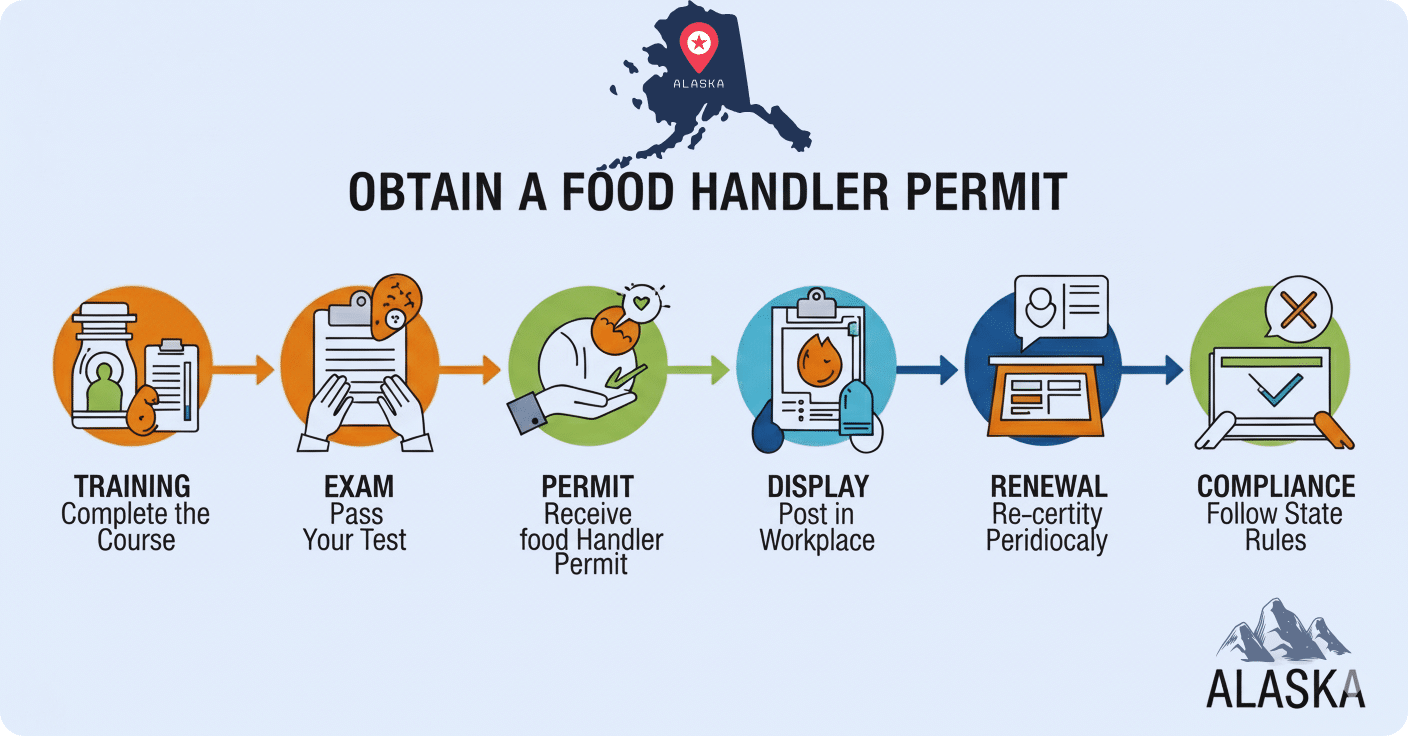
How to Apply for a Food Handler Permit Alaska
The process of obtaining a food handler permit Alaska generally involves three main steps: completing an approved training program, passing a certification exam, and submitting the permit application.
Step 1: Complete a Food Safety Training Course
The first step is enrolling in an approved food safety course. Training programs are available online or through in-person classes depending on the provider.
Course topics usually include:
- Personal hygiene practices
- Safe food storage and preparation
- Understanding foodborne illnesses
- Cleaning and sanitation procedures
- State food safety regulations
Online courses are especially helpful for workers in remote communities across Alaska, where access to in-person training may be limited.
Many restaurants also encourage or sponsor employee training to ensure consistent food safety knowledge across their teams.
Step 2: Pass the Certification Exam
After completing the training course, applicants must pass a certification exam. This exam evaluates understanding of food safety principles and proper handling procedures.
Most exams include multiple-choice questions and require a minimum passing score of approximately 70%. Some providers allow retakes if the applicant does not pass on the first attempt.
Passing the exam confirms that the worker understands Alaska’s food safety requirements and is prepared to apply them in real-world kitchen environments.
Step 3: Submit Application and Receive Permit
Once the exam is completed successfully, applicants submit their permit application along with the required fee. The cost is generally affordable and varies slightly by location.
Many systems issue digital permits within 24–48 hours. Workers may receive a printable certificate or a digital card that can be stored on a mobile device.
After receiving the permit, the employee is legally allowed to handle food in Alaska.
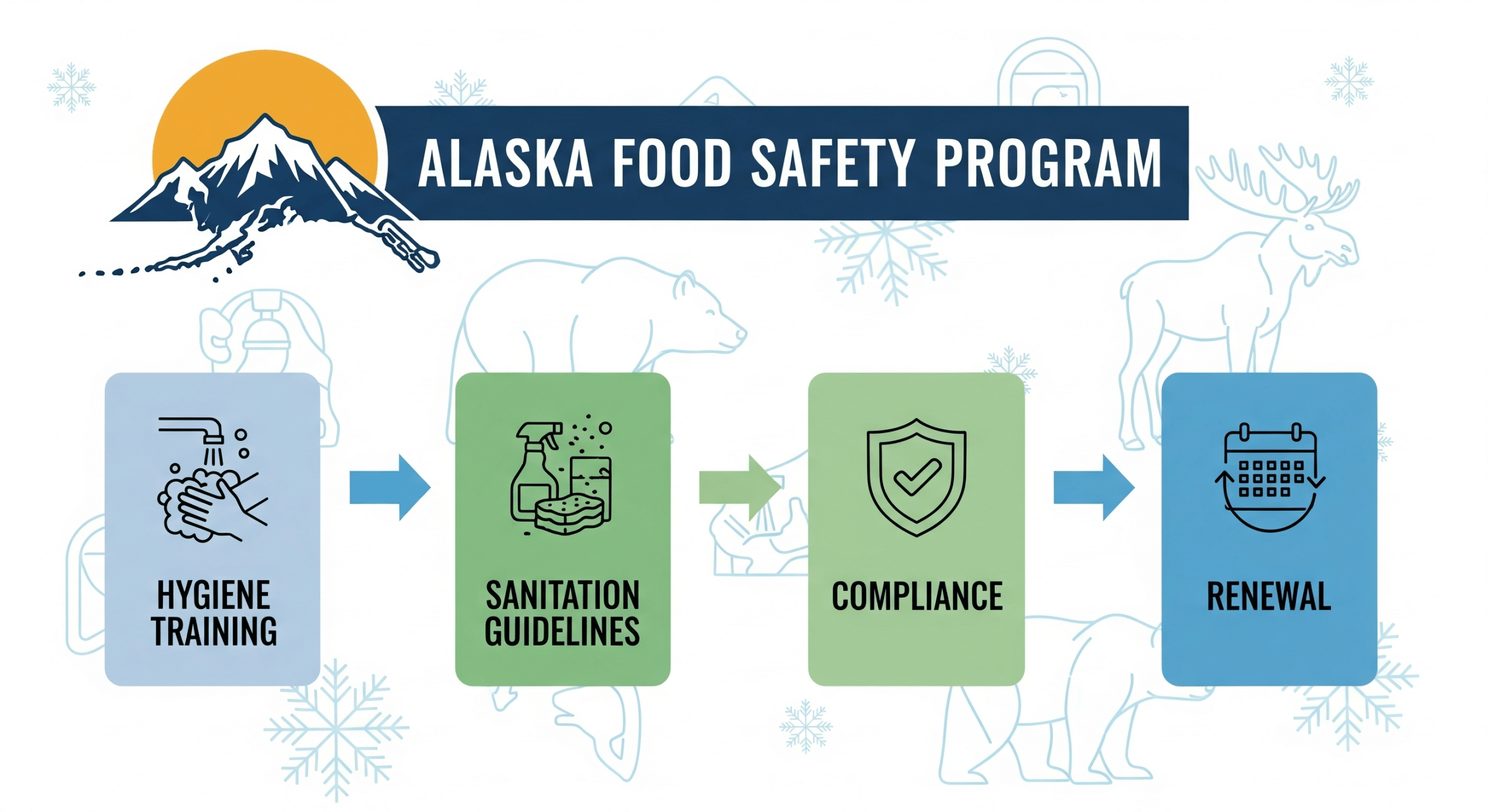
Training, Certification, and Compliance
Training is the foundation of Alaska’s food safety program. While obtaining the permit is important, the real value lies in understanding how to apply food safety practices consistently in daily operations.
Importance of Hygiene Training
Personal hygiene plays a critical role in preventing contamination. Workers must learn proper handwashing techniques, glove usage, and hygiene protocols when preparing or serving food.
Restaurants that enforce strong hygiene standards reduce the risk of contamination and build trust with customers.
Training also encourages employees to recognize potential food safety risks before they become serious problems.
Sanitation Guidelines and Best Practices
Sanitation procedures ensure that food preparation environments remain safe and clean. Workers must learn how to properly sanitize equipment, utensils, and surfaces between uses.
Typical sanitation practices include:
- Regular cleaning of food preparation surfaces
- Sanitizing cutting boards and utensils
- Maintaining safe refrigerator temperatures
- Preventing cross-contamination between raw and cooked foods
Health inspectors often review cleaning procedures and sanitation records during inspections.
Compliance With State Regulations
Compliance with food safety regulations protects both businesses and consumers. Restaurants must ensure that all staff members hold valid permits and follow safe food handling procedures.
Inspections conducted by health departments evaluate several factors, including employee certification, food storage conditions, sanitation practices, and temperature control.
Businesses that consistently follow these standards build strong reputations and avoid regulatory penalties.
Permit Renewal and Ongoing Responsibilities
Food handler permits are not permanent. Workers must renew their certification periodically to ensure they remain familiar with updated food safety regulations.
How Often Permits Must Be Renewed
In most areas of Alaska, a food handler permit remains valid for approximately three years. Workers should renew their certification before the expiration date to avoid interruptions in employment eligibility.
Employers often track permit expiration dates to help staff remain compliant.
Continuing Education and Refresher Training
Renewal training allows food workers to review important safety concepts and learn about new regulations. Updates may include changes in food storage practices, sanitation standards, or inspection procedures.
Refresher courses help reinforce good habits and maintain high food safety standards across the industry.
Maintaining Compliance During Health Inspections
Health inspections verify that food businesses follow state regulations. Inspectors may review employee permits, examine sanitation procedures, and observe food handling practices.
Employees with valid permits and proper training demonstrate professionalism during inspections and help their workplace maintain compliance.
Why Compliance Matters for Food Businesses in Alaska
For restaurants and food service businesses, maintaining compliance with food safety regulations goes beyond avoiding penalties. It plays a major role in protecting customers, building trust, and maintaining a positive reputation.
Protecting Customers and Public Health
Safe food handling practices significantly reduce the risk of foodborne illness. When restaurant staff understand proper hygiene and sanitation standards, they help create a safer dining environment for customers.
Strong food safety practices also build trust. Customers are more likely to return to establishments that maintain high cleanliness and safety standards.
Avoiding Fines and Legal Risks
Businesses that fail to follow food safety regulations may face financial penalties, failed inspections, or temporary closures. These consequences can damage both revenue and reputation.
Investing in proper training and certification is far less costly than dealing with the consequences of non-compliance.
Improving Operational Efficiency
Food safety training also improves operational efficiency. Employees who understand proper food handling procedures make fewer mistakes, waste less food, and maintain cleaner work environments.
These improvements contribute to smoother kitchen operations and stronger overall restaurant performance.
How Biyo Helps Food Businesses Stay Compliant
Managing compliance, employee records, and restaurant operations can become complex as businesses grow. Biyo POS helps restaurants stay organized with tools designed for modern food service operations.
The platform provides real-time reporting, inventory insights, and centralized dashboards that help restaurant managers monitor performance and maintain operational standards.
Businesses can also schedule a call to learn how Biyo POS helps streamline restaurant management, improve efficiency, and support compliance with industry requirements.
FAQ: Food Handler Permit Alaska
How long is a food handler permit Alaska valid?
A food handler permit in Alaska is typically valid for about three years, though exact expiration periods may vary depending on the local health department.
Can I complete the food safety course online?
Yes. Many approved providers offer online training and certification exams that allow workers to complete the process remotely.
What happens if I work without a permit?
Working without a valid food handler permit may result in penalties for both the employee and the employer and could lead to inspection violations.
Do seasonal workers need a food handler permit?
Yes. Seasonal employees working in food service roles must obtain certification before handling food.
How much does a food handler permit cost in Alaska?
The cost varies depending on the provider but generally ranges between $10 and $20, making it accessible for most workers.