Learning how to accept contactless payments is no longer optional for businesses that want to meet modern customer expectations. Consumers increasingly prefer fast, secure, and touch-free payment methods whether they are shopping in retail stores, dining at restaurants, visiting cafés, or making purchases at service-based businesses. Contactless payment technology has transformed the checkout experience by allowing customers to pay with a simple tap of a card, smartphone, smartwatch, or other connected device.
The growth of digital wallets, NFC-enabled cards, QR code payments, and mobile payment applications has accelerated the shift away from cash and traditional card insertion methods. Customers now expect businesses to support these convenient payment options, and many actively choose merchants that offer faster and more flexible checkout experiences.
For business owners, accepting contactless payments can improve customer satisfaction, reduce checkout times, enhance operational efficiency, and support stronger sales performance. Modern payment systems also provide advanced security protections that help reduce fraud and protect customer information.
This guide explains how contactless payments work, the technologies behind them, how to set up contactless payment systems, the benefits they provide, and what businesses should know about security and compliance.
Table of Contents
- What Are Contactless Payments?
- Technology Powering Contactless Transactions
- How to Set Up Contactless Payments
- Benefits of Accepting Contactless Payments
- Security and Compliance in Contactless Payments
- How Biyo POS Helps You Accept Contactless Payments
- Frequently Asked Questions
What Are Contactless Payments?
Contactless payments are electronic transactions that allow customers to make purchases without physically inserting a card into a payment terminal or handling cash. Instead, payment information is transmitted wirelessly through technologies such as Near Field Communication (NFC) or QR codes.
Customers simply tap a compatible payment card, smartphone, smartwatch, or wearable device near a payment terminal, and the transaction is completed within seconds. This streamlined process creates a faster and more convenient checkout experience while maintaining strong security protections.
As digital payment adoption continues to grow, contactless transactions have become a standard expectation across many industries.
How Contactless Payments Work
Contactless payments rely on secure wireless communication between a customer device and a payment terminal. When the device is placed near the reader, encrypted payment data is transmitted to the payment processor for authorization.
The transaction follows the same basic authorization process as traditional card payments but eliminates the need for card insertion or physical contact with payment hardware.
Because communication occurs almost instantly, contactless payments often reduce checkout times significantly.
Why Customers Prefer Contactless Payments
Convenience remains one of the primary reasons customers choose contactless payment methods. Customers can complete transactions quickly without searching for cash, inserting cards, or entering PINs for smaller purchases.
Digital wallets further simplify the process by allowing customers to store multiple payment methods on a single device.
The combination of speed, convenience, and flexibility has made contactless payments increasingly popular among consumers.
The Growth of Contactless Payment Adoption
Contactless payment usage has expanded rapidly across retail, hospitality, transportation, and service industries. Financial institutions continue issuing contactless-enabled cards, while smartphone manufacturers increasingly integrate digital wallet capabilities into their devices.
Many consumers now expect businesses to accept tap-to-pay transactions as part of a modern checkout experience.
Businesses that fail to support these payment methods risk falling behind competitors that offer greater convenience.
Technology Powering Contactless Transactions
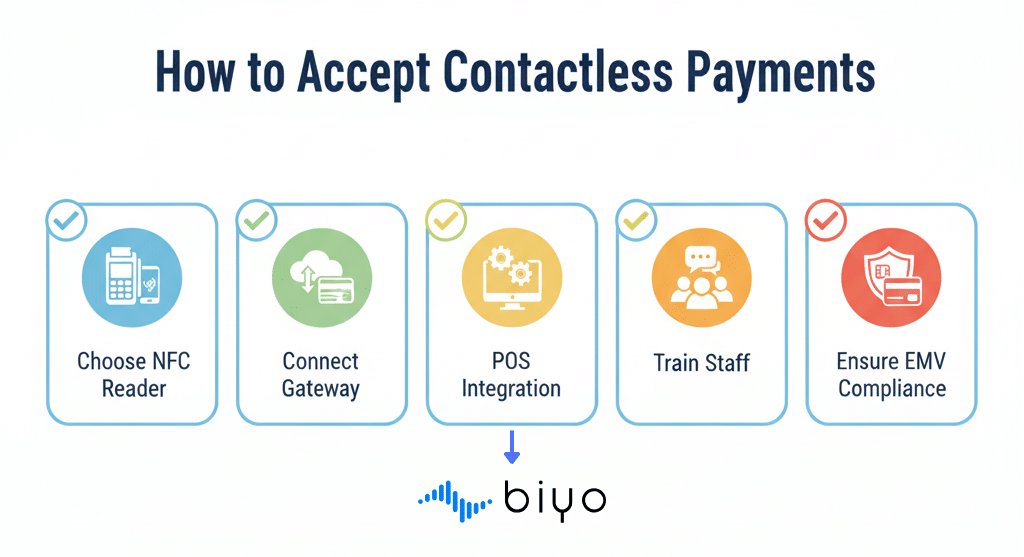
Several technologies work together to make contactless payments possible. Understanding these technologies helps businesses make informed decisions when selecting payment hardware, software, and service providers.
NFC and Tap-to-Pay Technology
Near Field Communication (NFC) is the most widely used technology behind contactless payments. NFC allows devices to exchange information wirelessly over short distances, enabling secure communication between customer devices and payment terminals.
Most contactless cards, smartphones, and wearable payment devices rely on NFC technology to complete transactions.
NFC enables the familiar tap-to-pay experience that customers increasingly expect.
QR Code Payments
QR code payments provide an alternative method for processing contactless transactions. Customers scan a QR code using a mobile device, which directs them to a secure payment interface where they can authorize the transaction.
QR payments are particularly popular in environments where NFC hardware may not be available or where businesses want a low-cost contactless payment option.
Many restaurants, retailers, and service businesses use QR codes to support ordering and payment experiences.
Tokenization and Transaction Security
Tokenization plays a critical role in protecting customer information during contactless transactions. Rather than transmitting actual card numbers, payment systems replace sensitive information with unique digital tokens.
These tokens are valid only for specific transactions, significantly reducing the risk of data theft.
Combined with encryption technologies, tokenization helps make contactless payments highly secure.
How to Set Up Contactless Payments
Implementing contactless payment capabilities requires selecting appropriate hardware, configuring payment processing services, and integrating payment functionality with existing business systems.
Fortunately, modern payment technology makes adoption easier than ever.
Select Contactless Payment Hardware
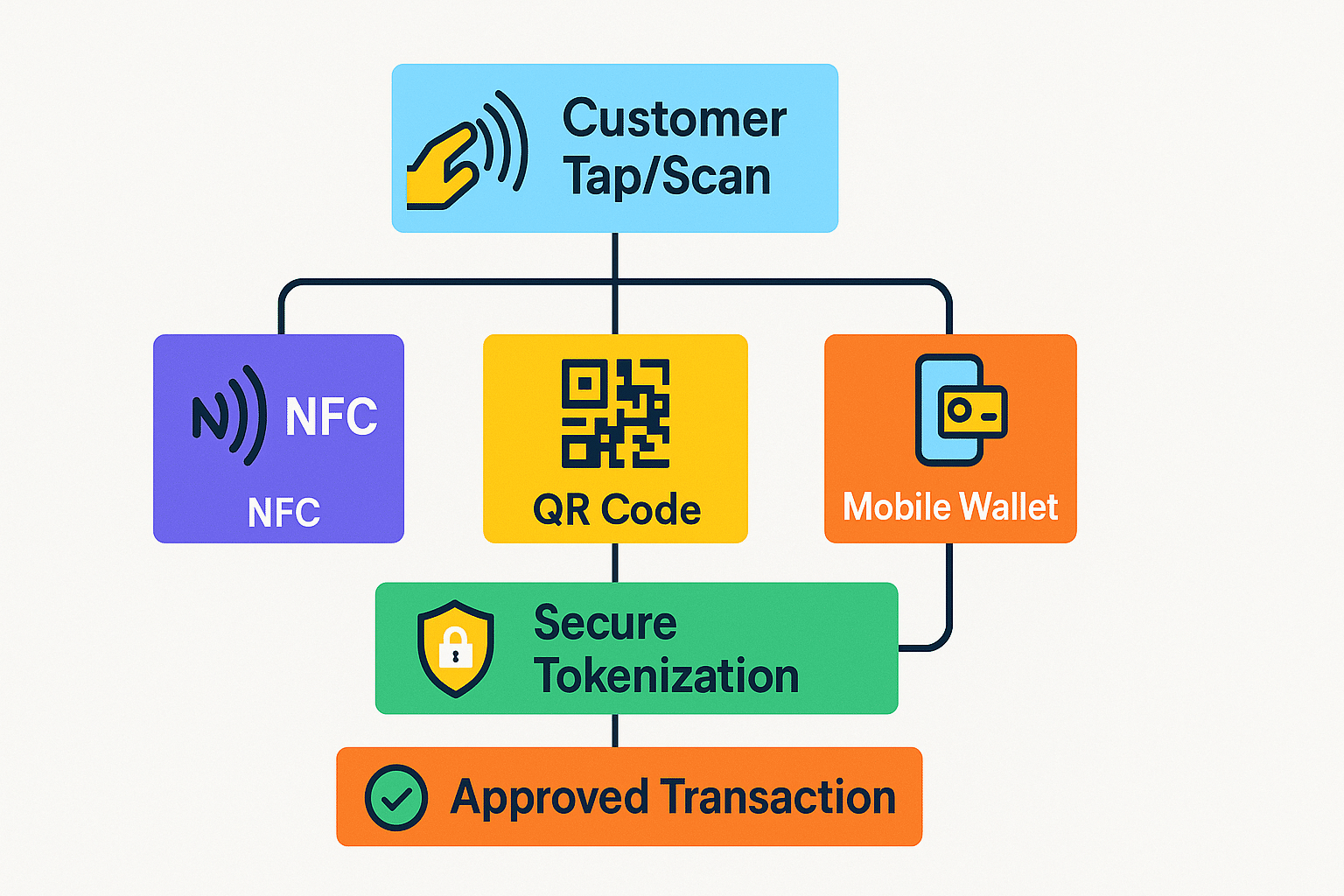
The first step is obtaining a payment terminal or card reader that supports contactless transactions. Most modern POS systems offer hardware capable of accepting NFC payments, mobile wallets, and tap-enabled cards.
Businesses should verify that hardware supports the payment methods their customers are most likely to use.
Reliable hardware helps ensure a smooth and consistent checkout experience.
Choose a Payment Processor
A payment processor facilitates communication between payment devices, card networks, and financial institutions. Businesses should select a processor that supports contactless transactions, digital wallets, and secure payment processing.
Many processors offer integrated solutions that combine hardware, software, and payment services into a single platform.
Choosing the right processor helps simplify implementation and ongoing management.
Integrate Payments with Your POS System
Integration between payment processing and POS systems improves efficiency by automatically synchronizing transaction data, sales reporting, inventory updates, and customer records.
Connected systems reduce manual work while improving operational visibility.
Integrated payment ecosystems help businesses manage transactions more effectively.
Benefits of Accepting Contactless Payments
Contactless payment technology offers significant benefits for both businesses and customers. These advantages extend beyond convenience and can contribute to stronger operational performance and customer satisfaction.
Faster Checkout Experiences
Contactless transactions are typically completed more quickly than traditional card payments. Reduced transaction times help minimize lines and improve customer flow during busy periods.
Faster service contributes to better customer experiences and increased operational efficiency.
Businesses that process transactions more efficiently may also increase overall sales capacity.
Improved Customer Convenience
Customers appreciate having flexibility in how they pay. Supporting tap-to-pay cards, digital wallets, mobile devices, and wearable technology allows businesses to accommodate diverse customer preferences.
Convenient payment options help create positive customer experiences and encourage repeat visits.
Modern payment flexibility can also help businesses differentiate themselves from competitors.
Enhanced Security
Contactless payment systems incorporate advanced security technologies such as encryption, tokenization, and fraud monitoring. These protections help reduce the risk of unauthorized transactions and data breaches.
Customers often view contactless payments as safer than traditional payment methods.
Strong security protections help build trust and confidence in the payment process.
Security and Compliance in Contactless Payments
While contactless payments offer strong security protections, businesses must still comply with industry standards and best practices to protect customer information and maintain secure operations.
EMV Compliance
EMV standards help protect card-present transactions through advanced chip technology. Most modern contactless payment systems are designed to meet EMV requirements and provide enhanced protection against card fraud.
Businesses should verify that their payment hardware and software support EMV-compliant transactions.
Maintaining compliance helps reduce liability and improve transaction security.
PCI DSS Requirements
The Payment Card Industry Data Security Standard (PCI DSS) establishes security requirements for businesses that process, store, or transmit payment information.
Compliance helps protect sensitive customer data while reducing the risk of security incidents.
Working with PCI-compliant payment providers simplifies compliance management.
Encryption and Fraud Prevention
Encryption protects payment information while it is transmitted between devices, payment processors, and financial institutions. Fraud prevention tools monitor transaction activity and help identify suspicious behavior.
Together, these technologies create multiple layers of security that protect both businesses and customers.
Comprehensive security measures support trust and long-term customer relationships.
How Biyo POS Helps You Accept Contactless Payments
Accepting contactless payments becomes much easier when businesses have access to integrated payment and POS technology. Biyo helps businesses support modern payment experiences through contactless card acceptance, digital wallet compatibility, QR code payment options, and integrated POS functionality.
By connecting payment processing with inventory management, sales reporting, customer engagement tools, and operational analytics, Biyo provides a unified platform that helps businesses manage transactions efficiently while maintaining visibility across their operations.
Whether you’re operating a retail store, restaurant, café, food truck, or multi-location business, Biyo helps create a seamless payment experience that meets modern customer expectations.
If you’d like to learn more about implementing contactless payments, you can schedule a consultation with Biyo. Businesses ready to explore the platform can also create an account and discover how integrated payment technology can support growth and operational efficiency.
Frequently Asked Questions
Do I need special hardware to accept contactless payments?
Yes. Businesses typically need a contactless-enabled payment terminal or card reader that supports NFC transactions and digital wallet payments.
Are contactless payments secure?
Yes. Contactless transactions use encryption, tokenization, and EMV security technologies to help protect customer information and reduce fraud risks.
Can small businesses accept contactless payments?
Absolutely. Many affordable POS systems and payment processors support contactless payments, making adoption accessible for businesses of all sizes.
Do contactless payments work with smartphones?
Yes. Customers can use digital wallets such as Apple Pay, Google Wallet, and Samsung Wallet to make contactless purchases using compatible mobile devices.
What is the difference between NFC and QR code payments?
NFC payments use short-range wireless communication between devices, while QR code payments require customers to scan a code that directs them to a secure payment interface.
Do contactless payments process faster than traditional card transactions?
In most cases, yes. Contactless payments typically require fewer steps and can be completed more quickly than traditional card insertion or cash transactions.
Why are businesses adopting contactless payments?
Businesses adopt contactless payments to improve customer convenience, reduce checkout times, enhance security, and support modern consumer payment preferences.