The inventory turnover ratio is one of the most important inventory management metrics a business can track. While the formula itself is simple, the insights it provides can significantly impact profitability, cash flow, purchasing decisions, and overall operational efficiency. This metric shows how many times a company sells and replaces its inventory during a specific period, helping businesses understand whether inventory levels are aligned with customer demand.
Businesses that maintain healthy inventory turnover typically experience stronger cash flow, lower holding costs, and fewer issues with obsolete stock. On the other hand, slow-moving inventory can tie up capital, increase storage expenses, and reduce profitability. Understanding how to calculate inventory turnover ratio allows business owners to make smarter decisions about purchasing, pricing, forecasting, and inventory planning.
Whether you operate a retail store, restaurant, warehouse, or eCommerce business, monitoring inventory turnover helps ensure that inventory investments are generating returns rather than sitting idle on shelves.
This guide explains how to calculate inventory turnover ratio, how to interpret the results, what factors influence turnover, and practical strategies to improve inventory performance.
Table of Contents
- Why Inventory Turnover Matters
- How to Calculate Inventory Turnover Ratio
- How to Interpret Inventory Turnover Results
- Factors That Affect Inventory Turnover
- How to Improve Inventory Turnover Ratio
- How Biyo Helps Businesses Optimize Inventory Turnover
- Frequently Asked Questions
Why Inventory Turnover Matters
Inventory represents one of the largest investments for many businesses. Every product sitting in storage represents money that has already been spent but has not yet generated revenue. The inventory turnover ratio helps measure how efficiently a business converts inventory into sales.
A healthy turnover ratio often indicates strong demand, effective inventory planning, and efficient operations. Businesses can use this metric to identify trends, reduce waste, improve forecasting accuracy, and strengthen profitability.
Monitoring turnover regularly helps businesses avoid costly inventory mistakes while maintaining the right balance between product availability and inventory investment.
Improving Cash Flow
Inventory that moves quickly converts into revenue faster. This improves cash flow and provides businesses with additional resources for purchasing, marketing, staffing, and growth initiatives.
When products remain unsold for extended periods, cash becomes trapped in inventory instead of being available for business operations.
Higher turnover often contributes to stronger financial flexibility and healthier business performance.
Reducing Inventory Carrying Costs
Every item stored in inventory generates costs. Storage fees, insurance, spoilage, depreciation, and warehouse expenses all increase when products remain in stock for too long.
Businesses with efficient turnover ratios often reduce these carrying costs and improve overall profitability.
Minimizing excess inventory helps create leaner and more efficient operations.
Supporting Better Purchasing Decisions
Inventory turnover provides valuable insight into product demand. Businesses can use turnover data to identify high-performing products, eliminate slow-moving inventory, and make more informed purchasing decisions.
Better purchasing decisions help reduce overstocking and stock shortages.
Inventory planning becomes more accurate when supported by reliable turnover data.
How to Calculate Inventory Turnover Ratio
Learning how to calculate inventory turnover ratio is relatively simple. The formula compares the cost of goods sold during a specific period against the average inventory held during that same period.
The formula is:
Inventory Turnover Ratio = Cost of Goods Sold (COGS) ÷ Average Inventory
This calculation reveals how many times inventory was sold and replaced during the chosen period.
Determine Cost of Goods Sold (COGS)
Cost of Goods Sold represents the direct costs associated with producing or purchasing the products that were sold during the reporting period. This figure typically includes materials, manufacturing costs, and direct labor where applicable.
Most businesses can locate COGS on their income statement.
Using accurate COGS data is essential for calculating a reliable inventory turnover ratio.
Calculate Average Inventory
Average inventory is calculated by adding beginning inventory and ending inventory together and dividing the result by two.
Average Inventory = (Beginning Inventory + Ending Inventory) ÷ 2
This approach helps smooth out fluctuations that may occur throughout the reporting period and provides a more representative inventory value.
Example Inventory Turnover Calculation
Suppose a business reports annual Cost of Goods Sold of $150,000. The inventory value at the beginning of the year was $35,000, while the ending inventory value was $25,000.
First, calculate average inventory:
($35,000 + $25,000) ÷ 2 = $30,000
Next, divide COGS by average inventory:
$150,000 ÷ $30,000 = 5
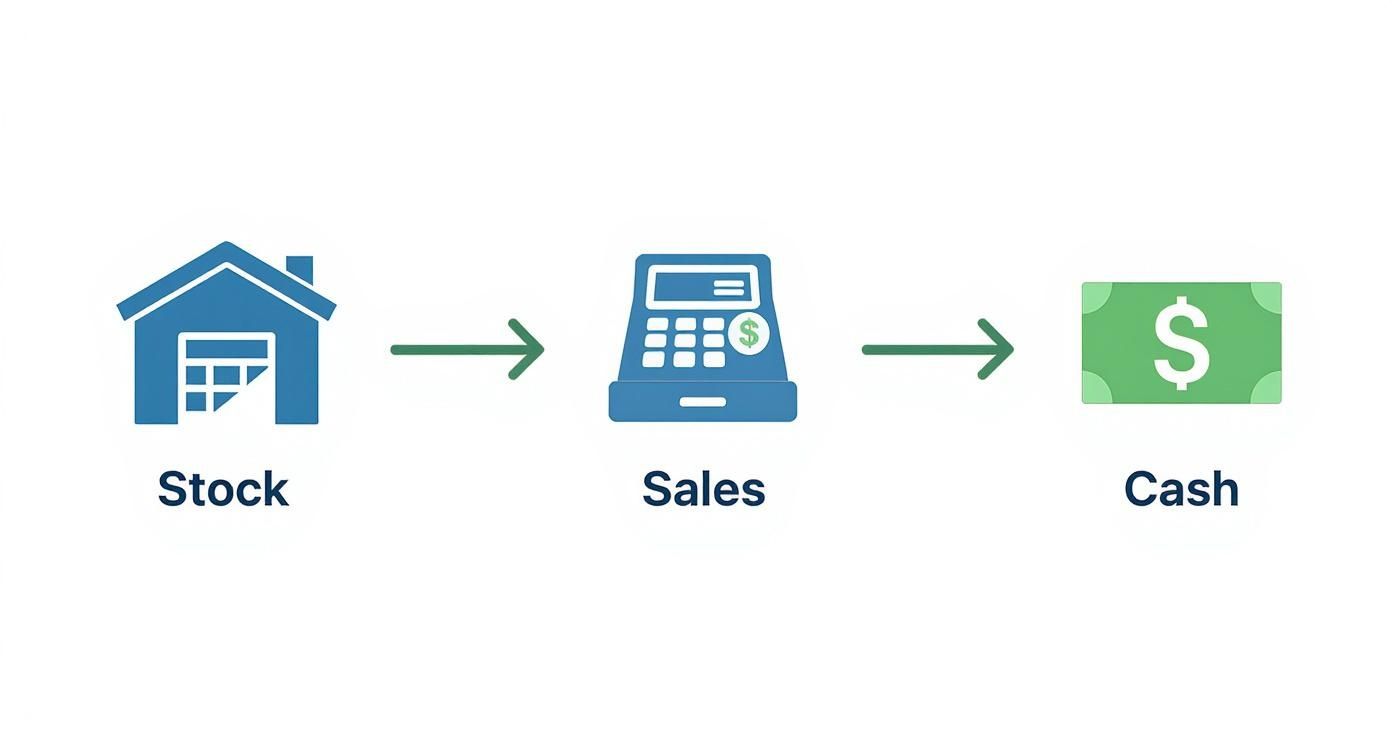
The inventory turnover ratio is 5, meaning the business sold and replenished its inventory five times during the year.
How to Interpret Inventory Turnover Results
Calculating the ratio is only the first step. Understanding what the number means is where the real value lies. A high turnover ratio and a low turnover ratio can each reveal important information about business performance.
What a High Inventory Turnover Ratio Means
A high inventory turnover ratio generally indicates strong sales performance and efficient inventory management. Products are moving quickly, inventory is not sitting idle for long periods, and cash flow remains healthy.
However, an extremely high ratio can sometimes indicate inventory levels are too low. Businesses may struggle to meet demand and risk losing sales because products are frequently out of stock.
The goal is to maintain efficient turnover while still meeting customer demand consistently.
What a Low Inventory Turnover Ratio Means
A low turnover ratio often suggests excess inventory, weak demand, purchasing inefficiencies, or obsolete products. Inventory may be occupying valuable storage space while generating little revenue.
Slow-moving inventory increases carrying costs and ties up working capital that could be invested elsewhere.
Identifying the root cause of low turnover is essential for improving inventory performance.
Industry Benchmarks Matter
There is no universal inventory turnover ratio that applies to every business. Different industries operate under different inventory models and customer demand patterns.
For example, grocery stores typically maintain higher turnover rates because products move quickly and often have limited shelf lives. Furniture retailers and luxury goods businesses may naturally have lower turnover ratios because products are sold less frequently.
Businesses should compare turnover performance against industry benchmarks as well as historical internal performance.
Factors That Affect Inventory Turnover
Inventory turnover does not exist in isolation. Multiple factors can influence how quickly products move through a business.
Customer Demand
Changes in consumer preferences, seasonal buying patterns, and economic conditions all influence product demand. High-demand products often generate stronger turnover, while declining demand can lead to inventory accumulation.
Monitoring demand trends helps businesses adjust purchasing decisions proactively.
Demand forecasting remains one of the most important components of inventory management.
Supply Chain Performance
Supply chain disruptions can significantly affect turnover ratios. Delayed shipments, supplier shortages, and transportation issues may reduce inventory availability or create stock imbalances.
Businesses with strong supplier relationships are often better positioned to maintain healthy inventory levels.
Supply chain resilience contributes directly to inventory performance.
Pricing and Promotions
Pricing strategies influence how quickly products sell. Discounts, promotions, and bundled offers can accelerate inventory movement and improve turnover ratios.
Strategic promotions are often used to clear aging inventory while generating revenue.
Effective pricing decisions help align inventory levels with customer demand.
How to Improve Inventory Turnover Ratio
Businesses looking to improve inventory turnover should focus on better forecasting, smarter purchasing decisions, and more effective inventory management practices.

Improve Demand Forecasting
Accurate forecasting helps businesses purchase inventory based on actual demand rather than assumptions. Historical sales data, seasonal trends, and customer behavior all contribute to more accurate forecasting.
Better forecasts reduce overstocking and improve inventory efficiency.
Businesses that forecast effectively often maintain healthier turnover ratios.
Reduce Slow-Moving Inventory
Slow-moving products should be identified and addressed before they become obsolete. Businesses can use promotions, discounts, bundles, or inventory liquidation strategies to free up capital.
Removing stagnant inventory creates room for products that generate stronger returns.
Regular inventory reviews help prevent long-term inventory accumulation.
Leverage Inventory Management Technology
Modern inventory management systems provide real-time visibility into stock levels, sales trends, and product performance. These tools help businesses make faster and more informed inventory decisions.
Automation reduces manual tracking and improves operational accuracy.
Technology-driven inventory management often leads to stronger turnover performance and greater efficiency.
How Biyo Helps Businesses Optimize Inventory Turnover
Managing inventory effectively requires accurate data, real-time visibility, and the ability to make informed decisions quickly. Biyo helps businesses improve inventory turnover through integrated inventory tracking, sales reporting, product performance analysis, and operational insights.
By connecting inventory management with POS operations, reporting, purchasing workflows, and sales analytics, Biyo provides a centralized platform that helps businesses maintain optimal stock levels while reducing excess inventory.
Business owners can identify top-performing products, monitor inventory movement, evaluate turnover trends, and make more strategic purchasing decisions from a single dashboard.
Whether you operate a retail store, restaurant, warehouse, or multi-location business, Biyo provides the tools needed to improve inventory efficiency and support long-term growth.
If you’d like to learn more about inventory optimization, you can schedule a consultation with Biyo. Businesses ready to explore the platform can also create an account and discover how better inventory visibility can improve profitability and operational performance.
Frequently Asked Questions
What is inventory turnover ratio?
Inventory turnover ratio measures how many times a business sells and replaces its inventory during a specific period. It helps evaluate inventory efficiency and product demand.
How do you calculate inventory turnover ratio?
The formula is Cost of Goods Sold (COGS) divided by Average Inventory. Average Inventory is calculated by adding beginning inventory and ending inventory together and dividing by two.
What is considered a good inventory turnover ratio?
A good inventory turnover ratio varies by industry. Retail businesses often aim for higher turnover rates, while industries with expensive or specialized products may naturally operate with lower ratios.
Why is inventory turnover important?
Inventory turnover helps businesses evaluate inventory efficiency, improve cash flow, reduce carrying costs, and make better purchasing decisions.
Can inventory turnover be too high?
Yes. Extremely high turnover may indicate inventory levels are too low, increasing the risk of stockouts and lost sales opportunities.
How often should inventory turnover be calculated?
Many businesses calculate inventory turnover monthly, quarterly, and annually to monitor trends and identify opportunities for improvement.
How can businesses improve inventory turnover?
Businesses can improve inventory turnover through better demand forecasting, inventory optimization, strategic promotions, stronger purchasing decisions, and modern inventory management technology.