Understanding how to choose a boba shop name is one of the most important branding decisions you will make when launching a bubble tea business. Your name becomes the foundation of your identity, influencing customer perception, marketing effectiveness, social media visibility, and long-term growth potential. In today’s crowded beverage market, where milk tea shops, dessert cafés, and hybrid drink concepts compete for attention, a strong name can immediately separate your business from competitors.
A well-crafted boba shop name does more than sound catchy. It communicates personality, creates emotional connection, improves memorability, and shapes the expectations customers form before they ever taste your drinks. Whether your concept focuses on playful branding, premium tea experiences, trendy aesthetics, or cozy community vibes, your name must align with the experience you want customers to remember.
This guide explores how to choose a boba shop name strategically, covering brand identity, audience alignment, creative naming methods, cultural inspiration, validation processes, and long-term branding protection.
Table of Contents
- Define Your Brand Identity Before Naming
- Align Your Name With Your Target Audience
- Use Creative Naming Techniques That Stand Out
- Draw Inspiration From Culture, Flavor, and Local Influence
- Test, Validate, and Protect Your Boba Shop Name
- Power Your Boba Shop With Biyo POS
- Frequently Asked Questions
Define Your Brand Identity Before Naming
Before brainstorming name ideas, you need to define the emotional and visual identity of your business. Many owners rush into naming too early and end up with names that feel disconnected from the actual experience customers receive. When learning how to choose a boba shop name, your brand identity should guide every decision.
Clarify Your Shop Personality
Your shop personality acts as the emotional blueprint for the customer experience. A playful, youthful tea shop will likely use bright visuals, casual language, and energetic social media marketing. Meanwhile, a modern minimalist tea café may focus on calm interiors, premium ingredients, and refined branding. Your name should reinforce this emotional atmosphere rather than contradict it.
Strong bubble tea businesses usually focus on one dominant emotional direction instead of trying to appeal to everyone simultaneously. Some shops emphasize fun and creativity, while others focus on comfort, luxury, or authenticity. When your name supports a clearly defined personality, customers immediately understand what kind of experience they can expect.
Brand identity also includes your tone of voice, design language, menu style, and overall positioning within the beverage market. A premium milk tea café benefits from sleek and elegant naming, while a social-media-focused boba shop may perform better with playful and highly visual branding. The clearer your identity becomes, the easier the naming process feels.
Focus on Emotional Memorability
Memorability should also influence your identity decisions. Customers need to remember your name easily enough to recommend it to friends, search for it online, and tag it on social media. Complicated names, difficult pronunciations, or unclear references often weaken long-term brand recognition. A memorable name improves both word-of-mouth marketing and customer retention.
Names that create visual imagery or emotional response tend to stay in memory longer. This is why many successful boba brands use names connected to sweetness, comfort, creativity, or tea culture. A strong emotional trigger makes your brand easier to recall even after customers leave your store.
Align Your Name With Your Target Audience
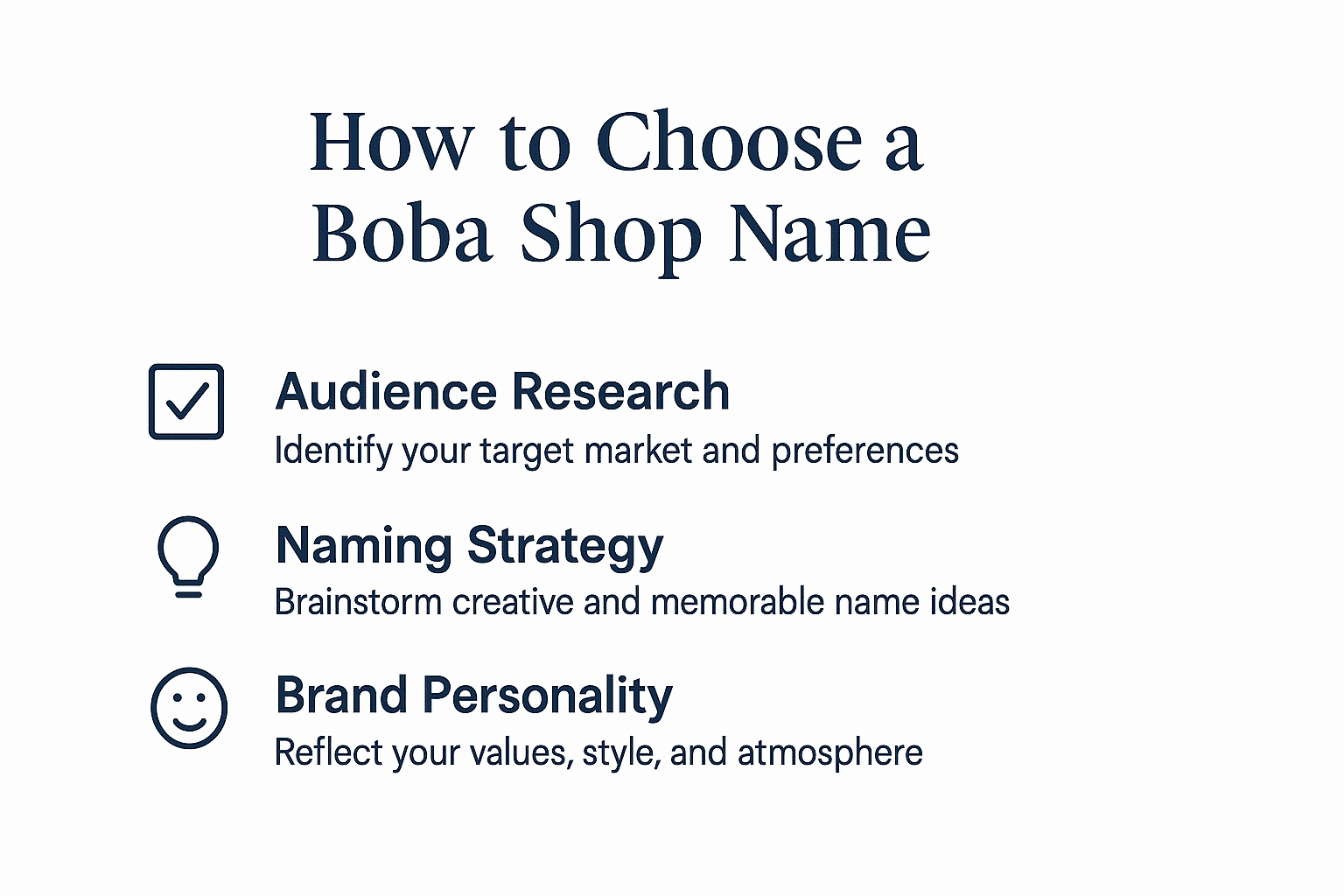
Your target audience should heavily influence your naming strategy. A name that feels exciting to one demographic may feel confusing or unappealing to another. Understanding customer behavior, lifestyle, and expectations makes the process of how to choose a boba shop name far more strategic.
Understand Customer Demographics
Younger audiences often respond strongly to trendy branding, playful wordplay, and visually engaging names that feel social-media-friendly. Shops located near universities or high schools frequently benefit from energetic and casual naming styles because students tend to value fun, shareable experiences. On the other hand, professional or family-oriented demographics may prefer cleaner and calmer names that suggest comfort, reliability, and quality.
Location also shapes naming expectations. Urban environments often reward sleek and modern aesthetics, while neighborhood-focused shops may benefit from warmer and more familiar branding. Customers subconsciously compare your name with surrounding businesses, so alignment with local culture improves acceptance and emotional connection.
Think About Social Media Visibility
Social media visibility is another critical factor. Modern boba culture is deeply tied to platforms such as Instagram and TikTok, where visually appealing drinks and aesthetic shop branding generate organic exposure. A strong name should look clean in hashtags, work well as a username, and remain easy to spell when customers search online.
Search visibility matters equally. Generic names often disappear in crowded Google results, making it harder for customers to find your business online. Unique and distinctive names improve local SEO performance, Google Maps visibility, and overall digital discoverability. A name that balances creativity with search clarity provides long-term marketing advantages without increasing advertising costs.
Use Creative Naming Techniques That Stand Out
Creativity transforms a simple business name into a memorable brand asset. However, creativity should support clarity rather than overpower it. When deciding how to choose a boba shop name, the goal is to create something distinctive without making it confusing.
Use Clever Wordplay Carefully
Wordplay is one of the most popular naming techniques in the bubble tea industry. Clever puns, rhythmic sounds, and playful tea-related references often feel approachable and fun. These names tend to perform well among younger demographics because they are highly shareable and memorable. However, simplicity still matters. If customers struggle to understand the joke or reference immediately, the name may lose effectiveness.
Minimalist naming is another strong approach, especially for shops focused on modern aesthetics and premium experiences. Minimalist names usually consist of one or two clean words that feel timeless and elegant. This style works particularly well for cafés emphasizing quality ingredients, calm interiors, or sophisticated branding.
Balance Trends With Longevity
Trendy branding can generate fast attention, but trend-focused names carry long-term risks. Slang and internet culture evolve quickly, meaning highly trend-dependent names may feel outdated within a few years. Instead of relying entirely on trends, focus on emotional themes that remain relevant over time, such as comfort, curiosity, sweetness, or relaxation.
The strongest naming strategies combine creativity, emotional connection, and long-term flexibility. A great name should still feel relevant years later as your business grows and evolves.
Draw Inspiration From Culture, Flavor, and Local Influence
Boba tea has strong cultural roots, and thoughtful inspiration can add authenticity and storytelling depth to your branding. Many successful tea shop names draw inspiration from tea traditions, flavor experiences, local identity, or emotional rituals connected to beverages and gathering spaces.
Respect Tea Culture
Tea culture offers rich naming opportunities related to brewing, balance, calmness, and craftsmanship. When using culturally inspired references, research and understanding are extremely important. Respectful and informed usage builds credibility, while careless cultural references can damage trust and authenticity.
Flavor inspiration is another effective direction. Names connected to sweetness, creaminess, freshness, or texture can immediately create sensory expectations in the customer’s mind. However, overly specific flavor references may limit future menu expansion. Broad emotional or sensory themes generally provide more flexibility as your offerings evolve.
Use Local Identity Strategically
Local influence can also strengthen emotional connection. References to neighborhoods, landmarks, city culture, or regional identity often help customers feel a sense of familiarity and ownership. Local naming improves community connection while also supporting local SEO and walk-in traffic.
Community-focused names tend to perform especially well in areas where neighborhood loyalty influences customer behavior heavily. Customers enjoy supporting businesses that feel connected to the local environment rather than generic or disconnected from the area.
Test, Validate, and Protect Your Boba Shop Name
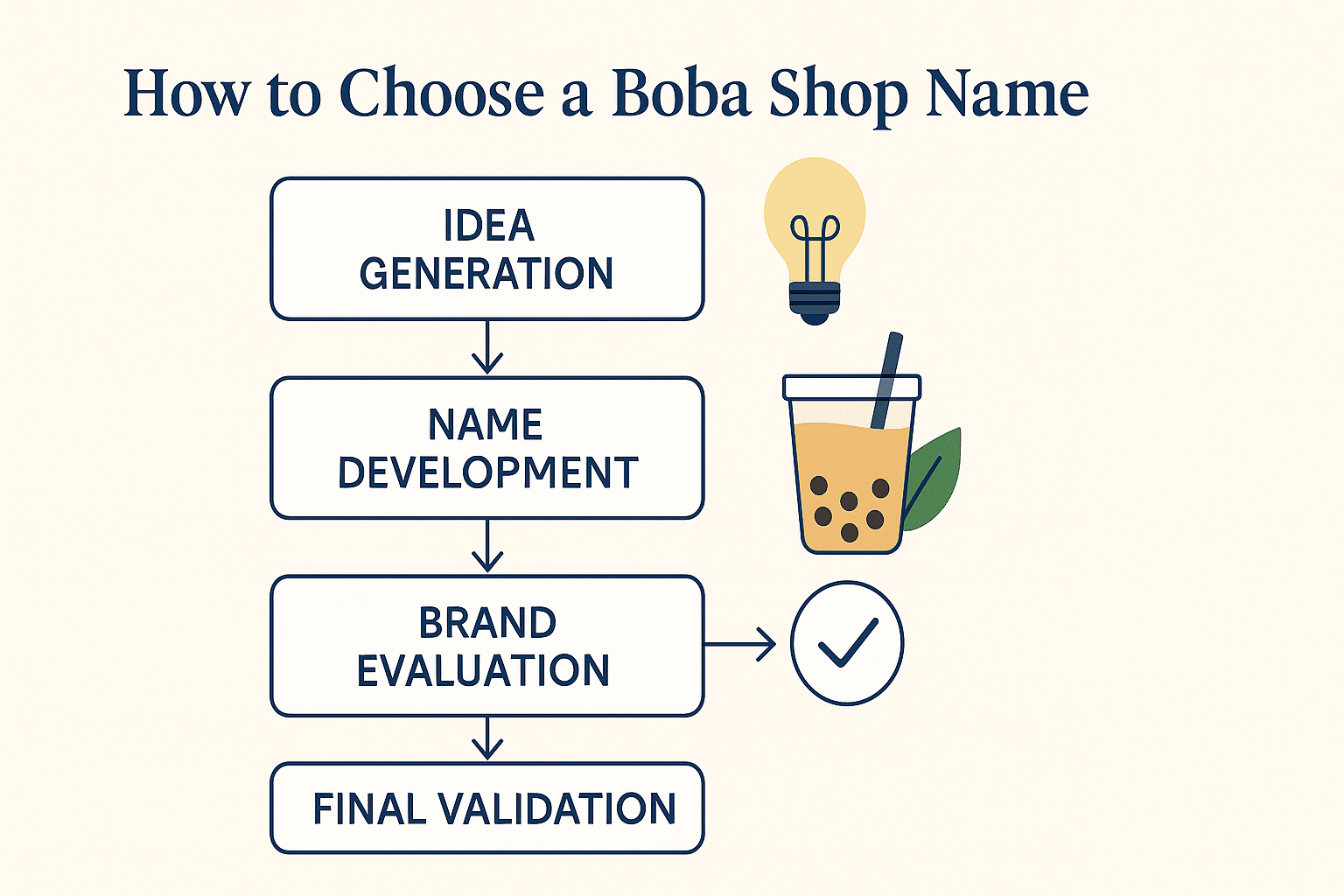
Even a strong name idea should be tested before finalizing. Validation helps identify potential problems early and reduces branding risks later.
Gather Real Customer Feedback
Customer feedback is one of the most valuable parts of the naming process. Ask people within your target demographic how the name feels emotionally, whether it is easy to pronounce, and what type of business they expect from it. Honest reactions matter far more than compliments from friends or family members.
Pay close attention to hesitation or confusion. If people repeatedly mispronounce the name, struggle to remember it, or misunderstand its meaning, those issues may become larger problems once the business launches publicly.
Protect Your Branding Assets
You should also check domain availability, social media handles, and local business registrations before making a final decision. Consistency across platforms helps build trust and simplifies marketing efforts. A name that is available across websites, Instagram, TikTok, and Google Business listings creates a cleaner customer experience.
Trademark and legal protection are equally important. Your business name becomes a long-term asset, especially if you eventually expand into multiple locations or franchising opportunities. Registering your business name and branding elements protects your investment and reduces future legal complications.
Thinking long-term during the naming stage helps avoid expensive rebranding later. A flexible, legally protected, and customer-tested name creates a much stronger foundation for sustainable growth.
Power Your Boba Shop With Biyo POS
After choosing the right name, building efficient operations becomes the next major priority. Biyo POS helps boba shops manage orders, menus, inventory, loyalty programs, and customer transactions from a centralized platform designed specifically for modern food and beverage businesses.
With integrated reporting, customizable menus, and streamlined payment processing, Biyo POS supports growing bubble tea businesses without locking owners into complicated systems or long-term contracts. Whether you operate a small neighborhood tea shop or plan to scale into multiple locations, Biyo POS provides the operational tools needed to support growth efficiently.
Frequently Asked Questions
How long should a boba shop name be?
Most successful boba shop names use one to three words. Shorter names are easier to remember, pronounce, search online, and display across branding materials.
Should I include “boba” or “tea” in the name?
Including words like “boba” or “tea” improves clarity and search visibility, but many successful brands also use emotional or lifestyle-focused names without directly mentioning beverages.
Can I change my boba shop name later?
Rebranding is possible, but it can be expensive and disruptive. Choosing the right name early helps avoid customer confusion and branding inconsistencies later.
How do I know if my shop name is unique?
Check business registries, website domains, social media platforms, and trademark databases to ensure the name is available and legally usable.
What makes a boba shop name memorable?
Memorable names are usually easy to pronounce, emotionally engaging, visually clean, and strongly connected to the overall customer experience and brand personality.