
A POS System for Restaurants is no longer just a digital cash register. It is the operational backbone of modern food service businesses. From table management to order tracking and payment processing, today’s restaurant point of sale systems control nearly every part of daily operations. Therefore, choosing the right system directly impacts speed, accuracy, and profitability.
Many restaurant owners focus on food quality and service experience. However, without reliable restaurant POS software, even the best concept can struggle. A powerful POS System for Restaurants connects the front of house, kitchen, and management team into one unified workflow. As a result, orders move faster, mistakes decrease, and reporting becomes clearer.
If you are evaluating the best POS for restaurants, this guide breaks down everything you need to know. We will explore table management, inventory management, payment processing, restaurant reporting, and more. By the end, you will understand how the right system supports long-term growth.
Table of Contents
- Core Functions of a POS System for Restaurants
- Front-of-House Efficiency and Table Management
- Order Tracking and Kitchen Coordination
- Payment Processing and Checkout Experience
- Inventory Management and Cost Control
- Restaurant Reporting and Business Insights
- Multi-Location and Scalability Features
- How Biyo POS Supports Restaurants
- FAQ
Core Functions of a POS System for Restaurants
A POS System for Restaurants combines multiple tools into one centralized platform. Instead of using separate systems for sales, inventory, and reporting, everything connects through one interface. Therefore, operations become streamlined and easier to manage.
Restaurant Point of Sale Basics
A restaurant point of sale system processes transactions and records sales data. However, modern systems go beyond simple payment handling. They manage menus, track modifiers, and route orders to kitchen displays automatically.
For example, when a server enters a customized order, the POS system sends it instantly to the kitchen printer or display screen. Meanwhile, inventory levels update in real time.
This automation reduces human error and increases order accuracy. As a result, service improves and customer satisfaction rises.
Beyond transactions, operational integration matters significantly.
Integration Across Restaurant Operations
A POS System for Restaurants integrates front-of-house service with back-of-house processes. When systems operate in isolation, communication gaps occur. Therefore, integration ensures smooth coordination.
Restaurant POS software can connect with accounting tools, payroll systems, and loyalty programs. Meanwhile, management gains full visibility into daily operations.
This level of integration creates efficiency that manual processes cannot match.
 Front-of-House Efficiency and Table Management
 Front-of-House Efficiency and Table Management
Front-of-house performance shapes customer experience. A reliable POS System for Restaurants simplifies table management and reduces wait times.
Digital Table Management
Table management features allow hosts and servers to view table status in real time. For instance, the system displays which tables are occupied, reserved, or ready for cleaning.
With visual floor plans, staff assign guests quickly and avoid confusion. Meanwhile, managers monitor seating flow during busy hours.
Efficient table management increases turnover rates without compromising service quality.
Order accuracy also depends on communication.
Server Order Entry and Modifiers
Servers can enter detailed orders with modifiers such as “no onions” or “extra cheese.” The POS System for Restaurants sends those details directly to the kitchen.
This precision reduces misunderstandings between staff. Therefore, fewer dishes return to the kitchen due to errors.
Clear order entry improves both speed and guest satisfaction.
Order Tracking and Kitchen Coordination
Kitchen efficiency determines overall service speed. A strong POS System for Restaurants enhances coordination between dining room and kitchen.
Real-Time Order Tracking
Order tracking allows staff to monitor preparation status instantly. When a dish is ready, the system updates automatically.
This visibility reduces unnecessary trips to the kitchen. Meanwhile, servers deliver food promptly and accurately.
Real-time updates keep the entire team aligned during peak hours.
Coordination also depends on clear workflows.
Kitchen Display Systems
Kitchen display systems replace traditional paper tickets with digital screens. Orders appear instantly, organized by time and priority.
The POS System for Restaurants ensures that chefs see accurate information immediately. Therefore, preparation errors decrease significantly.
Digital systems also provide data for analyzing preparation times and efficiency trends.
Payment Processing and Checkout Experience
Checkout speed influences customer perception. A modern POS System for Restaurants supports secure and flexible payment processing.
Multiple Payment Options
Customers expect flexibility, including chip cards, tap-to-pay, and mobile wallets. Restaurant POS software must support these options seamlessly.
Fast payment processing reduces wait times. Meanwhile, secure encryption protects sensitive card data.
Smooth transactions encourage repeat visits and positive reviews.
Payment integration also affects financial reporting.
Integrated Payment Reporting
An integrated POS System for Restaurants automatically reconciles payment data. Managers can review daily totals without manual calculations.
Accurate reporting prevents accounting discrepancies. Therefore, financial oversight improves.
When payment processing integrates directly into reporting dashboards, operational clarity increases.
Inventory Management and Cost Control
Food cost control remains one of the biggest challenges in restaurant management. A robust POS System for Restaurants includes inventory management features.
Real-Time Inventory Updates
Each sale automatically deducts ingredients from stock levels. For instance, selling a burger reduces bun and meat inventory instantly.
Real-time tracking prevents over-ordering. Meanwhile, managers receive alerts when items reach low stock thresholds.
This proactive approach reduces waste and protects margins.
Data insights further strengthen cost control.
Ingredient-Level Reporting
Advanced restaurant reporting tools provide insights into ingredient usage. Managers can analyze which menu items generate the highest profit.
The POS System for Restaurants connects sales data with inventory consumption. Therefore, recipe adjustments become data-driven decisions.
Better insights lead to smarter purchasing strategies.
Restaurant Reporting and Business Insights
Strong reporting capabilities turn raw data into actionable insights. A powerful POS System for Restaurants supports strategic planning.
Daily and Weekly Sales Reports
Sales reports reveal trends by day, hour, or menu category. Managers can identify peak periods quickly.
These insights support staffing decisions. Meanwhile, tracking revenue patterns improves forecasting accuracy.
Clear reporting strengthens operational control.
Performance metrics also guide growth strategies.
Performance Analytics
Restaurant reporting tools track metrics such as average ticket size and top-selling items. Therefore, marketing efforts become more targeted.
When managers monitor these KPIs consistently, they identify opportunities for upselling and promotions.
Data-driven insights create competitive advantages in crowded markets.
Multi-Location and Scalability Features
As restaurants expand, scalability becomes essential. A POS System for Restaurants must support multi-location management.
Centralized Oversight
Owners can monitor performance across all branches from one dashboard. Therefore, expansion does not reduce visibility.
Centralized reporting allows comparison between locations. Meanwhile, consistent standards remain easier to enforce.
This capability supports sustainable growth.
Cloud functionality enhances flexibility.
Cloud-Based Access
Cloud-based restaurant POS software enables remote access from any device. Managers review reports even when off-site.
Automatic cloud backups protect data security. Meanwhile, updates roll out without disrupting service.
Cloud systems simplify maintenance and long-term scalability.
How Biyo POS Supports Restaurants
 How Biyo POS Supports Restaurants
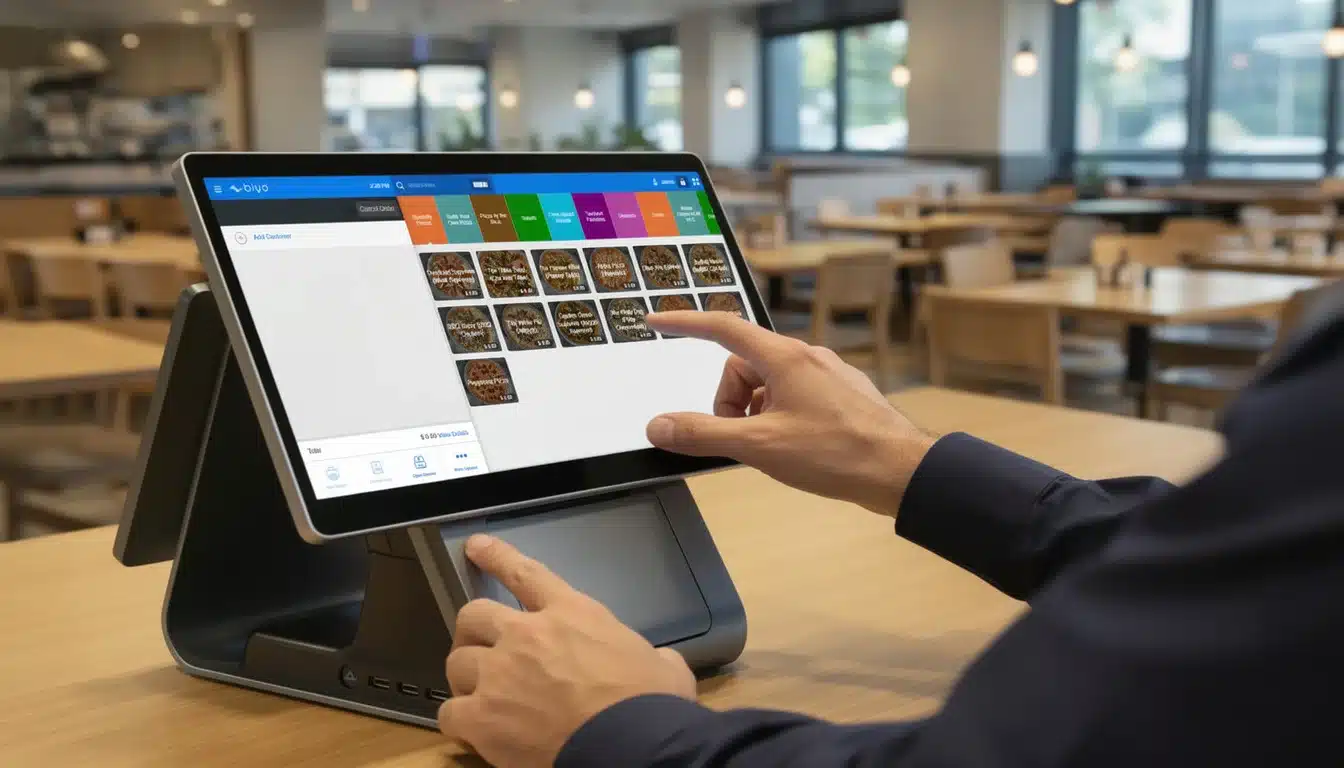
Biyo POS offers a modern POS System for Restaurants designed for speed, reliability, and growth. The cloud-based platform integrates table management, order tracking, inventory management, payment processing, and restaurant reporting into one unified solution.
Because Biyo supports multi-location oversight and real-time reporting, restaurant owners gain complete operational clarity. Meanwhile, flexible hardware compatibility allows restaurants to run on tablets, mobile devices, and dedicated POS terminals.
If you want to upgrade your restaurant point of sale system, you can schedule a live demo or explore the platform directly through the Biyo signup page.
FAQ
What is a POS System for Restaurants?
A POS System for Restaurants is a digital platform that manages sales, orders, payments, inventory, and reporting in food service businesses.
Why is table management important?
Table management improves seating efficiency and reduces wait times, which enhances customer satisfaction.
Can a restaurant POS track inventory?
Yes. Modern restaurant POS software deducts inventory automatically with each sale.
Is cloud-based POS better for restaurants?
Cloud-based systems offer remote access, automatic updates, and centralized oversight, making them ideal for growing restaurants.