Cutting boards are among the most essential tools in any kitchen. Whether preparing vegetables, slicing meat, chopping herbs, or serving appetizers, a reliable cutting board supports both efficiency and food safety. While many people view cutting boards as simple kitchen accessories, the reality is that the material, design, durability, and maintenance of a board can significantly affect cooking performance, knife longevity, and kitchen hygiene.
Modern kitchens now offer a wide range of cutting board options, including wooden boards, plastic boards, bamboo boards, composite surfaces, and heavy-duty butcher blocks. Each material comes with distinct advantages and disadvantages depending on the type of cooking being performed. Some boards prioritize durability and sanitation, while others focus on knife preservation, sustainability, or visual presentation.
Food safety has also become a major factor when selecting cutting boards. Improperly maintained boards can harbor bacteria, absorb odors, and increase the risk of cross-contamination. At the same time, advancements in kitchen technology and design have transformed cutting boards into multifunctional tools with features such as juice grooves, non-slip bases, color-coded systems, and antimicrobial surfaces.
This guide explores everything you need to know about cutting boards, including material comparisons, essential design features, food safety practices, maintenance techniques, and how modern kitchens are integrating cutting surfaces into more advanced food preparation systems.
Table of Contents
- Types of Cutting Boards: Materials and Benefits
- Key Features to Look for in Cutting Boards
- Food Safety and Hygiene with Cutting Boards
- Maintaining and Cleaning Your Cutting Boards
- Cutting Boards in Modern Kitchens and Beyond
Types of Cutting Boards: Materials and Benefits
Choosing the right cutting board material directly affects food preparation efficiency, knife performance, durability, and sanitation. Different materials perform better under different conditions, which is why many professional kitchens use multiple board types for separate tasks.
Wooden Boards: Traditional, Durable, and Knife-Friendly
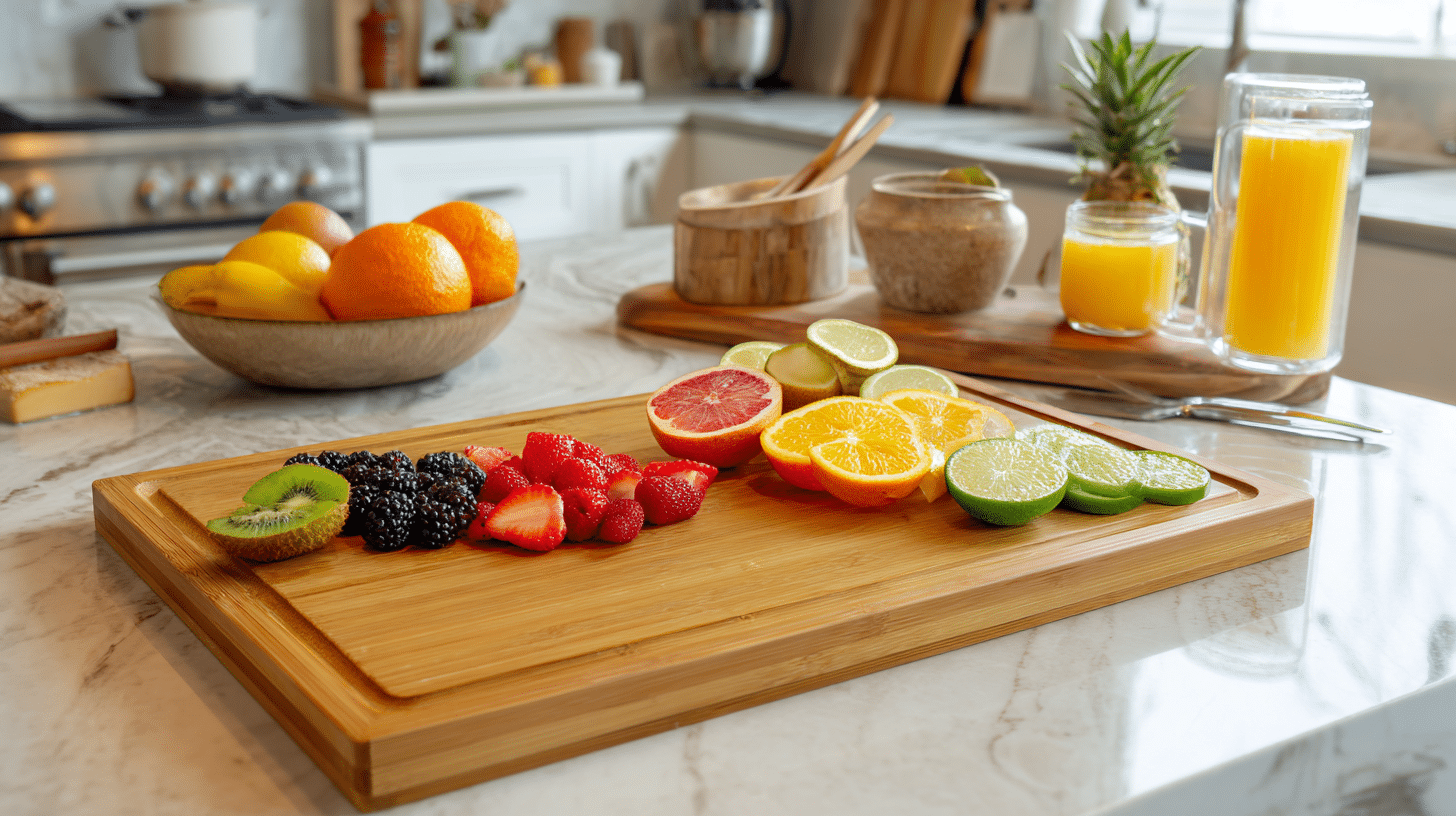
Wooden cutting boards remain one of the most popular options in both home and commercial kitchens. Common hardwood materials include maple, walnut, cherry, and teak. These woods provide a durable but forgiving cutting surface that helps preserve knife sharpness over time.
One of the primary advantages of wooden boards is their ability to absorb knife impact without excessively dulling blades. Softer cutting surfaces reduce edge wear compared to harder synthetic materials. This is especially important for professional chefs and serious home cooks who regularly use expensive kitchen knives.
Wooden boards also provide a visually appealing and professional aesthetic. Many restaurants and households use them not only for food prep but also for serving charcuterie, bread, cheese, and appetizers. Their natural grain patterns add warmth and elegance to kitchen presentation.
Hardwood boards also possess natural antibacterial properties. Research has shown that hardwood fibers can trap bacteria internally where the microorganisms gradually die off over time. However, this does not eliminate the need for proper sanitation and maintenance. Wooden boards still require regular cleaning, drying, and oiling to prevent moisture damage and bacterial buildup.
Maintenance is particularly important with wooden boards because excessive moisture exposure can cause warping, splitting, or cracking. Applying food-safe mineral oil regularly helps preserve the board’s structure and extends its lifespan significantly.
Plastic Boards: Affordable and Easy to Sanitize
Plastic cutting boards are extremely common because they are affordable, lightweight, dishwasher safe, and easy to sanitize. Most plastic boards are made from polyethylene or polypropylene materials that provide a non-porous cutting surface.
One of the biggest advantages of plastic boards is convenience. They can typically be cleaned in high-temperature dishwashers, which helps eliminate bacteria effectively after handling raw meat, seafood, or poultry. This makes them particularly useful in environments where strict sanitation procedures are required.
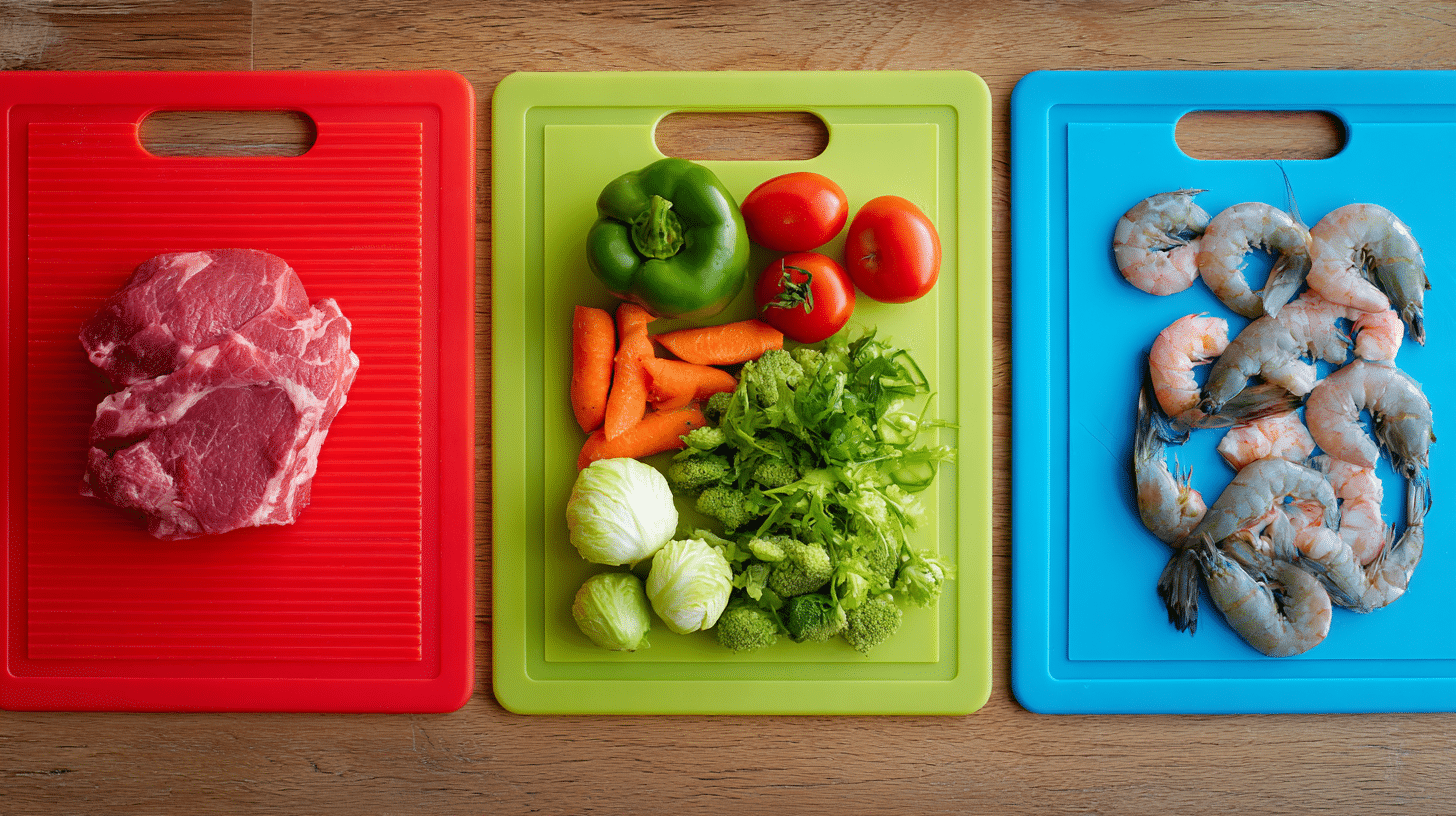
Plastic boards are also available in color-coded systems designed to reduce cross-contamination risks. Many commercial kitchens assign different colors to different food categories, such as red for raw meat, green for vegetables, blue for seafood, and yellow for poultry.
However, plastic boards also have limitations. Over time, repeated knife use creates grooves and cuts on the surface where bacteria and food particles can accumulate. Deep scoring becomes difficult to clean thoroughly, which is why heavily damaged plastic boards should be replaced regularly.
Despite environmental concerns associated with plastic products, many modern manufacturers now produce BPA-free and recyclable cutting boards that offer safer and more sustainable options for consumers.
Bamboo Boards: Sustainable and Lightweight
Bamboo cutting boards have become increasingly popular due to their sustainability, durability, and lightweight construction. Although bamboo resembles wood visually, it is technically a grass that regenerates rapidly without requiring replanting, making it one of the most environmentally friendly cutting board materials available.
Bamboo boards are harder than many traditional hardwoods, which helps resist knife marks and surface damage. Their dense fiber structure provides durability for heavy chopping tasks while remaining lighter than thick hardwood butcher blocks.
Like wooden boards, bamboo boards require periodic oiling to prevent drying and cracking. Without proper care, bamboo can become brittle over time. However, with consistent maintenance, high-quality bamboo boards can last for years.
Bamboo also possesses natural antibacterial properties and offers strong resistance to moisture absorption compared to some softer woods. This combination of sustainability, durability, and hygiene makes bamboo cutting boards highly attractive for modern kitchens.
Key Features to Look for in Cutting Boards
The material of a cutting board matters, but the design features are equally important for safety, convenience, and kitchen efficiency. Modern cutting boards now include several enhancements that improve workflow and reduce mess during food preparation.
Non-Slip Surfaces for Stability
Board stability is critical during food preparation because slipping surfaces increase the risk of knife injuries. Non-slip cutting boards use rubber feet, silicone edges, textured undersides, or grip-enhancing materials to keep the board firmly positioned during use.
This stability becomes especially important when cutting slippery ingredients such as tomatoes, onions, melons, or raw proteins. A secure cutting surface allows for greater precision, faster prep work, and improved safety.
Professional kitchens often prioritize non-slip boards because employees work quickly under pressure and require stable prep surfaces to reduce accidents.
Juice Grooves for Cleaner Food Prep
Juice grooves are shallow channels carved around the perimeter of cutting boards designed to catch liquids released during slicing. These grooves help prevent juices from spilling onto countertops, reducing mess and improving sanitation.
Juice grooves are particularly useful when carving meats, slicing watermelon, preparing tomatoes, or handling citrus fruits. In commercial kitchens, they also help contain raw meat juices that could otherwise contaminate surrounding surfaces.
Boards with deep, smooth juice grooves tend to be easier to clean and more effective at preventing spills during heavy prep sessions.
Color-Coded Systems for Food Safety
Color-coded cutting boards are widely used in commercial kitchens to prevent cross-contamination between raw proteins and ready-to-eat foods. Different colors are assigned to different food categories to reduce the spread of harmful bacteria.
For example:
- Red: Raw meat
- Blue: Seafood
- Yellow: Poultry
- Green: Vegetables and fruits
- White: Dairy and baked goods
Using separate cutting surfaces significantly lowers the risk of foodborne illness and improves kitchen organization. Many home kitchens now adopt similar systems for improved food safety practices.
Food Safety and Hygiene with Cutting Boards
Food safety is one of the most important considerations when using cutting boards. Improper cleaning or handling can lead to bacterial growth, cross-contamination, and foodborne illness.
Understanding Antibacterial Properties
Different cutting board materials interact with bacteria differently. Hardwood boards contain natural compounds that help reduce bacterial survival over time. Bamboo boards also offer antibacterial resistance due to their dense fiber structure.
Plastic boards do not naturally kill bacteria but can be sanitized effectively through dishwashing or chemical sanitization methods. However, once plastic develops deep knife grooves, bacteria may become more difficult to remove completely.
Regardless of material, proper cleaning remains essential. No cutting board is automatically sanitary without routine maintenance.
Preventing Cross-Contamination
Cross-contamination occurs when bacteria transfer from one food item to another through shared surfaces or utensils. Raw poultry, seafood, and meat are common sources of dangerous bacteria such as Salmonella or E. coli.
Using separate boards for different food categories is one of the most effective prevention methods. Cleaning boards immediately after handling raw proteins also reduces bacterial spread significantly.
Many kitchens additionally sanitize cutting boards using diluted vinegar, food-safe sanitizers, or bleach solutions depending on the board material.
Knife-Friendly Surfaces and Food Prep Efficiency
Knife preservation affects both kitchen safety and cooking performance. Dull knives require more pressure during cutting, increasing the risk of slipping and injury.
Wooden and bamboo boards are generally considered more knife-friendly because they absorb cutting impact better than harder surfaces like glass or stone. This helps extend knife lifespan while improving slicing precision.
Plastic boards vary in hardness depending on manufacturing quality, but many are still softer than ceramic or tempered glass alternatives that quickly damage knife edges.
Maintaining and Cleaning Your Cutting Boards
Proper maintenance extends the lifespan of cutting boards while helping preserve food safety and kitchen hygiene.
Cleaning Different Board Types Properly
Plastic boards are usually dishwasher safe and can tolerate high heat sanitization. Hand washing with hot, soapy water also works effectively when performed immediately after use.
Wooden and bamboo boards should never be soaked in water or cleaned in dishwashers because excessive moisture can cause cracking, warping, and splitting. Instead, they should be hand washed quickly, dried immediately, and stored in ventilated areas.
Regular oiling with food-safe mineral oil helps maintain moisture balance and protects wood fibers from drying out.
Removing Odors and Stains
Over time, cutting boards may absorb odors from ingredients such as garlic, onions, fish, or raw meat. Natural cleaning solutions like lemon juice, coarse salt, and baking soda help remove odors and surface stains effectively.
Vinegar solutions also provide mild antibacterial sanitization without damaging wood surfaces. However, harsh chemicals and prolonged soaking should generally be avoided on natural wood boards.
Knowing When to Replace a Cutting Board
No cutting board lasts forever. Deep grooves, cracks, warping, or splitting create spaces where bacteria can accumulate and become difficult to remove safely.
Plastic boards often require replacement sooner because knife grooves become more severe with heavy use. Wooden boards generally last longer but should still be replaced if cracking or instability develops.
Professional kitchens inspect cutting boards regularly because sanitation regulations often require damaged boards to be removed from service immediately.
Cutting Boards in Modern Kitchens and Beyond
Modern cutting boards now combine functionality, aesthetics, sustainability, and technology integration. They continue evolving as kitchens become more advanced and efficiency-focused.
Butcher Blocks for Heavy-Duty Food Prep
Butcher blocks are large, thick wooden cutting surfaces designed for intensive chopping, carving, and meat processing. Their heavy construction provides stability and durability for demanding prep work.
Professional chefs value butcher blocks because they withstand repeated heavy cutting while remaining repairable through sanding and refinishing. Many butcher blocks also function as permanent kitchen islands or prep stations.
Although butcher blocks require regular maintenance, they often last for decades when properly cared for.
Lightweight Boards for Everyday Use
Smaller lightweight boards remain popular for quick daily food preparation. Plastic and bamboo boards are particularly useful for compact kitchens, outdoor cooking, meal prep, and fast cleanup.
These boards offer portability and convenience while requiring minimal storage space. Many households use multiple lightweight boards simultaneously for separate prep tasks.
Technology Integration in Modern Kitchens
Kitchen technology continues influencing cutting board design and food prep systems. Some modern boards now feature antimicrobial coatings, integrated scales, smart sensors, and digital food tracking capabilities.
In commercial kitchens, cutting boards and prep stations increasingly integrate with inventory systems, food safety protocols, and kitchen management platforms.
Biyo POS supports these modern kitchen operations by helping restaurants manage inventory, monitor ingredient usage, streamline workflows, and maintain food safety compliance. Integrated kitchen management systems improve operational visibility while supporting efficient food preparation processes across restaurants and catering environments.
Frequently Asked Questions about Cutting Boards
What is the best cutting board material?
Wood and bamboo are excellent for knife preservation and durability, while plastic boards offer easier sanitation and dishwasher compatibility. The best choice depends on cooking habits and maintenance preferences.
How often should cutting boards be replaced?
Boards should be replaced once deep grooves, cracks, or warping develop. Plastic boards often require replacement more frequently than properly maintained wooden boards.
Can wooden cutting boards be sanitized safely?
Yes. Wooden boards can be sanitized using hot water, vinegar solutions, and proper drying techniques. Regular oiling also helps maintain the board’s protective surface.
Are bamboo boards better than hardwood boards?
Bamboo boards are more sustainable and lightweight, while hardwood boards are often slightly gentler on knife edges. Both perform very well with proper maintenance.
Why are color-coded cutting boards important?
Color-coded boards reduce cross-contamination risks by separating raw proteins, vegetables, seafood, and ready-to-eat foods onto dedicated cutting surfaces.