Inventory forecasting isn't just a spreadsheet exercise; it's the art and science of predicting what your customers will want to buy, and when. Think of it like a weather forecast for your products. It’s not a wild guess—it's a calculated prediction that helps you have the right stuff on your shelves at exactly the right time.
What Is Inventory Forecasting and Why It Matters
Ever run a popular coffee shop? If you haven't, imagine the constant tightrope walk. One day, you run out of your best-selling espresso beans by noon, and your regulars are not happy. The next, you over-order a mountain of milk that goes bad before you can sell it, literally pouring money down the drain.
This is the exact problem inventory forecasting is built to solve. It’s the process of looking at your past sales data and market trends to anticipate what's coming. You're making sure you have enough stock to keep customers happy without drowning your cash flow in products that just sit there. At its heart, inventory forecasting is a practical application of predictive analytics, using what you know about the past to make smart decisions about the future.
The Balancing Act of Supply and Demand
Good forecasting is all about finding that sweet spot between having too much and not enough.
When you have too little inventory, that’s called understocking. It leads to stockouts, lost sales, and frustrated customers who will gladly take their business elsewhere. And those losses add up. Globally, businesses lose an estimated $1 trillion just from out-of-stock items.
On the flip side, having too much inventory, or overstocking, is a silent killer. It ties up your working capital, drives up storage and insurance costs, and increases the risk that your products will expire or become obsolete before you can sell them. That’s cash you could be using to grow your business.
The goal of inventory forecasting isn't perfection. It's about minimizing uncertainty so you can make smarter, data-driven decisions that protect your bottom line.
Key Benefits of Accurate Forecasting
When you get your forecast right, the positive effects ripple across your entire business. It's about so much more than just having products on hand.
- Better Cash Flow: By not overbuying, you keep your money liquid and available for other critical needs like marketing or expansion.
- Happier Customers: Nothing builds loyalty like consistently having what your customers want, when they want it.
- Less Waste: Accurate ordering means less product spoilage, obsolescence, and costly write-offs.
- Lower Storage Costs: Holding only the inventory you truly need reduces warehousing fees and all the associated expenses.
Ultimately, getting a handle on your forecasting methods moves inventory management from a reactive, stressful task to a proactive, strategic advantage. It’s one of the cornerstones of a resilient and profitable business.
A Closer Look at Quantitative Forecasting Methods
If you have a solid history of sales data, quantitative forecasting is going to be your best friend. These methods use your past numbers as a blueprint to map out what's likely to happen next. It's a bit like a ship's captain using charts from past voyages to predict the currents and winds on the journey ahead. The whole approach is objective, data-driven, and incredibly powerful when market conditions are relatively stable.
Quantitative forecasting sets aside gut feelings and opinions. Instead, it systematically digs through past performance to find reliable patterns. This makes it the perfect starting point for any business with an established sales history, giving you a solid, evidence-based foundation for your inventory decisions.
Understanding Trend Analysis
The most fundamental quantitative method is trend analysis. At its core, this is all about looking at your sales data over a long period—think months or even years—to spot the general direction things are heading. Is demand for a product steadily climbing, slowly declining, or just holding flat?
Trend analysis helps you see past the short-term bumps and dips to reveal the bigger picture. A great example is a coffee shop that notices, despite daily ups and downs, its sales of cold brew have consistently grown by 10% every year. That long-term upward trend is a clear signal to start gradually increasing their base stock of the right beans and cups.
This isn't a new concept, either. For decades, trend analysis has been a cornerstone of smart inventory management. Studies have consistently shown that businesses applying this simple logic can reduce stockouts by 15-20% and cut down on costly excess inventory by up to 10%. You can find more insights on how trend analysis improves inventory control for businesses of all sizes.
Accounting for Seasonal Swings
While trend analysis gives you the long-term view, seasonality analysis zooms in on the predictable, recurring fluctuations in demand. These are the peaks and valleys that show up at specific times—be it a season, a holiday, or even a particular day of the week. For any retailer, the most obvious examples are the holiday rush in December or the back-to-school surge in August.
Think about a hardware store in a snowy climate. They know for a fact that demand for snow shovels and rock salt will be virtually zero in July but will explode the moment the first winter storm is on the forecast.
By analyzing sales data from previous winters, the store manager can figure out almost exactly when to ramp up orders. They can ensure the shelves are full precisely when panicked customers come rushing in. That's seasonality analysis in action—turning a predictable pattern into a profitable inventory strategy.
The image below helps put these different forecasting approaches into perspective, showing how they fit into a bigger strategic framework.
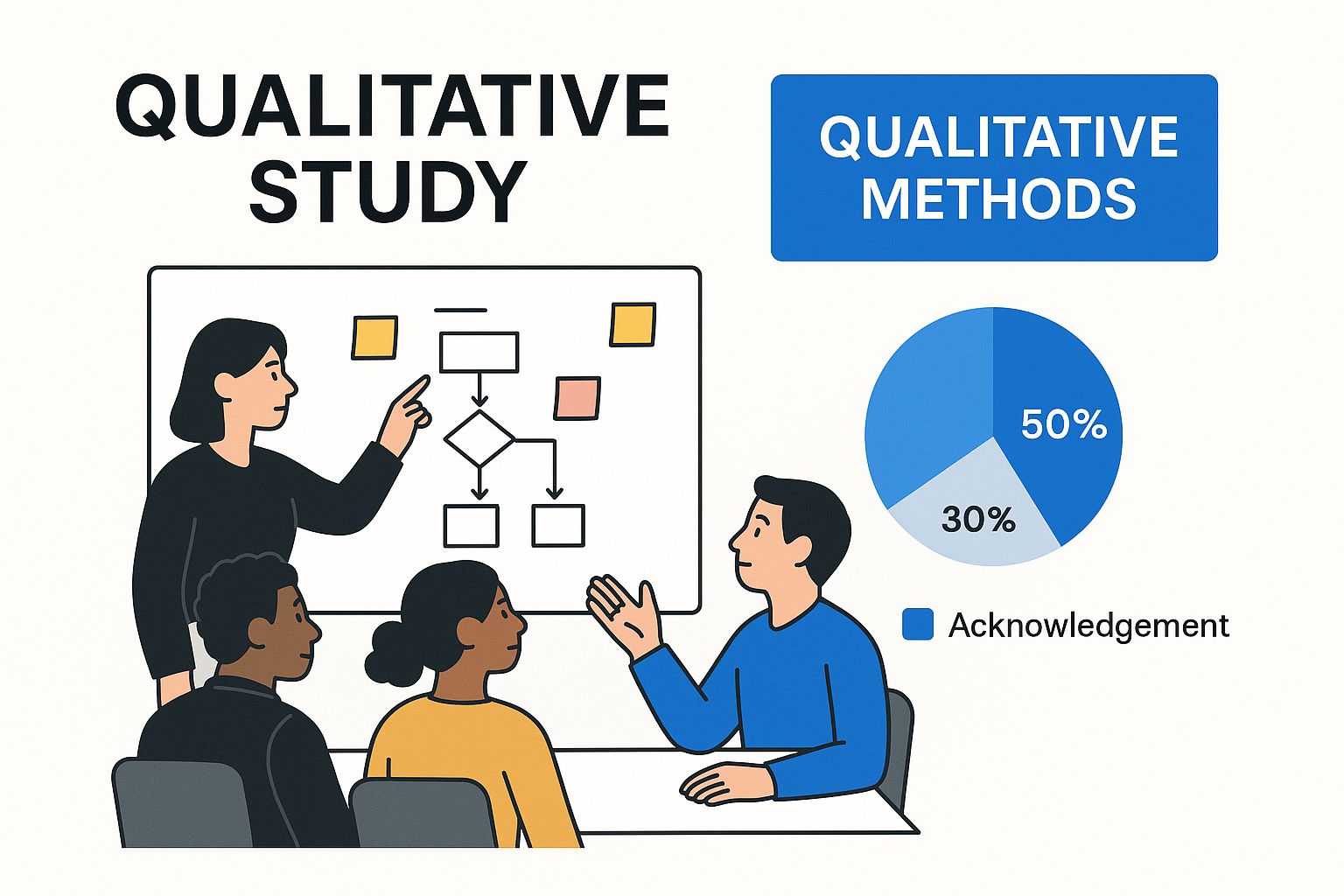
As the visual suggests, data-driven methods like trend and seasonality analysis are often complemented by qualitative approaches, which draw on human expertise and market intelligence.
To help you decide which of these two core quantitative methods might be a better fit for different products, here’s a quick comparison.
Comparing Quantitative Forecasting Techniques
| Technique | Best For | Data Requirement | Key Advantage |
|---|---|---|---|
| Trend Analysis | Products with consistent, long-term growth or decline. | At least 1-2 years of historical sales data. | Excellent for setting baseline inventory levels and strategic planning. |
| Seasonality Analysis | Items with predictable, cyclical demand (e.g., holiday goods, swimwear). | Multiple cycles of seasonal data (e.g., 2-3 years of winter sales). | Pinpoints exact timing for inventory ramp-ups and ramp-downs. |
Ultimately, many businesses find that the most powerful approach is to use both, letting trend analysis set the long-term direction while seasonality fine-tunes the short-term execution.
Pros and Cons of Quantitative Methods
As effective as they are, quantitative techniques aren't a silver bullet. Knowing their strengths and weaknesses is absolutely crucial for using them well.
Key Advantages:
- High Accuracy: When your sales history is stable, these methods can be incredibly precise.
- Objectivity: They rely purely on data, which removes personal bias and guesswork from the process.
- Scalability: Once you build a model, you can easily apply it across hundreds or even thousands of different products.
Potential Drawbacks:
- Data Dependent: They're basically useless for new products with no sales history to analyze.
- Market Blindness: They can't anticipate the impact of a sudden market disruption, a new competitor, or a massive economic shift.
- Less Flexible: These models work by assuming the future will look a lot like the past, which is a risky bet in highly volatile industries.
A Look at Qualitative Forecasting Methods
While number-crunching models rely on looking in the rearview mirror at historical data, qualitative forecasting is all about looking through the windshield. It’s what you turn to when you’re navigating new or uncertain territory where past performance just isn't a reliable guide. These inventory techniques swap out the spreadsheets for human expertise and real-world market intelligence.
This approach is absolutely essential when you're launching a game-changing product, expanding into a completely new market, or reacting to a sudden industry shake-up. Think about a tech startup trying to guess the demand for a first-of-its-kind gadget—there are no past sales to analyze. They have to look forward using strategic insight, which makes forecasting as much an art as it is a science.
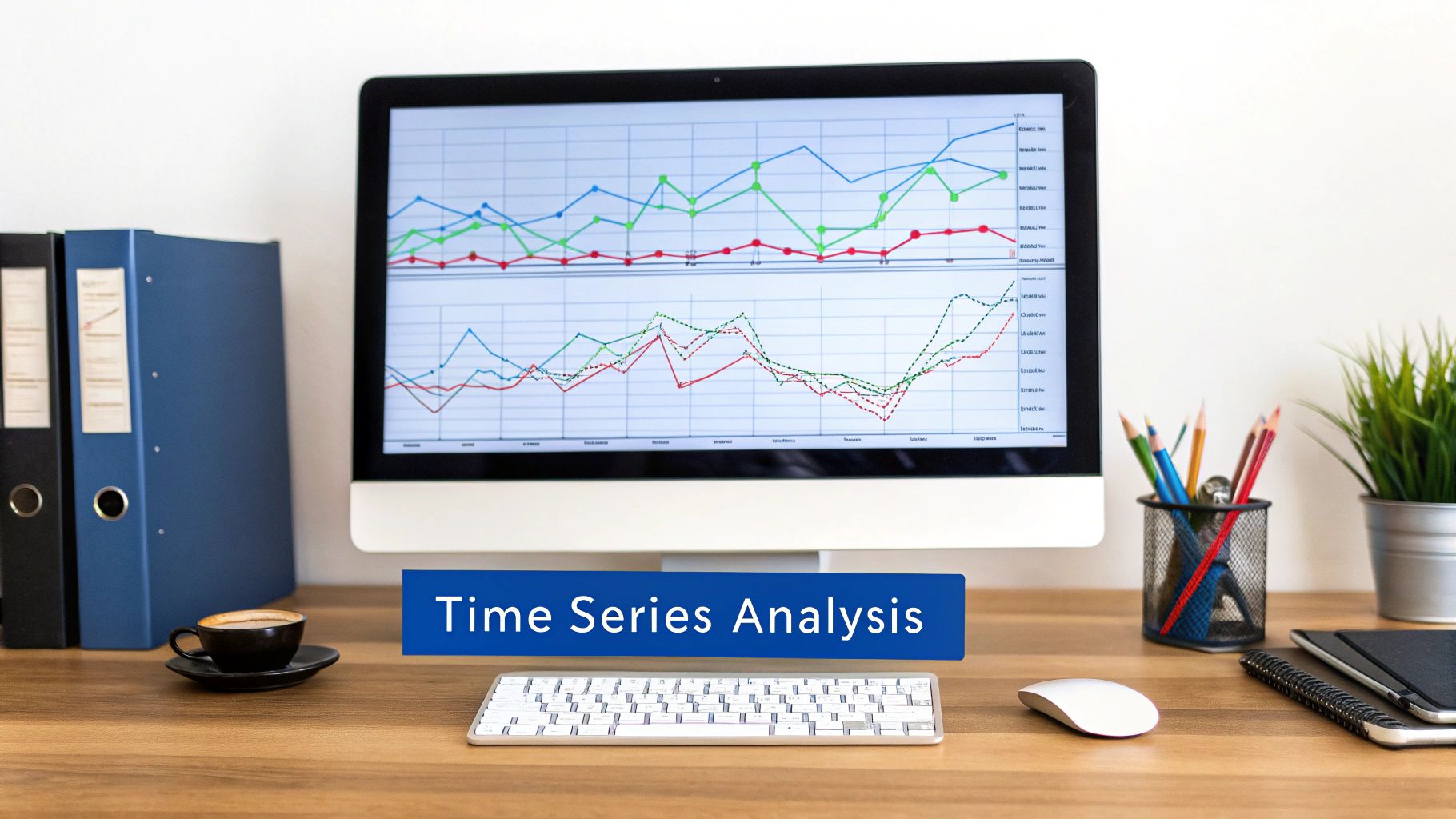
Qualitative methods are more than just a gut feeling; they’re a strategic necessity in these situations. In fact, research shows that about 30% of businesses around the world, particularly in fast-moving industries, pair qualitative techniques with their quantitative models. This blended approach can boost early-stage forecasting accuracy by a crucial 10-15% when historical data is scarce or non-existent.
Tapping into Market and Expert Knowledge
Two powerful qualitative techniques really stand out: market research and expert panels. Each one gives you a unique way to gather the kind of forward-looking insights that numbers alone simply can't provide.
-
Market Research: This is all about getting a direct read on customer interest and buying intent. You can use surveys, focus groups, and customer interviews to get a feel for the potential demand for a new product. For example, a clothing brand might send a survey to its email subscribers about a new jacket design to help estimate how many to order for the initial run. Using structured tools like Voice of Customer (VoC) templates can make collecting this kind of valuable data for demand prediction much more efficient.
-
Expert Panels: This technique is about pooling the collective wisdom of people who know the industry inside and out. A classic framework here is the Delphi method. In this process, a group of experts anonymously submits their forecasts. A facilitator then gathers the results, creates a summary, and shares it with the group, allowing the experts to adjust their predictions based on the collective input. This cycle repeats until the group reaches a consensus, which helps iron out individual biases and leads to a much more reliable forecast.
The big idea behind qualitative forecasting is simple but incredibly powerful: when the past can't tell you anything, listen to the experts and the market.
But these methods aren't just for startups. An established company might bring in an expert panel to predict how a new competitor’s big launch will affect their own sales. Similarly, market research is vital for forecasting demand for a product line extension, even if the original product has years of sales data. This flexibility is what makes qualitative forecasting such a key part of any solid inventory management strategy, giving you the context and nuance that raw data can sometimes miss.
Adopting Advanced and Hybrid Models
Relying on just one forecasting method is like trying to drive a car by only looking in the rearview mirror. Quantitative methods give you a great picture of where you've been, while qualitative methods offer clues about the road ahead, but neither one gives you the full view on its own. The real magic happens when you combine them into a hybrid model.
Think about it this way. Your historical sales data (that’s your quantitative side) might tell you to expect 1,000 units sold next month. But you also know your marketing team is about to launch a huge ad campaign. Your gut, along with the sales team's expert opinion (the qualitative part), tells you that campaign could easily boost sales by 20%. A hybrid approach merges these two worlds. It takes the hard data—1,000 units—and layers on the human insight, adjusting the forecast to a much more realistic 1,200 units.
This blend of art and science is what makes a forecasting strategy truly resilient. You anchor your predictions in solid numbers but stay flexible enough to react to real-world factors that data alone can't predict.
The Rise of AI and Machine Learning
If hybrid models are about blending a few key ingredients, then Artificial Intelligence (AI) and Machine Learning (ML) are like bringing in a master chef. These systems take the hybrid concept to a whole other level. Instead of you manually combining a couple of data points, ML algorithms can sift through thousands of variables all at once.
This isn't just about your past sales. AI can pull in a huge range of external factors to find patterns you'd never spot on your own. We're talking about things like:
- What your competitors are charging right now
- Buzz and sentiment on social media
- Upcoming holidays or even local festivals
- Broader economic news and consumer spending habits
An AI model can process this massive amount of information and uncover incredibly subtle connections. It might learn that a 2% drop in consumer confidence, when paired with a rival's weekend promotion, almost always causes your sales to dip by 5% the following week. That’s a level of detail that’s practically impossible for a person to track, allowing for incredibly sharp, real-time forecasts.
This is especially powerful for businesses with tricky supply chains or volatile costs. A restaurant, for instance, could use AI not just to predict how many diners to expect, but also to decide when to buy certain ingredients based on fluctuating market prices. We dive deeper into these kinds of challenges in our guide on food costing for restaurants. By weaving in all these variables, a business can make much smarter purchasing decisions that directly protect its bottom line.
Stepping up to these advanced forecasting tools does require an investment in good data and the right software. But the payoff is huge—greater accuracy, the ability to pivot quickly when the market changes, and a serious competitive edge that’s tough to beat.
How to Choose the Right Forecasting Technique
Picking the right inventory forecasting technique is a lot like choosing the right tool for a job. You wouldn't use a sledgehammer to hang a picture frame, right? In the same way, you shouldn't rely on gut feelings when you have years of solid sales data to work with. The best method for your business really just depends on your specific situation.
Making the right call starts with an honest look at where you stand. There's no magic bullet or one-size-fits-all solution here. It’s all about finding the approach that fits your product, your data, and your market. This isn't about guesswork; it's about making a smart, strategic decision based on what you actually know.

Key Questions to Guide Your Decision
To figure out which way to go, you need to ask yourself a few tough questions. The answers will point you toward the forecasting methods that will actually work for your business.
-
How much historical data do I have? If you have at least two years of clean, reliable sales history, then quantitative methods like trend or seasonal analysis are your best friends. But if you’re launching something new or your data is a mess, you’ll have to lean more on qualitative insights.
-
What is my product's lifecycle stage? A brand-new product with zero sales history is a blank slate. You’ll have to use qualitative forecasting and market research. On the flip side, an established product with years of steady demand is a perfect candidate for number-crunching with quantitative analysis.
-
How stable is my market? In a predictable market, the past is a pretty good indicator of the future. But if you’re in a volatile industry where trends and competitors pop up overnight, you need a hybrid approach—one that combines hard data with expert opinions to stay ahead.
-
Do my products have seasonal demand? If you sell things like Christmas decorations or bathing suits, seasonality analysis isn't optional—it's essential. Ignoring those predictable spikes and dips is just asking for a stockout or a warehouse full of dead inventory. For businesses like restaurants, mastering these cycles is crucial; you can find more tips on how to increase restaurant sales by planning for them.
Matching the Method to Your Needs
Once you have those answers, you can start connecting the dots and find the right strategy.
Think of it like a simple diagnostic process. You're matching the symptoms—like having no data or dealing with huge seasonal swings—to the right prescription. The goal is to make sure your forecasting technique is a perfect fit for your business reality.
A small boutique launching a new clothing line is going to rely heavily on market research and the opinions of industry insiders. Meanwhile, an established online store that sells phone chargers will live and die by the trend analysis of its sales data.
By figuring out what you need first, you move from abstract theory to a practical plan that actually works.
Fine-Tuning Your Forecasting Strategy
Picking a forecasting method is only the first step. The real magic happens when you put that method into practice with discipline and the right tools. Without a solid process backing it up, even the most sophisticated forecasting model is just a shot in the dark.
Think of a good restaurant inventory management system as the bedrock of your entire strategy. It handles the heavy lifting of data collection, giving you a clean, accurate, real-time picture of what’s happening on the ground. For businesses needing robust inventory control with built-in forecasting, a dedicated tool like a Fishbowl Inventory Management solution can be a game-changer.
Once you have your systems in place, it's all about rhythm and routine. Set a consistent schedule for your forecasting—whether that’s weekly, monthly, or quarterly. This cadence keeps you proactive, helping you spot and react to market shifts before they turn into major headaches.
Get Everyone on the Same Page
An inventory forecast made in isolation is practically guaranteed to be wrong. Your sales team knows what deals are in the pipeline. Your marketing team knows which promotions are about to launch. Your procurement team knows about potential supplier delays. Each department holds a crucial piece of the puzzle.
When these teams talk to each other, a forecast transforms from a static number into a dynamic strategic plan. For instance, if marketing is planning a huge summer sale, that’s going to create a massive demand spike. Your forecast needs to reflect that, or you'll be out of stock in a heartbeat.
Track, Tweak, and Repeat
Let’s be clear: your first forecast won’t be perfect. Nobody's is. The goal isn't to get it right on day one but to get progressively better over time. This means you have to constantly measure your forecast's accuracy against what actually sold.
Treat your forecast as a living document. By analyzing where your predictions were off—and why—you can refine your models, adjust for new variables, and make each subsequent forecast more accurate than the last.
Seasonality is a perfect example of a variable you can't ignore. Consumer electronics companies, for instance, have seen their forecast accuracy jump by about 20% just by adding seasonal trends to their models. That simple adjustment also helped them slash inventory holding costs. This loop of tracking, learning, and refining is what truly separates professional forecasting from simple guesswork.
Here's a look at some of the most common questions that pop up when business owners start putting inventory forecasting into practice.
How Often Should I Update My Forecast?
This is a big one. The honest answer? It depends.
For your best-sellers—the products that are constantly moving—you’ll probably want to run your forecast weekly. For slower-moving items in a predictable market, looking at the numbers monthly or even quarterly might be perfectly fine. The real trick is to find a rhythm that works for your business and then stick to it. Consistency is key.
What's a "Good" Forecast Accuracy Rate?
Everyone wants a number to shoot for. Many businesses aim for 85% accuracy or better, but don't get too hung up on a single metric. The real goal is to get a little bit better over time.
Think of it this way: your first forecast is your baseline. From there, you track your accuracy, figure out where you went wrong, and make adjustments. That process of continuous improvement is far more valuable than hitting an arbitrary number.
Can I Mix and Match Forecasting Methods?
Not only can you, but you absolutely should. Relying on a single method is like trying to build a house with only a hammer.
The most reliable forecasts often come from a hybrid approach. You might start with a quantitative method, like trend analysis based on past sales, and then layer on qualitative insights from your team. Your sales reps on the ground often have a gut feeling about what’s coming next that the numbers alone can’t tell you.
If there's one mistake to avoid, it's treating historical data as gospel. Your forecast has to look forward. Always factor in what's on the horizon—planned promotions, a big marketing push, or new competition entering the market.
Answering these questions head-on helps you move from theory to a practical, resilient forecasting strategy. You’re not just trying to guess the future; you’re building a plan to handle it, turning your inventory from a potential headache into one of your biggest assets.
Ready to take control of your inventory with powerful, intuitive tools? Biyo POS integrates advanced inventory management and forecasting directly into your sales process, giving you the real-time data you need to make smarter decisions. Start your 14-day free trial today