As a small business owner, you're constantly juggling products, supplies, and customer orders. It's a lot. Without a solid system in place, it's all too easy to get caught in a costly loop of running out of popular items while being buried in stuff that just won't sell. Getting a handle on your inventory isn't just another chore—it’s a genuine strategic advantage that frees up cash, slashes waste, and gives you the hard data you need to grow.
Why Smart Inventory Management Is a Game-Changer

Good inventory management is about so much more than just knowing what's on the shelf. Think of it as the engine that powers your profitability, keeps your customers happy, and paves the way for sustainable growth. When you don't have a clear picture of your stock levels, you're essentially flying blind.
This lack of visibility leads to two classic, resource-draining problems: stockouts and overstocking. A stockout on a popular item is a double whammy—you lose an immediate sale and you might lose the customer for good when they head to a competitor. On the flip side, overstocking ties up your hard-earned cash in products that aren't moving, hogging valuable storage space and risking becoming obsolete.
The Real-World Cost of Poor Tracking
Many small businesses get stuck trying to track everything manually. It's a bigger problem than you might think. A shocking 43% of small businesses either don't track their inventory at all or rely on a pen-and-paper system that's prone to error. This disorganization can cost a business up to 11% of its annual revenue—a devastating hit for anyone operating on tight margins.
Let's put that into a real-world context. Imagine you run a small boutique coffee shop. You misjudge your bean order and run out of your best-selling espresso blend on a busy Saturday morning. Not only have you lost a day's worth of sales on that key item, but your regulars might just decide to finally check out that new cafe down the street.
Now, think about the opposite scenario. You get a great deal on holiday-themed syrups in November but order way too much. Come January, those gingerbread and peppermint mocha bottles are still sitting on the shelf, collecting dust until they expire. That's not just wasted product; it's a direct financial loss.
"Your inventory is your cash sitting on a shelf. Managing it poorly is like leaving your wallet open on a public bench—it’s a risk you can't afford to take."
Moving From Guesswork to Smart Strategy
A proper inventory system helps you ditch the guesswork and start making decisions based on data. It gives you clear insights into which products are flying off the shelves and which ones are slow-movers, helping you understand the natural rhythm of your business.
This is where you start looking at key metrics like inventory turnover. By tracking how often you sell through and replace your stock over a certain period, you can make much smarter purchasing decisions. To get a better handle on this, check out our guide on how to calculate and improve your inventory turnover.
Ultimately, getting your inventory management right provides the stability you need to grow. It ensures you have the right products on hand at the right time, which keeps customers coming back and your cash flow positive. It’s less about counting boxes and more about building a resilient, profitable business from the ground up.
Choosing the Right Method for Your Business
Finding the right inventory management method isn't about picking the one that's universally "best." It's about finding the one that fits your business like a glove. The way you handle your stock needs to match your products, your sales cycle, and your overall business model. A one-size-fits-all approach just doesn't work in the real world.
Think about it. A local bakery with fresh-baked bread has completely different inventory challenges than a boutique selling high-end electronics. The bakery’s goods expire quickly, while the boutique’s items have a long shelf life but a much higher cost. You simply can't manage both the same way and expect good results.
First-In, First-Out (FIFO) for Perishables and Trends
The First-In, First-Out (FIFO) method is exactly what it sounds like: the first items that come into your stockroom are the first ones you sell. This is the go-to strategy for anyone dealing with products that can expire, spoil, or just go out of style.
A neighborhood grocery store is the classic example. When a new milk delivery arrives, employees push the older cartons to the front of the shelf and stock the fresh ones in the back. This simple rotation ensures customers grab the milk with the nearest expiration date, which drastically cuts down on spoilage and lost profit.
This same logic is a lifesaver for businesses built on trends, like fashion or tech. You need to sell that first batch of a new seasonal clothing line or the latest smartphone model before it becomes last season's news.
ABC Analysis for Prioritizing Your Most Valuable Stock
But what if your inventory is a mix of high-value and low-value items? That's where ABC analysis shines. This technique helps you sort your products into tiers based on their value, so you can stop wasting time and start focusing on what truly makes you money.
Here's how it breaks down in practice:
-
A-Items: These are your superstars. They only make up a small slice of your total inventory (around 20%) but are responsible for the lion's share of your revenue (about 80%). Think of the artisan espresso machines in a coffee supply shop or the designer handbags in a boutique. These items demand your full attention—tight security, frequent stock checks, and precise sales forecasting.
-
B-Items: This is your middle ground. These products have moderate value and sell regularly. They account for roughly 30% of your stock and bring in around 15% of your revenue. This could be your standard coffee grinders or mid-range accessories.
-
C-Items: These are your low-cost, high-volume products. They might represent 50% of your inventory but only contribute about 5% to your revenue. Think paper cups, cleaning supplies, or cheap phone cases. You still need to track them, but they don't require the same level of micromanagement.
By using ABC analysis, you avoid treating a $5 accessory with the same intense scrutiny as a $500 piece of equipment. It’s all about putting your energy where it will have the biggest impact on your profitability.
If you want to get into the nitty-gritty of the financial side, our guide on choosing an inventory costing method is a great next read. And if you're developing your own products, getting a handle on different OEM and ODM manufacturing models is crucial for planning your inventory right from the source. Picking the right method isn't just about organization; it’s about protecting your bottom line.
Building Your Inventory System from Scratch
Making the jump from a trusty old spreadsheet to a real inventory system can feel a bit daunting, I get it. But for any small business that wants to grow, it's an essential move. Think of it as creating a single, reliable source of truth for all your stock. Getting this foundation right from the get-go is the secret to avoiding the kind of data mess-ups that cause bad reports and massive headaches down the road.
Before you touch any software, your first job is to do a complete physical stock count. Yes, that means you have to physically count every single item in your possession. It’s a grind, but it's the only way to get a clean slate. This ensures your new system starts with perfect baseline numbers, not the wishful-thinking data that was probably living in your old spreadsheet.
Once you know exactly what you’ve got, it’s time to get your product data in order with a clear naming and coding system.
Creating a Workable SKU System
A Stock Keeping Unit (SKU) is just a fancy term for a unique code you give to each product and all its variations. A good SKU system is logical and tells you something about the product at a glance, so you and your team don't have to constantly look things up.
Let's say a coffee shop sells a medium-roast whole bean coffee from Brazil in a 12-ounce bag. A smart SKU could be COF-BRZ-MR-12WB.
- COF = Coffee
- BRZ = Brazil (origin)
- MR = Medium Roast
- 12WB = 12oz Whole Bean
This simple method cuts out the guesswork and makes sure every single product variant—whether it's a different size, color, or flavor—gets its own unique ID. In my experience, inconsistent product names are one of the top reasons small business inventory systems fall apart.
"A messy start guarantees a messy future. Take the time to standardize every product name, SKU, and category before you enter a single piece of data into your new system. This initial effort pays for itself by preventing months of future cleanup."
Organizing Your Physical Space
How you arrange your stockroom is just as critical as how you organize your data. A disorganized backroom is a recipe for slow fulfillment, misplaced items, and frustratingly inaccurate counts. The real goal here is to make finding and grabbing products as quick and painless as possible.
When you're mapping out your storage, you might even consider dedicated stock inventory storage solutions if you're tight on space. A good rule of thumb is to group similar items together and put your best-sellers in the most accessible spots, ideally close to your packing station. Use big, clear labels on every shelf and bin that match the SKUs in your system. This creates a solid connection between your digital records and physical stock, making everything from restocking to picking orders way faster for your team.
This infographic lays out a few of the most common methods for managing your physical and digital stock flow.
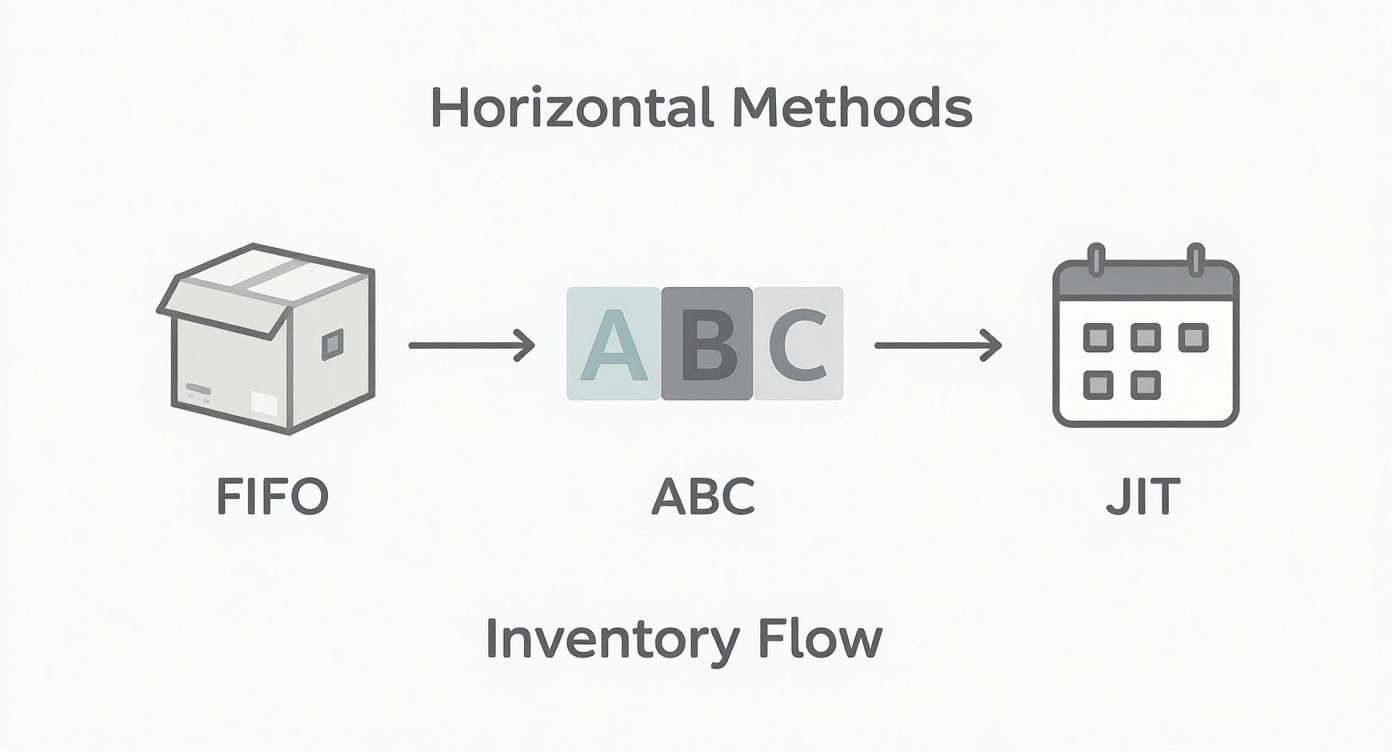
As you can see, techniques like FIFO, ABC, and JIT provide different strategies for how you prioritize and move inventory based on its type and value. Building this solid foundation, both in your software and in your storeroom, is what sets you up for a reliable inventory system that can grow with your business.
Weaving Inventory Tracking into Your Daily Operations
Having a great inventory system is one thing, but making it a natural part of your team's daily rhythm is something else entirely. A system is only as good as the people using it, and consistency is everything. This is where you actually weave inventory management into the fabric of your business—turning abstract data into concrete, everyday actions that protect your bottom line and keep things running like a well-oiled machine.
The trick is to build simple, repeatable routines for every point an item touches in its journey through your business. This isn't about piling more work onto your staff. It’s about making their existing tasks smarter and more efficient so your inventory data stays razor-sharp from the moment stock arrives to the second it walks out the door with a happy customer.
Making Key Tasks Second Nature
Think about the most common things your team does with your products. Each one is a chance to update your system in real-time and reinforce good habits. With the right tools, these tasks become almost effortless. A modern POS, for example, automatically deducts an item from your stock the instant it’s sold, which cuts out manual entry and the inevitable human errors that come with it.
Here’s how you can build solid routines around your core daily functions:
- Receiving New Stock: This needs a strict protocol. When a new shipment lands, the very first step is to check it against the purchase order. Before anything hits the storeroom shelf, staff should be scanning items directly into the system. This makes sure your on-hand count is accurate from the get-go.
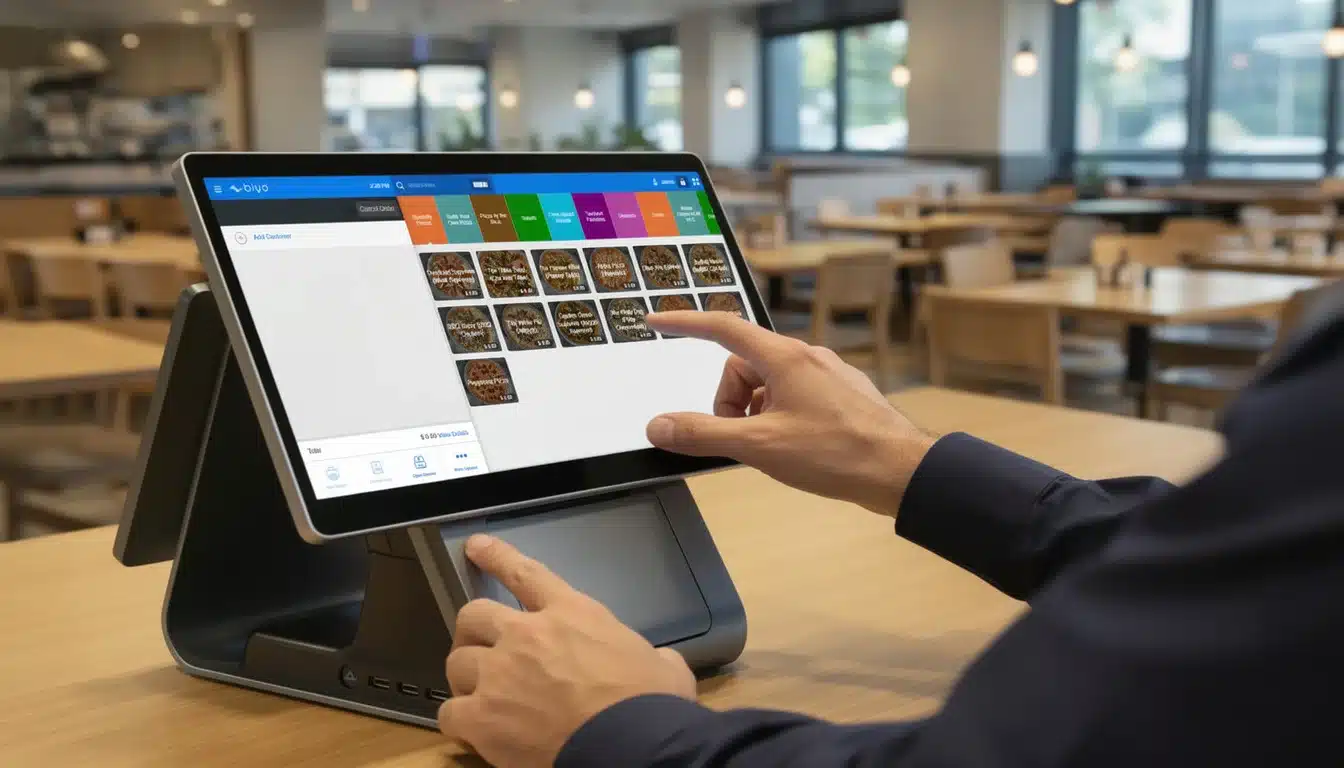
- Processing Sales: This should be the easy part. With a POS like Biyo, the simple act of ringing up a sale automatically updates your inventory levels. The only thing staff need to do is scan the correct product barcode—every single time. No exceptions.
- Handling Returns: Returns can quickly mess up your numbers if you're not careful. Set up a clear workflow: inspect the item for damage, and if it's sellable, scan it right back into your inventory. Don't let returns pile up in a corner; deal with them immediately.
- Conducting Cycle Counts: Forget the nightmare of a full physical inventory count. Instead, get your team doing quick, regular cycle counts. This just means counting a small, specific section of your inventory each day or week. It’s way less disruptive and helps you catch small mistakes before they snowball into huge problems.
A team that understands the why behind a process is far more likely to stick with it. Take a minute to explain that accurate inventory prevents those frustrating stockouts for customers and ultimately makes everyone's job a whole lot easier.
Training Your Team for Consistency
The biggest enemy of accurate inventory is human error. The key to beating it is clear training and a sense of shared responsibility. Your goal is to get every team member to follow the exact same procedure for every transaction. Inconsistent habits—like one person using a generic "miscellaneous" button while another hunts for the right SKU—will torpedo your data integrity in no time.
A Few Training Tips That Actually Work:
- Create Simple Checklists: Don't overcomplicate it. Make straightforward, laminated checklists for key tasks like opening, closing, and receiving stock. This reinforces the right steps until they become muscle memory.
- Use Role-Playing Scenarios: During training, walk through real-world situations. What do you do when a barcode won't scan? How do you process an exchange for a different size? Practicing these moments builds confidence so your team doesn't panic on the floor.
- Appoint an Inventory Champion: Designate one person on your team as the go-to expert for any inventory questions. This gives everyone a clear point of contact and fosters a real sense of ownership over the process.
When you embed these practices into your daily operations, inventory management stops feeling like a separate, annoying chore. It just becomes part of the background hum of the business—a process that empowers your team, keeps your data clean, and gives you a true, up-to-the-minute picture of your business's health.
Using Inventory Data to Make Smarter Decisions

Once you have your inventory system humming along, you'll discover its real magic isn't just in tracking what you have. The true power lies in the data it's constantly collecting for you. This is the point where you stop just counting and start making strategic moves that genuinely boost your bottom line. Think of the reports from a system like Biyo as your roadmap to a more profitable business.
These reports take all those raw numbers and turn them into insights you can actually use. You can finally stop guessing what your customers want and start knowing. This data-first approach is how you break the expensive cycle of running out of your bestsellers while being overstocked on items gathering dust.
Turning Reports into Revenue
A solid inventory system gives you a suite of reports that offer a clear, honest look at how your business is really doing. It can feel a bit overwhelming at first, so my advice is to zero in on a few key metrics that tell the most important stories.
Here are three essential reports you'll want to get comfortable with:
- Sales Velocity: This one is simple but powerful. It shows you exactly how fast specific products are selling. It's your ticket to identifying your "star" items—the ones flying off the shelves that deserve consistent stock and maybe even a better spot in your store.
- Inventory Turnover Rate: This metric tells you how many times you sell and replace your entire stock over a certain period. A high turnover rate is almost always a great sign, pointing to healthy sales and efficient management.
- Profit Margin Analysis: This is where you see the real money-makers. A product might sell well, but is it profitable? This report breaks down the margins on every item, helping you focus your marketing and purchasing power on the products that truly drive growth.
Understanding your data means you can spot trends before they become obvious. For example, if you notice a spike in sales for a particular item every spring, you can order ahead for next year, avoiding stockouts and capitalizing on seasonal demand.
Making Data-Driven Purchasing Decisions
When you have this kind of information at your fingertips, it completely changes how you buy. The data tells a clear story about what to buy, when to buy it, and exactly how much you need. You'll quickly learn to pinpoint your slow-movers—the products tying up precious cash and shelf space.
This allows you to make informed calls, like discontinuing an underperformer or running a flash sale to clear out old stock. The result is a much leaner, more efficient inventory that’s a near-perfect reflection of what your customers actually want. It's a proactive approach that ensures your capital is always invested in products that generate revenue.
If you're ready to take this to the next level, learning a few inventory forecasting techniques can help you predict future demand with startling accuracy. By combining your historical sales data with proven forecasting methods, you can fine-tune your purchasing and keep stock levels just right all year long, giving you a serious edge over the competition.
Got Questions About Inventory Management? We've Got Answers
Diving into inventory management can feel like a big step, and it's totally normal to have questions. Getting a handle on these common queries will help you build a solid foundation and avoid those little headaches that can turn into major problems down the road.
Lots of business owners worry about biting off more than they can chew. The good news? You don't have to go from zero to one hundred overnight. It's actually much smarter to start with a straightforward system that nails the basics: real-time tracking, simple sales reports, and low-stock alerts. Master these first, and you can always add more complex features later.
How Often Do I Really Need to Do a Full Physical Count?
Even with a slick digital system tracking every sale, you still need to get in there and count everything by hand periodically. It's the only way to catch what the system can't see.
For most retail or cafe-style businesses, a full count once or twice a year is plenty. This is your chance to account for shrinkage—the industry term for losses due to theft, damage, or products expiring—and make sure your digital records match reality.
But if you're selling high-ticket items like fine jewelry or premium electronics, you'll want to do this quarterly. With more valuable stock on the line, you can't afford to wait a whole year to find discrepancies.
What's the Single Biggest Mistake I Can Make?
Hands down, the most common and costly error is inconsistent data entry. This is the silent killer of an otherwise great inventory system.
It happens when one person lists an item as "Blue T-Shirt – M" and another enters it as "Tee, Medium, Blue." Or when you forget to create unique SKUs for different sizes and colors. Small inconsistencies like these create massive chaos in your data.
The old saying is true: garbage in, garbage out. Take the time to set up strict, clear naming conventions and SKU formulas from day one. It feels tedious at first, but it will save you an incredible amount of time and frustration later.
Can I Start With a Basic System and Scale Up?
Absolutely. In fact, that's the best way to do it. When you're just starting out, you don't need a system built for a multinational corporation. As your business grows, so will your needs. Soon you might be juggling multiple locations, a dozen suppliers, or complex product bundles.
The trick is to pick a system that's designed to grow with you. By choosing a scalable platform from the start, you ensure that when it's time to expand, you're just adding new features, not starting over from scratch with a painful data migration.
Ready to stop guessing and start managing your stock with confidence? Biyo POS offers a powerful, user-friendly inventory solution designed specifically for small businesses like yours. Get the real-time tracking, insightful reports, and low-stock alerts you need to make smarter decisions. Explore how Biyo can simplify your operations today.