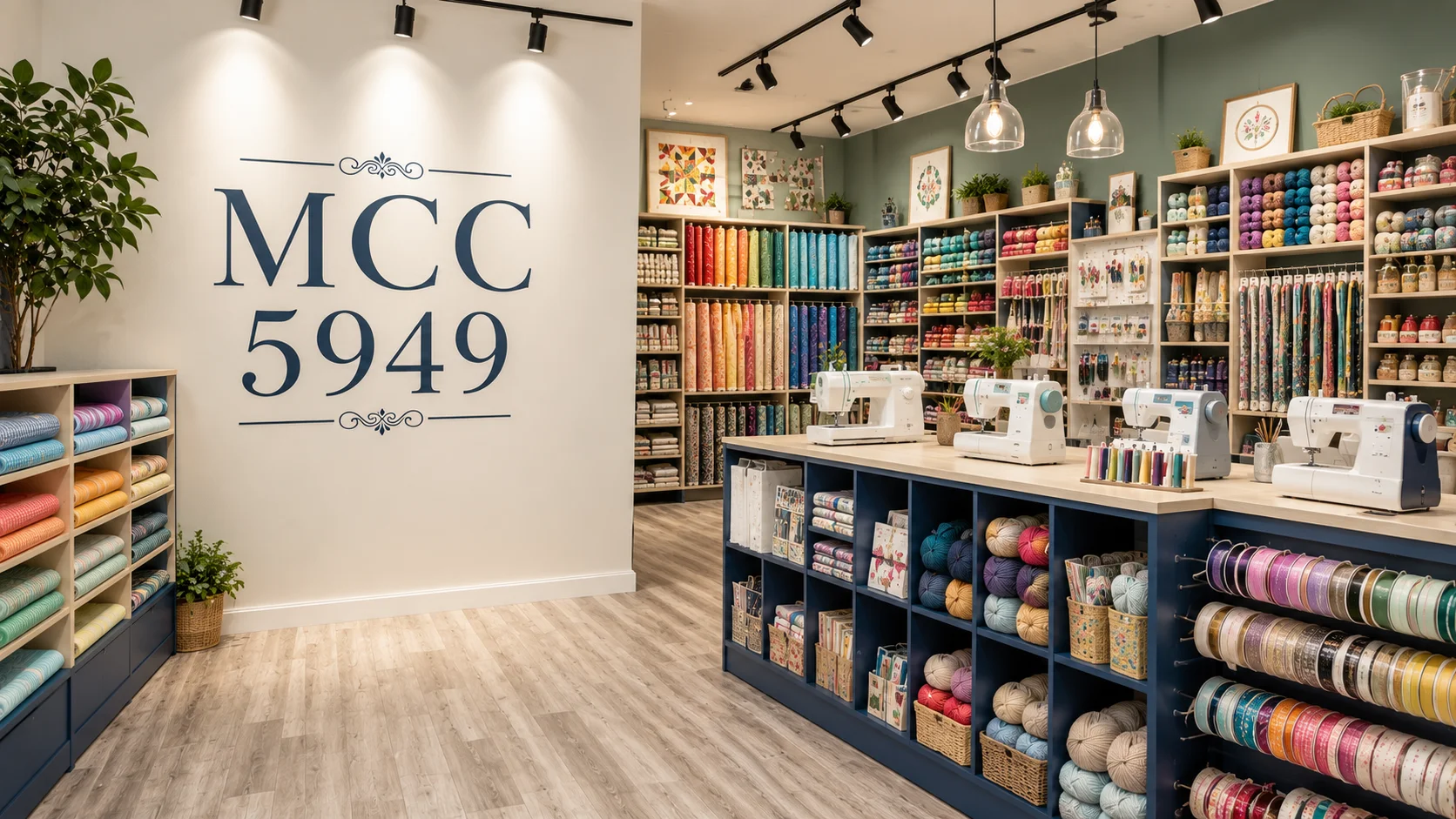

Whether it’s sewing a custom garment, quilting a family heirloom, crafting home décor, or designing handmade accessories, every creative project begins with the right materials. Sewing and fabric stores play an essential role in supporting hobbyists, fashion designers, tailors, schools, and professional makers by offering fabrics, sewing supplies, patterns, and specialty tools. Beyond selling products, these retailers inspire creativity while helping customers bring their ideas to life.
Businesses operating in this industry are commonly classified under Merchant Category Code (MCC) 5949. Payment processors, acquiring banks, and major card networks use this Merchant Category Code to identify merchants whose primary business involves selling fabric, sewing supplies, needlework materials, yarn, textiles, and related products. Although shoppers rarely notice these classifications, they help support payment processing, merchant reporting, transaction categorization, and certain credit card rewards programs.
This guide explains what MCC 5949 covers, the businesses that typically qualify, the products commonly sold, why proper merchant classification matters, and how modern retail technology helps sewing and fabric retailers operate more efficiently.
Table of Contents
Understanding MCC 5949
What Is Merchant Category Code 5949?
MCC 5949 is the Merchant Category Code assigned to businesses whose primary activity is selling sewing supplies, fabrics, needlework materials, textiles, yarn, patterns, and piece goods. Card networks and payment processors use this code to classify merchants based on the products they primarily sell, creating a standardized system for payment processing and financial reporting.
Whether the retailer is a neighborhood fabric shop, a quilting store, or a large craft retailer specializing in sewing supplies, MCC 5949 generally applies when sewing and textile products represent the merchant’s primary business activity.
How Payment Networks Use MCC 5949
Every credit and debit card transaction includes a Merchant Category Code that helps financial institutions identify the type of business accepting the payment. Banks and payment processors use MCC 5949 to organize merchant reporting, categorize purchases, support fraud monitoring, and determine eligibility for certain credit card reward programs. While customers rarely interact with the code directly, it plays an important role behind the scenes of every electronic payment.
Accurate merchant classification also supports more consistent reporting for both businesses and payment providers.
Why Correct Merchant Classification Matters
Using the appropriate Merchant Category Code ensures sewing and fabric retailers are accurately categorized within payment systems. Businesses that primarily sell fabrics, sewing supplies, and needlework products should be classified differently from apparel retailers or general merchandise stores. Correct classification contributes to more reliable transaction reporting and smoother payment processing.
 Businesses Classified Under MCC 5949
 Businesses Classified Under MCC 5949
Fabric and Textile Stores
Fabric retailers make up the largest group of businesses operating under MCC 5949. These stores offer cotton, linen, silk, denim, fleece, upholstery fabric, quilting fabric, and specialty textiles used for clothing, home décor, and commercial sewing projects. Many also provide cutting services and custom fabric orders.
Sewing and Needlework Shops
Specialty sewing retailers also commonly qualify under MCC 5949. Their inventory often includes sewing machines, thread, needles, scissors, measuring tools, embroidery supplies, knitting accessories, crochet materials, quilting tools, and sewing patterns. These stores serve everyone from beginners to experienced professionals.
Quilting and Craft Supply Retailers
Many quilting and needlecraft businesses fall within this merchant category when fabrics and sewing products represent their primary line of business. These retailers frequently sell quilt kits, batting, yarn, embroidery floss, cross-stitch supplies, appliqué materials, and specialty crafting products designed for creative projects.
Products Commonly Sold
Fabric and Piece Goods
Fabric remains the foundation of businesses classified under MCC 5949. Customers shop for quilting cotton, apparel fabric, canvas, fleece, linen, denim, felt, upholstery materials, and seasonal textiles available in countless colors, patterns, and textures.
Sewing Tools and Supplies
Retailers also carry essential sewing equipment including thread, needles, pins, scissors, rotary cutters, measuring tapes, cutting mats, sewing machine accessories, zippers, buttons, elastic, and fasteners that support projects of every size.
Needlecraft and Creative Materials
Beyond traditional sewing supplies, many businesses stock embroidery kits, knitting yarn, crochet hooks, cross-stitch materials, quilting templates, craft kits, ribbons, trims, lace, appliqués, and decorative embellishments that allow customers to personalize their creations.
Why MCC 5949 Matters
Supports Accurate Payment Processing
Merchant Category Codes help payment processors identify the type of merchant accepting each transaction. Using MCC 5949 allows sewing and fabric retailers to be categorized consistently across payment networks while supporting accurate payment processing and merchant reporting.
Improves Financial Reporting
Correct merchant classification helps organize accounting records, transaction reports, and business analytics. Consistent categorization provides retailers and payment providers with clearer financial reporting while simplifying performance analysis.
May Influence Credit Card Rewards
Some credit card issuers use Merchant Category Codes to determine cashback or bonus reward eligibility. Depending on the issuer’s rewards program, purchases made at merchants operating under MCC 5949 may qualify differently than purchases made in other retail categories.
MCC 5949 Comparison Table
| Category | MCC 5949 Sewing, Needlework, Fabric, and Piece Goods Stores |
|---|---|
| Primary Business | Retail sale of fabrics, sewing supplies, textiles, yarn, and needlework materials |
| Typical Customers | Hobbyists, tailors, fashion designers, quilters, schools, and craft enthusiasts |
| Common Products | Fabric, thread, yarn, needles, sewing tools, patterns, quilting supplies |
| Sales Channels | Fabric stores, specialty retailers, craft shops, and online stores |
| Inventory Characteristics | Large variety of colors, textures, materials, patterns, and seasonal collections |
| Peak Seasons | Holiday crafting, back-to-school, seasonal sewing projects, and quilting events |
| Operational Priorities | Inventory management, customer education, merchandising, and product variety |
Industry Operations
Managing Thousands of Fabrics and Supplies
Sewing and fabric retailers often maintain one of the most diverse inventories in specialty retail. A single fabric collection may be available in multiple colors, patterns, widths, and materials, while sewing supplies include countless notions, tools, and accessories. Keeping inventory organized and ensuring popular products remain available requires careful purchasing, accurate stock management, and efficient merchandising.
Many stores also sell fabric by the yard, requiring precise inventory tracking and point-of-sale systems capable of handling variable-length product sales without sacrificing accuracy.
Supporting Creative Customers
Unlike many retail businesses that focus solely on product sales, sewing and fabric stores frequently serve as educational resources for their communities. Employees often help customers select suitable fabrics, estimate material requirements, recommend compatible notions, and troubleshoot sewing projects. Workshops, quilting classes, and crafting demonstrations further strengthen customer relationships while encouraging repeat visits.
Providing knowledgeable service builds trust and helps customers complete projects with confidence, making personalized assistance an important part of daily operations.
Selling Across Multiple Channels
Modern sewing retailers increasingly combine physical stores with eCommerce websites, online marketplaces, and social media sales. Customers may browse fabrics online before purchasing in-store or place online orders for local pickup. Maintaining synchronized inventory across every sales channel helps prevent overselling while ensuring customers receive accurate information about product availability.
Inventory and Operational Challenges
Tracking High-SKU Inventory
Fabric stores often carry thousands of individual SKUs, with products differing by color, pattern, material, width, brand, and collection. Even minor variations create separate inventory records, making manual inventory management difficult and increasing the risk of stock discrepancies without automated tracking systems.
Managing Seasonal Collections and Trends
Customer demand changes throughout the year as new fashion trends, quilting collections, holiday fabrics, and seasonal crafting projects emerge. Retailers must forecast demand carefully, introduce new inventory at the right time, and manage remaining stock once seasonal demand declines. Balancing fresh merchandise with evergreen products is essential for maintaining healthy inventory turnover.
Reducing Waste and Inventory Loss
Unlike packaged retail products, fabrics are often cut to customer-requested lengths, making inventory accuracy especially important. Measurement errors, damaged materials, and inaccurate stock counts can lead to unnecessary waste and reduced profitability. Consistent inventory procedures and barcode-supported workflows help minimize these issues while improving operational efficiency.
Industry Trends
The Handmade Movement Continues to Grow
Interest in sewing, quilting, embroidery, and DIY crafting has increased as more consumers embrace handmade products and personalized creations. Social media platforms, online tutorials, and maker communities continue inspiring people to learn new skills, creating steady demand for fabrics, sewing supplies, and creative materials.
Sustainable and Eco-Friendly Fabrics Are Gaining Popularity
Consumers are increasingly seeking environmentally responsible materials such as organic cotton, recycled fabrics, natural fibers, and sustainably produced textiles. Retailers that expand their eco-friendly product selections can appeal to environmentally conscious shoppers while supporting changing consumer preferences.
Technology Is Modernizing Fabric Retail
Cloud-based POS systems, real-time inventory management, barcode scanning, integrated eCommerce platforms, and detailed sales analytics are helping fabric retailers operate more efficiently than ever before. These technologies improve inventory accuracy, simplify purchasing decisions, enhance customer service, and provide valuable business insights that support long-term growth.
How Biyo Helps Sewing, Needlework, Fabric, and Piece Goods Stores
 How Biyo Helps Sewing, Needlework, Fabric, and Piece Goods Stores
Running a sewing and fabric store requires more than stocking shelves with fabrics and supplies. Retailers often manage thousands of SKUs across different colors, patterns, materials, widths, and seasonal collections while serving customers who expect knowledgeable assistance and accurate inventory. Biyo POS helps simplify these daily operations by providing the tools needed to manage inventory efficiently and improve the overall shopping experience.
With real-time inventory tracking, every sale automatically updates stock levels, giving staff immediate visibility into available fabrics, sewing notions, yarn, patterns, and accessories. This helps reduce inventory discrepancies, prevents overselling, and makes it easier to replenish popular products before they run out. Barcode scanning also speeds up checkout while improving inventory accuracy during receiving, stock counts, and day-to-day operations.
For retailers selling through both physical stores and online channels, Biyo keeps inventory synchronized across every sales platform. Businesses operating multiple locations can monitor inventory, compare sales performance, transfer products between stores, and access centralized reporting through a single cloud-based dashboard. This creates greater operational visibility while supporting long-term business growth.
Detailed reporting gives store owners valuable insights into bestselling fabrics, seasonal buying trends, inventory turnover, and customer purchasing behavior. These reports help retailers make smarter purchasing decisions, optimize merchandising strategies, and maintain the right mix of products throughout the year.
Whether you operate an independent fabric shop, a quilting store, or a specialty sewing retailer, Biyo provides the technology needed to streamline operations and improve efficiency. You can sign up for Biyo POS or schedule a personalized demo to see how the platform can support your business.
Frequently Asked Questions
What is MCC 5949?
MCC 5949 is the Merchant Category Code assigned to businesses that primarily sell sewing supplies, fabrics, textiles, yarn, needlework materials, and piece goods. Payment processors use this code to classify merchants for transaction processing and reporting.
Which businesses qualify for MCC 5949?
Fabric stores, sewing supply retailers, quilting shops, needlework stores, yarn retailers, and specialty textile businesses generally qualify under MCC 5949 when these products represent their primary business activity.
Can fabric stores sell craft supplies under MCC 5949?
Yes. Many businesses operating under MCC 5949 also sell embroidery supplies, knitting materials, ribbons, trims, craft kits, sewing machines, and other related products. As long as sewing, fabric, and textile merchandise remains the primary focus of the business, the merchant classification typically stays the same.
Does MCC 5949 affect credit card rewards?
It can. Some credit card issuers use Merchant Category Codes to determine cashback or bonus rewards. Whether purchases qualify depends on the specific credit card and its rewards program.
Why is Merchant Category Code 5949 important?
MCC 5949 helps payment processors, banks, and card networks accurately classify sewing and fabric retailers. It supports payment processing, merchant reporting, fraud monitoring, financial analytics, and consistent transaction categorization.
How can sewing and fabric stores improve inventory management?
Modern POS systems with real-time inventory tracking, barcode scanning, centralized reporting, and integrated sales analytics help retailers maintain accurate stock levels, reduce manual errors, optimize purchasing decisions, and improve operational efficiency.