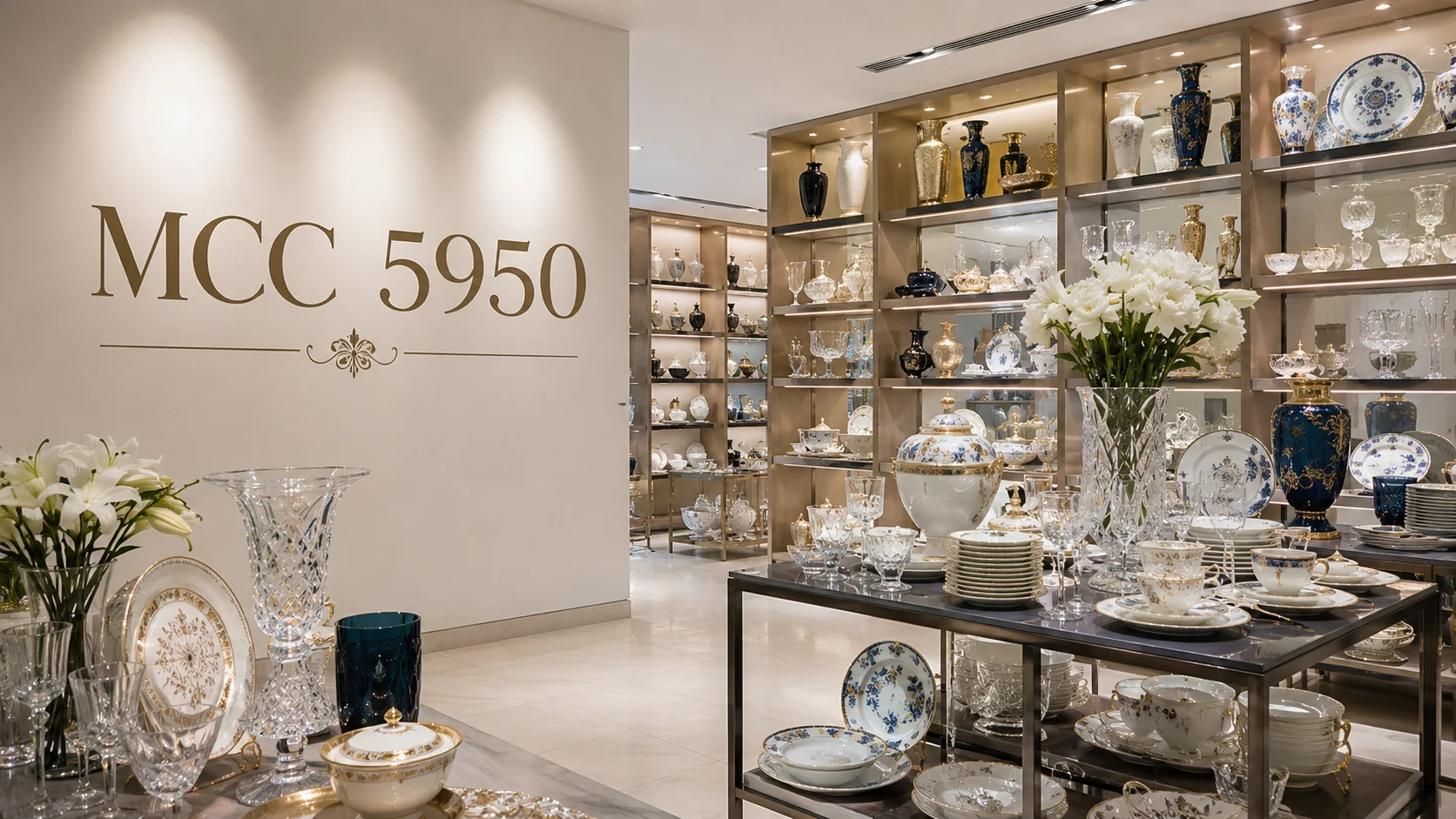

From handcrafted crystal vases and decorative glass sculptures to everyday drinkware and serving sets, glassware retailers offer products that combine function with style. Whether customers are shopping for home décor, wedding gifts, fine dining accessories, or collectible crystal pieces, these specialty stores provide carefully curated selections that appeal to homeowners, interior designers, collectors, and gift buyers alike.
Businesses specializing in these products are commonly classified under Merchant Category Code (MCC) 5950. Payment processors, acquiring banks, and major card networks use this Merchant Category Code to identify merchants whose primary business involves selling glassware, crystal products, decorative glass items, and related merchandise. Although customers rarely notice these classifications, they play an important role in payment processing, transaction reporting, merchant analytics, and certain credit card rewards programs.
This guide explores what MCC 5950 includes, the types of businesses that qualify, the products commonly sold, why accurate merchant classification matters, and how modern retail technology helps glassware and crystal retailers manage inventory, improve customer service, and operate more efficiently.
Table of Contents
Understanding MCC 5950
What Is Merchant Category Code 5950?
MCC 5950 is the Merchant Category Code assigned to businesses whose primary activity is selling glassware, crystal products, decorative glass, barware, tableware, and related specialty merchandise. Payment processors use this standardized code to classify merchants based on the goods they primarily sell, creating consistency across electronic payment systems and merchant reporting.
Whether the business operates a boutique crystal showroom, a specialty kitchenware retailer, or an upscale home décor store focused on glass products, MCC 5950 generally applies when glassware and crystal merchandise represent the merchant’s primary line of business.
How Payment Networks Use MCC 5950
Every credit and debit card transaction includes a Merchant Category Code that identifies the merchant’s business type. Financial institutions use MCC 5950 to categorize transactions, support fraud detection, organize merchant reporting, and determine eligibility for certain credit card rewards. While customers rarely interact with these classifications, they help create greater consistency throughout the payment ecosystem.
Using standardized Merchant Category Codes also enables payment processors to generate more accurate financial reporting and transaction analytics.
Why Correct Merchant Classification Matters
Glassware and crystal retailers should be assigned the Merchant Category Code that best reflects their primary business activity. Businesses focused on decorative glass, crystal, stemware, and specialty glassware should be classified differently from general home goods stores or department retailers. Proper classification supports accurate reporting and helps payment providers maintain consistent merchant records.
 Businesses Classified Under MCC 5950
 Businesses Classified Under MCC 5950
Glassware Retail Stores
Many businesses operating under MCC 5950 specialize in everyday and premium glassware for residential use. Their product selections often include drinking glasses, serving bowls, pitchers, bakeware, storage containers, and dining accessories available in various styles and materials.
Crystal and Fine Gift Retailers
Retailers that focus on premium crystal merchandise also commonly qualify under MCC 5950. These businesses frequently offer crystal stemware, decorative figurines, chandeliers, collectible pieces, luxury giftware, and handcrafted crystal products for weddings, anniversaries, and special occasions.
Specialty Home Décor Shops
Some home décor retailers qualify for MCC 5950 when glassware and crystal products make up the majority of their inventory. Their collections may include decorative vases, candle holders, centerpieces, artistic sculptures, ornamental bowls, and designer glass accents that complement residential and commercial interiors.
Products Commonly Sold
Dining and Drinkware
Glassware retailers typically carry drinking glasses, wine glasses, champagne flutes, whiskey tumblers, beer mugs, cocktail glasses, pitchers, decanters, serving trays, and complete dining collections designed for both casual and formal entertaining.
Decorative Glass and Crystal
Many stores offer decorative crystal figurines, glass sculptures, artistic centerpieces, ornamental bowls, candle holders, display pieces, collectible crystal items, and handcrafted works created by skilled glass artisans.
Gift and Specialty Merchandise
Businesses classified under MCC 5950 frequently stock wedding gifts, anniversary presents, engraved crystal keepsakes, seasonal decorations, luxury gift sets, and personalized glassware that appeals to customers celebrating important milestones.
Why MCC 5950 Matters
Supports Accurate Payment Processing
Merchant Category Codes allow payment processors to consistently identify the type of merchant accepting a transaction. Using MCC 5950 ensures glassware and crystal retailers are properly categorized within payment networks while supporting reliable transaction processing and reporting.
Improves Business Reporting
Accurate merchant classification contributes to more organized accounting records, sales analysis, transaction reporting, and business intelligence. Consistent categorization also benefits payment providers by creating standardized merchant data across multiple systems.
May Affect Cardholder Rewards
Some credit card issuers rely on Merchant Category Codes when determining cashback categories or bonus rewards. Depending on the issuer’s program, purchases made at merchants classified under MCC 5950 may qualify differently than purchases made at merchants operating in other retail categories.
MCC 5950 Comparison Table
| Category | MCC 5950 Glassware and Crystal Stores |
|---|---|
| Primary Business | Retail sale of glassware, crystal products, decorative glass, and specialty giftware |
| Typical Customers | Homeowners, collectors, gift buyers, restaurants, hotels, and interior designers |
| Common Products | Drinkware, crystal décor, serving pieces, vases, figurines, and barware |
| Sales Channels | Retail stores, gift boutiques, specialty home décor shops, and online stores |
| Inventory Characteristics | Fragile merchandise with premium, seasonal, and collectible product lines |
| Peak Seasons | Wedding season, holidays, anniversaries, and gift-giving occasions |
| Operational Priorities | Inventory protection, merchandising, customer service, and secure product handling |
Industry Operations
Managing Fragile and High-Value Inventory
Glassware and crystal retailers handle products that require careful storage, transportation, and display. From delicate wine glasses to handcrafted crystal sculptures, every item must be protected from chips, cracks, and breakage throughout the supply chain. Proper shelving, secure packaging, and well-designed showroom layouts help minimize product damage while allowing customers to browse merchandise comfortably.
Many retailers also maintain premium collections with higher price points, making inventory accuracy and careful handling essential to protecting profitability.
Delivering a Personalized Shopping Experience
Customers visiting glassware and crystal stores are often shopping for weddings, anniversaries, housewarmings, holidays, or other special occasions. Staff members frequently provide guidance on selecting coordinated collections, recommending gift options, explaining crystal quality, and matching products to customers’ preferences. Personalized service helps create memorable shopping experiences while encouraging repeat business and referrals.
Balancing In-Store and Online Sales
Many glassware retailers now combine traditional showroom sales with eCommerce websites and online marketplaces. Customers often browse products online before visiting the store or purchase gifts for direct shipping. Maintaining synchronized inventory across every sales channel helps prevent overselling while ensuring customers receive accurate product availability and timely order fulfillment.
Inventory and Operational Challenges
Preventing Breakage and Product Loss
Unlike many retail categories, glassware stores face constant risks associated with fragile merchandise. Products may be damaged during shipping, stocking, customer handling, or delivery. Retailers must implement protective packaging, careful receiving procedures, and employee training to reduce losses while maintaining an attractive shopping environment.
Managing Seasonal and Gift-Driven Demand
Sales often increase during wedding season, holidays, graduations, Mother’s Day, and other gift-giving occasions. Retailers must forecast demand accurately, stock popular collections before peak seasons, and manage slower sales periods without creating excess inventory. Effective purchasing strategies help balance product availability with healthy inventory turnover.
Maintaining Diverse Product Collections
Glassware retailers frequently carry multiple brands, patterns, finishes, sizes, and coordinated collections. As manufacturers introduce new designs and discontinue older ones, businesses must keep inventory current while supporting customers who wish to expand existing collections. Organized inventory management simplifies purchasing decisions and improves customer satisfaction.
Industry Trends
Growing Demand for Premium Home Entertaining Products
Consumers continue investing in high-quality dining accessories, barware, and decorative glassware as home entertaining becomes increasingly popular. Premium stemware, handcrafted crystal pieces, and designer serving collections remain attractive purchases for homeowners seeking both elegance and functionality.
Personalized and Custom-Engraved Gifts
Customization has become a major trend within the glassware industry. Personalized wine glasses, engraved crystal awards, monogrammed decanters, and commemorative keepsakes allow retailers to offer unique products that appeal to customers celebrating weddings, anniversaries, retirements, and corporate milestones.
Technology Is Improving Retail Operations
Cloud-based POS systems, barcode inventory management, real-time stock tracking, integrated eCommerce platforms, and advanced sales reporting are helping glassware retailers operate more efficiently. These technologies improve inventory accuracy, reduce manual processes, streamline order fulfillment, and provide valuable insights into customer purchasing behavior and product performance.
How Biyo Helps Glassware and Crystal Stores
 How Biyo Helps Glassware and Crystal Stores
Managing a glassware or crystal store requires careful attention to inventory accuracy, product protection, and customer service. Retailers often carry hundreds or even thousands of fragile items across multiple collections, brands, and seasonal product lines. Biyo POS helps simplify these operations by providing powerful inventory management tools designed for specialty retail businesses.
With real-time inventory tracking, every sale automatically updates stock quantities, giving staff an accurate view of available drinkware, crystal collections, decorative glass pieces, barware, and gift items. Barcode scanning speeds up receiving, inventory counts, and checkout while reducing manual entry errors and helping maintain precise stock records.
For businesses operating both physical stores and online shops, Biyo synchronizes inventory across all sales channels to prevent overselling and improve order fulfillment. Multi-location retailers can monitor inventory, transfer merchandise between stores, compare sales performance, and access centralized reporting through a cloud-based dashboard, making it easier to manage growing operations.
Comprehensive reporting provides valuable insights into bestselling collections, seasonal purchasing trends, inventory turnover, and customer buying habits. These analytics help retailers optimize purchasing decisions, reduce excess inventory, and ensure popular products remain available during peak shopping seasons.
Whether you operate a boutique crystal showroom, a specialty glassware retailer, or a home décor store focused on premium glass products, Biyo offers the technology needed to improve efficiency and support business growth. You can sign up for Biyo POS or schedule a personalized demo to learn how the platform can help your business.
Frequently Asked Questions
What is MCC 5950?
MCC 5950 is the Merchant Category Code assigned to businesses that primarily sell glassware, crystal products, decorative glass, and related specialty merchandise. Payment processors use this code to classify merchants for transaction processing and reporting.
Which businesses qualify for MCC 5950?
Glassware retailers, crystal boutiques, specialty gift shops focused on glass products, and certain home décor stores generally qualify under MCC 5950 when these products represent their primary business activity.
What products are commonly sold under MCC 5950?
Businesses classified under MCC 5950 typically sell drinking glasses, stemware, crystal figurines, decorative vases, serving pieces, barware, giftware, ornamental glass items, and collectible crystal products.
Does MCC 5950 affect credit card rewards?
It may. Some credit card issuers use Merchant Category Codes to determine cashback or bonus reward eligibility. Whether purchases qualify depends on the card issuer and the specific rewards program.
Why is Merchant Category Code 5950 important?
MCC 5950 helps banks, payment processors, and card networks accurately classify glassware and crystal retailers. It supports payment processing, merchant reporting, transaction categorization, fraud monitoring, and financial analytics.
How can glassware and crystal stores improve inventory management?
Modern POS systems with real-time inventory tracking, barcode scanning, cloud reporting, and synchronized multi-channel inventory help retailers maintain accurate stock levels, reduce breakage-related losses, improve purchasing decisions, and deliver better customer service.