Every restaurant has a limited number of tables, seats, and service hours available each day. Because of this, maximizing efficiency inside the dining room becomes one of the most important factors affecting profitability. One of the clearest ways to measure operational efficiency is through the restaurant table turnover rate.
Table turnover measures how many different parties occupy a table during a specific service period. At first glance, it may seem like a simple operational statistic, but in reality, it directly impacts revenue, labor efficiency, guest satisfaction, and long-term profitability.
A restaurant with strong turnover can serve more guests without expanding its dining space, while a restaurant with slow turnover may struggle to maximize revenue even during busy periods. However, increasing turnover does not mean rushing customers out the door. The goal is to create smooth, efficient service that feels seamless and comfortable for guests.
The most successful restaurants understand how to balance hospitality with operational speed. They eliminate unnecessary delays, streamline communication between staff, optimize ordering and payment systems, and create workflows that naturally move service forward without making guests feel pressured.
In this guide, we’ll break down how restaurant table turnover rate works, how to calculate it, industry benchmarks, factors that influence turnover, practical strategies to improve it, and how technology platforms like Biyo POS help restaurants increase efficiency while maintaining excellent customer experiences.
Table of Contents
- Understanding Restaurant Table Turnover
- How to Calculate Table Turnover Rate
- Industry Benchmarks and Restaurant Types
- What Affects Restaurant Table Turnover?
- Strategies to Improve Table Turnover
- Staff Training and Operational Coordination
- How Technology Improves Restaurant Efficiency
- Balancing Speed with Customer Experience
- The Future of Restaurant Turnover Optimization
- How Biyo POS Helps Restaurants Improve Turnover
- Frequently Asked Questions
Understanding Restaurant Table Turnover
Restaurant table turnover refers to the number of times a table is occupied by different parties during a specific period of service, such as lunch or dinner.
For example, if a restaurant has 20 tables and serves 60 parties during dinner service, the average turnover rate is 3. This means each table was occupied by three different groups during that service period.
Although the concept sounds simple, turnover reflects much more than seating volume alone. It measures the efficiency of the entire dining experience, including:
• seating speed
• ordering process
• kitchen preparation
• food delivery
• payment handling
• table resetting
Every delay within these stages affects how quickly the next guests can be seated.
Why Table Turnover Matters
Table turnover directly affects restaurant profitability because dining room capacity is limited.
A restaurant can increase sales in two primary ways:
• increase average spending per customer
• serve more customers within the same time frame
Improving turnover allows restaurants to generate more revenue without expanding physical space.
For high-demand restaurants with long waitlists, even small improvements in turnover can create significant revenue increases over time.
Operational Efficiency and Workflow
Turnover also reveals how efficiently the restaurant operates overall.
A slow turnover rate may indicate:
• kitchen delays
• inefficient payment systems
• poor staff communication
• slow table clearing
• menu complexity
• seating bottlenecks
Restaurants with healthy turnover usually maintain smoother coordination between front-of-house and back-of-house teams.
Operational efficiency improves both profitability and guest satisfaction simultaneously when managed correctly.
 How to Calculate Table Turnover Rate
 How to Calculate Table Turnover Rate
Calculating restaurant table turnover is straightforward and provides valuable operational insight.
The Basic Formula
The standard formula is:
Table Turnover Rate = Number of Parties Served ÷ Number of Tables
For example:
• total parties served during dinner: 60
• total tables in restaurant: 20
60 ÷ 20 = 3
This means each table served three separate parties during the dinner service.
Calculating Average Occupancy Time
Restaurants can also calculate average seating time to understand how long guests remain at tables.
The formula is:
Average Table Time = Service Duration ÷ Turnover Rate
For example:
• dinner service duration: 180 minutes
• turnover rate: 3
180 ÷ 3 = 60 minutes
This means the average party occupied a table for approximately one hour.
Understanding average seating time helps managers identify operational delays more accurately.
Tracking Turnover Consistently
Restaurants should track turnover regularly across different:
• meal periods
• weekdays
• weekends
• seasonal periods
• special events
Patterns often vary dramatically depending on customer volume and service style.
Consistent reporting allows restaurants to identify improvement opportunities over time.

Industry Benchmarks and Restaurant Types
Not every restaurant should aim for the same turnover rate.
Different restaurant concepts naturally operate at different speeds depending on customer expectations and service style.
Fine Dining Restaurants
Fine dining restaurants intentionally encourage longer dining experiences.
Guests expect multiple courses, wine service, conversation, and relaxed pacing.
As a result, fine dining restaurants often average turnover rates between 1.5 and 2 per dinner service.
Attempting to push turnover too aggressively in fine dining environments can damage the guest experience.
Casual Dining Restaurants
Casual dining restaurants usually target approximately 3 table turns during busy meal periods.
This pace balances comfort and efficiency while allowing restaurants to maximize seating capacity during peak hours.
Many family restaurants, diners, and neighborhood bistros fall into this category.
Fast-Casual and Quick-Service Restaurants
Fast-casual restaurants and quick-service businesses prioritize speed heavily.
These operations may achieve turnover rates of 5 or more during peak service periods.
Customers expect shorter visits, streamlined ordering, and rapid meal completion.
Operational systems in these environments are designed specifically to maximize flow efficiency.
Coffee Shops and Cafés
Cafés often experience highly variable turnover depending on customer behavior.
Some customers stay briefly, while others work remotely or socialize for extended periods.
Busy urban cafés may still achieve turnover rates above 6 during peak hours.
What Affects Restaurant Table Turnover?
Many operational factors influence how quickly tables become available for new guests.
Menu Complexity
Large or overly complicated menus can slow turnover significantly.
Customers often spend more time deciding what to order when menus become overwhelming.
Complex menu items may also increase kitchen preparation times.
Well-designed menus simplify decision-making while helping kitchens maintain speed and consistency.
Kitchen Efficiency
The kitchen directly affects turnover speed.
If food preparation slows down during peak periods, guests remain seated longer waiting for meals.
Kitchen bottlenecks frequently occur due to:
• poor station organization
• understaffing
• communication issues
• menu complexity
• equipment limitations
Efficient kitchens maintain consistent ticket times even during busy service periods.
Payment Delays
One of the most overlooked causes of slow turnover is the payment process.
Traditional payment workflows often add unnecessary delays at the end of meals.
Guests may wait for:
• the check to arrive
• cards to be processed
• receipts to return
These delays can easily extend occupancy time by 10 to 15 minutes per table.
Modern mobile payment systems significantly reduce this inefficiency.
Dining Room Layout
Poor floor plans create operational bottlenecks for staff movement.
If servers and bussers struggle to move efficiently between tables and kitchen stations, service slows naturally.
Optimized layouts improve communication, table clearing speed, and overall dining flow.
Strategies to Improve Table Turnover
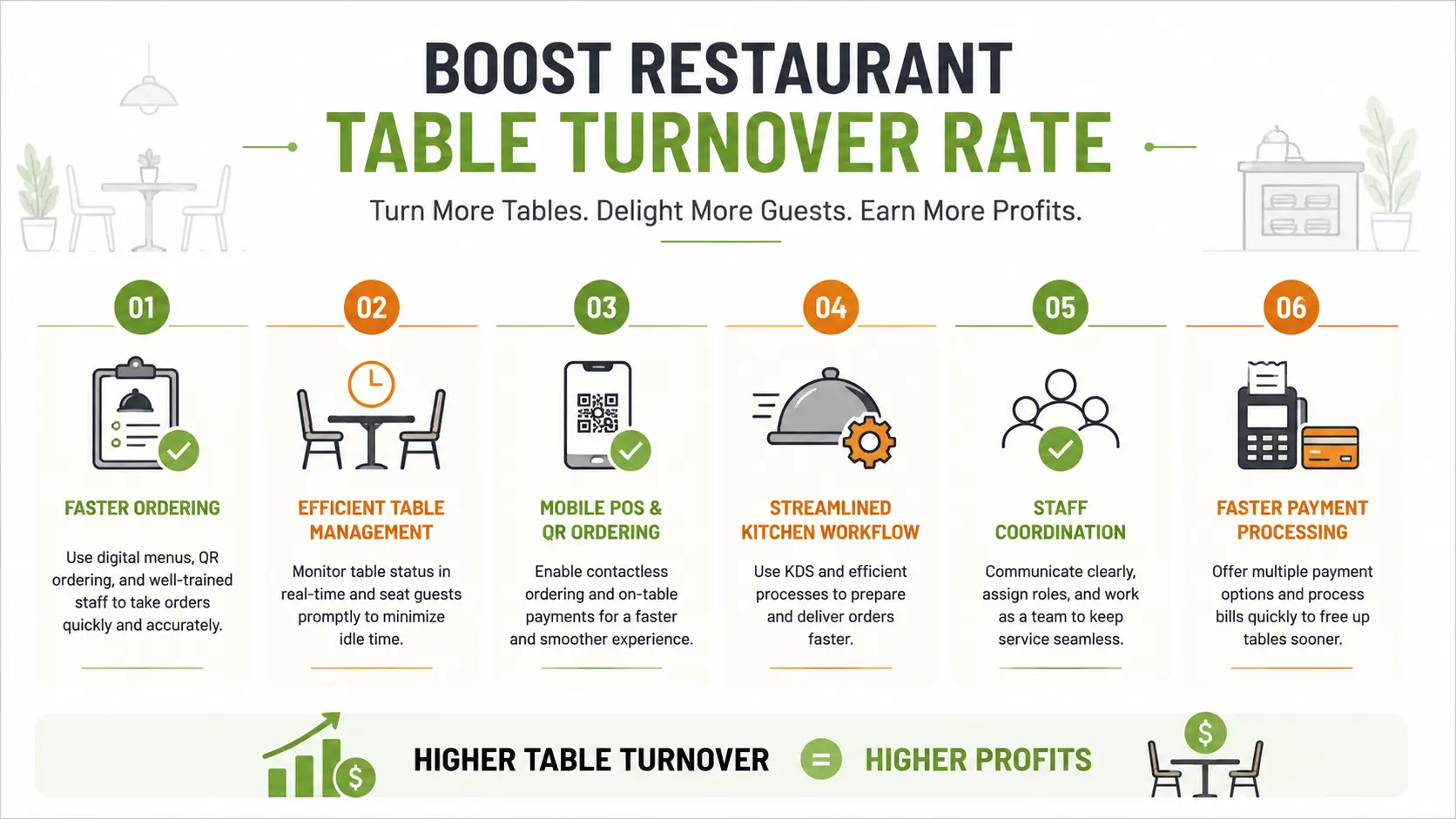
Improving turnover requires operational refinement rather than aggressive customer rushing.
Optimize Table Resetting
Dirty or uncleared tables create immediate seating delays.
Restaurants should establish clear procedures for rapid table clearing and resetting.
Dedicated bussing support often improves turnover significantly during peak service periods.
Clean tables should become available as quickly as possible after guests leave.
Simplify Ordering Workflows
Streamlined ordering systems reduce delays between seating and kitchen preparation.
Servers should take orders promptly while maintaining a comfortable pace for guests.
Digital ordering systems can also reduce communication errors and improve kitchen coordination.
Restaurants increasingly use handheld POS devices to speed up ordering workflows directly at the table.
Improve Reservation Management
Reservation systems help restaurants balance customer flow more evenly throughout service periods.
Well-managed reservation pacing prevents sudden overcrowding that overwhelms kitchens and slows turnover.
Accurate seating timing also improves guest satisfaction by reducing waiting periods.
Use Data to Identify Bottlenecks
Restaurants should analyze operational data regularly to identify where delays occur most frequently.
Common bottlenecks include:
• slow kitchen stations
• delayed check delivery
• understaffed sections
• inconsistent table clearing
Data-driven adjustments improve efficiency far more effectively than assumptions alone.
Staff Training and Operational Coordination
Well-trained staff are essential for healthy table turnover.
Front-of-House Coordination
Hosts, servers, bussers, and managers must communicate continuously throughout service.
Empty tables should never remain unavailable unnecessarily while guests wait to be seated.
Strong coordination keeps the dining room moving smoothly.
Anticipating Guest Needs
Experienced servers improve turnover naturally by anticipating customer needs before delays occur.
Examples include:
• refilling drinks proactively
• clearing finished plates quickly
• offering dessert promptly
• presenting checks at appropriate moments
Excellent service often improves efficiency without guests feeling rushed.
Reducing Staff Turnover
Employee turnover also affects operational consistency.
Restaurants with constant staffing changes often struggle to maintain efficient service because inexperienced staff require additional training and supervision.
Stable teams generally perform faster and communicate more effectively during busy shifts.
How Technology Improves Restaurant Efficiency
Modern restaurant technology plays a major role in improving turnover while enhancing guest experience.
Tableside Ordering Systems
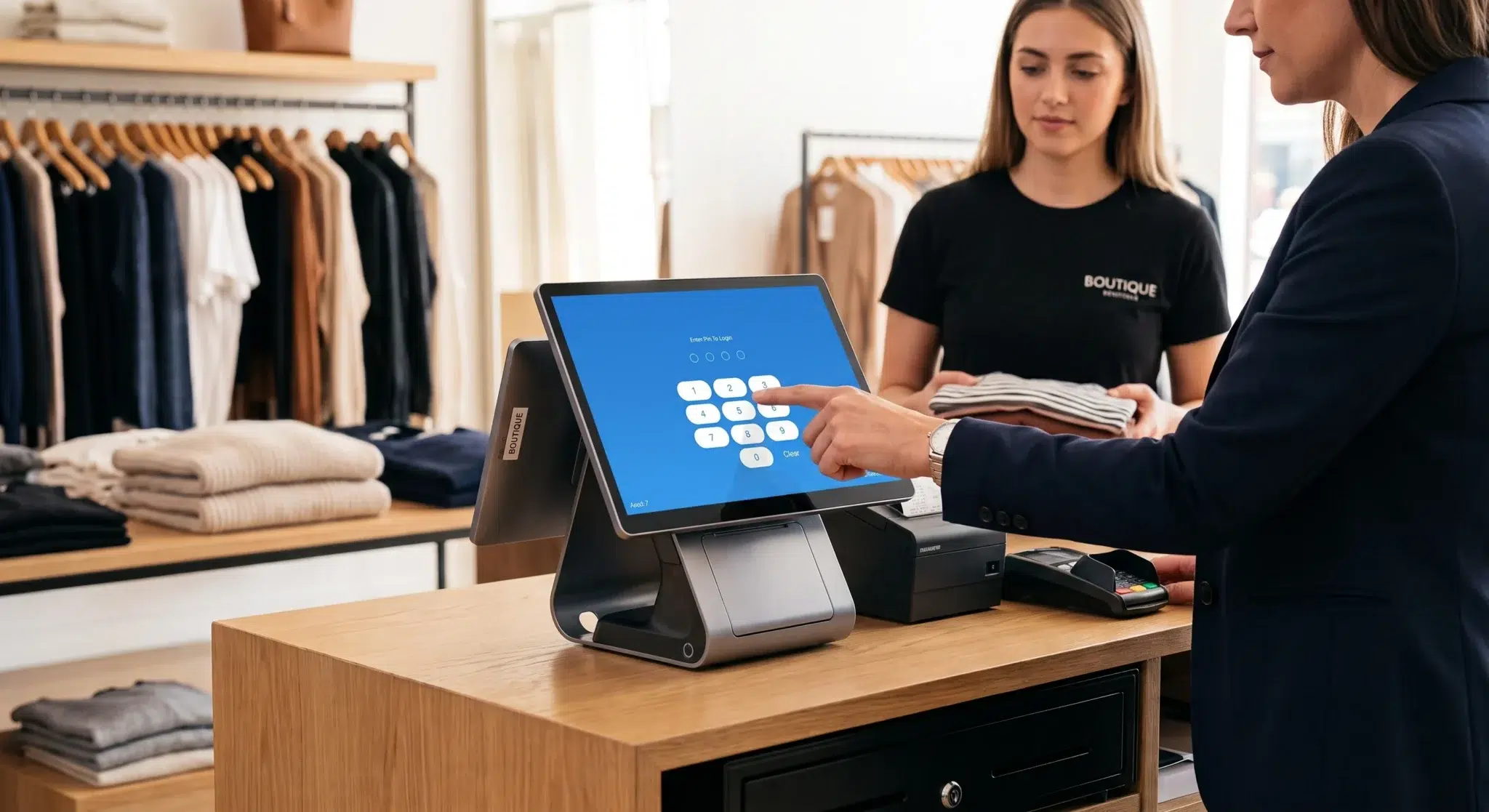
Handheld POS devices allow servers to send orders directly to the kitchen without returning to stationary terminals.
This reduces walking time while speeding up communication between dining room and kitchen staff.
Order accuracy also improves significantly.
Mobile Payment Solutions
Tableside payment systems eliminate long waits associated with traditional check processing.
Guests can complete payments instantly without waiting for cards or receipts to travel back and forth.
This alone can reduce table occupancy time substantially.
Kitchen Display Systems
Digital kitchen display systems improve ticket organization and preparation speed.
Orders appear instantly and can be prioritized more efficiently than paper tickets.
Improved kitchen coordination helps maintain consistent service times.
Real-Time Analytics
Modern POS systems provide real-time reporting that helps managers monitor:
• average table times
• sales volume
• labor efficiency
• peak periods
• server performance
These insights support smarter operational decisions.

Balancing Speed with Customer Experience
The biggest mistake restaurants make is assuming turnover improvement means rushing guests.
In reality, customer satisfaction remains essential for long-term profitability.
Invisible Efficiency
The best turnover improvements feel natural rather than forced.
Guests should experience:
• smooth service
• minimal waiting
• attentive staff
• quick payment handling
without feeling pressured to leave.
Efficiency should enhance hospitality rather than replace it.
Matching Turnover to Restaurant Concept
Different restaurant concepts require different pacing expectations.
Fine dining guests expect slower experiences, while fast-casual customers prioritize convenience and speed.
Restaurants should optimize turnover according to customer expectations rather than chasing unrealistic benchmarks.
Guest Satisfaction and Repeat Business
Restaurants that balance efficiency and hospitality effectively often achieve stronger repeat business and customer loyalty.
Customers appreciate smooth service far more than rushed service.
The goal is operational precision, not pressure.
The Future of Restaurant Turnover Optimization
Restaurant turnover management will continue evolving alongside automation and data analytics.
Artificial intelligence, predictive staffing tools, and smart reservation systems will likely improve operational forecasting significantly.
Future systems may automatically recommend staffing adjustments, optimize seating arrangements, and predict dining duration based on customer behavior patterns.
Restaurants that embrace operational technology early will likely maintain stronger profitability and efficiency advantages over competitors.
How Biyo POS Helps Restaurants Improve Turnover
 How Biyo POS Helps Restaurants Improve Turnover
Biyo POS helps restaurants streamline service and improve table turnover through integrated operational tools designed for modern dining environments.
The platform supports:
• handheld tableside ordering
• mobile payments
• kitchen display systems
• reservation coordination
• sales analytics
• labor reporting
By reducing operational friction between ordering, kitchen communication, and payment processing, Biyo POS helps restaurants serve guests more efficiently while maintaining strong customer experiences.
Real-time analytics also provide managers with visibility into average table times, peak service periods, and operational bottlenecks.
If you want to improve restaurant efficiency and optimize dining room performance, you can schedule a live demo or explore the platform directly through the Biyo signup page.
Frequently Asked Questions
What is restaurant table turnover rate?
Restaurant table turnover rate measures how many different parties occupy a table during a specific service period.
Why is table turnover important?
Table turnover directly affects revenue, operational efficiency, labor utilization, and customer flow within a restaurant.
How do you calculate table turnover rate?
Divide the number of parties served by the total number of tables during a specific service period.
What is a good table turnover rate?
It depends on the restaurant type. Fine dining may average 1.5–2 turns, while casual dining often targets around 3 turns during peak service.
How can restaurants improve table turnover?
Restaurants can improve turnover through better staff coordination, faster payment systems, efficient kitchen workflows, optimized seating, and modern POS technology.