In the fast-moving catering industry, inventory management is far more complex than simply keeping ingredients stocked. Every event comes with different guest counts, menu selections, timelines, dietary requirements, and logistical challenges. Unlike traditional restaurants that operate with relatively predictable demand, catering businesses must constantly adapt inventory levels to match changing event schedules.
That is why effective inventory management for catering is essential for maintaining profitability, operational efficiency, and customer satisfaction.
Without accurate inventory systems, catering businesses often struggle with food shortages, ingredient spoilage, overordering, and rising operational costs. Even small inventory mistakes can create major problems during high-pressure events where timing and consistency are critical.
Inventory management affects nearly every part of catering operations, including:
- Ingredient purchasing
- Event preparation
- Supplier coordination
- Waste reduction
- Cost forecasting
- Menu planning
- Storage organization
According to research from the Food Waste Reduction Alliance, nearly 30–40% of food produced globally is wasted. Catering operations contribute heavily to this issue when inventory systems lack proper forecasting and tracking controls.
For businesses operating on tight margins, poor inventory visibility can quickly reduce profitability and create unnecessary operational stress.
Modern catering companies increasingly rely on digital inventory systems, real-time stock tracking, automated purchase orders, and forecasting tools to improve efficiency while reducing waste.
This guide explores how catering businesses can improve inventory control through better organization, forecasting strategies, supplier coordination, waste reduction practices, and integrated inventory technology.
Table of Contents
- Building a Strong Foundation for Catering Inventory Management
- Optimizing Stock Tracking and Ingredient Management
- Demand Forecasting and Event Planning Strategies
- Technology and Catering Software Integration
- Audits, Waste Reduction, and Cost Control
- How Biyo Helps Caterers Streamline Inventory Management
- Frequently Asked Questions
Building a Strong Foundation for Catering Inventory Management
Every successful catering inventory system begins with structure and organization.
Catering businesses manage a wide range of products including perishable ingredients, beverages, disposable supplies, serving equipment, and event-specific materials. Without organized systems, inventory quickly becomes difficult to track accurately.
Strong inventory foundations help businesses prevent:
- Double ordering
- Ingredient spoilage
- Last-minute shortages
- Storage confusion
- Unnecessary waste
Well-structured systems also improve coordination between chefs, purchasing managers, event coordinators, and support staff.
Creating Structured Inventory Systems
A structured inventory system ensures that every ingredient and supply item is accounted for from purchase through final usage.
This structure helps catering teams operate with greater confidence during busy events because inventory availability becomes more predictable.
For example, preparing a wedding reception for hundreds of guests requires careful coordination between menu planning and ingredient allocation. Missing even one essential ingredient can disrupt food preparation timelines and damage the client experience.
Structured inventory processes help prevent these problems by improving visibility across purchasing, storage, and event preparation workflows.
Consistency is especially important for catering businesses managing multiple events simultaneously. Organized systems allow operations to scale more smoothly while maintaining service quality.
Assigning Inventory Responsibilities
Inventory management works best when responsibilities are clearly defined.
Multiple employees often interact with inventory throughout the day, including:
- Chefs
- Kitchen assistants
- Purchasing managers
- Event coordinators
- Storage staff
Without clear accountability, businesses often encounter duplicate supplier orders, inaccurate stock counts, or missing inventory records.
Assigning specific inventory responsibilities helps reduce confusion while improving operational accountability.
Managers may oversee supplier relationships and purchasing approvals, while kitchen staff monitor ingredient usage and update inventory records during food preparation.
This division of responsibility creates a more organized workflow while reducing operational mistakes.
Organizing Storage Efficiently
Storage organization plays a major role in inventory accuracy.
Poorly organized storage spaces often lead to expired ingredients, misplaced supplies, and inefficient kitchen workflows.
Catering businesses benefit from:
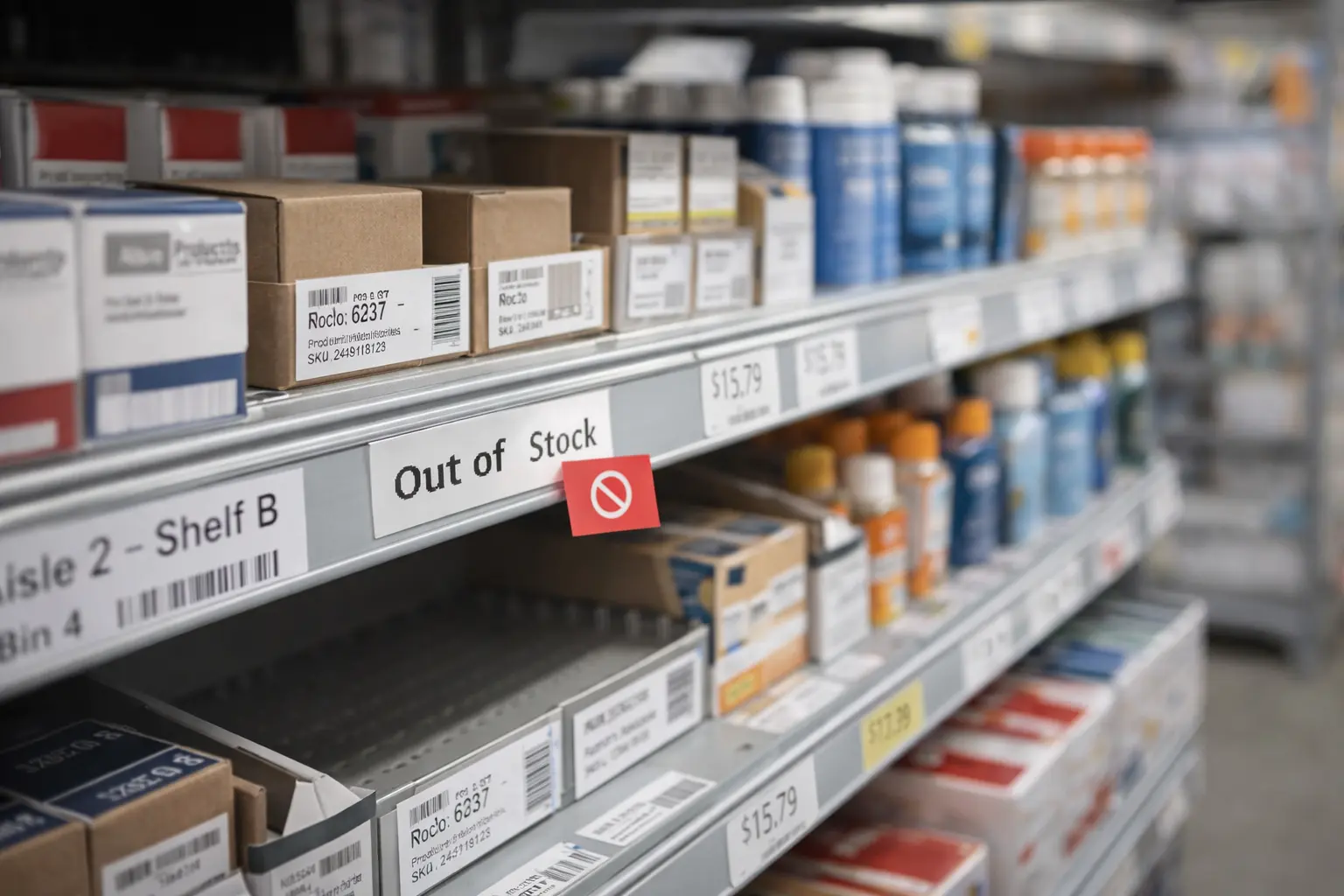
- Labeled shelves
- Categorized ingredient sections
- Expiration-date organization
- Dedicated refrigeration zones
- Clearly separated dry storage areas
Digital inventory systems further improve visibility by tracking expiration dates, monitoring low stock levels, and providing real-time inventory updates.
When storage systems and digital tracking tools work together, catering teams spend less time searching for ingredients and more time focusing on event execution.

Optimizing Stock Tracking and Ingredient Management
Once foundational systems are in place, catering businesses can focus on improving inventory visibility and ingredient tracking accuracy.
Efficient stock tracking ensures that teams always know:
- What inventory is available
- How quickly ingredients are being used
- When reordering is necessary
- Which products generate waste
Better inventory visibility reduces operational surprises while supporting more accurate purchasing decisions.
Real-Time Inventory Tracking
Real-time inventory tracking is one of the most valuable tools available to modern catering operations.
Every inventory change is recorded immediately whenever products are:
- Purchased
- Used during preparation
- Transferred between locations
- Discarded due to spoilage
This live visibility helps managers make faster and more informed decisions.
For example, if a large corporate event consumes more seafood inventory than expected, the system instantly reflects the updated stock level.
Managers can then adjust upcoming purchase orders or reallocate ingredients between events before shortages occur.
Real-time tracking also strengthens supplier communication because replenishment needs become easier to forecast accurately.
Ingredient Management and Menu Planning
Ingredient management is closely connected to menu planning.
Each catering menu requires precise ingredient quantities based on:
- Guest count
- Portion sizes
- Menu complexity
- Service style
Many modern catering systems now integrate ingredient management directly with menu planning software.
When an event menu is finalized, the system automatically calculates the required ingredient quantities needed for preparation.
This approach eliminates guesswork while improving:
- Portion consistency
- Purchasing accuracy
- Food cost visibility
- Waste reduction
Accurate ingredient planning also helps maintain consistent food quality across different events.
Supplier Coordination and Automated Purchase Orders
Reliable supplier relationships are critical for catering operations.
Caterers depend heavily on suppliers for fresh ingredients, beverages, serving supplies, and specialty products.
Automated purchase order systems simplify supplier coordination by generating replenishment orders whenever stock reaches predefined thresholds.
This automation reduces manual workload while helping businesses avoid emergency purchasing situations.
Strong supplier relationships also improve flexibility during busy seasons or last-minute event adjustments.
Suppliers are more likely to prioritize businesses that maintain organized ordering systems and accurate forecasting practices.
Demand Forecasting and Event Planning Strategies
Forecasting is one of the most important skills within catering inventory management.
Unlike restaurants with recurring daily demand, catering businesses operate on an event-driven model where inventory requirements change constantly.
Accurate forecasting helps businesses align inventory with event-specific demand while minimizing food waste and overordering.
Event-Based Inventory Planning
Every event requires customized inventory planning.
A corporate luncheon for 50 guests requires very different inventory preparation compared to a wedding reception serving 400 attendees.
Effective event-based planning considers:
- Guest count
- Menu structure
- Dietary preferences
- Service format
- Event duration
Careful planning ensures that resources align with actual event requirements while preventing unnecessary waste.
Using Historical Data for Better Forecasting
Historical event data significantly improves forecasting accuracy.
By analyzing previous events, catering businesses can identify trends related to:
- Ingredient consumption
- Beverage demand
- Seasonal menu preferences
- Portion requirements
For example, if previous holiday events consistently required more beverages or desserts than expected, future inventory plans can account for those patterns proactively.
Data-driven forecasting reduces uncertainty while improving purchasing efficiency.
Managing Seasonal Variations
Seasonality affects ingredient pricing, availability, and customer preferences.
Effective inventory management for catering requires adapting menus and purchasing strategies based on seasonal conditions.
Seasonal menu planning offers several advantages:
- Lower ingredient costs
- Improved freshness
- Better supplier availability
- Reduced supply disruptions
Seasonal ingredients also improve menu quality while creating more appealing dining experiences for guests.
Technology and Catering Software Integration
Modern catering businesses increasingly rely on integrated inventory technology to manage complex operations efficiently.
Cloud-based catering software centralizes inventory tracking, event planning, supplier coordination, and reporting into a single operational system.
Integrated Catering Software
Integrated systems allow managers to monitor inventory across multiple events and locations simultaneously.
Real-time visibility improves coordination while reducing operational confusion.
Integrated platforms help businesses:
- Track inventory usage
- Coordinate supplier deliveries
- Manage multiple events
- Monitor expiration dates
- Reduce administrative workload
These systems also support food safety compliance through expiration tracking and batch monitoring.
Automation of Routine Inventory Tasks
Automation significantly reduces the manual workload associated with inventory management.
Modern systems can automate:
- Low stock alerts
- Purchase order generation
- Inventory reporting
- Ingredient usage tracking
- Supplier notifications
Automation improves scalability because businesses can manage growing event volumes without increasing administrative complexity proportionally.
Analytics and Reporting
Analytics tools provide detailed insights into inventory performance and operational efficiency.
Reports help managers identify:
- Waste patterns
- High-cost ingredients
- Consumption trends
- Supplier performance
- Profitability opportunities
These insights support smarter purchasing decisions and long-term operational planning.
Audits, Waste Reduction, and Cost Control
Even advanced inventory systems require ongoing monitoring and refinement.
Regular audits and waste reduction strategies help businesses maintain accurate records while controlling operational costs.
Conducting Inventory Audits
Inventory audits compare recorded stock levels against actual physical inventory.
These audits help identify discrepancies caused by:
- Counting errors
- Spoilage
- Theft
- Misplaced inventory
- Data entry mistakes
Regular audits improve confidence in inventory accuracy while reducing operational surprises during events.
Reducing Food Waste
Food waste remains one of the largest hidden costs in catering operations.
Overproduction, poor forecasting, and inaccurate portioning all contribute to unnecessary waste.
Waste reduction strategies include:
- Portion control guidelines
- Accurate forecasting
- Ingredient rotation systems
- Expiration monitoring
- Repurposing unused ingredients
Reducing waste improves both profitability and sustainability.
Controlling Operational Costs
Cost control requires continuous monitoring of inventory expenses, supplier pricing, labor efficiency, and storage overhead.
Digital inventory systems help businesses identify inefficiencies through detailed operational reporting.
Managers can then make adjustments such as:
- Optimizing purchasing schedules
- Renegotiating supplier contracts
- Reducing unnecessary inventory
- Improving storage efficiency
Over time, these improvements create stronger financial stability and better scalability.

How Biyo Helps Caterers Streamline Inventory Management
Biyo POS helps catering businesses simplify inventory operations through integrated cloud-based inventory and restaurant management technology.
The platform supports:
- Real-time inventory tracking
- Automated purchase orders
- Supplier coordination
- Event-based inventory forecasting
- Multi-location inventory visibility
- Ingredient usage monitoring
- Sales and cost reporting
- Inventory analytics
Catering businesses can monitor inventory across multiple events while maintaining accurate stock visibility and reducing operational waste.
Biyo POS helps caterers improve efficiency, strengthen forecasting accuracy, and streamline event preparation workflows through centralized inventory management.
If you want to modernize catering operations and improve inventory control, you can create a Biyo account or explore how Biyo POS supports modern catering businesses.
Frequently Asked Questions
Why is inventory management important for catering businesses?
Inventory management helps catering businesses prevent shortages, reduce waste, improve forecasting accuracy, control food costs, and maintain smooth event operations.
What tools help improve inventory management for catering?
Modern catering businesses use digital inventory systems, POS software, forecasting tools, automated purchase orders, and analytics platforms to improve inventory accuracy and operational efficiency.
How can caterers reduce food waste?
Caterers can reduce food waste through accurate forecasting, portion control, expiration tracking, ingredient rotation systems, and better inventory visibility.
What role does forecasting play in catering inventory management?
Forecasting helps businesses estimate ingredient needs based on guest counts, menus, event types, and historical consumption data.
How often should catering businesses perform inventory audits?
Many catering businesses perform weekly or biweekly audits for perishable ingredients and monthly audits for non-perishable inventory to maintain accurate records.
How does Biyo POS help catering businesses?
Biyo POS helps caterers manage inventory, forecasting, purchasing, supplier coordination, reporting, and event operations through integrated cloud-based management tools.