Walk into a packed restaurant on a Friday night and you might assume the owner is making great money. Every table is full, servers are rushing, and the kitchen is moving nonstop. From the outside, it looks like success. However, the hard truth is that Busy Doesn’t Mean Profitable Restaurant Business. High traffic alone does not guarantee healthy margins.
Many operators discover this the painful way. Sales reports look strong, yet the bank account feels weak. After rent, food costs, labor, and hidden expenses, very little remains. Therefore, staying busy without control can actually create more problems instead of profits.
In this guide, you will learn why Busy Doesn’t Mean Profitable Restaurant Business, where money quietly leaks, and how smarter systems, tighter cost control, and better POS data help restaurants turn volume into real profit.
Before fixing costs, you must understand the difference between revenue and profit. Many restaurants confuse the two.
High Sales Can Hide Low Margins
It feels good to see big daily sales numbers. Owners often celebrate hitting record revenue. However, revenue alone does not show what you actually keep.
If costs rise alongside sales, profits may stay flat or even decline. Therefore, chasing volume without watching margins can create a false sense of success.
This is the first reason why Busy Doesn’t Mean Profitable Restaurant Business in real life.
Once you accept this, you start focusing on efficiency instead of just traffic.
More Customers Can Increase Costs Faster
Serving more guests requires more staff, ingredients, utilities, and supplies. Each extra order adds pressure to operations.
If those costs grow faster than your pricing, profit shrinks. Meanwhile, you work harder for less return.
As a result, Busy Doesn’t Mean Profitable Restaurant Business when expenses are not controlled.
Next, you need to evaluate what each sale truly costs.
Profit Comes From Control, Not Chaos
Restaurants that stay calm and organized often outperform chaotic busy ones. Efficient systems create steady margins.
Smart operators measure profit per dish, not just total revenue. This mindset changes everything.
When you focus on control, Busy Doesn’t Mean Profitable Restaurant Business becomes a warning, not a surprise.
Food Cost Percentage Problems
Food costs often represent the largest expense in a restaurant. Even small mistakes add up quickly.
Poor Portion Control
When staff eyeball portions, costs become inconsistent. Some plates go out heavier than others.
Although customers may not notice, your margins suffer daily. Extra ounces across hundreds of orders waste thousands of dollars monthly.
Therefore, inconsistent portions prove that Busy Doesn’t Mean Profitable Restaurant Business without discipline.
Standardization protects profit.
Menu Items With Low Margins
Some popular dishes simply do not make money. They attract customers but deliver weak returns.
Without analyzing margins, you may sell lots of low-profit items. High volume then becomes meaningless.
In this case, Busy Doesn’t Mean Profitable Restaurant Business because the wrong products dominate sales.
Engineering the menu fixes this issue.
Waste and Spoilage
Overordering ingredients leads to spoilage. Expired products go straight into the trash.
Waste increases when forecasting is poor or inventory tracking is weak.
Reducing waste helps ensure Busy Doesn’t Mean Profitable Restaurant Business becomes less common.
Labor Cost Management Mistakes
Labor is usually the second biggest cost. Mismanagement here quickly destroys profit.
Overstaffing During Slow Hours
Many managers schedule extra staff “just in case.” While it feels safe, it drains payroll.
Idle employees still cost money. Meanwhile, sales may not justify the expense.
This mismatch shows again why Busy Doesn’t Mean Profitable Restaurant Business.
Smarter scheduling solves this.
Understaffing During Rushes
Too few staff slows service. Orders back up and guests leave early.
Missed sales hurt revenue while stressed employees make mistakes.
Balanced staffing helps prevent situations where Busy Doesn’t Mean Profitable Restaurant Business.
Timing matters as much as headcount.
Lack of Sales-Based Scheduling
Scheduling should follow data, not guesswork. Historical sales reveal peak periods clearly.
POS reports make this simple, yet many restaurants ignore them.
Using data helps ensure Busy Doesn’t Mean Profitable Restaurant Business becomes less likely.
Table Turnover and Service Efficiency
Even a full dining room can underperform if tables move slowly.
Slow Table Turnover Reduces Capacity
If each table stays too long, you serve fewer guests overall. That limits total revenue.
Better pacing and faster checkout increase throughput without adding space.
Otherwise, Busy Doesn’t Mean Profitable Restaurant Business because capacity remains capped.
Flow drives profit.
Long Checkout Times
Waiting for bills and payments frustrates guests. It also delays new customers from being seated.
Faster POS payments reduce these delays significantly.
Quick checkout supports higher profit potential.
Speed helps fix the reality that Busy Doesn’t Mean Profitable Restaurant Business.
Poor Communication Between Staff
Miscommunication slows service and increases errors. Remakes waste food and time.
Clear systems reduce confusion and speed up operations.
Efficiency protects margins.
Hidden Expenses and Poor Tracking
Small recurring expenses often go unnoticed but quietly drain profit.
Untracked Small Costs
Subscriptions, repairs, and supplies may seem minor. However, together they add up quickly.
Without tracking, these costs grow unchecked.
This is another reason Busy Doesn’t Mean Profitable Restaurant Business.
Visibility matters.
Manual Reporting Errors
Spreadsheets often contain mistakes. Inaccurate data leads to poor decisions.
Automated reporting reduces errors and saves time.
Clear reporting improves profitability.
Reliable numbers help prevent the situation where Busy Doesn’t Mean Profitable Restaurant Business.
No Real-Time Insights
Waiting until month-end to review performance delays action. Problems compound daily.
Real-time dashboards allow immediate fixes.
Fast insight keeps margins healthy.
How Biyo Helps Restaurants Protect Profit
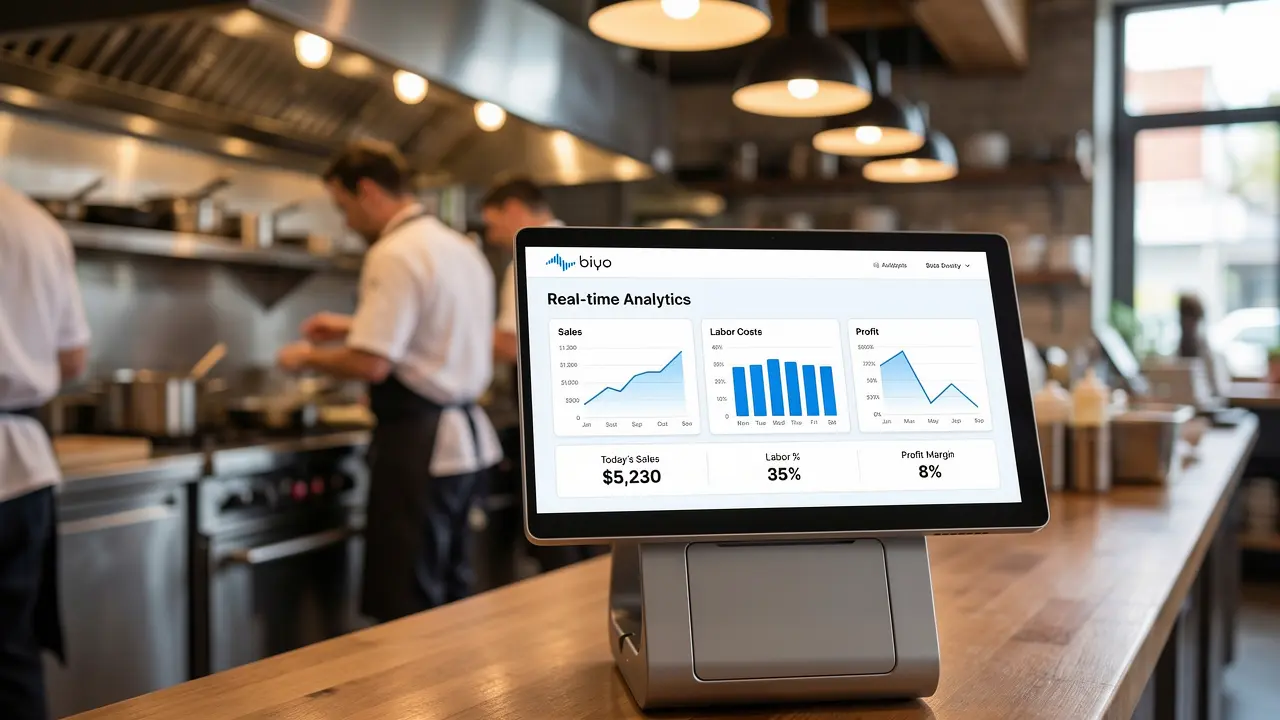
Biyo POS helps operators control food, labor, and daily expenses with real-time reporting and simple analytics. Instead of guessing, managers see exactly where money leaks. With smarter tracking and automation, restaurants avoid the trap where Busy Doesn’t Mean Profitable Restaurant Business.
Biyo provides tools for sales tracking, inventory control, labor insights, and fast checkout, all designed to protect margins. These features help restaurants turn busy shifts into profitable ones.
If you want to see how Biyo can improve your restaurant’s performance, you can schedule a call or sign up here to get started.
Frequently Asked Questions
Why can a busy restaurant still lose money?
High costs, waste, and poor management can cancel out strong sales.
What is the ideal food cost percentage?
Most restaurants aim for 25 to 35 percent depending on concept.
How does POS software improve profitability?
It provides real-time data for sales, labor, and inventory control.
Should I focus more on sales or margins?
Margins matter more because they determine what you actually keep.
Is Biyo POS good for small restaurants?
Yes. It helps restaurants of all sizes track costs and improve profits.


 Food Cost Percentage Problems
 Food Cost Percentage Problems