Every great chef knows that success in the kitchen depends not only on skill but also on having the right tools at hand. A well-stocked chef’s toolkit can elevate your cooking experience, making prep work smoother, faster, and more enjoyable. Whether you’re a professional or a passionate home cook, equipping yourself with essential kitchen knives, cutting boards, mixing bowls, and more will set you on the path to culinary excellence. This article dives deep into the must-have tools every chef needs and explores how these essentials work together to create a seamless cooking process.
Table of Contents
- Essential Cutting Tools in the Chef’s Toolkit
- Mixing and Measuring Gear for Precision Cooking
- Cooking and Preparation Utensils You Can’t Do Without
- Specialized Kitchen Equipment for Professional Results
- Maintaining and Organizing Your Chef’s Toolkit
Essential Cutting Tools in the Chef’s Toolkit
Cutting tools are the backbone of any chef’s gear. Without quality kitchen knives, cutting boards, and peelers, preparing ingredients can become a frustrating chore rather than an enjoyable process. Each item plays a unique role in food prep, ensuring that you achieve precision and efficiency in your cooking.
Kitchen Knives: The Heart of Your Cooking Tools
Sharp, well-balanced kitchen knives are indispensable in a chef’s toolkit. From a versatile chef’s knife to specialized paring and serrated knives, having the right blade allows you to slice, dice, and chop with accuracy. For instance, a chef’s knife handles a wide variety of tasks, while a paring knife excels at delicate work like peeling and trimming.
Choosing knives with high-quality steel and ergonomic handles will reduce fatigue during extended prep times. It’s wise to invest in a knife set tailored to your cooking style, whether that involves heavy-duty chopping or precise vegetable cuts. Regular sharpening and proper storage also help maintain blade performance.
Furthermore, pairing your knives with a durable cutting board is essential. Wooden and plastic boards each have their advantages; wooden boards offer gentleness on knife edges, while plastic boards are easier to sanitize. Many chefs keep multiple boards to avoid cross-contamination between meats, vegetables, and breads. This thoughtful combination of knives and boards ensures not only safety but also efficiency, enabling chefs to maintain a smooth and hygienic workflow.
Cutting Boards: The Foundation of Safe and Efficient Prep
A reliable cutting board protects your knives and your countertops, creating a safe workspace. The size and material of the board influence your comfort and efficiency. Large boards give you room to work with bigger ingredients, while smaller boards are handy for quick jobs.
Wooden cutting boards made from maple or bamboo offer durability and natural antibacterial properties, making them a popular choice. Conversely, plastic cutting boards are dishwasher-safe and less prone to warping, which appeals to chefs who prioritize easy maintenance.
Organizing your cutting boards by task reduces the risk of flavor transfer or bacterial contamination. Color-coding boards can help you quickly identify the right one, keeping your kitchen workflow smooth and hygienic. This system also fosters discipline in busy kitchens where speed and cleanliness go hand in hand, reinforcing best practices that protect both food quality and health standards.
Peelers and Mandoline Slicers for Uniform Cuts
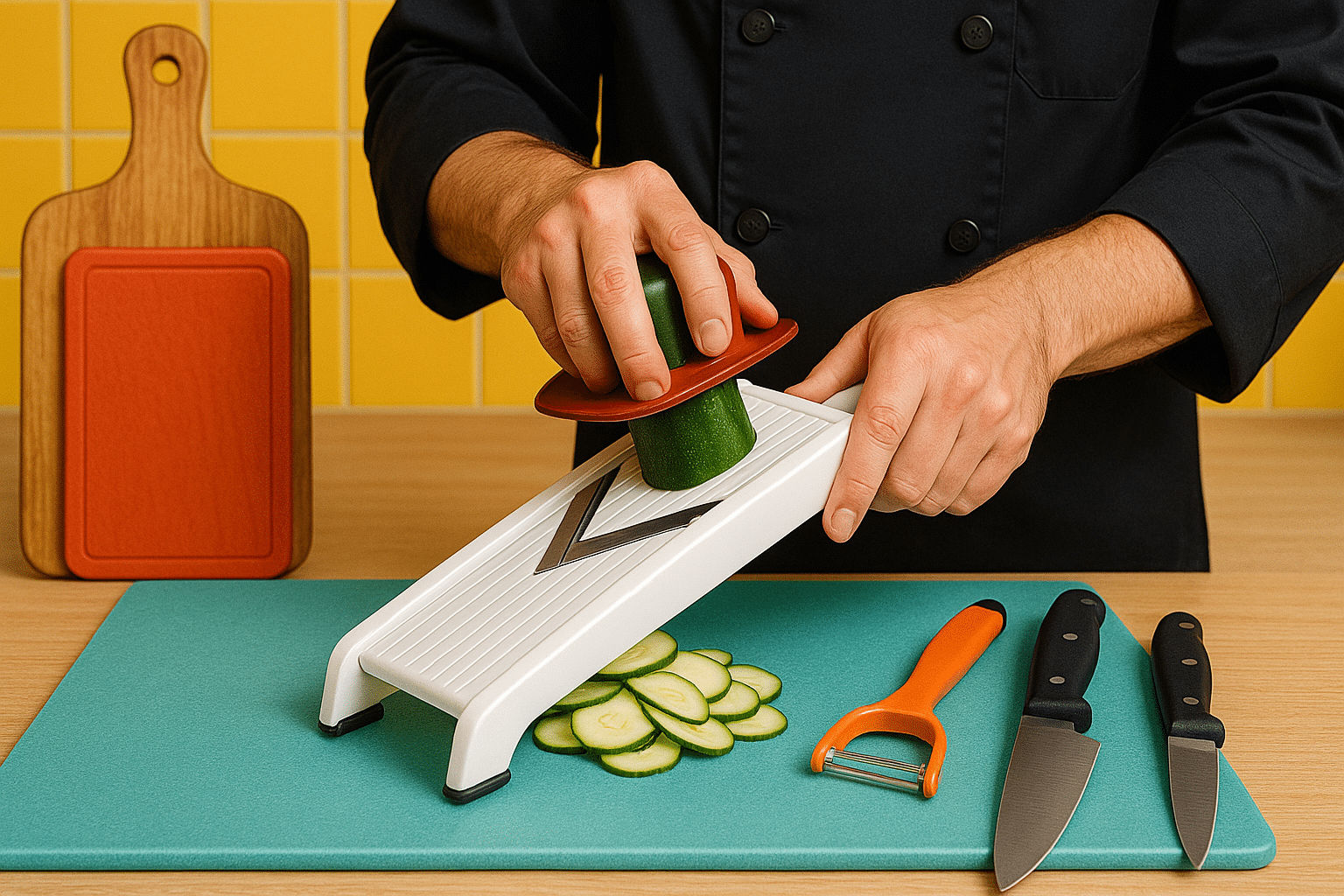
Peelers are underrated but critical tools in any chef’s toolkit. They allow you to quickly remove skins from vegetables and fruits, ensuring clean, thin peels that minimize waste. A good peeler will feel balanced in your hand and glide easily across produce.
Mandoline slicers are another must-have for chefs who want perfect, even slices every time. These tools let you adjust thickness with precision, saving hours of manual slicing and helping with dishes that rely on consistent cuts, like gratins or salads.
Using peelers and mandolines requires care and attention, but once mastered, they add speed and professionalism to your prep work. They also complement your knives and cutting boards, completing the trio of essential cutting tools. By integrating these devices into your routine, you enhance both the aesthetics and uniformity of your dishes, impressing diners with visually appealing plates and consistent cooking results.
Mixing and Measuring Gear for Precision Cooking
Precise measurements and efficient mixing form the backbone of consistent recipes. A chef’s toolkit is incomplete without a reliable set of measuring cups, mixing bowls, and kitchen scales to ensure each dish comes out just right. Let’s explore how these tools bring accuracy and ease to the kitchen.
Mixing Bowls: Versatile and Essential for Every Kitchen
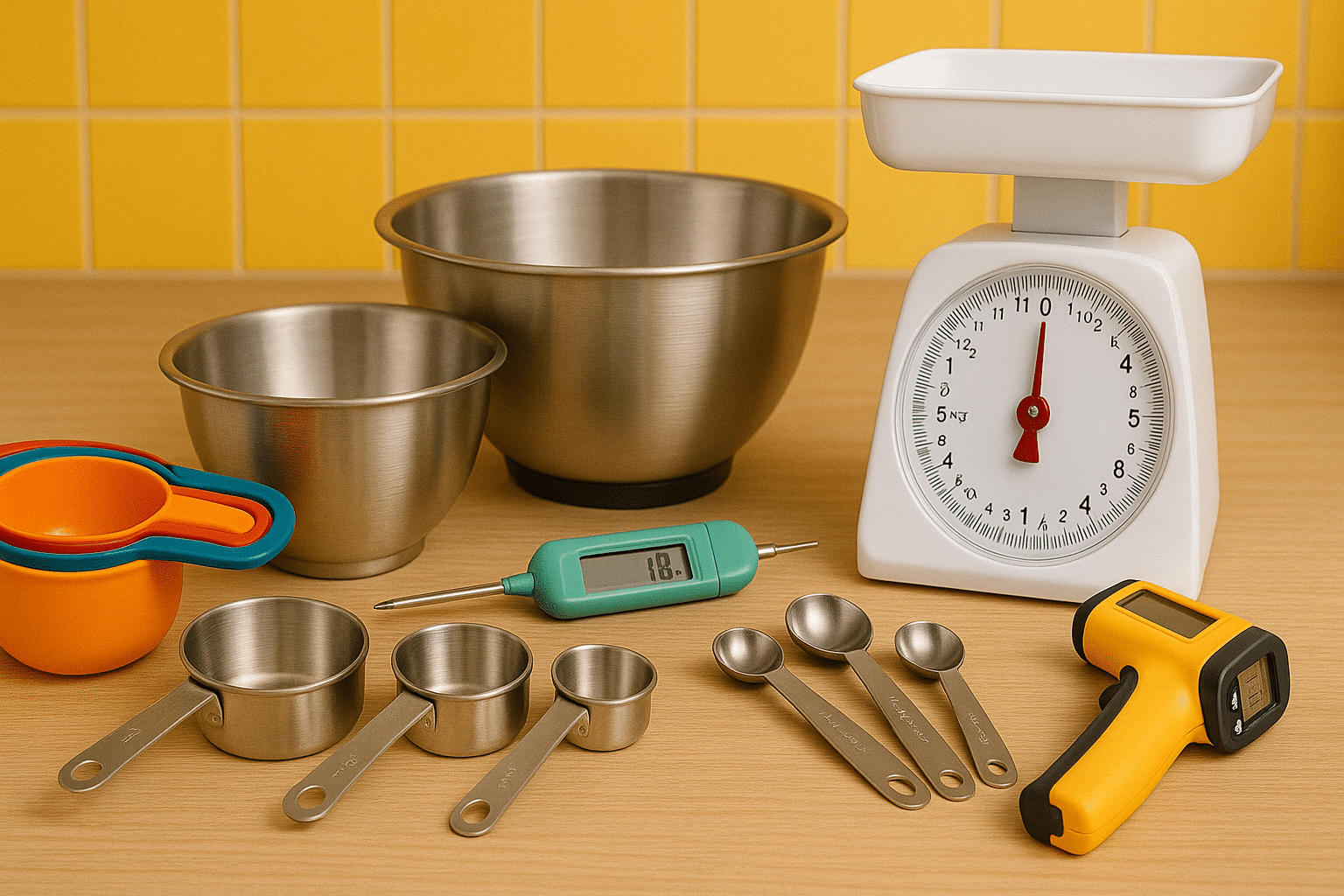
Mixing bowls are the workhorses of your kitchen toolkit. They serve multiple purposes, from tossing salads and mixing batters to marinating proteins. Stainless steel bowls are favored by many professionals because they’re lightweight, durable, and easy to clean.
Glass and ceramic bowls add the advantage of being microwave-safe, which is handy for melting ingredients or keeping mixtures warm. Having bowls of various sizes allows you to handle tasks ranging from beating eggs to preparing large batches of dough.
Choosing bowls with non-slip bases or lids can also improve your workflow, allowing you to mix confidently without spills. When organizing your toolkit, nesting bowls save space and keep your kitchen clutter-free. These thoughtful choices make your prep time more flexible and adaptable, enabling you to handle a wide range of recipes efficiently.
Measuring Cups and Kitchen Scales: Accuracy You Can Trust
Measuring ingredients correctly is crucial in cooking and baking alike. While measuring cups are perfect for liquids and some dry ingredients, kitchen scales provide precise weight measurements that make recipes more reliable.
Digital kitchen scales offer clear displays and often come with tare functions, so you can measure multiple ingredients in one bowl without extra cleanup. This tool is especially beneficial when working with baking recipes that require exact proportions.
Meanwhile, sets of measuring cups made from durable plastic or stainless steel are indispensable for liquid measurements. They often come in nested sets with various sizes, making it easy to handle different recipe requirements. Using these tools with care ensures that each dish meets your expectations, minimizing mistakes and improving consistency.
Thermometers and Kitchen Timers: Keeping Control of Temperature and Time
Maintaining control over cooking temperature and timing is vital for perfectly cooked meals. Thermometers allow you to check the internal temperature of meats and baked goods, ensuring food safety and optimal texture. Instant-read digital thermometers provide quick and accurate readings, essential for busy kitchens.
Similarly, kitchen timers help you manage multiple tasks without guesswork. Mechanical timers or digital ones with multiple settings keep you on track, preventing overcooking or burning. Chefs often use timers to coordinate different stages of meal preparation effectively.
Both tools work hand in hand to help you maintain consistency in your dishes. They reduce stress by giving you precise control, which is especially important when timing is everything in professional cooking. Their role becomes indispensable during complex meals where timing can make or break the flavor and texture.
Cooking and Preparation Utensils You Can’t Do Without
Beyond cutting and measuring, cooking requires a variety of utensils that assist in every stage from sautéing to plating. A comprehensive chef’s toolkit includes whisks, tongs, spatulas, and other accessories that make cooking efficient and enjoyable.
Whisks, Tongs, and Spatulas: The Trio of Essential Cooking Utensils
Whisks are indispensable for blending ingredients, whipping cream, or emulsifying sauces. They come in different sizes and wire thicknesses to suit various tasks, from light beating to heavy-duty mixing. Using the right whisk can improve texture and help you achieve the desired consistency.
Tongs give you precision and control when flipping, tossing, or serving food. Their long handles keep your hands safe from heat, while their firm grip helps handle delicate ingredients like fish or vegetables without damage.
Spatulas are incredibly versatile, used for scraping, flipping, or folding ingredients. Silicone spatulas are popular because they resist heat and won’t scratch cookware, making them perfect for non-stick pans and mixing bowls alike. Together, these tools form a functional core for any cooking station. Their thoughtful design and durability contribute significantly to a chef’s efficiency and ease during busy service hours.
Chef’s Apron and Carving Tools: Adding Practicality and Style
A chef’s apron is more than just attire; it’s an essential protective gear that keeps you clean and organized. With pockets for utensils and towels, a good apron ensures you have your tools within reach. Choosing durable fabric that’s easy to wash helps maintain professionalism in any kitchen.
Carving tools, including knives and forks designed specifically for slicing cooked meats, add finesse to your plating and serving process. They allow you to create clean, even slices that enhance the presentation of your dishes, whether it’s a roast or poultry.
Both the apron and carving tools represent the balance of function and style in a chef’s toolkit, showing readiness and attention to detail that impresses both diners and colleagues. These accessories symbolize the chef’s commitment to quality and precision, extending beyond the cooking itself to the entire dining experience.
Cooking Utensils: Sauce Pans, Sauté Pans, and More
High-quality saucepans and sauté pans form the foundation of cooking equipment. Sauce pans are perfect for simmering sauces, boiling liquids, or preparing grains, while sauté pans offer a wider base for browning and frying. Investing in these pans with heavy-bottom construction ensures even heat distribution and durability.
Beyond pans, tools like blenders, food processors, and fine mesh strainers expand your kitchen’s capabilities. A blender helps create smooth sauces and soups, while a food processor saves time chopping and pureeing. Fine mesh strainers allow you to refine textures by removing lumps or seeds from liquids.
Combining these utensils with your cooking skills transforms simple ingredients into complex, flavorful dishes. The right tools let you experiment and perfect your recipes with confidence, unlocking your full culinary potential and impressing guests every time.
Specialized Kitchen Equipment for Professional Results
To truly master the culinary arts, many chefs include specialized equipment in their toolkit. These tools often enhance efficiency, precision, and the quality of the final dish, especially in professional kitchens.
Mandoline Slicer: Precision in Every Slice
The mandoline slicer is a game-changer for chefs seeking uniform cuts quickly. It offers adjustable thickness settings and can create slices, julienne cuts, or even waffle patterns. This versatility speeds up prep and ensures consistent cooking times, which is vital for presentation and texture.
Using a mandoline requires caution because of its sharp blades. Protective gloves and guards help prevent accidents. Once accustomed to it, this tool can become your go-to for preparing vegetables, fruits, and even cheeses.
Incorporating a mandoline slicer into your chef’s toolkit adds professional polish to your dishes, especially in high-volume kitchens where time is of the essence. Its ability to produce consistent slices also helps maintain uniform cooking, contributing to the overall quality of your meals.
Kitchen Scales and Fine Mesh Strainers: Accuracy and Refinement
As discussed earlier, kitchen scales provide measurement precision, which is critical for recipe accuracy. They are especially useful when portion control matters, whether in a commercial kitchen or for dietary needs at home.
Fine mesh strainers enhance the texture of sauces, soups, and stocks by filtering out impurities. They also assist in sifting dry ingredients or rinsing small grains and seeds, improving the overall quality of your dishes.
Together, these tools refine the cooking process and final results, elevating your work from good to exceptional. They enable chefs to maintain a high standard of taste and presentation that distinguishes professional kitchens.
Blender and Food Processor: Multipurpose Powerhouses
Modern kitchens often rely on blenders and food processors to speed up food prep. Blenders handle liquids and soft ingredients, perfect for smoothies, purees, and emulsions. Food processors chop, slice, and shred, taking the manual labor out of repetitive tasks.
Investing in reliable models with multiple attachments increases your versatility. For example, pulse functions give you control over texture, allowing for chunky or smooth finishes as needed.
Integrating these appliances into your chef’s toolkit not only saves time but also expands the range of dishes you can prepare efficiently and creatively. Their multipurpose nature makes them invaluable assets in both home and professional kitchens.
Maintaining and Organizing Your Chef’s Toolkit
Having the best tools is only half the battle; maintaining and organizing your chef’s toolkit ensures longevity and maximizes usability. A well-kept kitchen makes cooking more enjoyable and keeps your equipment in top condition.
Cleaning and Care for Longevity
Proper cleaning extends the life of kitchen knives, cutting boards, and utensils. For knives, hand washing and immediate drying prevent rust and dulling. Wooden boards benefit from regular oiling to avoid cracking and warping.
Appliances like blenders and food processors require disassembly and thorough cleaning to avoid residue buildup. Using gentle detergents and avoiding abrasive materials protects surfaces and sharp edges.
Routine maintenance, such as sharpening knives and inspecting utensils for damage, keeps your chef’s toolkit reliable and ready for use. This preventive care minimizes replacements and ensures your tools always perform at their best.
Organizing Your Tools for Efficiency
Organized storage improves workflow by keeping frequently used items within easy reach. Magnetic knife strips, utensil holders, and drawer dividers are popular options that prevent clutter.
Grouping similar tools together, such as all cutting items or mixing gear, helps you find what you need quickly, saving time during busy cooking sessions.
Labeling storage areas and investing in modular storage solutions can further enhance your kitchen’s organization, making your toolkit accessible and your space pleasant to work in. A well-organized kitchen fosters creativity and reduces stress, contributing to a more productive environment.
Incorporating Biyo POS for Seamless Kitchen Management
Biyo POS offers features that complement a professional chef’s toolkit by streamlining kitchen and inventory management. With easy-to-use order tracking, inventory control, and real-time reporting, Biyo POS helps chefs and kitchen managers maintain stock levels of essential tools and ingredients efficiently.
This system reduces downtime caused by missing or malfunctioning equipment, allowing chefs to focus on what they do best—cooking amazing meals. The integration of technology and traditional chef’s gear creates a harmonious kitchen environment that supports productivity and excellence.
Adopting Biyo POS alongside your chef’s toolkit elevates both your culinary and business operations to new heights, empowering chefs to deliver exceptional food with confidence.
Frequently Asked Questions (FAQ)
What are the must-have items in a basic chef’s toolkit?
A basic chef’s toolkit includes quality kitchen knives, cutting boards, mixing bowls, measuring cups, cooking utensils like whisks and spatulas, and essential cookware such as saucepans and sauté pans. These tools cover most cooking tasks and provide a solid foundation for any kitchen.
How do I maintain my kitchen knives to keep them sharp?
Always hand wash and dry knives immediately after use to prevent rust and corrosion. Regularly sharpen your knives using a whetstone or professional sharpening service. Storing knives in a knife block or on a magnetic strip helps protect their edges.
Why is a kitchen scale important in cooking?
A kitchen scale offers precise measurements by weight, which is more accurate than volume measurements. This precision is especially useful in baking or when portion control is critical. It ensures consistency and improves recipe outcomes.
Can Biyo POS help with kitchen inventory management?
Yes, Biyo POS features robust inventory management tools that help track supplies and tools in real-time. This reduces the risk of running out of essential cooking tools or ingredients and helps optimize kitchen operations for efficiency.
What specialized tools should a professional chef consider adding to their toolkit?
Professional chefs often add mandoline slicers, food processors, fine mesh strainers, digital thermometers, and carving tools to their toolkit. These items enhance precision, speed, and presentation, enabling chefs to deliver high-quality dishes consistently.