If you've ever worked in a coffee shop, you know the daily chaos. A cafe point-of-sale system is what tames that chaos. It's the command center for your entire shop, handling everything from taking that complicated latte order to tracking how many oat milk cartons you have left.
Forget thinking of it as just a modern cash register. It's so much more than that.
What Is a Cafe POS System, Really?
Imagine your old cash register was a simple calculator that happened to hold cash. A modern cafe POS system is the brain of your entire operation. It's like having a master barista who not only remembers every regular's favorite drink but also knows exactly how much inventory is in the back and can juggle a dozen custom orders during the morning rush without missing a beat.
This system is a mix of the physical tools you touch and the smart software that makes it all work. We’ve moved way past scribbled tickets and late-night inventory counts. A good POS automates those tedious tasks, which means you have more time and fewer costly mistakes. The whole point is to make every single part of the customer experience—from the "hello" to the final tap of their card—feel effortless.
The Core Components
When you break it down, a cafe POS system really stands on two legs: the hardware and the software.
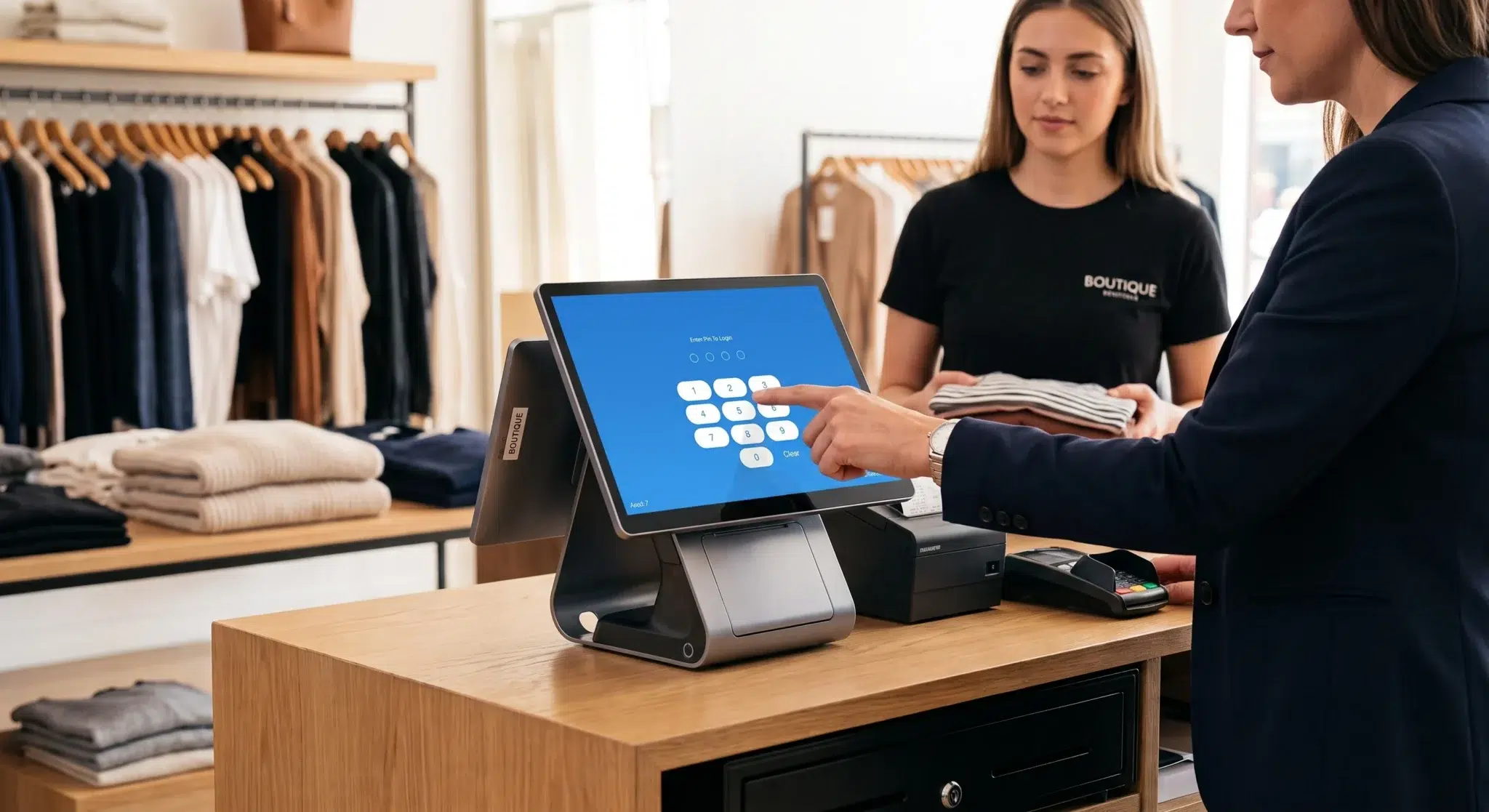
- Hardware: This is all the physical stuff your team uses every day. Think of the main terminal (usually an iPad or a sleek touchscreen), a credit card reader, a cash drawer, and a receipt printer. For high-volume shops, you might also have a kitchen display system (KDS) that zaps orders straight to the baristas.
- Software: This is the magic behind the screen. The software is what manages your menu, processes payments, tracks every sale, handles employee permissions, and can even keep a list of your regulars. It's the digital engine that powers your daily grind.
It's not just a hunch that technology helps. A study from the National Restaurant Association found that 76% of restaurant operators see technology as a key competitive advantage. This shows just how far we've come from basic cash registers to systems that actually help a business grow.
Beyond the Basics
The real game-changer isn't just taking payments faster. The true power of a modern cafe POS comes from how it connects all the different parts of your business that used to be separate. It can tell you which pastries are flying off the shelves, what your busiest hours actually are, and even help you run a loyalty program that keeps people coming back for more.
For instance, when a customer buys a cappuccino, the system does more than just record a $5 sale. In that single action, it also subtracts the right amount of espresso beans and milk from your inventory count, adds the revenue to your daily sales report, and might even credit the customer's loyalty account with points. This is what turns a simple tool into a genuine business partner, giving you the hard data you need to make smarter decisions.
Must-Have Features for Your Cafe POS
When you’re picking a POS system for your café, you're choosing more than just a glorified cash register. You're selecting the very heart of your daily operations. The right features can turn a chaotic morning rush into a beautifully orchestrated symphony of service. These are the non-negotiable tools that empower your team, make customers happy, and give you a crystal-clear picture of your business's health.
Think about the massive leap from a basic cash register to a modern POS. It’s not just an upgrade; it’s a complete operational shift.
To really see the difference, let’s compare them side-by-side.
Modern Cafe POS vs Traditional Cash Register
| Feature | Traditional Cash Register | Modern Cafe POS System |
|---|---|---|
| Order Taking | Manual entry, often with written tickets for baristas. | Touchscreen interface with custom modifiers (e.g., oat milk, extra shot). |
| Payments | Cash and basic card swipe. | Contactless, mobile wallets (Apple/Google Pay), chip, and swipe. |
| Inventory | No tracking. Relies on manual counts. | Real-time tracking of ingredients (coffee beans, milk, syrups). |
| Reporting | Basic end-of-day sales totals (Z-report). | Detailed analytics on sales trends, peak hours, and top-selling items. |
| Employee Mgmt | Separate punch clock or manual timesheets. | Integrated clock-in/out, shift scheduling, and performance tracking. |
| Customer Tools | None. | Built-in loyalty programs and customer profiles. |
As you can see, a modern POS does so much more than just handle money. It’s a central hub that connects every part of your café, from the front counter to the back office.
Flawless Order Management
During peak hours, speed and accuracy are everything. A top-notch café POS makes even the most complicated orders—a decaf, half-sweet, extra-hot latte with oat milk—a breeze to input. Your staff should be able to punch in custom requests with just a couple of taps, not fumbling through confusing menus.
This is where a Kitchen Display System (KDS) truly shines. Forget about flimsy paper tickets that get lost, smudged, or misread. A KDS beams orders directly to a screen for your baristas, ensuring every drink is made exactly as requested and in the right order. It's a simple change that drastically cuts down on mistakes and keeps the line moving.
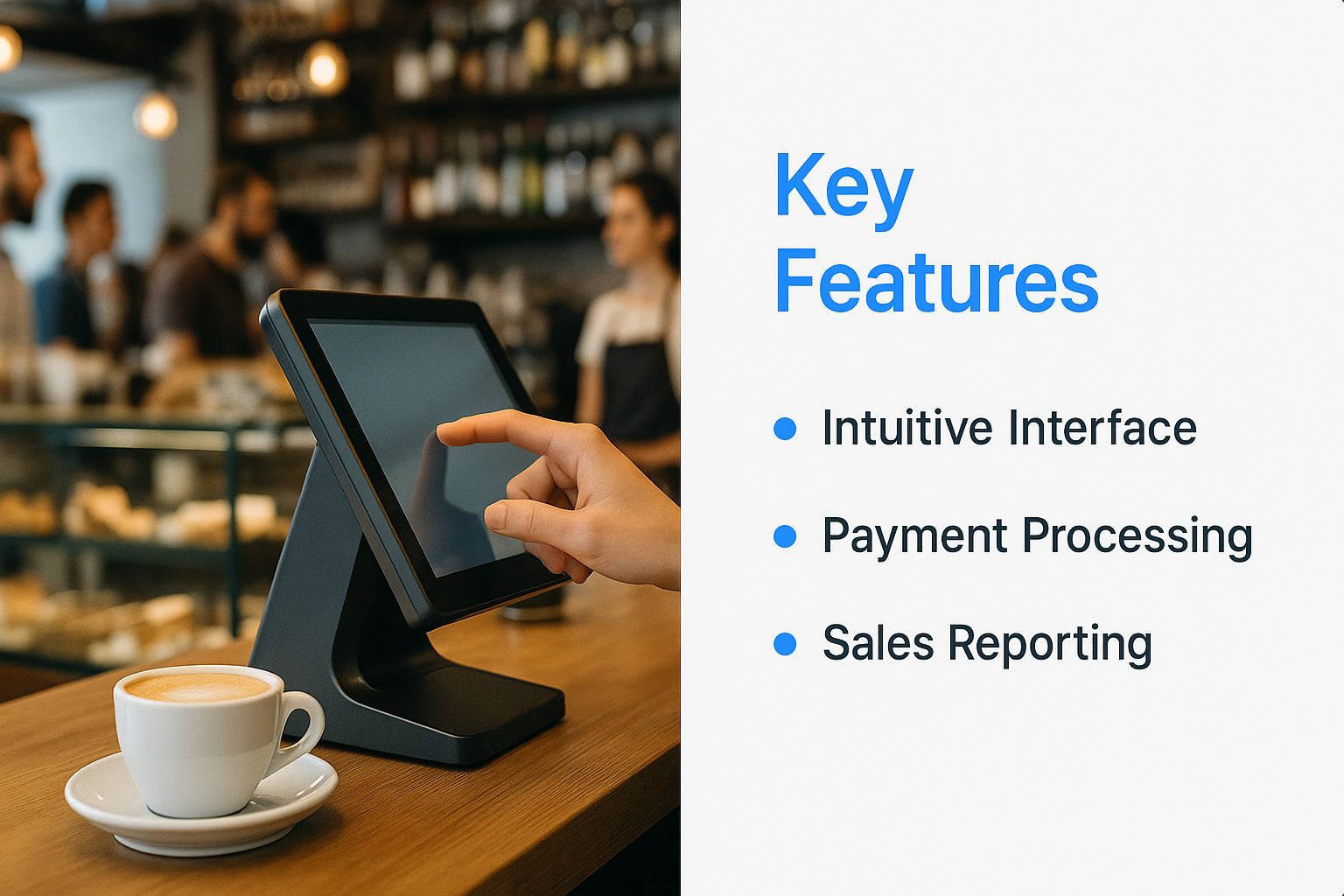
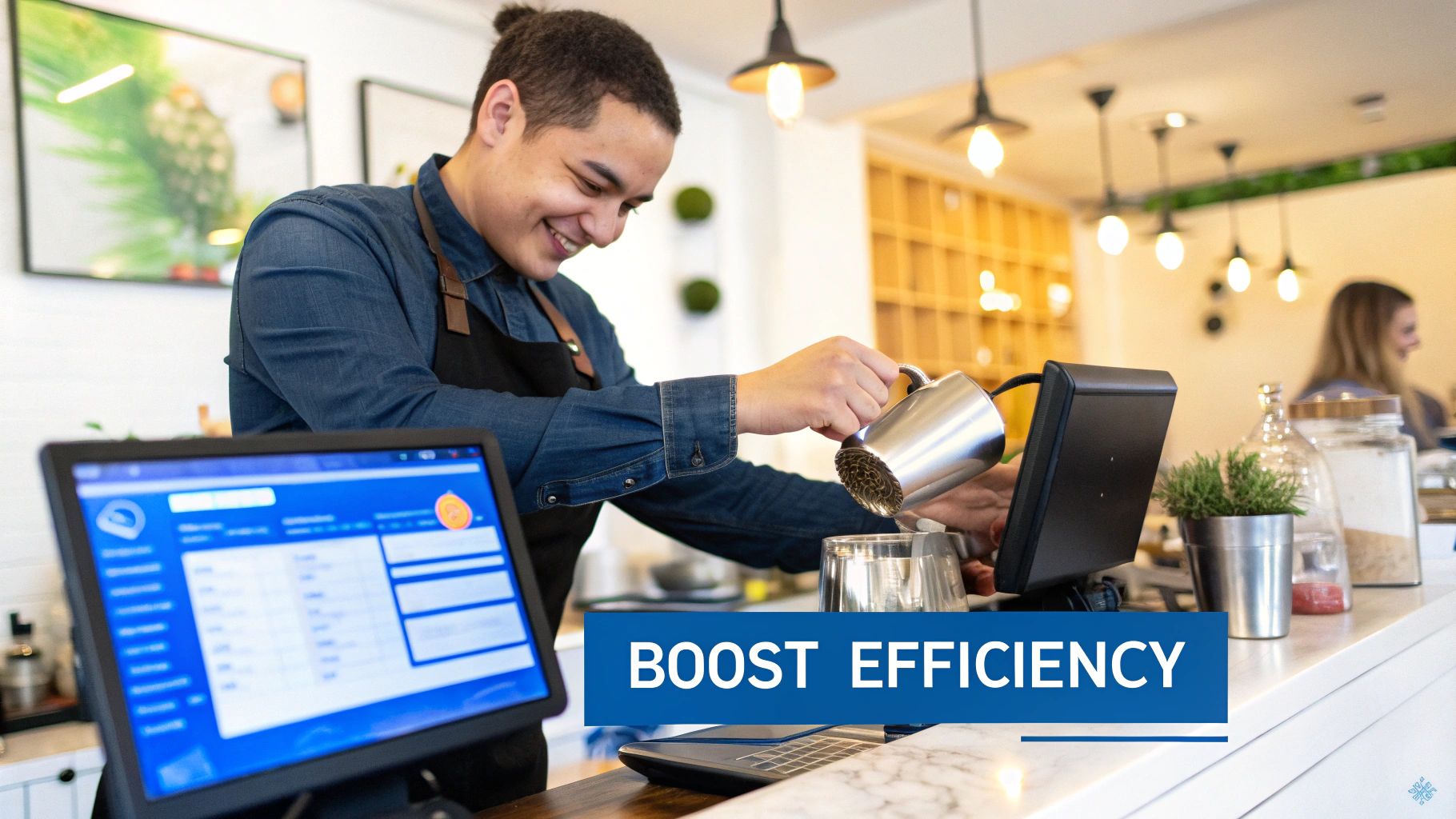
This image captures it perfectly: the POS is the central command center, keeping everything from orders to payments running smoothly.
Flexible and Fast Payment Processing
The checkout is your final handshake with the customer. A slow or clunky payment process can sour an otherwise great experience, especially for someone rushing to work. Your POS absolutely must handle a variety of payment types without a hitch.
That means being ready for:
- Contactless Payments: Tap-to-pay is no longer a "nice-to-have"; it's what people expect.
- Mobile Wallets: Seamless support for Apple Pay and Google Wallet is a must for your tech-savvy regulars.
- Traditional Chip and Swipe: You still need the basics covered for every customer who walks through the door.
Offering these options isn't just about convenience. It shows you respect your customers' time and are running a modern, efficient business.
A seamless payment process does more than just move the line faster. It signals to your customers that you value their time and have invested in technology to make their experience better from start to finish.
Integrated Employee Management
A great POS system also takes the headache out of managing your team. Instead of juggling separate scheduling apps, spreadsheets, and a physical time clock, you can handle everything in one central place.
Look for a system that lets you:
- Create and Manage Schedules: Build weekly schedules, approve time-off requests, and let staff check their shifts right from the system.
- Track Hours Accurately: Employees can clock in and out directly on the terminal. This means no more guesswork or manual errors when it's time to run payroll.
- Monitor Performance: Get insights into who your top performers are. You can see who excels at upselling pastries or who handles the most transactions per hour, giving you real data for training and recognition.
This kind of integration doesn't just simplify your admin work—it gives you tight control over your labor costs, which are easily one of the biggest expenses for any café.
Clear and Simple Daily Reports
At the end of a long day, you need to know how you did without digging through piles of receipts or complicated spreadsheets. A quality POS gives you an immediate, easy-to-read snapshot of your business performance.
Your daily report should clearly break down the essentials: total sales, number of customers served, the average amount each customer spent, and which items were your bestsellers. This instant feedback helps you spot what's working, fix what isn't, and make smarter decisions for tomorrow.
How Advanced POS Features Drive Growth
Sure, the core functions of a POS—taking orders and processing payments—are what keep the lights on day-to-day. But if you want to actually grow your café, you need to look beyond the basics. A modern cafe point of sale system should be more than a cash register; it should be a strategic partner. It’s the tool that helps you fine-tune your stock and build a community of regulars, directly impacting your bottom line.
Let's dig into two of the most powerful growth drivers a great POS offers: smart inventory management and customer relationship management (CRM). These aren't just fancy add-ons; they're features that turn your system from a simple transaction tool into a true engine for business growth.
Master Your Inventory and Reduce Waste
Think of your POS system as a hyper-aware pantry for your café. It doesn't just store a list of your supplies; it actively monitors every single item. From the grams of coffee beans in each espresso shot to the last drop of oat milk, it tracks exactly what you're using in real-time.
This level of detail is a game-changer.
- No More Stockouts: The system knows when you're about to run out of your most popular single-origin beans and can ping you with an alert. This means you’ll never have to utter the dreaded words, "Sorry, we're out of that."
- Slash Food Waste: Waste is a silent profit killer. By tying ingredient usage to sales data, your POS can flag items that just aren't moving. You can adjust your ordering, stop throwing away expired goods, and save significant money. In fact, studies show that restaurants can save $7 for every $1 they invest in cutting down kitchen waste.
- Automate Reordering: You can set thresholds so the system automatically drafts a purchase order when your milk supply hits a two-day low. This simple automation frees up your time for more important things and cuts out the risk of forgetting to place an order.
By connecting every sale directly to your inventory levels, the system gives you a crystal-clear picture of your cost of goods sold (COGS). That clarity is exactly what you need to make smarter pricing decisions and maximize the profit on every latte and croissant you sell.
Turn Visitors into Loyal Regulars with CRM
Your most valuable asset isn't that shiny espresso machine—it's your customer base. A POS with built-in Customer Relationship Management (CRM) tools becomes your secret weapon for building real connections with the people who walk through your door.
Here's a simple way to look at it: for a new customer, their first visit is just a transaction. With a CRM, their second visit is the beginning of a relationship.
By tracking what people buy and when, a POS lets you understand their unique preferences. That data is gold—it’s the key to creating personalized offers and loyalty programs that make customers feel seen, valued, and eager to come back.
This is how CRM features help you build that loyal following:
- Build Detailed Customer Profiles: Every time a customer makes a purchase, their profile grows. You can track their go-to drink, how often they visit, and what they typically spend. You might quickly notice that "Sarah" always grabs a large cold brew on Monday mornings.
- Run Smarter Loyalty Programs: Forget the generic "buy ten, get one free" punch card. Armed with data, you can send Sarah a targeted offer for a free pastry with her next Monday morning cold brew. It’s a small, personalized touch that feels much more special and effective.
- Launch Targeted Marketing Campaigns: A good cafe point of sale system allows you to filter your customer list. You could, for instance, send a promo email about your new vegan scones only to customers who have previously bought plant-based milks or food items.
This is the kind of personalization that makes a café thrive. It turns your POS from a passive box that collects data into an active tool for driving repeat business—which is always cheaper and more effective than trying to chase down new customers.
Using Data to Make Smarter Decisions
Beyond just processing orders, a modern cafe point of sale system acts as your business's central intelligence hub. Every transaction, whether it's a simple espresso or a big catering order, tells you a story. Once you start paying attention to these stories, you can finally ditch the guesswork and make sharp, strategic decisions that actually drive growth.
This isn't about getting lost in a sea of spreadsheets. It’s about translating raw numbers into real-world insights—giving you a direct line into what your customers love and how your café truly operates day-to-day.
Let's imagine a café owner named Alex. He knew his mornings were a frantic mess, but he couldn't quite put his finger on why or how to fix it. He just assumed the rush was a solid block from 7 AM to 10 AM.
Uncovering Hidden Patterns
When Alex finally dove into his hourly sales reports, he found something that completely changed his perspective. The real chaos wasn't a three-hour marathon; it was a concentrated sprint between 8:15 AM and 9:30 AM. In that tight 75-minute window, his shop was pulling in 40% of its entire morning revenue. The rest of the morning was busy, sure, but it was manageable.
Armed with this crucial detail, Alex made two simple, targeted changes:
- Optimized Staffing: He scheduled one extra barista to come in just for the peak, from 8:00 AM to 10:00 AM.
- Prepped for the Rush: The team began prepping popular grab-and-go items, like cold brew pitchers and breakfast sandwiches, right before 8:00 AM.
The difference was night and day. Customer wait times during that morning crush dropped by an average of three minutes. Better yet, morning sales climbed by 12% simply because they could serve more people, more quickly.
Identifying Your Most Profitable Items
Alex didn't stop there. Next, he dug into his product sales reports to figure out what was really making him money. His classic croissants and blueberry muffins were consistent sellers, but the data pointed to an unsung hero: his small selection of vegan, gluten-free pastries.
Your POS data doesn't just show you what you've sold; it reveals what your customers truly want. Paying attention to these trends is the fastest way to align your menu with demand and boost profitability.
The reports were crystal clear. Even though he only offered three vegan options, they accounted for nearly 20% of his total pastry sales and—critically—had a much higher profit margin. His customers were sending a strong signal.
So, Alex listened. He expanded his vegan lineup, adding new scones, cookies, and even a savory wrap. Within just three months, his overall profits jumped another 8%. It all happened because he followed the story his data was telling him. You can learn more about how to use POS information by exploring our guide to how restaurant data analytics tools maximize efficiency.
Alex's experience shows how powerful POS analytics can be. When you pay attention to the data, you can:
- Pinpoint Peak Hours: Staff your café more intelligently to keep labor costs in check while delivering amazing service when it counts.
- Discover Hidden Gems: Find out which menu items are your quiet profit-drivers and which ones are just taking up valuable shelf space.
- Track Promotion Success: See exactly how that "2-for-1 scone" special performed, so you know which offers are worth repeating.
A great cafe point of sale system puts all this information at your fingertips, turning your daily numbers into a clear roadmap for building a more successful business.
Choosing the Right Cafe Point of Sale System
Picking the right cafe POS system feels a lot like choosing the foundation for a new house. It has to be solid, reliable, and strong enough to support you as you grow. With so many options out there, it’s easy to get distracted by flashy features. The real trick is to focus on what will actually help your daily operations and push you toward your long-term goals. This isn't just another purchase; it's a core investment in your cafe's future.
The demand for these systems is booming. The global market for cafe POS systems was worth about USD 3.2 billion in 2023 and is expected to hit USD 8.7 billion by 2033. This explosion is driven by the shift to cloud-based tools and a surge in new coffee shops. Just look at the U.S., where new cafe and restaurant registrations jumped by 27% in 2023. It’s clear these systems are now essential.
Prioritize an Intuitive User Interface
First things first: your POS has to be easy to use. I mean really easy. A new barista should be able to jump on and confidently take orders after just a few minutes of training. A clunky, complicated system is a recipe for disaster during the morning rush, leading to slow lines, frustrated staff, and costly mistakes.
Look for a clean, logical layout where everything is just a tap or two away. Adding order modifiers—like "extra shot" or "oat milk"—should be second nature, not a puzzle. If the system feels confusing, it will quickly become a daily bottleneck for your entire team.
A great POS interface doesn't just make work easier for your staff; it directly impacts your customer's experience. A faster, more accurate ordering process means happier customers who are more likely to return.
Ensure Scalability for Future Growth
The POS you choose today needs to be ready for where you're headed tomorrow. Right now, you might just be a single cozy cafe, but what happens when you’re ready to open a second location? Or when you decide to start selling your branded coffee beans online?
Your cafe point of sale system must be flexible enough to handle these exciting new steps. A truly scalable system will support:
- Multi-Location Management: The power to track inventory, sales, and staff across all your shops from one central dashboard.
- E-commerce Integration: A smooth connection to platforms that syncs your online and in-person sales and inventory automatically.
- Expanding Features: The option to add new tools as you need them, like an advanced loyalty program or a kitchen display system.
Choosing a system that can't scale with you is a trap. You’ll eventually be forced to switch, and that’s a disruptive and expensive process you don’t need.
Evaluate Hardware Compatibility and Costs
While the software is the brain of your POS, the hardware is the body. You need to make sure the system works with reliable, industry-standard equipment. Some providers lock you into their own proprietary hardware, which can get very expensive when it’s time to replace or upgrade.
Ideally, the software should play nicely with a variety of devices, including iPads, touchscreen terminals, card readers, and receipt printers. This gives you way more control over your initial setup costs and makes life easier if a single piece of equipment breaks. When you find the right system, you can learn more about finding a POS solution for coffee shops and bistros that saves time and supports your unique workflow.
Don't Overlook Customer Support
Picture this: your system goes down during peak hours. Every minute of downtime costs you money and chips away at customer trust. This is the moment when the quality of your POS provider's customer support becomes painfully clear. Before you sign anything, dig into what kind of support they actually offer.
Here are the key questions to ask:
- What are the support hours? Can you get help 24/7, or are you on your own after 5 p.m.?
- How can I reach them? Do they offer phone, email, and live chat support?
- What is their response time? How fast will they get back to you when you have a critical issue?
Reliable, responsive support isn't a "nice-to-have"—it's a must. It’s the safety net that stops a small technical glitch from turning into a full-blown business disaster. And remember, your POS is part of a bigger picture that includes marketing basics like understanding local SEO.
Why Mobile and Cloud POS Are the Future
That clunky cash register chained to your front counter? It’s quickly becoming a thing of the past. The most successful modern cafes are cutting the cord and embracing the freedom that mobile and cloud-based POS systems offer. This isn't just a small tech upgrade; it’s a complete shift in how a coffee shop can operate, putting agility and customer experience front and center.
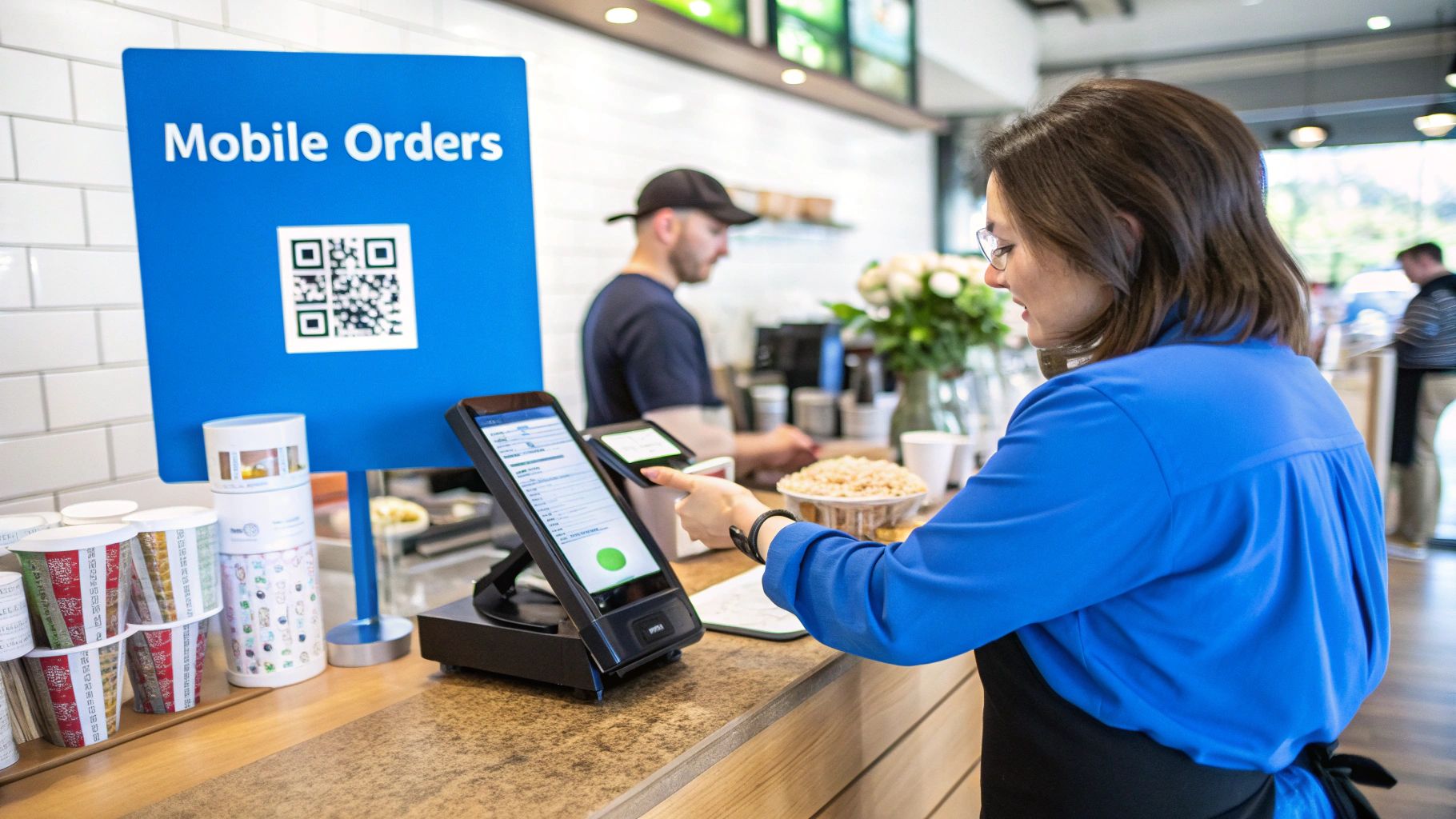
Imagine completely untethering your ordering process. A Mobile POS (mPOS), which often runs on a simple tablet or smartphone, lets your staff get out from behind the counter. Instead of forcing customers into a static line, a barista can walk the queue, taking orders and payments on the spot. This is a classic line-bustin`g move that can slash wait times during that chaotic morning rush.
This kind of mobility also unlocks new ways to make money. With an mPOS in hand, you could run a pop-up coffee stand at a local farmers' market or city event with almost no friction. Your entire menu and payment system are right there with you. It's a game-changer, and it's why the global mPOS market is expected to be worth around USD 49.7 billion by 2025. You can read more about these impressive POS statistics to see just how big the impact is.
The Power of the Cloud
If mobile POS changes where you do business, the cloud changes how you do business. A cloud-based cafe point of sale system doesn't store your data on a dusty computer in the back office; it keeps everything safe on remote servers. It sounds like a simple change, but it has a massive impact on your daily operations.
With a cloud POS, your business data is no longer trapped within the four walls of your shop. You gain the freedom to manage your operations from anywhere, at any time, turning your smartphone into a remote command center.
This accessibility is huge. You could be across town meeting a new bean supplier and still check your live sales figures, tweak the staff schedule, or update menu prices right from your phone. For a busy owner who can't be on-site 24/7, that level of control brings incredible peace of mind. You can get a much deeper understanding by reading our article on what a cloud-based POS system is and all the benefits it brings.
Security and Scalability Combined
Beyond just being convenient, cloud systems are built for security and growth.
- Automatic Data Backups: All your critical information—sales data, customer lists, inventory counts—is backed up automatically. If a tablet gets dropped or stolen, none of that crucial business data is lost. You can get back up and running on a new device in minutes.
- Seamless Software Updates: New features and security patches are pushed to your system automatically over the internet. You’re always running the latest, most secure version without having to do a thing.
- Effortless Growth: When you’re ready to open that second or third location, a cloud system makes it incredibly simple. Just add new terminals, and all your data syncs perfectly across every shop.
These technologies aren't just a trend; they are the new standard for any cafe that wants to be quick on its feet. They give you the tools to do more than just survive—they help you thrive by delivering a faster, more secure, and more personal experience for every customer who walks through your door.
Frequently Asked Questions
Thinking about a new point of sale system for your café usually brings up a few key questions. Let's walk through some of the most common ones we hear from owners just like you, so you can feel confident in your decision.
How Much Does a Cafe Point of Sale System Cost?
The honest answer? It really depends. The price can swing quite a bit based on what your café actually needs. Think of it in three main parts.
First, you'll have a monthly software fee, which is usually based on how many terminals you're running. Then there’s the one-time cost for hardware—things like the iPad stand, your card reader, and a receipt printer.
Finally, and this is a big one, you have payment processing fees. These are a small percentage of every single sale. My best advice is to find a provider who is upfront and crystal clear about their pricing. No one likes surprise fees.
A new POS is a major investment for your shop. Always, always ask for a detailed quote that spells out every single cost: software, hardware, and processing. That’s the only way to see the full financial picture.
Is It Hard to Switch from a Cash Register to a Modern POS?
Not at all. In fact, you'll probably be surprised at how easy it is. Modern POS systems are designed to feel intuitive, almost like using an app on your phone. If your team can use a smartphone, they can learn a modern POS.
Most good companies will hold your hand through the setup process, too. They’ll help you get your menu loaded, import any customer lists, and make sure everything is ready for a smooth transition. Usually, a few hours of hands-on training is all your staff needs to feel totally comfortable.
Can a POS System Integrate with My Other Business Tools?
Absolutely, and this is where the real magic happens. A great POS system doesn't live on an island; it’s designed to be the hub of your business, connecting all your other tools. This lets data flow automatically, saving you a massive amount of time and cutting down on manual entry mistakes.
Here are a few of the most common connections you’ll want to look for:
- Accounting Software: Imagine your daily sales data flowing right into QuickBooks without you lifting a finger.
- Online Ordering Platforms: This allows your website and third-party delivery apps to talk directly to your kitchen.
- Marketing Services: You can connect your system to email marketing tools or customer loyalty programs to keep regulars coming back.
Ready to see how a modern POS can change the game for your café? Biyo POS is an all-in-one solution with intuitive features, clear pricing, and the kind of support that helps your business grow. Get started with a free trial today