Managing restaurant reservations effectively is about more than just keeping a diary of bookings. It's about having a slick system to track reservations, turn tables faster, and keep guests in the loop. When you get this right, you stop overbooking, cut down on no-shows, and create a much more predictable flow of income. You have to stop thinking of it as just filling seats and start seeing it as a core part of your business strategy.
Why Smart Reservation Management Boosts Your Bottom Line
Picture a hectic Saturday night. The host is frazzled, walk-ins are getting mixed up with reservations, and you're watching potential customers walk out the door because of the long, chaotic wait. Now, imagine that same night with a smooth system in place. Every booking is neatly organized, tables are turning over like clockwork, and your front-of-house team is cool, calm, and collected. The gap between those two scenarios is pure profit.
Getting your reservation management right is a game-changer. It’s not just an admin chore; it’s often the very first interaction a guest has with your restaurant and a cornerstone of your daily operations. A solid system gives you a steady stream of customers, which means you can schedule staff more effectively, nail your inventory orders, and create a much less stressful shift for everyone involved.
The Financial Impact of Organized Bookings
When you handle reservations efficiently, the positive effects are felt everywhere in the business. A messy, disorganized approach leaves tables sitting empty between seatings, which is just money walking out the door. An optimized system, on the other hand, directly fattens your profit margin in a few critical ways:
- Better Table Turnover: When you know precisely when parties are arriving and should be leaving, you can dramatically cut down on the time a table sits empty. Shaving just a few minutes off each turn can easily add up to an entire extra seating for that table over the course of a busy night.
- Fewer No-Shows: This is a big one. Sending out automated reminders and confirmation texts is proven to work wonders. Industry numbers show that a simple SMS reminder can slash your no-show rate by up to 30%. That’s revenue you can count on.
- A Better Guest Experience: A smooth booking and arrival process starts the entire dining experience on a high note. Guests who feel taken care of from the beginning are far more likely to come back, spend more, and leave those all-important positive reviews.
"A well-managed reservation system isn't just about avoiding chaos; it's about creating a predictable, profitable engine for your restaurant. It transforms your front door from a point of friction into your greatest asset."
At the end of the day, every reservation is a promise you make to a guest and a valuable piece of data for your business. To see just how powerful this can be, it's worth looking into the ultimate leverage play in celebrity steakhouses and the lessons it offers on maximizing every opportunity. Adopting that kind of strategic thinking is what turns a simple booking into a serious financial tool.
Choosing Your Restaurant Reservation System
Let's get real about your reservation system. The days of a dog-eared notebook by the host stand are pretty much over for any restaurant that wants to grow. The technology you pick isn't just a tool for taking bookings; it’s the very foundation of your guest experience and operational sanity.
Your choice—whether it's a simple app, a dedicated platform, or something baked right into your POS—will define how smoothly your front-of-house runs.
The old-school pen-and-paper method still has its charm, I guess. It’s simple, and there are no monthly fees. For a tiny, walk-in-heavy coffee shop, maybe it works. But the moment you get a rush, it falls apart. Double bookings, messy handwriting, no way to track regulars… you’re flying blind, and that’s a risky way to run a business.
Comparing Your Options
Once you step into the digital world, you’re basically looking at two paths: standalone third-party apps or a system that’s part of your POS.
Apps like OpenTable or Resy are fantastic for getting your name out there. They put you in front of a huge audience of diners actively looking for a table. The trade-off? You're often paying a fee for every single person who books through them, and you don't really own that guest relationship. Building a loyal following is tough when the platform owns the data.
This is where an integrated system, like the kind that works with your Biyo POS, really changes the game. Suddenly, your reservations, table status, orders, and payments are all talking to each other. When a host seats a party, the system instantly updates the floor plan. No more frantic check-ins or walking the floor to see what’s open. It creates this beautiful, seamless flow from the moment a guest books to when they pay the check.
This kind of connected workflow is absolutely critical if you're juggling a big dining room or multiple sections. We actually dive deeper into this in our guide to mastering multi-location table management.
The right reservation system isn't just a booking engine. It becomes the central nervous system for your front-of-house, tying guest data, table status, and staff communication into one smart, cohesive operation.
What Actually Matters in a Reservation System
Don't get bogged down in a laundry list of features. Focus on what will make a tangible difference in your day-to-day.
Take automated reminders. Sending a simple SMS or email reminder has been proven to slash no-show rates. That’s not a fancy feature; that’s money you’re no longer leaving on the table. A digital waitlist is another game-changer. Instead of just turning people away, you can grab their number and text them when a table is free. You’ve just captured business you would have otherwise lost.
And make sure the system lets you keep guest notes. Remembering that a regular loves table 22 by the window or has a gluten allergy is how you turn a first-time visitor into a lifelong fan. This data is your secret weapon.
To help you weigh your options, I've put together a quick comparison of the most common setups.
Reservation System Comparison
Here’s a straightforward look at what you can expect from the different types of systems out there. Think about where your restaurant is now and where you want it to be in a year.
| System Type | Key Features | Best For | Potential Drawbacks |
|---|---|---|---|
| Pen-and-Paper | Simple, no-cost, manual entry. | Small, low-volume cafes with predictable traffic and minimal staff. | High risk of human error, no data or guest history, totally inefficient during rushes. |
| Third-Party App | Massive user base for discovery, online visibility, built-in marketing. | New restaurants that need to attract a customer base quickly. | Per-cover fees add up, you don't own the guest data, your brand is one of many on a list. |
| Integrated POS | Centralized operations, real-time table sync, detailed guest history, waitlist management. | Busy restaurants focused on top-tier operational efficiency and building guest loyalty. | Higher initial investment for setup and training, dependent on your POS ecosystem. |
Ultimately, the goal is to find a system that not only solves your immediate booking problems but also gives you the tools and data you need to run a smarter, more profitable restaurant.
Building a Digital Booking Strategy That Fills Tables
Your restaurant’s booking strategy needs to meet diners where they are: online. This isn't just about sticking a "book now" button on your site. It’s about building a smart, multi-channel approach that pulls in customers from all over the web while always steering them toward direct, commission-free reservations.
A strong digital presence always starts with your own website. Think of it as your home turf—the one place where you call the shots, control the entire guest experience, and don't have to pay a fee for every person who walks through the door. Making your website's booking form seamless is absolutely critical for growing a loyal following.
Moving from a paper diary to a fully integrated system can feel like a big leap. This flow chart breaks down the decision-making process and shows the path forward.
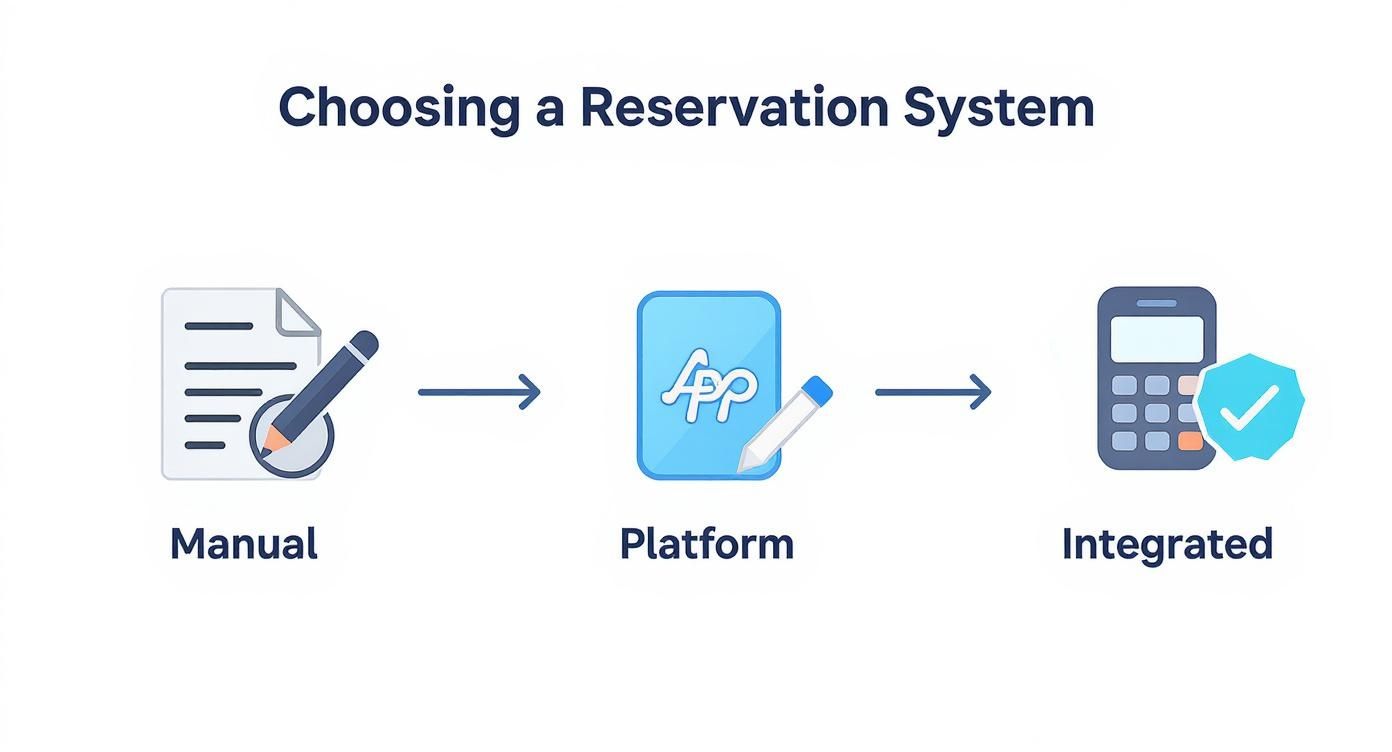
As you can see, the progression leads toward an integrated POS system, which is really the most powerful solution for managing reservations in a modern restaurant.
Mastering Your Own Booking Funnel
Your website should always be your #1 source for reservations. It's the most profitable channel and the best way to build direct relationships with your guests. Make sure your booking widget is impossible to miss, easy to use, and works perfectly on a phone—because that’s where most people are booking from.
The name of the game is reducing friction. Only ask for what you absolutely need: name, party size, date, time, and contact info. A clunky, multi-page form is a guaranteed way to lose a potential customer. Your website is so much more than a digital menu; it's the most important tool you have for turning browsers into diners. For a deeper dive, check out our guide on creating the perfect website for restaurants.
Using Third-Party Platforms to Find New Customers
While direct bookings are the goal, you can't ignore third-party platforms. They are incredibly effective for getting your restaurant in front of new people. Think of them as marketing partners that introduce you to thousands of diners who might never have found you otherwise.
The trick is to use these platforms strategically without getting locked into their system. A perfect example of this is "Reserve with Google." Recent data shows just how big of an impact this one integration can have.
Managing reservations has shifted heavily to digital, and a restaurant's own website is proving to be the top performer. However, integrating with platforms like Reserve with Google has been a game-changer for finding new diners—a staggering 73% of bookings through it come from first-time customers. Restaurants that turned on Reserve with Google saw a median increase of 32.3% in total bookings. It’s a clear signal that a multi-channel strategy is essential. Discover more about these global digital booking trends.
This hybrid approach gives you the best of both worlds. You use the massive reach of third-party services to bring new faces in, and then you deliver an amazing experience that convinces them to book directly with you next time. This keeps your tables full, your commission costs down, and your customer relationships strong.
Training Your Staff to Be Reservation Experts
A fancy reservation system is a great tool, but let's be honest—it's your people who make or break the guest experience. The best tech in the world is useless if the team using it isn't confident and capable. Proper training turns your front-of-house staff from just button-pushers into true hospitality pros who can master the art of a busy service.
This isn't just about showing them how the software works. It's about giving them the confidence to handle those tricky real-world situations with poise. The goal is to make every single guest interaction, from a phone call to a final goodbye, feel smooth and personal.
Moving Beyond Technical Know-How
Great service is all about preparation and empathy. You need to give your team the skills to handle the chaos of a packed dining room, so they can manage reservations on the fly, not just follow a rigid script.
- Handling Walk-ins During a Rush: Instead of a blunt "we're full," teach your staff to offer a solution. Something like, "We're currently on a wait, but I can add you to our digital list and text you the moment a table is ready," keeps a potential customer engaged and shows you value their time.
- Managing Special Requests: This is where you shine. Empower your team to use the system’s notes feature for everything. A severe allergy, a guest's favorite table, a special anniversary—noting these details shows you're actually listening.
- Navigating Cancellations Gracefully: A last-minute cancellation doesn't have to be lost revenue. Train your team to immediately pivot to the waitlist or call back a recent inquiry. This turns a potential loss into a win and makes another guest’s day.
True reservation expertise isn't just about managing a schedule; it's about managing guest expectations. A well-trained host can make a 20-minute wait feel like a personalized service, not an inconvenience.
Scripts and Best Practices for Communication
The words your team uses set the stage for the entire meal. A robotic, stiff greeting can kill the vibe before a guest even sits down. I always recommend developing a few simple, field-tested scripts that sound natural and welcoming.
For phone calls, this means a warm greeting that includes the restaurant's name and their name. It means actually listening to the caller's request before jumping to a solution. That human touch is irreplaceable and is a huge part of any serious program focused on training for restaurant excellence.
When you invest in these communication skills, your reservation system becomes more than just a tool for efficiency—it becomes your first and best opportunity to build a relationship with your guests.
Fine-Tuning Your Schedule for Today's Diners
If you're still bracing solely for the classic 8 PM dinner rush, you might be missing the bigger picture. Mastering how to manage restaurant reservations today means understanding that diner habits have changed. A more flexible, dynamic approach to your schedule can turn a single chaotic spike into a steady, manageable flow of guests all evening.
The real secret lies in what we call 'shoulder times'—those golden hours just before and after your traditional peak. When you strategically fill these slots, you take a massive amount of pressure off your kitchen and front-of-house crew. It’s a simple shift in thinking that allows you to serve more guests without the burnout.
Lean Into the Early-Bird Wave
We're seeing a huge trend toward earlier reservation times. More and more, people are seeking a relaxed experience, wanting to avoid the prime-time crush. This isn't some fleeting fad; it's a significant shift that smart restaurant owners are capitalizing on.
People are booking dinner at times that would have been unheard of a decade ago. Data from the 2025 Resy Retrospective backs this up, showing that nearly half of diners (46%) now prefer to book between 5 p.m. and 6 p.m. That time slot has officially overtaken the old 8 p.m. to 11 p.m. window. This is great news, as it lets you spread demand out and give every table a better experience.
Smart Moves to Smooth Out Your Service
Instead of just letting the bookings roll in, you can actively shape the flow of your entire night. A few deliberate tactics can make all the difference.
-
Tempt Guests with Off-Peak Perks: Nudge people toward those shoulder hours with a small, appealing offer. Think a complimentary glass of house wine, a free appetizer to share, or a small discount for anyone booking between 5:00 PM and 6:30 PM. It doesn't have to be a big giveaway to be effective.
-
Hold a Few Tables Back: Don't put every single seat online. It’s always smart to keep a few tables in your back pocket for valuable walk-ins, last-minute VIP calls, or regulars who decide to pop in. This gives you crucial flexibility without messing up your reservation grid.
-
Let Your Data Guide You: Your reservation system is packed with valuable intel. Dig into your booking patterns to see when you're consistently busy and when things slow down. Using this history to forecast demand helps you nail your staff scheduling and inventory, ensuring you're never caught off guard.
A proactive scheduling strategy does more than just fill seats—it crafts a better dining experience for everyone. By guiding guests toward off-peak times, you create a more balanced service, reduce stress on your team, and ultimately increase your total nightly covers.
Dealing with the Inevitable Reservation Headaches
Even with the best system in place, running a restaurant means you're going to hit a few snags with reservations. It’s just the nature of the business. The real trick is knowing how to handle these common hurdles so you can keep service running smoothly and guests walking away happy.
Think of this less as firefighting and more as building a better fire extinguisher. We're not just solving problems as they pop up; we're creating systems to stop them from happening in the first place. That’s what separates the truly great operators from the merely good ones.
How Do I Stop No-Shows from Killing My Bottom Line?
Ah, the no-show. It's one of the most frustrating and costly problems in our industry. The most effective way I've seen to tackle this is with a multi-layered approach that mixes smart automation with a bit of old-fashioned hospitality.
Your first line of defense should be automated SMS and email reminders. Send them out 24-48 hours before the booking. You’d be surprised how often a simple, friendly nudge is all it takes to keep a reservation on track. For your biggest tables or on a slammed Saturday night, don't be afraid to secure the booking with credit card details or a small, refundable deposit.
Make sure your cancellation policy is crystal clear on your website and in every confirmation message. It sets the ground rules from the start. And here’s a pro tip: use your reservation system to flag repeat offenders. For their next booking, have your host make a personal confirmation call. That human touch adds a sense of commitment that automation just can't replicate.
A smart mix of automated reminders, clear policies, and personal follow-ups can slash your no-show rate. It’s all about making the reservation feel like a real commitment, both for you and your guest.
What’s the Best Way to Handle Walk-ins When We're Already Fully Booked?
Turning away a hopeful walk-in because you're on a wait is always tough. It feels like a missed opportunity. Instead of giving them a flat "no," you need to empower your host team with a couple of practical solutions to capture that business.
A digital waitlist is an absolute game-changer here. Your host can grab the guest's name and number, give them a realistic wait time, and shoot them a text when their table is ready. This is huge—it lets them wander over to a nearby shop or grab a drink without being chained to your front door.
And speaking of drinks, if you have a bar or lounge area, use it. Get them seated, get a drink in their hand, and maybe offer a few small bites. This simple gesture of hospitality can turn a potential disappointment into a fantastic experience. They'll remember that, and they'll be far more likely to come back or book ahead next time.
Should I Use a Third-Party App or Just Focus on My Own Website?
I get this question all the time. The answer isn't one or the other—it's both. The most successful restaurants run a hybrid strategy that leverages the strengths of each.
Third-party platforms like OpenTable or Resy are incredible for getting new butts in seats. They expose your restaurant to a massive audience that probably wouldn't have found you otherwise. The catch? You're paying per-cover fees, and, critically, you don't own the customer's data.
That’s why your own website's booking system is non-negotiable. It's your home base for building loyalty and driving repeat business. When you integrate it with your POS, you get total control over the branding, you capture all that valuable guest data, and you kiss those commission fees goodbye. Use the big platforms as a marketing engine to bring people in, then make sure you're encouraging them to book directly with you for their next visit.
How Can I Actually Use My Reservation Data to Run a Better Restaurant?
Your reservation system is so much more than a digital calendar; it’s a treasure trove of operational data. If you're not digging into it regularly, you're flying blind.
- Nail Your Staffing and Inventory: Look at your booking trends. Which days and times are consistently slammed? Which weeks are slow? This data lets you build smarter staff schedules and place more accurate food orders, which directly cuts down on waste and labor costs.
- Make the Guest Experience Personal: Start tracking things like visit frequency, average spend, and seating preferences. Knowing that a regular always asks for a booth or is celebrating an anniversary lets you create those "wow" moments that build fierce loyalty.
- Rethink Your Floor Plan: Are you constantly getting requests for tables of six but your layout is mostly two-tops? That's your data telling you something important. This kind of insight can justify reconfiguring your dining room to match what your customers actually want, which means you can seat more people, more often.
Ready to solve these challenges and more with a system that ties it all together? Biyo POS offers an integrated solution that streamlines reservations, table management, and guest data, giving you the tools to run a smarter, more profitable restaurant. Learn more and start your free trial today.