The entrance to your bistro does far more than welcome guests—it shapes expectations before customers ever step inside. Research in hospitality, retail psychology, and consumer behavior consistently shows that people form impressions of a business within seconds of seeing it. Those impressions influence whether they enter, how they perceive pricing, and even how they evaluate the overall dining experience.
This is why investing in creative bistro entrance makeover ideas can deliver measurable business value. A thoughtfully designed entrance increases curb appeal, improves foot traffic, strengthens brand identity, and creates memorable guest experiences. Whether you’re operating a neighborhood café, upscale bistro, wine bar, or casual dining concept, your entrance serves as one of your most important marketing assets.
Modern restaurant design extends beyond interior décor. Today’s customers often discover restaurants through social media, online reviews, and street-level impressions. An attractive entrance can encourage spontaneous visits while generating photographs and social shares that extend your marketing reach.
This guide explores practical and creative ways to transform your bistro entrance into a space that attracts attention, reinforces your brand, and encourages guests to walk through the door.
Table of Contents
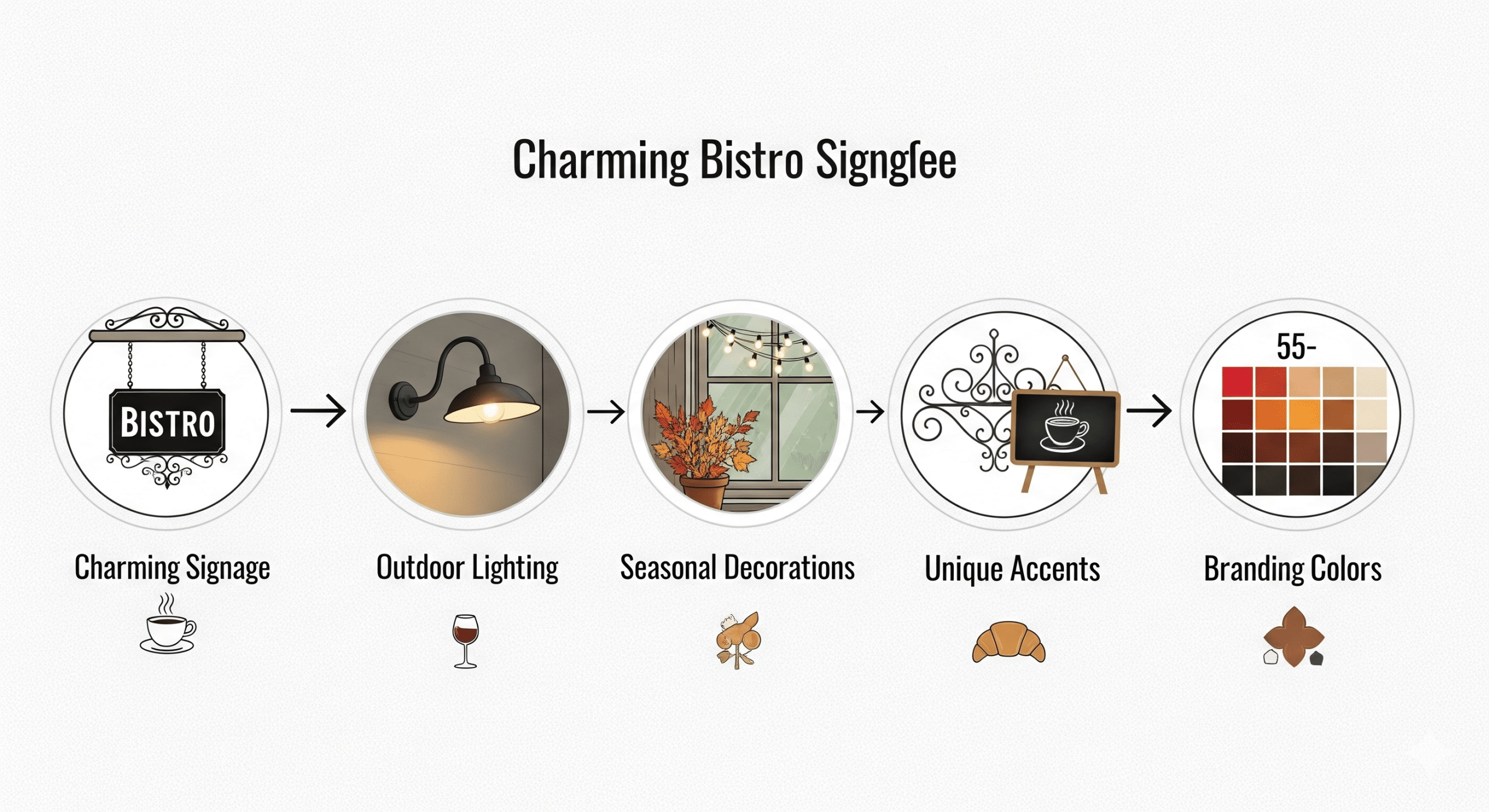
- Charming Signage and Artistic Touches
- Outdoor Lighting for a Cozy Ambiance
- Greenery, Flowers, and Seasonal Decorations
- Unique Details and Vintage Accents
- Brand Identity and Inviting Pathways
- How Biyo Helps Create Better Bistro Experiences
- Frequently Asked Questions
Charming Signage and Artistic Touches
Your signage is often the first interaction customers have with your business. Long before guests see your menu or experience your service, your sign communicates personality, atmosphere, and brand positioning.
Effective signage should be visually appealing, easy to read, and consistent with the overall identity of your bistro. Whether your concept leans toward rustic charm, contemporary elegance, or vintage sophistication, signage plays a critical role in setting expectations.
Rustic Décor with Handcrafted Signs
Handcrafted signage adds authenticity and character. Materials such as reclaimed wood, brushed metal, wrought iron, or hand-painted lettering help create a sense of craftsmanship that many customers associate with independent restaurants and neighborhood dining experiences.
Natural textures often make a business feel more approachable and inviting. Guests tend to perceive handcrafted elements as signs of attention to detail and quality.
To maximize visibility, signage should maintain strong contrast, consistent branding, and appropriate illumination during evening hours.
Artistic Murals and Visual Storytelling
Murals transform ordinary exterior walls into memorable visual experiences. In addition to attracting attention from pedestrians, murals often encourage customers to take photos and share them online.
The most effective murals reflect the restaurant’s identity and cuisine. A Mediterranean bistro might incorporate coastal colors and olive tree imagery, while a French-inspired café could feature artistic interpretations of Parisian architecture or street scenes.
Visual storytelling helps differentiate your restaurant from nearby competitors while creating additional opportunities for organic marketing.
Chalkboard Menus and Daily Features
Chalkboard displays remain popular because they combine flexibility with charm. They allow restaurants to highlight daily specials, seasonal offerings, chef recommendations, and limited-time promotions without requiring permanent signage changes.
Customers often associate chalkboards with freshness, authenticity, and creativity. Rotating content regularly creates a sense of novelty that encourages repeat visits.
Positioning chalkboards near the entrance allows passersby to quickly understand what makes your menu unique.
Outdoor Lighting for a Cozy Ambiance
Lighting significantly influences how customers perceive a restaurant. Well-designed exterior lighting improves visibility, enhances safety, and creates an inviting atmosphere that encourages guests to enter.
For many bistros, evening hours represent an important revenue period. Attractive lighting helps extend curb appeal well after sunset.
Lantern Lighting for Warmth and Character
Lantern-style lighting creates a warm and welcoming atmosphere that complements many bistro concepts. Warm white lighting between 2700K and 3000K often produces the most comfortable effect.
Lanterns work particularly well when placed along walkways, beside entry doors, or near signage. They help guide customers toward the entrance while creating visual interest.
The combination of warm lighting and natural materials often reinforces feelings of comfort and hospitality.
String Lights for a Relaxed Atmosphere
String lights add visual softness and charm while creating a more relaxed environment. Many restaurants use them beneath awnings, across patios, around planters, or above outdoor seating areas.
LED string lights provide energy efficiency and long-term durability while offering significant aesthetic impact at a relatively low cost.
Soft lighting often encourages customers to linger longer and perceive the environment as more enjoyable.
Illuminated Signage for Visibility
Illuminated signs improve visibility during evening hours while helping customers locate your restaurant more easily. Backlit signage, subtle neon accents, and professionally illuminated logos can all enhance nighttime recognition.
The goal is to increase visibility without overwhelming the overall atmosphere. Excessively bright lighting can create visual discomfort and detract from the dining experience.
Balanced illumination helps maintain a welcoming appearance while supporting brand recognition.
Greenery, Flowers, and Seasonal Decorations
Natural elements can dramatically improve how customers perceive hospitality spaces. Greenery introduces warmth, texture, and visual softness that often make restaurants feel more inviting.
Studies in environmental design suggest that plants and natural elements contribute to positive emotional responses while improving overall customer perceptions.
Floral Arrangements for Seasonal Appeal
Fresh flowers provide color, vibrancy, and seasonal relevance. Updating floral arrangements throughout the year helps keep your entrance looking fresh and well-maintained.
Spring flowers, summer hanging baskets, autumn displays, and winter greenery each contribute to a changing visual experience that reflects the seasons.
Coordinating floral colors with brand elements can further strengthen visual consistency.
Greenery Walls and Living Features
Vertical gardens and greenery walls create dramatic visual impact while requiring relatively little space. These installations often become focal points that encourage photography and social sharing.
In addition to aesthetics, greenery walls can help soften urban environments and create a more relaxing atmosphere.
When combined with thoughtful lighting, they can transform even simple storefronts into memorable destinations.
Seasonal Decorations and Community Connection
Seasonal decorations help maintain visual interest while demonstrating awareness of local traditions and celebrations. Holiday displays, harvest themes, spring refreshes, and seasonal accents create opportunities for customers to experience something new throughout the year.
Frequent updates signal attentiveness and care, which often influence how customers perceive the overall business.
Seasonal design also creates opportunities to connect exterior visuals with seasonal menu offerings and promotions.
Unique Details and Vintage Accents
Small design details often leave lasting impressions. Thoughtful accents can help differentiate your restaurant while creating a more distinctive guest experience.
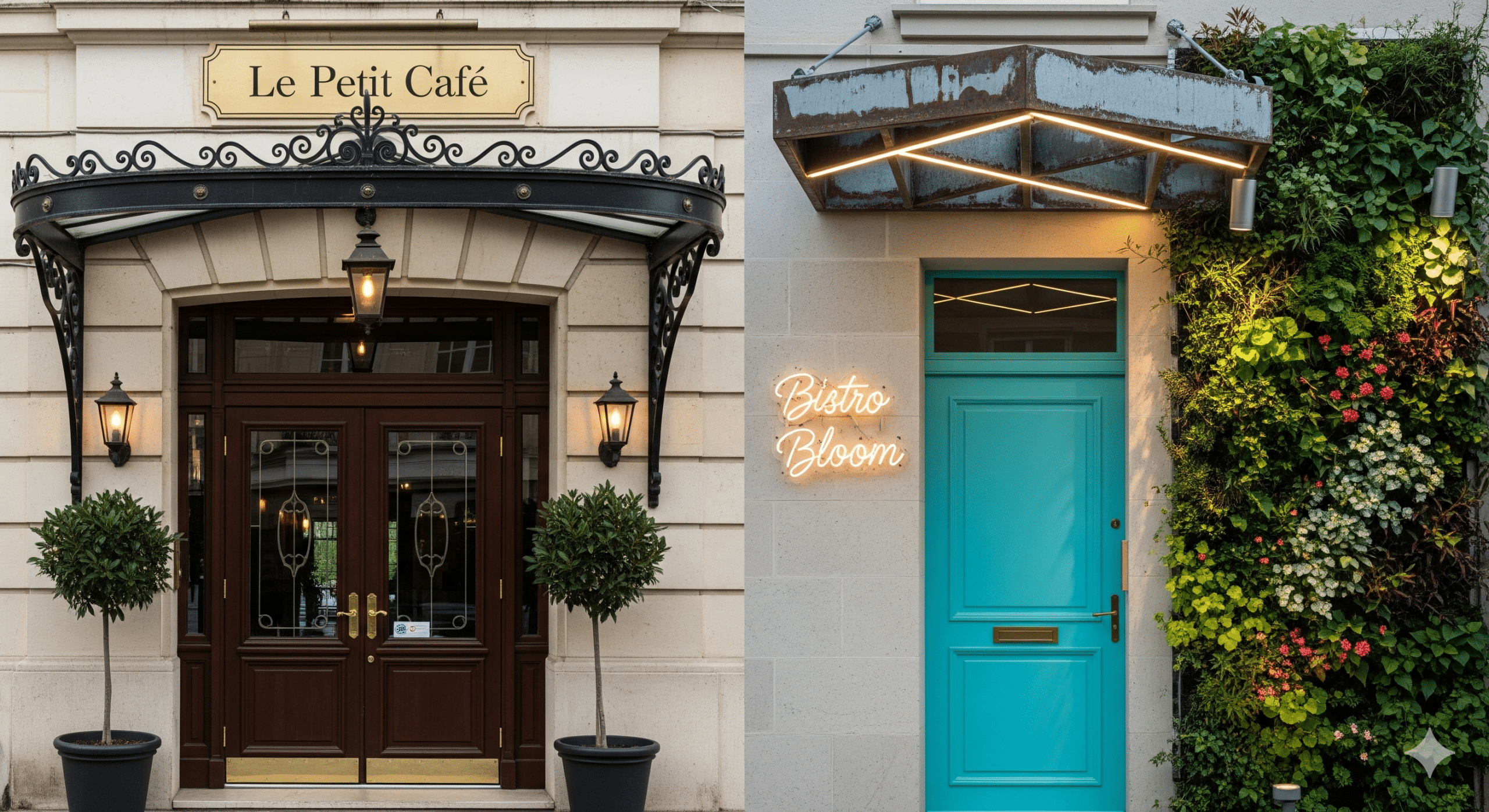
Unique Door Hardware and Entry Features
Custom door handles, decorative glass panels, and distinctive entryway details contribute to a more memorable arrival experience.
Materials such as brass, wrought iron, or handcrafted wood can reinforce specific design themes while adding visual interest.
These elements may seem minor individually, but collectively they contribute to a stronger perception of quality.
Vintage Accents for Character and Charm
Vintage benches, decorative lanterns, antique planters, and historic architectural details often create feelings of nostalgia and comfort.
When used thoughtfully, vintage elements add character without making the space feel outdated.
Blending vintage touches with contemporary design often creates the most balanced and appealing result.
Warm Textures and Natural Materials
Stone pathways, exposed brick, wood trim, and woven accents create visual warmth while adding depth to the entrance design.
Natural materials often help customers perceive a restaurant as more welcoming and authentic.
Texture adds richness and dimension that can significantly improve curb appeal.
Brand Identity and Inviting Pathways
Your entrance should communicate the same identity customers encounter throughout the rest of the restaurant. Consistency strengthens recognition and reinforces brand positioning.
Using Branded Colors Strategically
Incorporating brand colors into awnings, signage, planters, menus, and decorative accents creates visual consistency that strengthens recognition.
Customers often associate repeated visual cues with professionalism and trustworthiness.
Strong branding helps businesses remain memorable in competitive markets.
Creating Welcoming Pathways
Clearly defined pathways help guide customers naturally toward the entrance. Decorative paving, planters, lighting, and subtle architectural cues all contribute to better flow.
Customers tend to feel more comfortable approaching businesses that provide clear visual direction.
Effective pathways improve accessibility while enhancing overall appearance.
Decorative Awnings for Function and Style
Awnings provide practical protection from weather while contributing to the overall architectural identity of the building.
Custom awnings featuring logos, brand colors, or decorative trim help reinforce branding while improving visibility from a distance.
Well-maintained awnings also communicate professionalism and attention to detail.
How Biyo Helps Create Better Bistro Experiences
An attractive entrance may encourage guests to walk in, but the experience inside ultimately determines whether they return. Successful restaurants combine strong visual branding with efficient operations and exceptional customer service.
Biyo POS helps bistros streamline operations through integrated order management, inventory tracking, customer loyalty tools, reporting, and payment processing.
By providing real-time business insights and improving operational efficiency, Biyo helps restaurants deliver experiences that match the expectations created by a well-designed exterior.
If you’d like to see how Biyo can support your restaurant operations, you can schedule a consultation and explore the platform’s capabilities.
Frequently Asked Questions
What are the most affordable bistro entrance upgrades?
Chalkboard menus, seasonal flowers, string lights, planters, and updated signage often provide significant visual improvements without requiring major investments.
How does lighting affect customer behavior?
Warm, welcoming lighting improves visibility, increases feelings of comfort and safety, and makes businesses appear more inviting during evening hours.
How often should bistro entrance décor be updated?
Seasonal updates every three to four months help maintain freshness while giving returning customers new visual experiences throughout the year.
Why is branding important at the entrance?
The entrance is often the first customer touchpoint. Consistent branding helps create recognition, strengthen trust, and communicate the restaurant’s identity before guests enter.
Can small bistros create strong visual impact?
Absolutely. Strategic use of lighting, signage, greenery, murals, and thoughtful design details can transform even compact storefronts into memorable destinations.
What role do murals play in restaurant marketing?
Murals attract attention, differentiate the business, encourage social sharing, and create memorable visual experiences that extend marketing reach beyond physical foot traffic.