Opening a restaurant is an exciting journey, but securing capital is where most concepts succeed or fail. Understanding how to get funding for a restaurant isn’t just about finding money—it’s about choosing the right financing mix that supports your concept, timeline, and growth potential.
Whether you’re launching a new concept or expanding an existing brand, your funding strategy should align with your operational model and risk tolerance. The most successful restaurateurs don’t rely on a single source—they combine loans, investors, and alternative funding to create stability.
This guide breaks down the most effective ways to raise capital, helping you make smarter financial decisions from day one.
Table of Contents
- Crafting a Strong Restaurant Business Plan
- Small Business Loans and SBA Options
- Finding Investors and Private Funding
- Crowdfunding and Alternative Financing
- Grants and Funding Programs
- How Biyo POS Strengthens Your Funding Strategy
- FAQ
Crafting a Strong Restaurant Business Plan
A business plan is your primary tool for securing funding. It shows lenders and investors how your restaurant will generate revenue and manage risk.
Why Your Business Plan Matters
Investors don’t fund ideas—they fund structured opportunities. Your plan should clearly define your concept, target audience, location strategy, and competitive advantage.
Strong plans answer critical questions: Why this concept? Why this location? Why now? If you can’t justify those clearly, funding becomes difficult.
Financial Projections That Make Sense
Most funding applications fail because projections are unrealistic. Instead of guessing, base your numbers on local data, competitor pricing, and realistic traffic estimates.
Break down:
– startup costs
– monthly expenses
– expected revenue
– break-even timeline
Clear assumptions matter more than aggressive projections.
Presenting Your Funding Ask
Be specific about how much funding you need and where it will go. Investors want clarity—not vague requests.
Separate your pitch depending on the audience:
– lenders → repayment ability
– investors → return potential
Small Business Loans and SBA Options
Loans are one of the most common ways to finance a restaurant. The key is choosing the right type based on your situation.
Types of Restaurant Loans
Different loans serve different purposes:
- Term loans → build-outs, large investments
- Lines of credit → cash flow flexibility
- Equipment financing → kitchen setup
- Microloans → small startups
Choosing the wrong loan structure can hurt your cash flow early.
SBA Loans
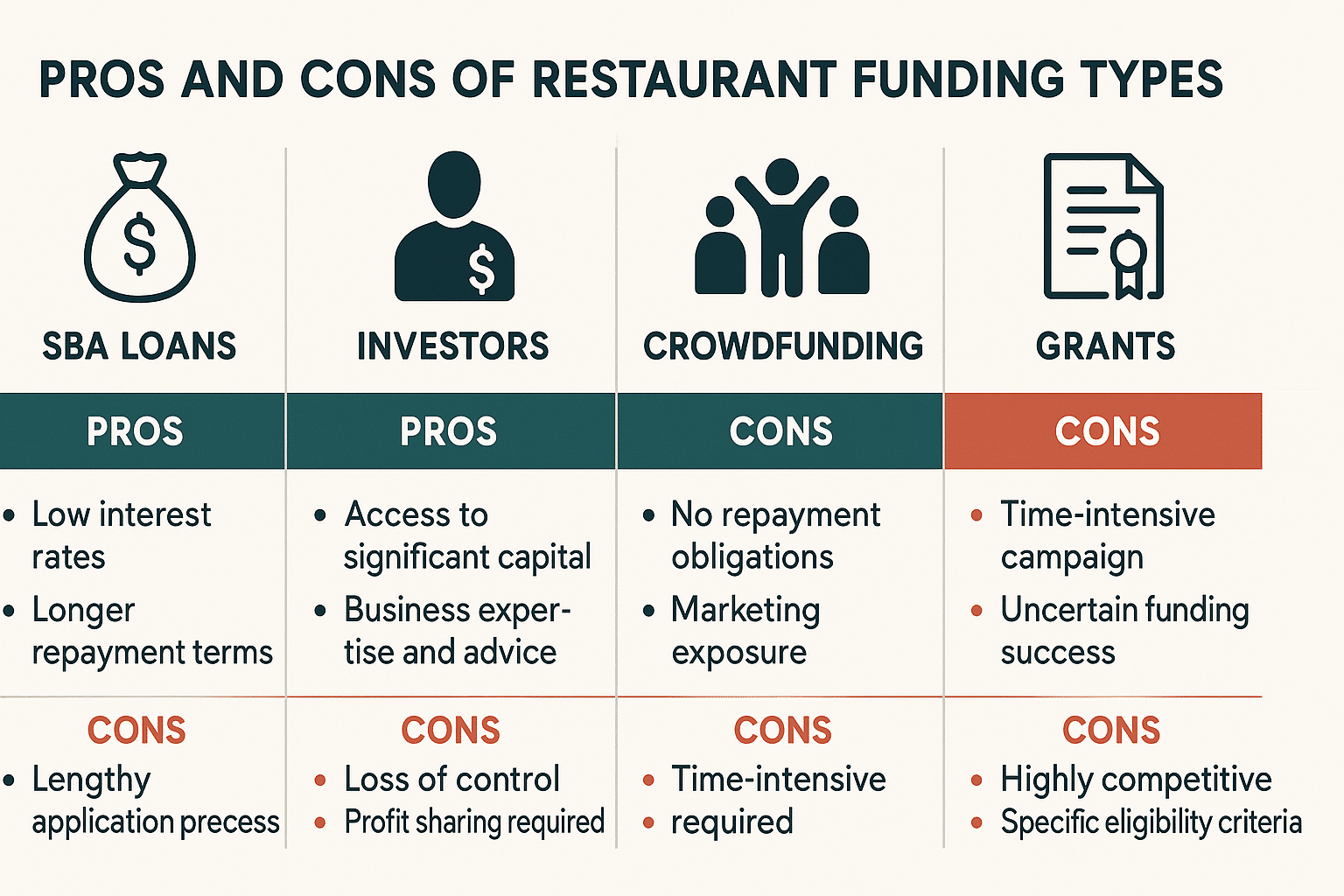
SBA loans are popular because they offer lower interest rates and longer repayment terms. However, they require strong documentation and patience.
If approved, they provide one of the most stable funding options available.
Private Lenders
Private lenders move faster but cost more. They’re useful for short-term needs, not long-term financial stability.
Always calculate total repayment—not just monthly cost.
Finding Investors and Private Funding
Investor funding works differently from loans. You’re trading equity or control for capital.
Angel Investors
Angel investors fund early-stage concepts. They look for:
– clear concept
– realistic growth
– operator credibility
They don’t just invest in ideas—they invest in people.
What Investors Actually Care About
This is where most founders get it wrong. Investors care about:
- Return on investment
- Scalability
- Operational consistency
If your restaurant can’t scale beyond one location, your investor pool shrinks significantly.
Partnership Models
Partnerships can reduce financial pressure, but only if roles are clearly defined.
Unclear agreements are one of the biggest reasons restaurant partnerships fail.
Crowdfunding and Alternative Financing
Crowdfunding is often misunderstood. It’s not just fundraising—it’s marketing plus validation.
What Makes Crowdfunding Work
Successful campaigns do three things well:
- Clear concept
- Strong visual storytelling
- Compelling rewards
Without these, campaigns fail—even with good ideas.
Real Strategy (Not Generic Advice)
Most campaigns fail because they rely only on the platform. That’s a mistake.
You need:
– pre-launch audience
– email list
– social media push
– local partnerships
Traffic must come from outside the platform.
Alternative Financing Options
Options like revenue-based financing or merchant advances can work, but they come at a cost.
Use them strategically—not as your main funding source.
Grants and Funding Programs
Grants are competitive but valuable because they don’t require repayment.
Where to Find Grants
Look at:
– government programs
– local business initiatives
– private foundations
Most restaurateurs ignore grants because they require effort—that’s why fewer people apply.
How to Improve Your Chances
Strong applications focus on impact:
– job creation
– community value
– sustainability
Generic applications get ignored.
Combining Funding Sources
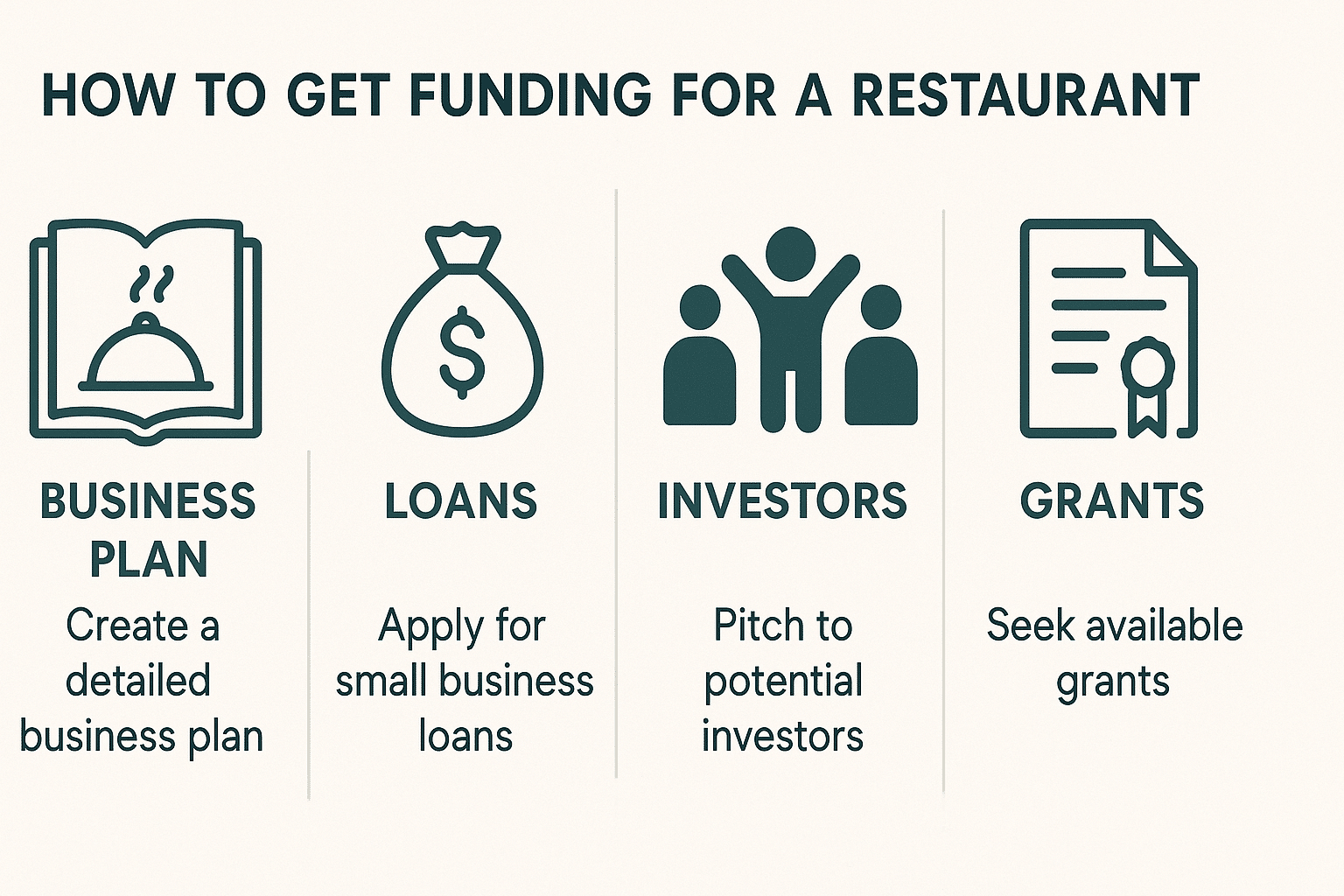
The best strategy is rarely one source. Combining loans, grants, and investor funding reduces risk.
How Biyo POS Strengthens Your Funding Strategy
Here’s what most people overlook: funding isn’t just about getting money—it’s about proving you can manage it.
Biyo POS helps you do exactly that.
With real-time reporting, sales tracking, and operational insights, you can show lenders and investors actual performance data—not guesses.
This matters more than you think. Investors trust numbers, not assumptions.
Using a system like Biyo POS allows you to:
- Track revenue trends
- Monitor costs
- Improve efficiency
- Present credible financial data
If you want to strengthen your funding position, sign up here and start building real data.
Frequently Asked Questions
What is the best way to fund a restaurant?
A combination of loans, investors, and alternative funding usually works best.
Can I start without capital?
Only with partnerships, small-scale concepts, or crowdfunding.
Are grants realistic?
Yes—but competitive. Most require strong applications and patience.
How much funding is needed?
Typically $250,000–$500,000 depending on concept and location.