Securing a liquor license in Nevada is one of the most important steps for any entrepreneur planning to sell alcohol. Whether you’re opening a restaurant on the Las Vegas Strip, managing a grocery store in Reno, or hosting a large-scale event, compliance with Nevada liquor laws is non-negotiable. The liquor license application process is not just about filling out forms; it involves understanding state regulations, background checks, zoning laws, and ongoing compliance requirements. By taking the time to fully understand these rules, business owners can avoid costly mistakes, ensure smooth operations, and focus on serving their customers responsibly.
Table of Contents
- Types of Liquor Licenses in Nevada
- Nevada Liquor License Application Process
- Compliance, Training, and Legal Requirements
- Costs, Renewal, and Ongoing Responsibilities
- Local Ordinances and Zoning Laws
- How Biyo POS Helps with Compliance and Alcohol Sales
- FAQ: Liquor License in Nevada
Types of Liquor Licenses in Nevada
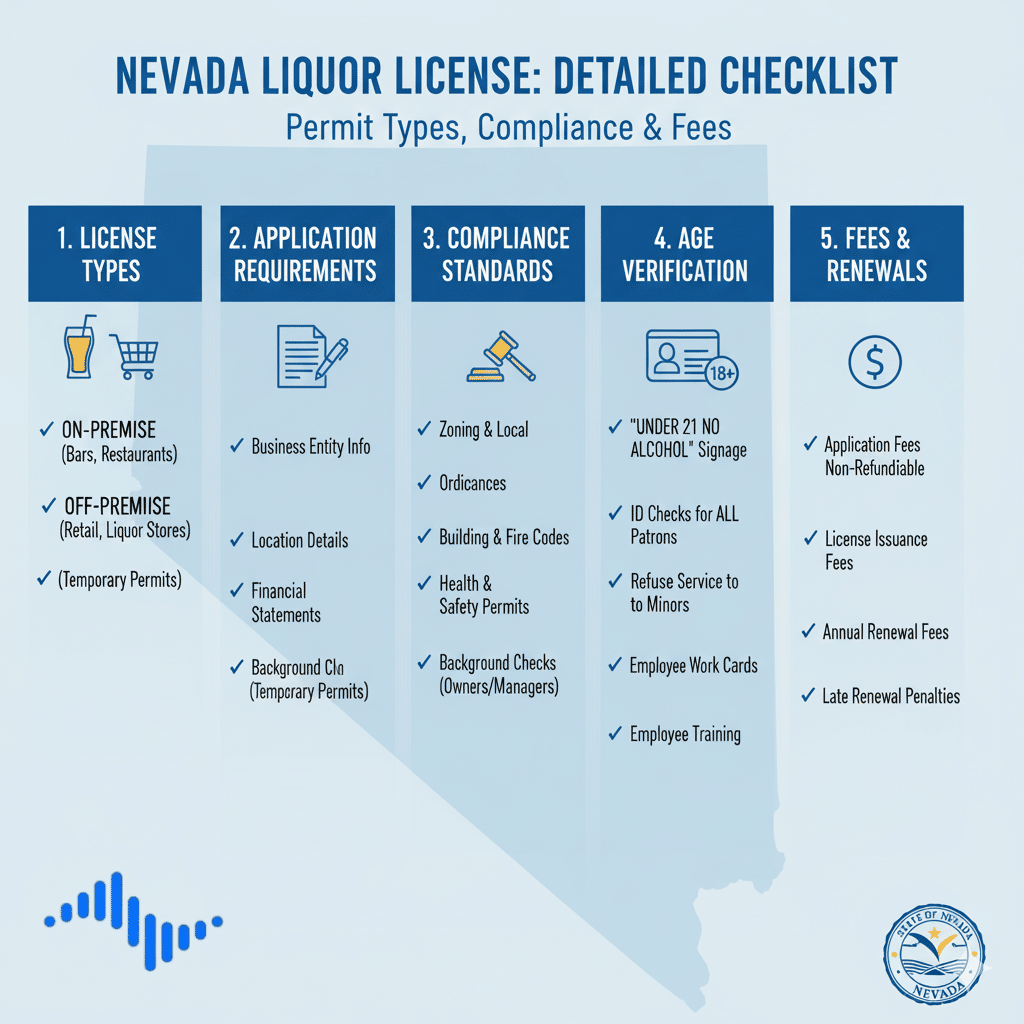
Nevada offers different categories of liquor licenses, each tailored to the nature of the business. Choosing the correct license is critical because it defines what type of alcohol you can sell, where it can be consumed, and the regulatory obligations attached to it. These categories range from on-premise licenses for bars and restaurants, off-premise licenses for retail sales, and temporary permits for special events. Understanding the differences helps business owners align their operations with the state’s alcohol permit requirements and avoid compliance issues down the road.
On-Premise Liquor License
An on-premise liquor license in Nevada is designed for businesses where alcohol will be consumed on the property. Establishments such as bars, lounges, nightclubs, and full-service restaurants fall under this category. The Nevada liquor laws require strict adherence to responsible serving standards, making it essential for staff to undergo server training programs. For example, bartenders must know how to verify age, refuse service to visibly intoxicated customers, and document incidents appropriately. These rules are in place to protect public safety while allowing businesses to thrive in Nevada’s vibrant hospitality industry.
Obtaining this type of license involves a detailed liquor license application process, including background checks on the business owners and managers. Regulators want to ensure applicants have no history of serious alcohol-related violations or financial instability that could compromise responsible operations. In some cases, local hearings are held where community members can voice concerns about granting an alcohol sales permit in their neighborhood. This shows how the licensing process balances economic growth with community welfare.
Once granted, an on-premise liquor license also comes with ongoing responsibilities. Businesses must maintain proper age verification systems, train staff regularly, and comply with inspection processes from state regulators. For example, inspectors may visit without notice to check that ID verification tools are functioning correctly and that staff understand compliance requirements. Failure to maintain these standards can lead to fines, suspension, or even permanent revocation of the license. Therefore, operators must treat the on-premise license not as a one-time achievement but as an ongoing responsibility tied to Nevada’s strict alcohol distribution laws.
Off-Premise Liquor License
An off-premise liquor license allows businesses like grocery stores, convenience stores, and liquor retailers to sell packaged alcohol that customers take home for consumption. Nevada liquor laws make clear distinctions between on-premise and off-premise sales because the compliance requirements differ significantly. In this case, the main focus is on preventing underage sales and ensuring proper record-keeping rather than monitoring in-house consumption. For example, a supermarket in Henderson selling wine must ensure that every cashier understands how to verify IDs using approved technology or manual inspection methods.
The liquor license application for off-premise sales typically requires proof of compliance with zoning laws. Nevada’s local ordinances may prohibit alcohol retailers from operating within a certain distance of schools, parks, or religious institutions. This is designed to minimize exposure to underage individuals and reduce community risks. As part of the inspection process, regulators may visit the store to evaluate how alcohol is stored, labeled, and displayed. For example, placing alcohol near the checkout counter in a way that encourages impulse buys by minors might be flagged during an inspection.
Ongoing compliance for off-premise license holders includes employee training, routine inspections, and consistent age verification practices. Businesses often invest in ID scanning devices to eliminate human error. For instance, some stores integrate scanners with their point-of-sale systems to prevent alcohol sales until a valid ID is confirmed. These technological solutions reduce risks, protect revenue, and keep businesses aligned with Nevada liquor laws. Without these safeguards, retailers risk fines, license suspension, or even permanent bans from selling alcohol in the state.
Special Event Permits
Special event permits are temporary licenses that authorize alcohol sales at events like concerts, festivals, trade shows, and charity fundraisers. Unlike permanent licenses, these permits are valid only for the duration of the event and under specific conditions outlined in Nevada liquor laws. For instance, an outdoor festival in downtown Las Vegas might apply for a one-week permit that allows beer and wine sales during event hours. Event organizers must coordinate closely with local authorities to ensure compliance with alcohol distribution rules and public safety standards.
The liquor license application for special events usually requires details such as expected attendance, event location, and security measures. Regulators will assess whether the event has adequate ID verification systems and trained staff to manage alcohol sales responsibly. For example, wristbands might be issued to attendees over 21, while checkpoints staffed by trained servers prevent underage drinking. Organizers may also be required to contract licensed vendors to handle alcohol distribution instead of relying on volunteers.
Compliance requirements during special events are strict because temporary permits often attract large crowds in uncontrolled environments. Local police or inspectors frequently monitor these events to ensure that alcohol sales do not violate state regulations. Any violations, such as overserving or underage sales, can lead to immediate permit revocation and jeopardize future applications. As a result, organizers must treat special event permits with the same seriousness as permanent liquor licenses. Proper planning and compliance not only protect the event’s reputation but also ensure the safety of attendees and the surrounding community.
Nevada Liquor License Application Process
Applying for a liquor license in Nevada is a multi-step process that requires thorough preparation. From background checks to inspections, each stage ensures that only qualified businesses are approved to sell alcohol. The timeline can vary based on license type, but applicants should expect the process to take several months. Understanding these steps in detail helps business owners prepare effectively and avoid costly delays.
Background Checks and Eligibility
Background checks are one of the most critical steps in the liquor license application process. Nevada liquor laws require that all individuals with ownership stakes or managerial responsibilities undergo a thorough review of their criminal history, financial background, and business track record. For example, a prospective bar owner with previous alcohol-related violations may face stricter scrutiny or outright denial. This ensures that only responsible and law-abiding individuals are entrusted with the sale of alcohol, reducing the risk of misconduct in the community.
Eligibility requirements also include age and residency standards. Applicants must be at least 21 years old, and in some cases, residency in Nevada may be required for certain license types. This ensures that local operators are directly accountable to state regulators and communities. Investors or silent partners who provide financial backing may also need to undergo background checks to ensure transparency in ownership. These checks are not just a formality; they are a safeguard to prevent criminal enterprises or financially unstable individuals from gaining control over alcohol distribution channels.
The state also evaluates whether applicants have the financial stability to operate legally. For example, applicants may need to show tax records, bank statements, or proof of capital to demonstrate that they can pay licensing fees, cover operational expenses, and comply with ongoing regulations. This financial vetting process prevents businesses from collapsing under the weight of regulatory costs, which could otherwise leave gaps in responsible alcohol distribution. By ensuring that applicants meet strict eligibility standards, Nevada maintains a fair and safe environment for businesses and consumers alike.
Filing the Liquor License Application
Filing a liquor license application in Nevada requires careful attention to detail. Applicants must submit extensive documentation, including floor plans, business ownership structures, financial disclosures, and compliance strategies. For instance, a restaurant applying for an on-premise license must provide seating arrangements, bar layouts, and proof of compliance with health and safety standards. These details allow regulators to assess whether the business can manage alcohol sales responsibly and within the bounds of Nevada liquor laws.
In addition to standard paperwork, businesses must provide security policies outlining how they will handle age verification, intoxicated patrons, and emergencies. For example, a nightclub might be required to submit policies on hiring licensed security personnel, installing surveillance cameras, and establishing ID checkpoints at entrances. These proactive measures demonstrate to regulators that the business is prepared to manage alcohol-related risks effectively. Failure to submit adequate documentation can delay approval or lead to rejection, costing valuable time and money.
The application process often involves public hearings where local residents and businesses can provide input. These hearings give communities a voice in deciding whether a new alcohol establishment should open nearby. For example, a liquor store application might face opposition if it is proposed near a school or residential area. By considering community input, regulators balance business growth with neighborhood concerns. This step underscores the importance of location and zoning compliance in the application process.
Inspection and Regulatory Approval
Inspections are conducted to ensure that businesses meet all state and local standards before a liquor license in Nevada is granted. Inspectors evaluate compliance with building codes, fire safety regulations, and health department standards. For example, a restaurant applying for an on-premise license must demonstrate that its kitchen and bar areas meet sanitary standards and that fire exits are accessible and clearly marked. Passing these inspections is non-negotiable, as public safety is a top priority for regulators.
Inspectors also review the business’s ID verification systems and training records. They want to ensure that staff members are trained to handle alcohol responsibly and that technological tools are in place to prevent underage sales. For example, a retail liquor store may be required to show that its cash registers are integrated with ID scanners, preventing alcohol sales until a valid ID is scanned. These measures not only ensure compliance but also protect businesses from costly fines and license suspensions.
Regulatory approval is the final step, and it comes only after inspections and hearings are successfully completed. Once approved, the business is granted its liquor license and can begin legally selling alcohol. However, approval does not mark the end of the process; ongoing inspections and compliance checks continue throughout the life of the license. Businesses must remain diligent, as any violations discovered during operations can lead to penalties or revocation. This constant oversight ensures that Nevada maintains a safe and regulated alcohol industry.
Compliance, Training, and Legal Requirements
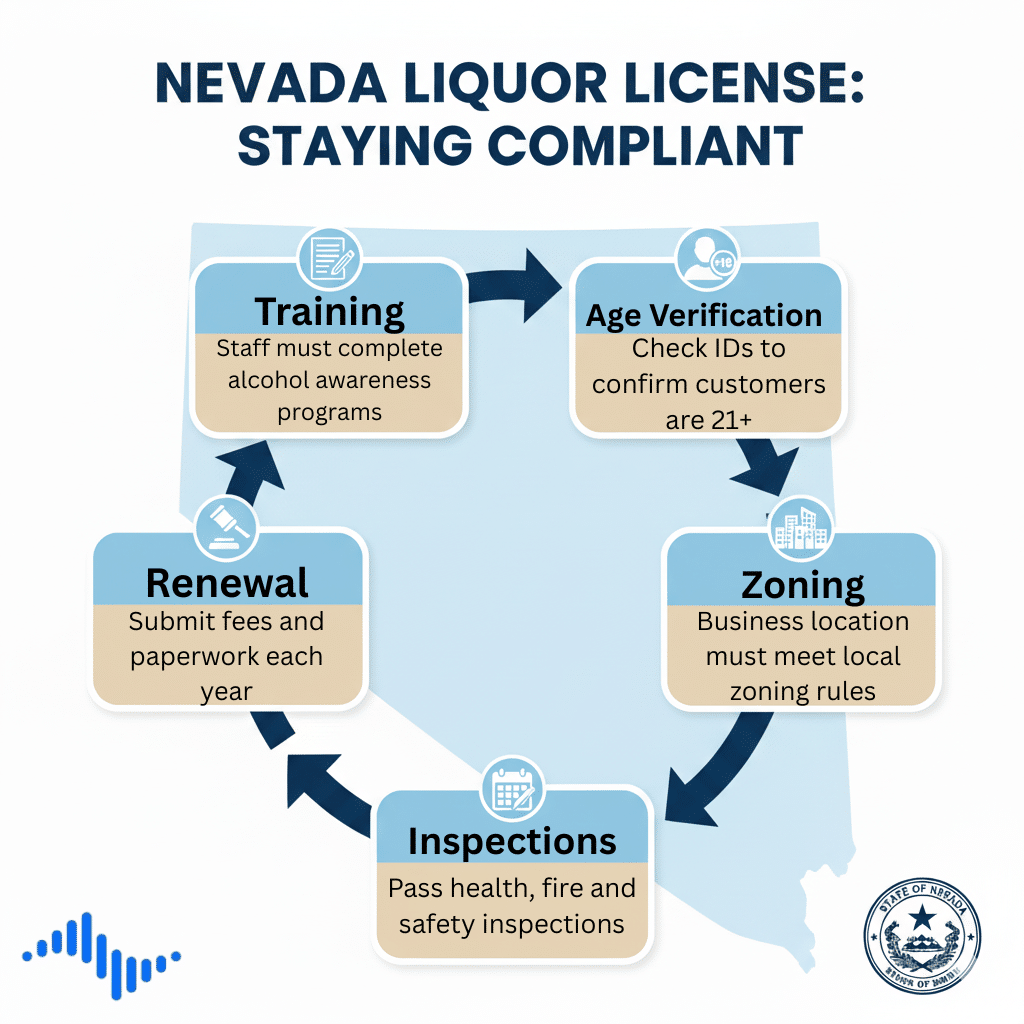
Owning a liquor license in Nevada comes with ongoing responsibilities. Compliance is not a one-time requirement but a continuous obligation that covers staff training, age verification, zoning compliance, and proper record-keeping. Regulators expect businesses to stay proactive in meeting these standards, and failure to do so can result in serious consequences. By understanding the compliance landscape, businesses can protect their licenses, build trust with regulators, and operate smoothly in the long run.
Server Training and Age Verification
Server training programs are mandatory under Nevada liquor laws, and for good reason. These programs equip employees with the skills needed to verify customer ages, handle intoxicated individuals, and comply with state regulations. For example, training may cover how to spot fake IDs, how to document refusals, and how to handle confrontations in a professional manner. By participating in these programs, staff gain confidence in their roles and reduce the risk of violations that could endanger the business’s liquor license.
Age verification is a cornerstone of compliance. Nevada requires strict ID checks for anyone appearing under the age of 30. Many businesses now rely on electronic ID scanners that integrate with their point-of-sale systems. For example, Biyo POS integrates ID scanning directly into the checkout process, preventing alcohol sales until a valid ID is confirmed. This eliminates human error and ensures consistent enforcement of Nevada liquor laws. Without reliable verification, businesses face severe penalties, including fines and potential license suspension.
Regular refresher courses are also recommended to keep staff updated on evolving state regulations. Laws can change, and employees must stay informed to avoid mistakes. Businesses that invest in continuous training not only protect their licenses but also improve customer service. For instance, well-trained staff can handle situations like refusing service to an intoxicated customer with professionalism, preserving both safety and customer relationships. This balance between compliance and customer care is vital in the hospitality and retail industries.
Zoning and Local Ordinances
Zoning laws determine where businesses can operate with a liquor license in Nevada. Local governments impose restrictions to prevent oversaturation of alcohol outlets in certain areas. For example, a small residential neighborhood in Reno may prohibit liquor stores within a half-mile radius of schools or churches. These restrictions aim to protect community safety while still supporting business opportunities. Businesses that ignore zoning rules risk having their applications denied or licenses revoked.
Local ordinances can also impose additional restrictions beyond zoning. For example, a city might limit the hours during which alcohol can be sold or prohibit outdoor advertising of liquor near certain areas. In Las Vegas, casinos and entertainment venues face unique ordinances that regulate how and when alcohol can be served. Understanding these local rules is essential because compliance with state regulations alone is not enough. Businesses must meet both state and local standards to operate legally.
Failing to comply with zoning and local ordinances can result in serious penalties, including fines, suspension, or permanent loss of the liquor license. For instance, if a bar consistently violates noise ordinances, local regulators may suspend its license regardless of state compliance. This dual system of oversight ensures that businesses are accountable to both state and community standards. Proactive communication with local authorities during the planning and application process can help businesses avoid conflicts and streamline approvals.
Ongoing Compliance and Renewal
Renewal of a liquor license in Nevada is not a simple matter of paying a fee. The renewal process often involves updated background checks, financial reviews, and proof of ongoing compliance with state regulations. For example, a business renewing its on-premise license may need to show that all staff have completed updated training programs and that ID verification systems are still functional. Regulators take these checks seriously because they want to ensure businesses remain compliant over time, not just at the time of application.
Random inspections are common during renewal periods. Inspectors may arrive unannounced to review sales records, training certificates, and compliance systems. For instance, they may test ID scanners to ensure they are properly integrated with point-of-sale systems. These inspections keep businesses accountable and ensure that compliance requirements are not ignored once the license is granted. Businesses that fail these inspections risk delays in renewal or even license suspension.
Maintaining compliance requires a culture of responsibility within the organization. Owners must set clear expectations, managers must enforce policies, and staff must receive regular training. For example, businesses that schedule quarterly compliance meetings often perform better during inspections because they stay ahead of issues. This proactive approach not only secures smooth renewals but also builds a reputation for reliability and trustworthiness in the community. By treating compliance as an ongoing commitment, businesses safeguard their long-term success in Nevada’s competitive alcohol industry.
Costs, Renewal, and Ongoing Responsibilities
Operating under a liquor license in Nevada involves significant financial commitments. From initial application fees to ongoing training and renewal costs, businesses must budget carefully to remain compliant. Understanding these costs upfront helps business owners plan effectively and avoid financial surprises. While these expenses can be substantial, they are an essential part of operating legally and responsibly in Nevada’s alcohol industry.
Licensing Fees
Licensing fees vary depending on the type of license and the jurisdiction. On-premise licenses for bars and nightclubs often carry the highest costs because of the increased regulatory oversight and risks involved. For example, a nightclub in Las Vegas may pay tens of thousands of dollars annually for its liquor license. In contrast, a small grocery store in a rural area may pay significantly less for an off-premise license. These fees reflect the scale of operations and the regulatory resources required to oversee compliance.
Application fees are typically non-refundable, meaning that even if an application is denied, the costs are not returned. This underscores the importance of submitting a complete and accurate application to avoid wasting money. Additional costs may include background check fees, inspection charges, and legal fees if the application process involves hearings or appeals. Business owners should also budget for annual renewal fees, which ensure continued funding for regulatory oversight.
Failing to pay fees on time can result in penalties or suspension of the liquor license. For example, late payment of renewal fees may lead to surcharges or the need to reapply entirely. This can disrupt business operations and damage customer trust. Setting up reminders or automating payments can help businesses avoid these pitfalls. By staying on top of licensing fees, businesses ensure uninterrupted operations and maintain good standing with regulators.
License Renewal Costs
Renewing a liquor license in Nevada involves more than just a simple payment. Renewal fees are often substantial, and failing to pay them on time can have serious consequences. For example, a restaurant that misses its renewal deadline may be forced to halt alcohol sales until the license is reinstated. This can lead to significant revenue loss, especially in industries where alcohol sales are a major profit driver. Timely payment is therefore essential for maintaining financial stability and customer satisfaction.
Renewal costs also vary by license type and location. A high-volume casino in Las Vegas may face higher renewal fees than a small café in Reno because of the different regulatory demands. In addition to base renewal fees, businesses may need to cover costs for updated background checks, inspections, and compliance certifications. These additional expenses can add up quickly, so business owners must plan ahead to ensure they have sufficient funds available at renewal time.
Late renewals often result in additional charges, and in some cases, businesses may need to reapply for a new license entirely. This reapplication process is more costly and time-consuming than a straightforward renewal, often requiring businesses to go through background checks and inspections from scratch. This can create operational downtime that frustrates both owners and customers. To avoid this scenario, many businesses set internal policies for tracking deadlines and assigning responsibility for renewal submissions. By treating renewal costs as a predictable and recurring business expense, owners protect their revenue streams and maintain continuous compliance with Nevada liquor laws.
Training and Compliance Expenses
Training employees to comply with Nevada liquor laws is an ongoing cost that cannot be ignored. Businesses must ensure that all staff who handle alcohol complete initial training programs and participate in refresher courses. These programs often come with fees, whether conducted in person by certified trainers or through online platforms. For example, a bar in Reno might spend several hundred dollars each year to certify new hires in responsible beverage service. While this may seem like an added expense, it ultimately saves money by reducing the risk of costly violations and fines.
Compliance expenses also include investing in technology that supports responsible alcohol sales. For instance, ID scanning devices and point-of-sale software integrated with compliance features are becoming standard in the industry. Systems like Biyo POS help automate ID verification, track sales data, and generate compliance reports for inspections. While these systems require upfront investment, they pay for themselves by minimizing risks and streamlining operations. Without such tools, businesses risk human error that could result in legal penalties or license suspension.
Beyond training and technology, businesses must budget for periodic legal consultations. Regulations change over time, and legal professionals can help interpret updates to Nevada liquor laws. For example, if local ordinances in Las Vegas change to restrict late-night alcohol sales, a legal advisor can help businesses adapt policies quickly. Staying proactive with compliance expenses ensures that businesses avoid surprises and continue operating smoothly in Nevada’s highly regulated alcohol market.
Local Ordinances and Zoning Laws
While state regulations provide the overarching framework, local ordinances and zoning laws play an equally important role in obtaining and maintaining a liquor license in Nevada. Each county and municipality has the authority to impose additional restrictions tailored to the needs of their communities. Business owners who ignore these local rules risk delays in approval or even outright denial of their liquor license applications. Understanding the local regulatory landscape ensures that businesses remain compliant at every level of government.
City-Specific Regulations
Different cities in Nevada implement unique alcohol regulations that reflect their character and economic priorities. For example, Las Vegas, with its thriving tourism and entertainment industries, allows more flexibility in alcohol service hours for casinos and nightclubs. However, the city also imposes strict requirements for surveillance, security staff, and alcohol distribution protocols. By contrast, smaller cities like Carson City or Henderson often adopt stricter ordinances to maintain community standards and protect residents from excessive alcohol-related disturbances. This demonstrates how city-specific regulations can shape business strategies for alcohol sales.
Businesses must review municipal codes before applying for a liquor license. For instance, a café in Henderson might find that city rules limit early morning alcohol service, while a similar business in Reno may face fewer restrictions. Understanding these variations prevents costly missteps and ensures smoother application approvals. City councils and licensing boards often publish these rules publicly, but consulting with local officials can provide valuable clarification and guidance during the process.
Failure to comply with city-specific regulations can result in serious consequences. For example, a nightclub in Las Vegas that fails to adhere to mandated surveillance requirements may face license suspension even if it complies with state laws. These local enforcement mechanisms ensure that businesses are held accountable to the standards of the communities they serve. Staying informed about city-specific rules protects business owners from unexpected penalties and fosters better relationships with local regulators.
Zoning Restrictions
Zoning laws regulate the physical locations where businesses can operate under a liquor license in Nevada. These rules help manage the concentration of alcohol-serving establishments in certain neighborhoods, maintaining balance between economic activity and community well-being. For example, zoning ordinances may prevent liquor stores from opening within a specific distance of schools, parks, or residential areas. This prevents overexposure of alcohol to vulnerable populations and helps maintain community safety standards.
Applicants must often submit detailed site plans as part of their liquor license application to prove zoning compliance. These plans typically include floor layouts, property maps, and surrounding land-use descriptions. For instance, a prospective bar owner in Reno may be asked to show that their location is more than 500 feet from the nearest school or church. Regulators use this information to verify that the business complies with both state and local zoning laws. Ignoring these requirements can result in immediate denial of the application.
Zoning restrictions can also change as cities grow and neighborhoods evolve. For example, a new residential development near a business may lead local councils to impose stricter zoning rules in the area. Businesses must stay alert to these changes and be prepared to adapt if local ordinances shift. By proactively engaging with zoning boards and staying informed about urban planning decisions, business owners can safeguard their operations and avoid sudden disruptions caused by regulatory updates.
Local Enforcement and Inspections
Local enforcement agencies conduct inspections to ensure businesses remain compliant with city ordinances and zoning laws. These inspections may occur on a scheduled basis or as surprise visits. For example, a bar in Las Vegas might receive unannounced visits from local regulators to check if staff are properly verifying IDs and following noise ordinances. These inspections provide an additional layer of accountability beyond state-level oversight, ensuring that businesses respect community expectations.
Inspectors often review sales records, training logs, and compliance documentation during visits. For instance, they may request to see proof that all employees have completed mandatory server training programs within the required timeframe. Inspectors may also check whether point-of-sale systems are integrated with ID verification tools to prevent underage sales. Businesses that maintain accurate and up-to-date records typically pass these inspections with ease, while those that fail to prepare may face penalties or suspension.
Building strong relationships with local enforcement officials can be highly beneficial for businesses. By demonstrating transparency and cooperation, owners create trust with regulators, which can result in smoother renewal processes and more lenient handling of minor infractions. For example, a store that promptly corrects a minor violation may receive a warning instead of a fine if it has a history of compliance. Ultimately, successful navigation of local enforcement not only ensures legal operation but also builds goodwill in the communities where businesses operate.
How Biyo POS Helps with Compliance and Alcohol Sales
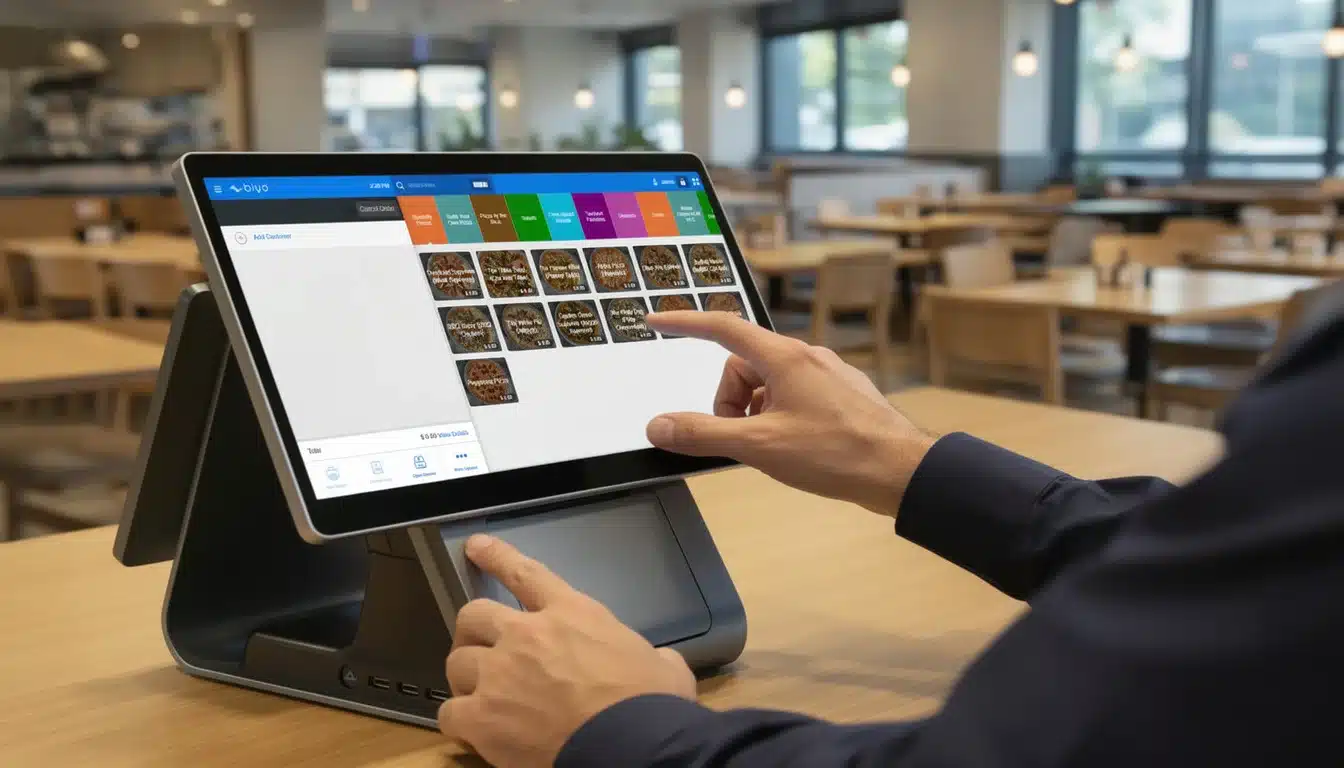
Managing alcohol sales requires more than just securing a liquor license in Nevada; it also demands efficient systems to maintain compliance on a daily basis. Biyo POS offers a modern point-of-sale solution designed specifically for businesses in industries like hospitality, retail, and event management. Its built-in compliance features streamline ID verification, transaction tracking, and sales reporting, reducing the risks associated with manual processes. By integrating compliance directly into daily operations, businesses can confidently meet Nevada liquor laws without sacrificing speed or customer satisfaction.
For example, Biyo POS systems integrate ID scanners that verify customer ages before transactions are completed. This prevents human error and ensures that underage sales do not occur, protecting businesses from costly fines and license suspensions. The platform also provides detailed sales reports that simplify inspection processes, allowing regulators to review accurate data during compliance checks. This transparency not only helps with audits but also builds credibility with licensing boards.
Biyo POS further supports multi-location businesses by providing centralized dashboards that track sales and compliance across multiple outlets. Whether you operate several liquor stores in Reno or manage bars across Las Vegas, Biyo POS gives owners real-time visibility into their operations. By offering a system that combines sales efficiency with compliance, Biyo POS helps businesses thrive in Nevada’s competitive alcohol industry. Interested operators can explore features or sign up here to start streamlining compliance and sales processes.
FAQ: Liquor License in Nevada
How long does it take to get a liquor license in Nevada?
The process typically takes 60 to 90 days, depending on the complexity of the application, background checks, and inspection schedules. Businesses with complete documentation may receive approval faster, while those with missing details often face delays.
Can I transfer my liquor license in Nevada?
In some cases, liquor licenses can be transferred, but approval is required from local and state authorities. The transfer process often includes background checks on the new owners and a review of zoning laws to ensure the business remains compliant.
What happens if I sell alcohol without a license?
Selling alcohol without a valid liquor license in Nevada is illegal and carries severe penalties. Businesses risk hefty fines, closure, and possible criminal charges. It can also permanently damage a company’s ability to obtain a license in the future.
Do I need a separate license for each business location?
Yes, liquor licenses are tied to specific locations and cannot be shared between multiple businesses. Each outlet or venue must apply for and maintain its own license to sell alcohol legally under Nevada liquor laws.
Are server training programs mandatory in Nevada?
Yes, all servers and employees involved in alcohol sales must complete state-approved training programs. These courses teach responsible serving practices, age verification techniques, and compliance requirements to ensure businesses meet regulatory standards.